Best Siding Colors for Homes in Alabama Hill, Whatcom County
Updated August 2026 · Alpine Exteriors · WA contractor license ALPINI751OW
Alabama Hill sits up above downtown Bellingham with a mix of mature fir and cedar canopy, partial bay views, and a patchwork of older ranch homes next to newer infill builds. That combination makes color a harder decision than it looks on a paint chip. A shade that reads crisp and modern in a showroom can look flat under the gray, diffused light we get most of the year, and a color that photographs well in full sun can streak with moss within two or three wet seasons if the lot sits under heavy tree cover. We put this guide together from what we actually see on re-siding jobs around Alabama Hill, Sunnyland, and the lower South Hill slopes — not from a manufacturer's swatch book.
The Short Answer
For most Alabama Hill lots, the colors that hold up best and look right longest are mid-tone warm greiges, weathered cedar/driftwood tones, and deep slate or charcoal blues used selectively rather than on every elevation. These sit in a sweet spot: dark enough that moss and algae bloom are less visible between cleanings, light enough that the house doesn't disappear into the tree line, and muted enough to look intentional against both the bay views on the west-facing lots and the deep green backdrop on the interior ones. Bright white and true black both come with real trade-offs here, covered below, which is why we don't put them at the top of the list even though they're popular searches.
If you're already planning to re-side, this is also a reasonable time to double-check that the wall assembly underneath meets current Washington State Energy Code requirements for continuous insulation and air sealing — color has no bearing on that, but the house wrap and insulation decisions happen at the same time as the color decision, so it's worth doing once.
How We Judged Color Options for This Area
We're not ranking colors on trend appeal. The criteria below are specific to what actually damages or ages siding color in Whatcom County, and especially on a tree-covered hillside lot like most of Alabama Hill.
- Moss and algae visibility. Our wet, mild climate grows green and black algae streaks on any siding, full stop. The question is whether a given color hides early growth between cleanings or broadcasts it.
- Light quality. Bellingham gets long stretches of soft, overcast light rather than harsh direct sun. Colors that rely on bright sunlight to look good (certain whites, pastels) can look dull or even slightly dingy under a gray November sky.
- Tree canopy and shade. A lot tucked under fir and cedar reads differently than an open, view-oriented lot. Darker colors recede into shade; lighter colors can look washed out or, conversely, pop awkwardly against dark green.
- Wind-driven rain exposure. Homes with any west or southwest exposure toward Bellingham Bay and the Strait take rain sideways during winter storms. Lap siding, trim returns, and inside corners on that exposure show water staining faster regardless of color, so we weigh how forgiving a color is of water lines and minor staining.
- Fade and UV exposure. We don't get hurricane-intensity sun here, but summer days are long and low-angle light off the water can bleach south- and west-facing walls unevenly over years. Darker, saturated colors fade faster and more visibly than muted mid-tones.
- HOA and neighborhood norms. Alabama Hill isn't uniformly HOA-governed, but several pockets have deed restrictions or informal neighborhood expectations around exterior palettes, and resale value is closely tied to not standing out from the block in the wrong way.
- Material behavior. Vinyl, fiber cement, and engineered wood siding each hold and fade color differently, and that affects which shades actually make sense per material.
The Best Options for Alabama Hill Homes
Warm Greige and Taupe
This is the color family we install most often on Alabama Hill re-sides, and for good reason. A warm greige sits between beige and gray without tipping fully into either, which means it reads calm next to the green of the tree canopy and doesn't clash with the cooler gray tones common on roofs and stone veneer in this area.
- Pros: Hides dust, pollen, and early moss growth well between cleanings; pairs easily with white, black, or warm wood-tone trim; doesn't read as trendy or dated the way some warmer beiges from the 2000s eventually did.
- Cons: In deep shade under heavy fir cover, a greige can look slightly flat or lifeless without some trim contrast to break it up. It's also common enough now that it won't make a house stand out, which is a pro for resale and a con if you want something distinctive.
Weathered Cedar and Driftwood Tones
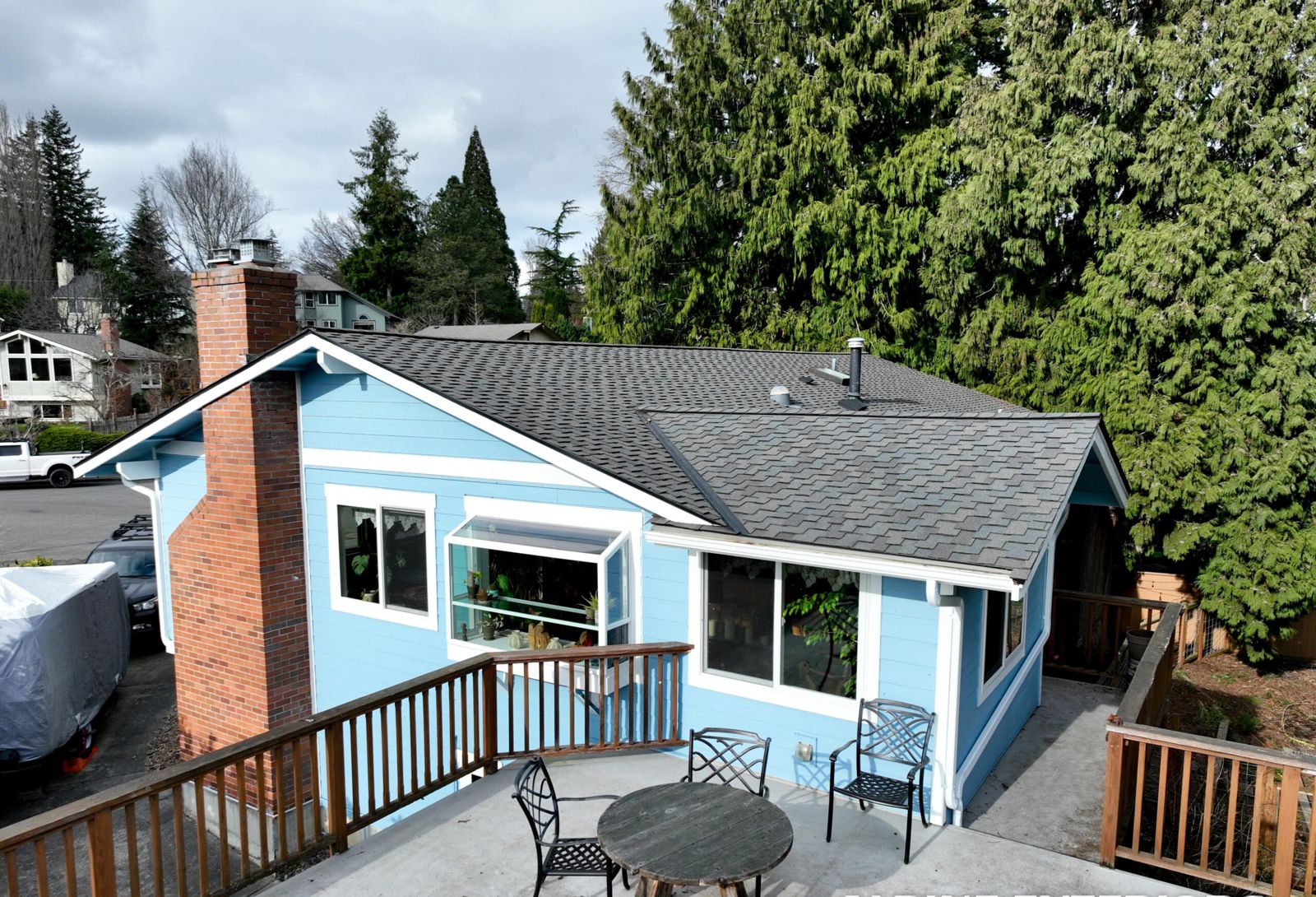
Fiber cement and engineered wood siding products now come in convincing weathered-wood colorways — grayed browns and soft tans that echo the look of naturally aging cedar without the maintenance of actual wood. On a wooded hillside lot, this palette tends to look like it belongs rather than like it was dropped in.
- Pros: Blends naturally with a forested lot; forgiving of water streaking since the base tone already mimics weathering; a strong fit for the craftsman and Northwest-modern styles common on Alabama Hill infill builds.
- Cons: On vinyl specifically, wood-look colorways can look printed rather than natural up close; fiber cement and engineered wood hold the tone better but cost more than vinyl. These tones can also look muddy on a home with very little trim contrast.
Deep Slate Blue and Charcoal
Used on a full elevation, a deep slate blue or charcoal gives a house real presence, especially on the view-oriented lots facing the bay. We usually recommend it as a primary color on one or two elevations with a lighter greige or white on the rest, rather than wrapping the whole house, for reasons covered under cons.
- Pros: Reads sophisticated against both gray sky and green canopy; hides moss streaking better than almost any lighter color; strong contrast with white trim and black window frames, a combination that photographs and sells well.
- Cons: Darker colors absorb more heat on the rare hot summer afternoon, and on vinyl siding specifically that heat gain can contribute to warping over time — fiber cement doesn't have this issue. Charcoal and dark slate also show dust and pollen film differently than moss, sometimes as a faint grayish bloom, and they fade unevenly on south and west faces over many years.
Soft White and Cream
Classic and still common on the older ranch homes scattered through Alabama Hill, a soft white or warm cream (not a stark, blue-white) keeps a traditional look and maximizes light on a shaded lot.
- Pros: Brightens a home on a lot with heavy tree cover; timeless rather than trend-driven; easy to match trim and roof colors to later.
- Cons: This is the color where moss, algae, and water streaking show up fastest and most visibly, particularly on north-facing walls that stay damp longest and on any wall exposed to wind-driven rain off the bay. A white or cream house here needs a real cleaning schedule, not an occasional rinse, to look as good as the day it went up.
Muted Forest or Hunter Green
A deep, slightly grayed green is one of the few colors that can make a house almost disappear into the tree line in a flattering way, which some owners specifically want on a heavily wooded lot.
- Pros: Blends with the forested backdrop rather than competing with it; historically at home on Pacific Northwest architecture; hides moss and algae about as well as charcoal does, since the color family overlaps.
- Cons: Can read as dark and heavy on a smaller lot with limited canopy, or on a lot that's been partially cleared; like charcoal, it's a darker vinyl color and carries the same heat-related warping consideration on full sun exposures; harder to resell to a buyer who wants a brighter look.
What to Avoid Here and Why
A few choices come up often in color searches and trend articles that we'd steer most Alabama Hill homeowners away from, or at least use with caution.
- Bright, stark white. It looks clean in a rendering and terrible in real life here within a couple of wet seasons, especially on shaded north walls and anywhere wind-driven rain off the Strait hits the siding at an angle. It's not that white is a bad color — it's that this climate is uniquely hard on it.
- Pastels and light trend colors (soft blues, pale greens). Under our frequently overcast light, pastels tend to look washed out rather than soft, and they show mildew and water lines almost as readily as white.
- High-gloss or very reflective finishes. Most quality siding today is low-sheen, but if you're offered a glossier finish, skip it on a tree-covered lot — glare against the canopy looks odd and gloss tends to highlight surface streaking rather than hide it.
- Solid black. It's striking in photos, but on vinyl it carries the most heat-gain risk of any color we install, and on a hillside lot with real sun exposure on the west face, that matters. If you want the black look, ask about it as an accent (entry, trim, or one smaller elevation) on fiber cement rather than full-wrap vinyl.
- Anything dramatically off from the block. Outside of lots with no deed restrictions, an unusually bright or saturated color can draw HOA or neighbor pushback and, more practically, can make a home harder to sell to buyers who want something they can picture themselves living with.
FAQ
What siding color hides moss and algae best in Whatcom County?
Mid-tone colors with some gray or green already mixed in — warm greige, weathered cedar tones, charcoal, and muted forest green — hide early moss and algae growth far better than white, cream, or pastel colors, simply because the existing tone is closer to the color moss turns as it establishes. No color prevents moss; regular cleaning and good roof/gutter drainage matter more than paint choice for long-term growth, but color determines how noticeable it is between cleanings.
Will a dark siding color fade faster on an Alabama Hill lot with a lot of tree cover?
Less than you'd think on a heavily shaded lot, since tree canopy blocks a lot of direct UV exposure. The faces that fade fastest are the ones that get unobstructed afternoon sun, typically south and west walls on lots that have been partially cleared for a view. If your lot has real sun exposure on one or two sides, expect more visible fading there over many years regardless of how shaded the rest of the property is.
Do I need HOA approval for a siding color change in Alabama Hill?
It depends on the specific lot. Some pockets of Alabama Hill carry deed restrictions or an active homeowners' association with color guidelines, while others have none. We can't tell you from the street whether a given address is covered, so check your CC&Rs or HOA documents before committing to a color, and we're glad to provide color samples and spec sheets to submit for approval if yours requires it.
What's the most practical siding color for a rental or resale-focused property on Alabama Hill?
Warm greige is usually the safest bet for resale. It photographs well in listing photos under our typically overcast light, it's neutral enough that buyers can picture their own furniture and landscaping against it, and it hides moss and minor water staining better than white while still reading as bright and well-kept rather than dark or heavy.
Get a Color Recommendation for Your Lot
Photos and paint chips only tell you so much — the right siding color for a home on Alabama Hill depends on your specific tree cover, which walls take the weather, and what's already on the block. Alpine Exteriors is a licensed Washington contractor (ALPINI751OW) serving Bellingham, Ferndale, Lynden, Blaine, Birch Bay, Sudden Valley, and the islands, and we'll walk your property with you, hold samples up against your actual light and landscaping, and give you a straight recommendation instead of a trend list. If you're ready to talk through colors and materials for your re-side, reach out to Alpine Exteriors and we'll set up a time to look at your home in person.
Want a straight answer for your home? Alpine Exteriors gives free on-site assessments across Bellingham, Ferndale, Lynden, Blaine, Birch Bay, Sudden Valley and the islands.
Call (360) 543-4799 or
request an estimate.
