
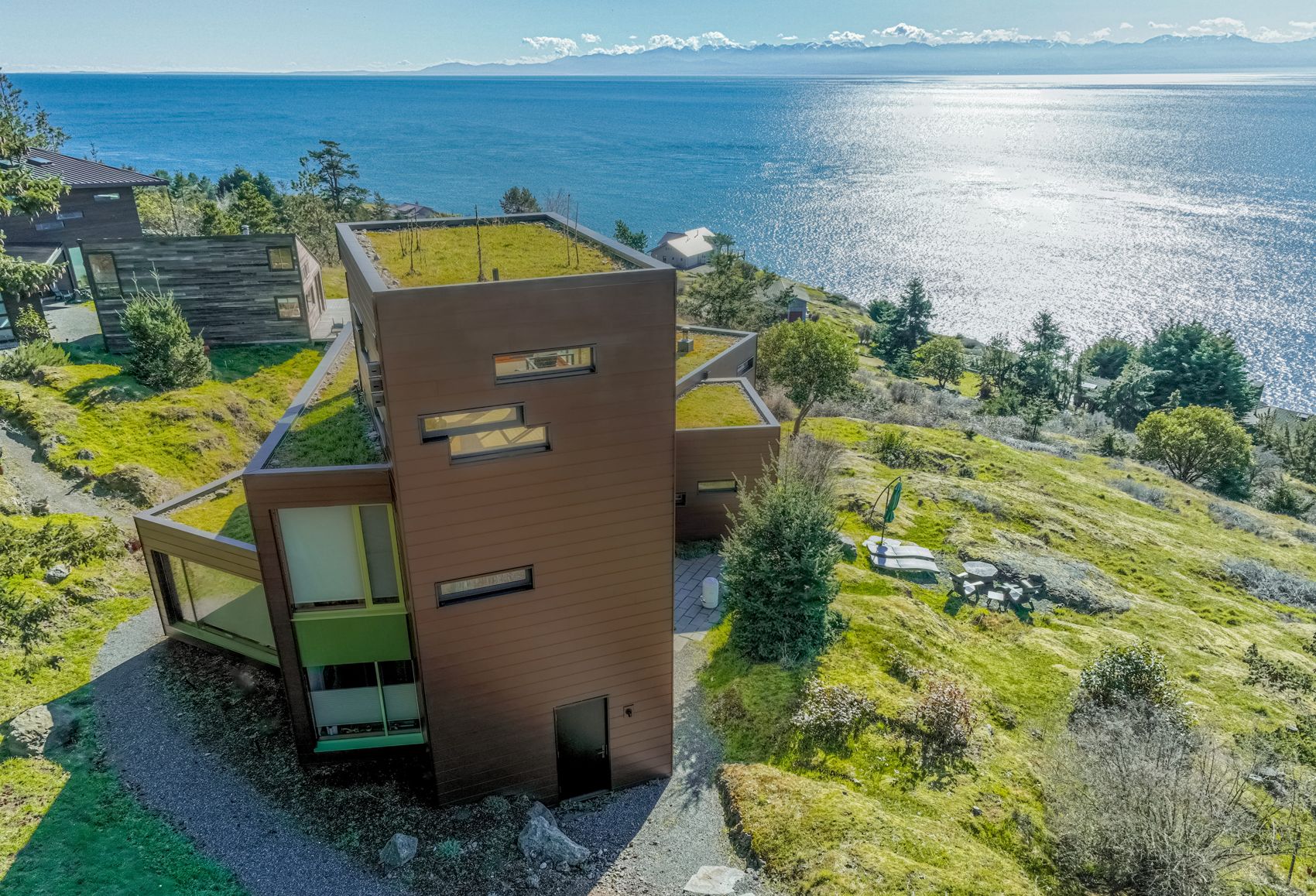
Alabama Hill sits high enough above Bellingham Bay that houses up there catch weather most flatland neighborhoods don't see quite as directly — wind-driven rain pushed in off the bay and the Strait, long stretches of drizzle that never quite lets a wall dry out, and enough shade from mature evergreens on the north- and east-facing lots to keep moss and algae established year-round. If you're re-siding a home up here, or building new, the choice usually comes down to two products: James Hardie fiber cement and vinyl siding. Both are common across Whatcom County, from Bellingham and Ferndale down to Lynden, Blaine, Birch Bay, Sudden Valley, and the island communities, but they behave differently once they're actually hung on a wall and left to deal with a Pacific Northwest winter. This page walks through both options honestly, including where each one falls short, so you can make a decision that fits your specific house rather than a generic sales pitch.
If your Alabama Hill home has a history of wood rot, sits on a lot with heavy tree shade and persistent moss growth, or takes wind-driven rain directly on one or two exposed elevations facing the bay, James Hardie fiber cement is generally the more durable long-term choice — it resists moisture intrusion and impact damage better and holds paint and color in a way that vinyl can't match over decades. If your priority is a lower upfront cost, a faster install timeline, and you're maintaining a starter home, a rental, or a property where you don't plan to hold long enough to see a 20-plus-year siding cycle play out, vinyl remains a reasonable and widely used option in this same neighborhood. Neither product is wrong for Whatcom County — the right one depends on your home's exposure, your budget horizon, and how much maintenance you're willing to do.
James Hardie fiber cement is a blend of cement, sand, and cellulose fiber, formed into planks or panels and kiln-cured. It's become the dominant premium siding choice in Whatcom County over the last decade, largely because it holds up to exactly the kind of weather Alabama Hill gets a lot of: sustained damp conditions without swelling, cupping, or rotting the way wood does, and enough rigidity that wind-driven rain doesn't work its way behind the boards as easily as it can with lighter materials. It's also non-combustible, which some homeowners value given wildfire smoke seasons have become a more regular late-summer occurrence in the Pacific Northwest, even though wildfire risk itself isn't the primary driver for siding choice in this specific area.
The drawbacks are real and worth naming. Fiber cement is heavy — installation is more labor-intensive than vinyl, and it needs to be cut with proper dust control since the material contains silica. It also has to be painted (factory pre-finished ColorPlus products reduce this, but eventually all painted siding needs a repaint cycle, typically longer than wood but not indefinite). Installed poorly — without correct fastener placement, proper flashing, or adequate clearance from grade and roof lines — fiber cement can still let water behind the cladding, and because it's rigid, minor installation mistakes are less forgiving to fix later than they are with vinyl. Upfront material and labor costs are meaningfully higher than vinyl, generally somewhere in the range of $9 to $16 per square foot installed depending on plank profile, trim detail, and site access, though final numbers vary by scope.
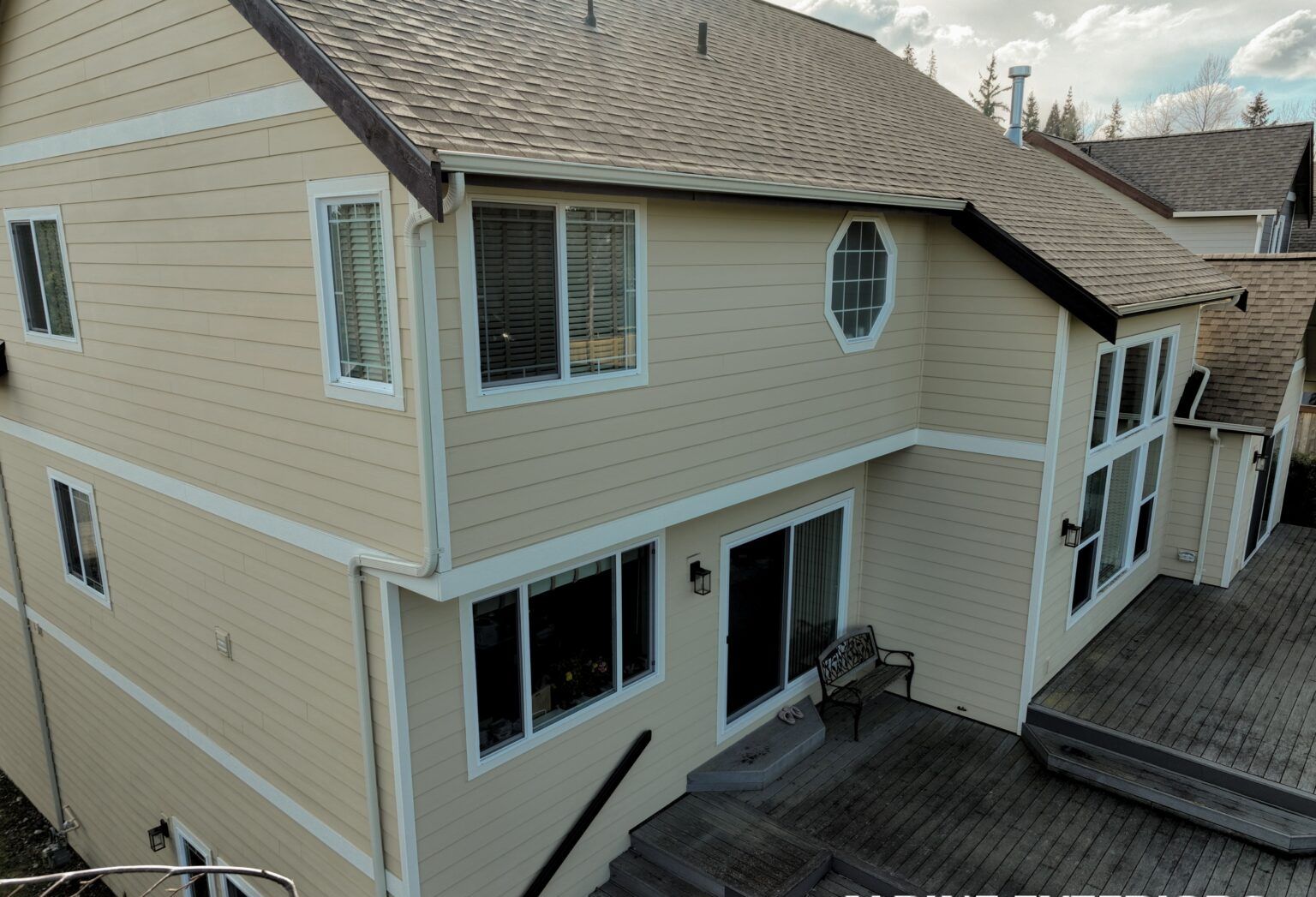
Vinyl siding is an extruded PVC product that's been a mainstay of residential construction across Whatcom County for decades, particularly on the more affordably built homes in Ferndale, Lynden, and older subdivisions around Bellingham. Its biggest advantages are cost and installation speed — it's lighter, faster to hang, and the material itself never needs painting since color is baked through the panel. For a straightforward re-side on a home without major moisture problems, vinyl can be a sensible, budget-conscious choice, and modern insulated vinyl products have narrowed some of the performance gap with fiber cement.
The honest drawbacks matter more here than they do in drier climates. Vinyl expands and contracts with temperature swings, and in the occasional freeze-thaw stretches that reach into the Whatcom County foothills and higher elevations, panels installed too tightly can buckle or crack at the nail hem. It's also more vulnerable to wind-driven rain finding its way behind panels at corners, seams, and J-channels, especially on elevations that catch the brunt of storms coming off Bellingham Bay and the Strait — vinyl doesn't itself rot, but the wood sheathing or framing behind it can, silently, if water gets past the panels and the house wrap or rainscreen behind them isn't doing its job. Vinyl also tends to fade and chalk over time, especially in south- and west-facing exposures, and it holds moss and algae on its surface in the same shaded, damp spots that affect any siding here — the difference is that vinyl's texture and seams give algae more places to grip than a smooth painted fiber cement surface. Impact resistance is lower too; a stray branch off one of the tall firs common on Alabama Hill lots can crack a vinyl panel in a way it wouldn't crack fiber cement.
| Factor | James Hardie Fiber Cement | Vinyl Siding |
|---|---|---|
| Installed cost (typical range) | Roughly $9–$16 per sq ft, varies by profile and trim | Roughly $4–$9 per sq ft, varies by product and insulation backing |
| Expected lifespan | 30–50 years with proper maintenance and repainting | 20–30 years, shorter in high-UV or high-impact exposures |
| Maintenance | Repaint every 10–15 years unless factory-finished; caulk joints periodically | Occasional washing to control algae/moss buildup; no painting, but cracked panels must be replaced |
| Moisture/rot resistance | High — resists swelling and rot; relies on correct flashing and fastening | Vinyl itself won't rot, but trapped moisture behind panels can rot sheathing unnoticed |
| Wind-driven rain performance | Rigid panels and tight seams perform well on exposed bay-facing walls when installed correctly | More seams and channels; performance depends heavily on quality of house wrap and flashing beneath |
| Freeze-thaw tolerance | Stable, minimal expansion/contraction | Can become brittle and crack in cold snaps if installed without proper expansion gaps |
| Appearance options | Wide range of plank widths, textures, and factory colors; holds paint well long-term | Wide range of colors and profiles, including insulated options; colors fade and chalk over time |
Alabama Hill's combination of elevation, tree cover, and direct exposure on several streets to weather rolling in off Bellingham Bay makes it a neighborhood where the weaknesses of vinyl show up faster than they would on a more sheltered lot in, say, a tighter subdivision in Ferndale or Lynden. Homes on the west- and north-facing sides of the hill take wind-driven rain more directly, and the persistent shade from mature firs and cedars on many lots keeps north walls damp for days after a storm passes — exactly the condition that lets moss and algae establish and, over years, lets any weak point in a wall assembly turn into a rot problem. For those homes, fiber cement's rigidity and moisture resistance tend to justify the higher upfront cost, particularly if the existing siding is already showing rot or if the home has had water intrusion issues in the past.
That said, not every Alabama Hill home needs the premium option. A well-sheltered home tucked behind other structures or dense tree cover, with south- or east-facing exposure and no history of moisture problems, can do reasonably well with vinyl, especially a heavier-gauge or insulated product installed with proper rainscreen detailing behind it. Budget matters too — if a full fiber cement re-side isn't realistic this year, a correctly installed vinyl job with attention to flashing, J-channel sealing, and a functioning weather-resistive barrier underneath will still outperform an old, failing wood or aluminum siding system. Alpine Exteriors evaluates each Alabama Hill home on its actual exposure — which walls take the weather, whether there's existing rot, how much shade the lot gets — rather than defaulting to one product for every job. Regardless of material, Washington State Energy Code compliance around continuous insulation and the underlying weather-resistive barrier assembly matters just as much as which cladding sits on top of it; a code-compliant assembly with vinyl will outperform a poorly detailed fiber cement job every time.
For most fully exposed, bay-facing, or heavily shaded lots on the hill, though, the recommendation leans toward James Hardie fiber cement as the material that ages better against this specific combination of persistent rain, wind exposure, and moss pressure — with the understanding that it's a bigger investment and does require an eventual repaint unless a factory-finished ColorPlus product is chosen up front.
Both materials will grow moss and algae in shaded, damp spots — that's a function of sun exposure and airflow around the house more than the siding material itself. The practical difference is texture: fiber cement's smoother, painted surface sheds spores more easily during a wash than vinyl's seams, laps, and slightly more textured surface, which tend to hold organic growth a bit longer once it establishes. Neither material is immune, and homes on shaded Alabama Hill lots should expect to wash siding periodically regardless of which product is installed.
Not necessarily bad, but it needs more careful detailing. On exposed elevations, the weak points are the seams, corners, and channels where wind-driven rain can be forced behind the panel under pressure. A vinyl installation with a properly lapped weather-resistive barrier, correctly flashed windows and penetrations, and quality J-channel work can perform acceptably even on exposed walls — the risk comes from cutting corners on those details, not from the vinyl itself.
Factory-finished ColorPlus products are engineered to hold their finish considerably longer than field-applied paint, often well beyond a decade before touch-ups are needed. Field-painted fiber cement in Whatcom County's damp, low-UV climate generally holds up longer between repaints than painted wood siding did, but most homeowners should still plan on a repaint cycle roughly every 10 to 15 years depending on paint quality, color, and sun exposure.
Some homeowners do this deliberately — using fiber cement on the most exposed, bay-facing, or rot-prone elevations and vinyl on more sheltered sides to manage cost. It's a legitimate approach as long as the transition details are handled correctly so water doesn't get trapped where the two materials meet, but it does mean two different maintenance schedules (repainting one material, periodic washing on the other) going forward.
Every house on Alabama Hill has its own exposure, tree cover, and history of past moisture issues, and that's what should actually drive the fiber cement versus vinyl decision — not a blanket recommendation. Alpine Exteriors, WA contractor license ALPINI751OW, works throughout Whatcom County including Bellingham, Ferndale, Lynden, Blaine, Birch Bay, Sudden Valley, and the islands, and can walk your specific home's exposure, existing siding condition, and budget to help you decide which material makes sense before any work begins. Reach out for an on-site look and a straightforward, no-pressure comparison for your home.