
For most homes in Cordata, the best-performing siding colors are warm mid-tone grays, soft greiges, and true whites with a slight warm undertone. These read well against the fir and cedar tree lines that back up to most Cordata lots, they hide water spotting and pollen film better than very light whites, and they don't chalk out or yellow as fast as cheap off-whites tend to under our long stretch of gray, UV-filtered daylight. If you want contrast, a deep charcoal or bark-brown works well on trim, garage doors, and gable accents without becoming a moss magnet across a whole wall face. We say this after years of tearing old siding off Cordata and greater Bellingham homes and seeing, firsthand, which colors held their look after a decade of Pacific Northwest weather versus which ones looked tired after three winters.
Whatcom County isn't a hurricane market, so wind rating and impact resistance aren't the deciding factors here the way they might be elsewhere. What actually separates a good color choice from a regretted one in Cordata comes down to a handful of local realities:
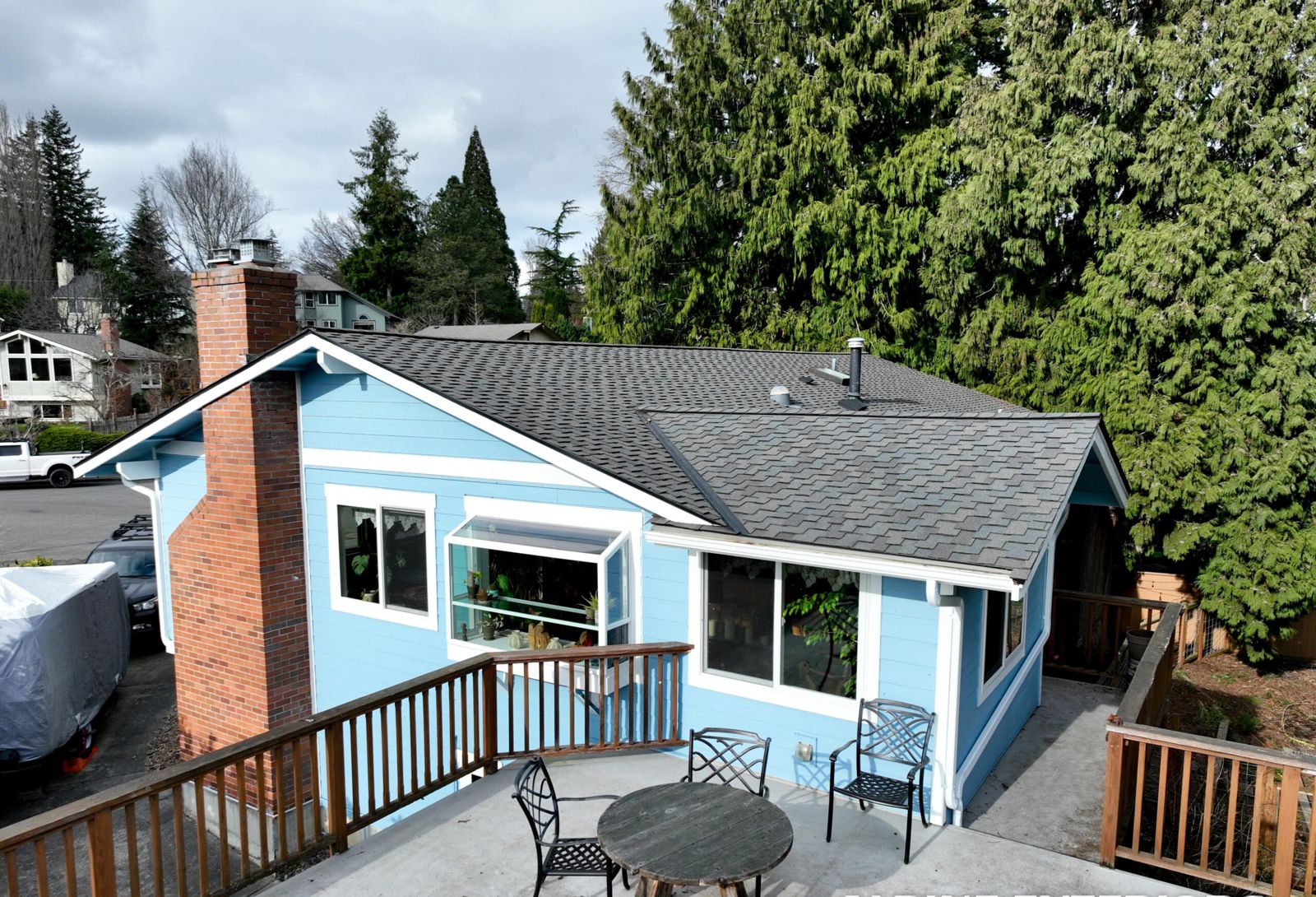
Mid-tone warm grays are the most requested color family we install in Cordata, and for good reason. They sit comfortably against the green backdrop of Western red cedar and Douglas fir that surrounds most lots, they don't show pollen and road film the way white does, and they're broadly accepted by HOA design committees because they read as neutral rather than trendy.
Pros: hides dirt and mild algae haze between cleanings, ages gracefully, pairs well with black or bronze window frames common in newer Cordata builds, and generally has the widest selection across fiber cement and vinyl product lines.
Cons: a gray that leans too cool or too blue can look flat and cold under our frequent overcast skies, especially on homes with little direct sun exposure. It's worth viewing a large sample board outdoors on an actual cloudy day, not just under showroom lighting, before committing.
Greige has become a dependable middle ground for homeowners who find pure gray too cold but don't want a beige that leans yellow. It reads as warm without looking dated, and it tends to complement stone or brick foundation accents that show up on a number of Cordata homes.
Pros: flatters warm-toned roofing (charcoal or driftwood asphalt shingles), photographs well, and generally holds its undertone evenly as it weathers.
Cons: cheaper greige products can drift pink or muddy as pigment breaks down after several years in direct sun; sticking with a known manufacturer color line rather than a generic tint match reduces that risk substantially.
White siding still has a strong following in Cordata, particularly on Craftsman and farmhouse-style builds. The key distinction is true or warm white versus stark, blue-white. A slightly warm white avoids looking clinical against green landscaping and reads better under our gray-sky light, which has a cooler cast than direct sunlight.
Pros: classic look that ages well architecturally, makes a home stand out against a tree-heavy lot, works with almost any trim or roof color.
Cons: shows moss, water spotting, and pollen streaking faster than any other option on this list, especially on shaded north walls or under gutters without splash guards. White also requires more frequent gentle washing to keep looking sharp, a real maintenance commitment, not a one-time detail. Homeowners who choose white and then skip annual cleaning are usually the ones calling us two years later asking why it looks dingy.
Charcoal and dark bark-brown tones are popular as accent colors on gables, shutters, entry surrounds, and garage doors, less so as a full-field siding color, and that split is intentional. On a full wall, dark colors absorb more heat on sun-exposed sides, which can accelerate expansion and contraction in vinyl siding over time, and they show dust, spider webs, and hard-water spotting from sprinklers more visibly than a mid-tone would.
Pros: strong curb-appeal contrast, hides moss streaking extremely well on any section that does get shade, and pairs well with black-framed windows and modern trim details.
Cons: full-field dark siding can look heavy on smaller Cordata lots with tight setbacks, and it's more likely to draw HOA scrutiny in subdivisions with muted-palette guidelines. Used as a 15-25% accent, most of these concerns go away.
A handful of Cordata homes, particularly older ones near the wooded margins of the neighborhood, carry muted sage green or slate blue siding that blends into the landscape rather than standing apart from it. Done well, this is a striking, understated look.
Pros: blends naturally with evergreen surroundings, less common than gray or white so it stands out without being loud, and tends to hide green algae growth better than any neutral.
Cons: the color pool is narrower, so matching trim and finding replacement panels years later (after storm or impact damage) can take longer to source. Some HOAs restrict green and blue tones more tightly than neutrals, so it's worth checking covenant paperwork before falling in love with a swatch.
A few choices consistently disappoint Cordata homeowners once the siding has been up through a couple of wet seasons:
None of these are absolute rules, and we've installed all of them successfully for clients who understood the tradeoffs going in. The point isn't to scare anyone off a color, it's to make sure the choice is made with eyes open about maintenance and fade behavior specific to this climate.
Color itself doesn't change water resistance, that comes down to the siding material, the house wrap and flashing details behind it, and correct installation. What color does affect is how visible moss, algae, and water staining become between cleanings, which is why darker, less reflective tones tend to look better longer on shaded walls in a rain-heavy climate like ours.
Many Cordata subdivisions do have design covenants that favor earth-tone or muted palettes, and some require submitting a color sample for approval before installation. Always check your specific HOA's covenants first; Alpine Exteriors can help pull sample boards that are likely to clear review, but final approval sits with the HOA, not with us.
On shaded or north-facing walls in Cordata, an annual soft wash is a reasonable expectation for white or very pale siding to keep moss and pollen streaking from building up. Mid-tone grays and greiges can often stretch that to every other year without looking noticeably dirty, which is one reason they're so widely chosen here.
If a project removes siding down to the sheathing, it can trigger Washington State Energy Code provisions around continuous insulation and air sealing, depending on the scope of work. This is worth discussing early with your contractor, since it affects the wall assembly and, in turn, which siding profiles and colors are compatible with the insulation approach chosen.
Picking a siding color from a small chip in a store is one of the hardest calls a homeowner makes, colors read very differently under Cordata's tree cover and gray-sky light than they do indoors. Alpine Exteriors, WA contractor license ALPINI751OW, brings full-size sample boards out to your property so you can see how a color actually looks against your roofline, trim, and landscaping before anything is ordered. If you're planning a re-side in Cordata or anywhere else in Whatcom County, reach out to Alpine Exteriors and we'll walk the property with you, talk through the tradeoffs honestly, and help you land on a color that still looks good ten winters from now.