
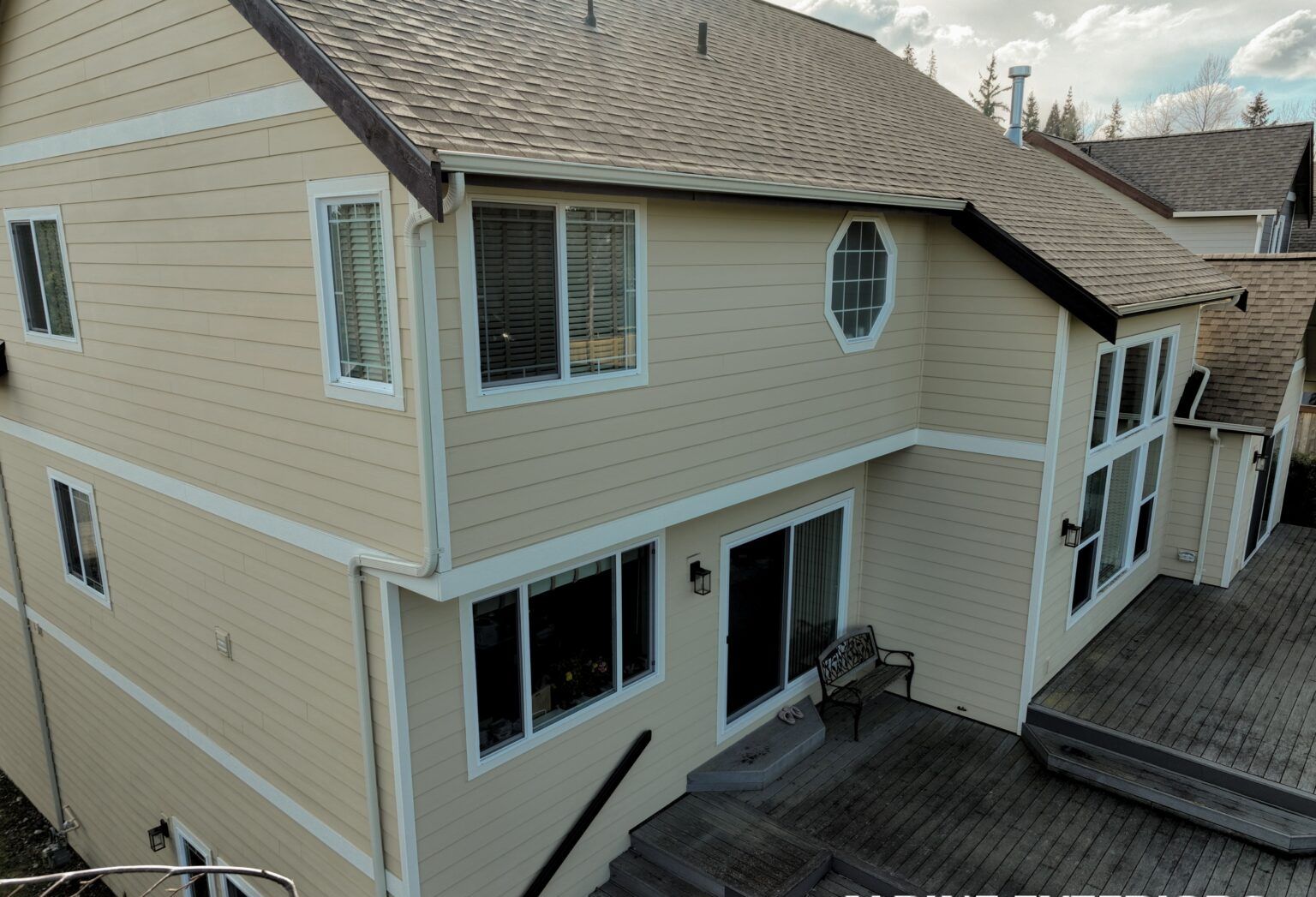
Most siding problems on Roosevelt-area homes come down to trapped moisture, not the siding material itself failing outright. A single damaged section can almost always be repaired if it's caught early, but once rot has spread behind the wall or a discontinued siding profile is involved, replacing a whole elevation is usually the more honest recommendation.
Roosevelt sits close enough to downtown Bellingham and Bellingham Bay that its housing stock spans everything from early-1900s bungalows with wood lap siding to 1970s-80s infill with T1-11 panels and newer builds with fiber cement or vinyl. Each of those materials fails differently, and the repair path depends on which one you have and how far the damage has already traveled.
Wood lap and cedar shingle siding fail from the bottom up. Water works into end-grain cuts, nail holes, and butt joints, and because wood wicks moisture along its grain, a soft spot at the bottom of one board often means the top of that same board — and the sheathing behind it — is already wet even if the paint looks fine. Pressing a screwdriver or awl into suspect boards is the simplest way to find out how far it's gone; if it sinks in easily, that section needs to come off, not just be caulked and repainted.
T1-11 and other plywood-panel siding, common on Roosevelt homes built in the 60s through 80s, has a different failure pattern: the exposed edges and the bottom few inches near grade delaminate and swell first, and once the outer veneer separates from the core, patching doesn't hold — the panel section has to be cut out and replaced with matching material or, more often, resided entirely if the panel style has been discontinued.
Fiber cement (HardiePlank and similar) holds up well against moisture itself but is vulnerable at cut ends, fastener holes, and anywhere caulk has failed, especially where it wasn't factory-primed on the cut edge during the original install. Damage here is usually cracking from impact or settling, not rot, and individual boards can typically be swapped without touching the rest of the wall.
Vinyl siding rarely rots, but it cracks in cold snaps, fades unevenly on south and west exposures, and — because manufacturers change color runs and panel profiles every few years — a panel bought to replace one broken piece today may not be an exact color match even if it's the same brand, which matters more on a highly visible street-facing elevation than on a side wall.
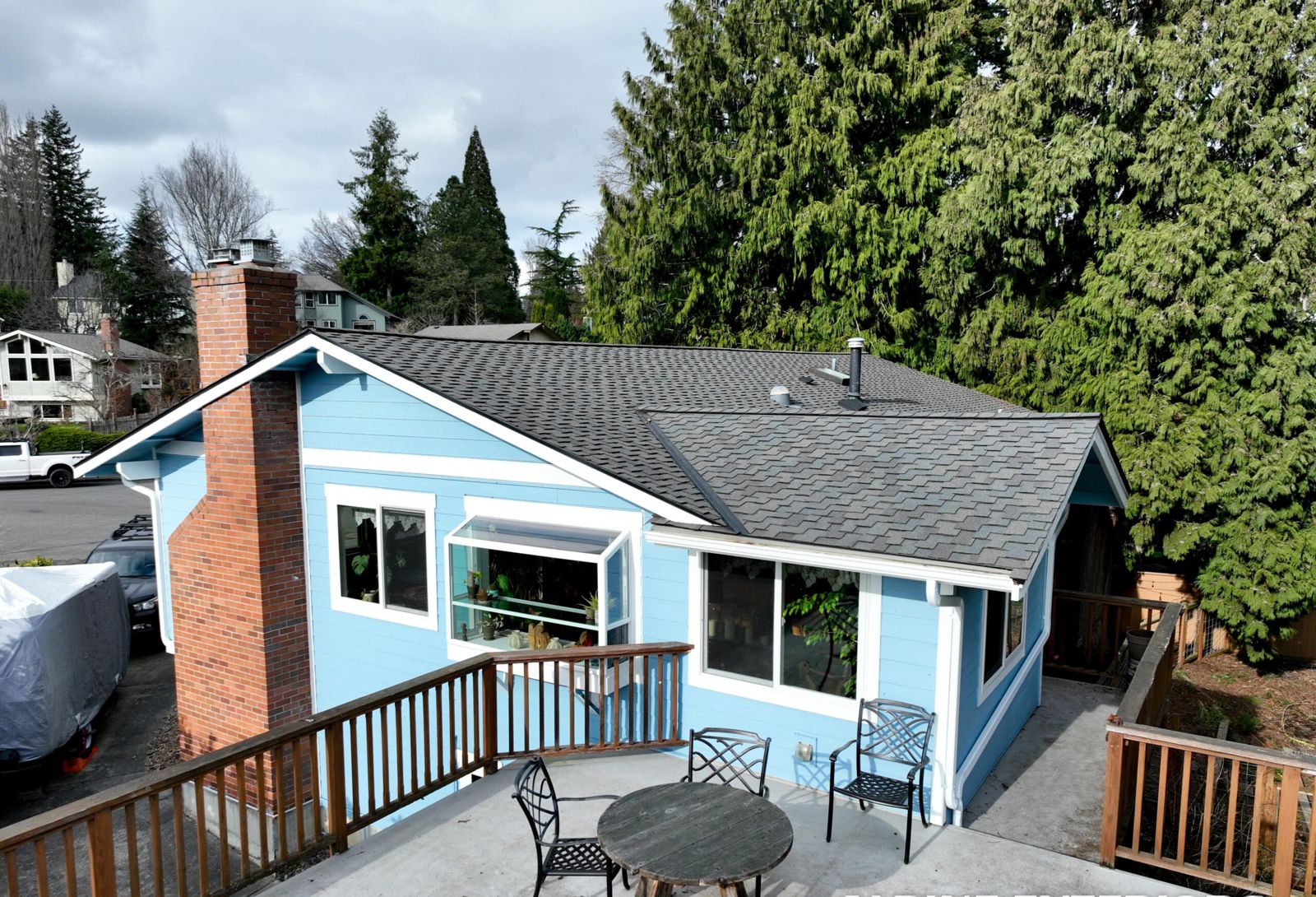
The repair-vs-replace math here isn't generic — it's shaped by a handful of local conditions that show up on almost every inspection Alpine Exteriors does in this part of Bellingham.
Start outside, not with a contractor call. Walk the perimeter of the house on a dry day and look specifically at the bottom two feet of each wall, the trim around windows and doors, and any spot where a deck, porch roof, or gutter downspout meets the siding — those transitions are where water concentrates. Note anything soft, discolored, bubbling, or visibly separated at seams.
Next, be honest about scope before you get a quote. A single soft board, a cracked fiber cement panel, or a few damaged vinyl pieces on one wall is a repair. Soft spots on multiple walls, siding that flexes or sounds hollow across a large area, or any sign that water has reached the sheathing (staining on interior walls, a musty smell in that room, insulation you can feel is damp through an outlet) points toward a section or full-elevation replacement, because the underlying wall assembly needs attention that a surface patch can't provide.
On the matching question, set expectations early. If your siding is wood or fiber cement and can be repainted after the repair, matching is straightforward — a like-for-like board swap plus a fresh coat solves it. If it's an older T1-11 profile, a discontinued vinyl color, or cedar shingles that have weathered unevenly for twenty years, an exact match may not be available, and the more realistic options are repainting/restaining the whole elevation for a uniform look, or accepting a visible but minor difference on a less prominent wall. Alpine Exteriors will tell you directly when an exact match isn't realistic rather than promising one and delivering a mismatch.
Get repairs done in the dry months when possible. Whatcom County's repair season is effectively spring through early fall — patching or replacing siding during the wettest stretch of winter risks trapping moisture behind new material before it's had a chance to dry out, which defeats the purpose of the repair.
Finally, get a second opinion if a contractor's first move is "replace everything." Sometimes that's genuinely the right call, especially on a 40-plus-year-old wall assembly, but it should be backed up by what they found when they opened up a damaged section, not offered as a default.
The test is whether the damage is isolated to the visible surface or has reached the sheathing behind it. A cracked panel, one rotted board, or a small area of failed caulk with no soft wood underneath is typically a spot repair. If probing with a screwdriver finds soft wood in multiple spots, if you can see daylight or feel dampness through an interior wall in that area, or if the damage tracks along an entire butt joint or corner, that's a sign water has gotten behind the cladding and a larger section — sometimes the whole wall — needs to come off so the sheathing and wrap can be inspected and repaired too.
In Roosevelt and much of low-lying Bellingham, prevailing weather pushes wind-driven rain in off Bellingham Bay and the Strait, so west- and northwest-facing walls take more direct, sideways rain than walls facing east or south. That exposure difference alone can explain why one elevation shows advanced rot or paint failure while the rest of the house looks fine, and it's worth telling your contractor which side of the house has been the problem area so they check the flashing and trim details there first.
Sometimes, but not always, and it depends heavily on the material. Standard-profile fiber cement and most wood siding can be matched closely because the board dimensions are common and repainting evens out any difference. Older T1-11 panels, discontinued vinyl colors, and cedar shingles that have weathered for a decade or more are harder — manufacturers change profiles and color runs over time, so an exact match may not exist. In those cases the honest options are repainting or restaining the affected wall for uniformity, or accepting a close-but-visible difference, usually placed on a less prominent elevation.
A small like-for-like patch that doesn't open the wall assembly generally doesn't trigger a code review. But any repair that removes siding down to the sheathing, or a larger replacement project, does need to account for current Washington State Energy Code requirements for insulation and moisture control behind the new siding — not just cosmetic matching in front of it. A licensed contractor should flag this as part of the scope rather than treating it as an afterthought.
If you're in Roosevelt or anywhere else in Bellingham, Ferndale, Lynden, Blaine, Birch Bay, Sudden Valley, or the islands and you're not sure whether that soft spot or cracked panel is a quick fix or something bigger, Alpine Exteriors will come look at it, tell you what's actually going on behind the siding, and give you a repair-or-replace recommendation you can trust — no upsell, no guesswork. Contact Alpine Exteriors, WA contractor license ALPINI751OW, to schedule an inspection.