
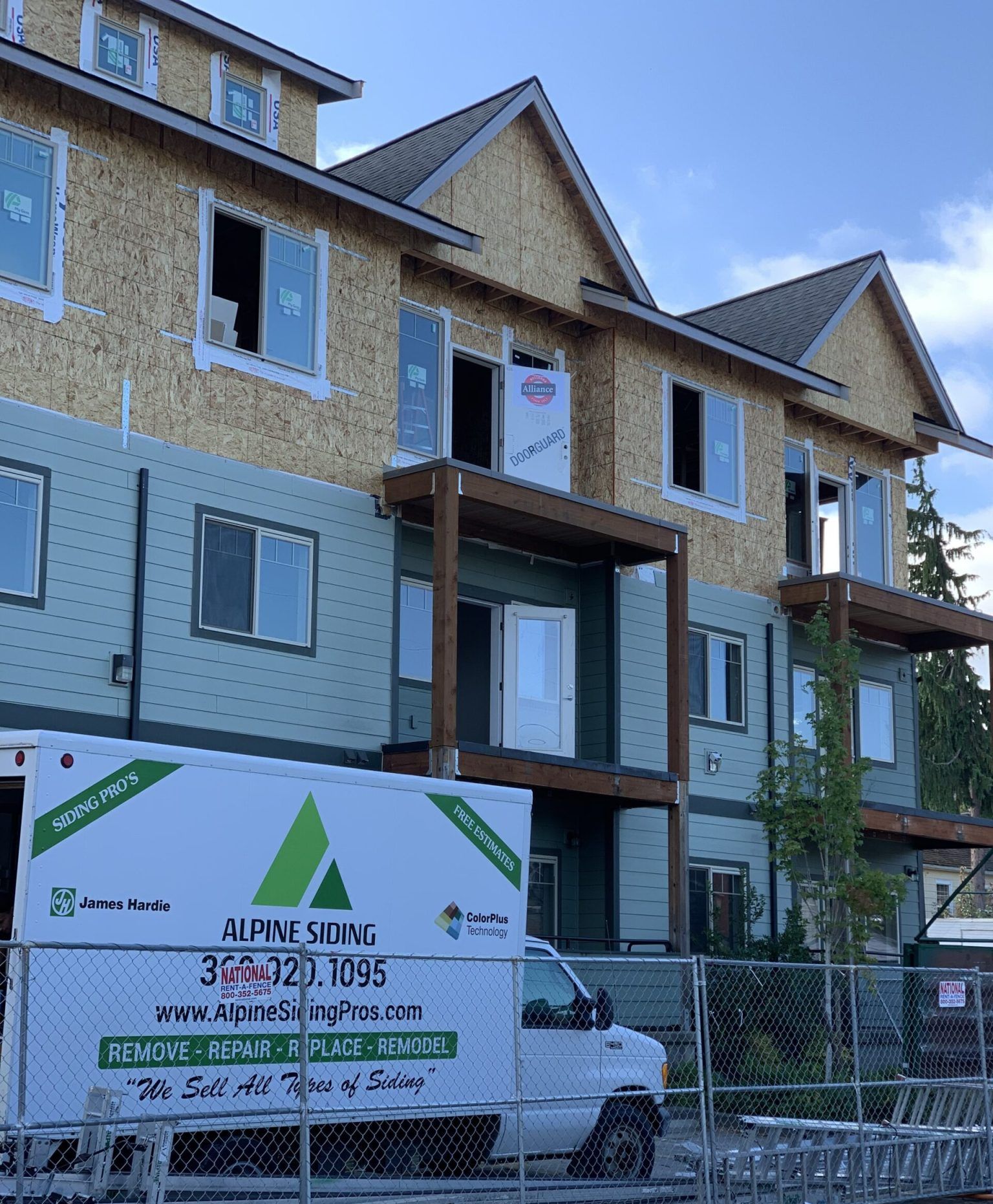
Deming sits back from the water, tucked into the Nooksack River valley along the Mount Baker Highway where the foothills start to rise and the fir and cedar canopy closes in overhead. That setting changes the siding-color conversation compared to Bellingham or Blaine. You're not fighting salt spray or wind-driven rain off Bellingham Bay and the Strait of Georgia the way a Birch Bay or Blaine home does — Deming is inland and shielded by terrain. What you are fighting is shade, standing moisture under a heavy tree canopy, and a wider swing between summer heat and winter cold as you gain elevation toward the foothills. Color choice here isn't just about curb appeal; it affects how visible algae streaking gets, how a finish weathers under filtered light instead of open sun, and how well a color still looks right in five or ten years once the trees have dropped another few seasons of needles and moss spores onto the wall.
For most Deming lots — wooded, set back from the road, often bordered by second-growth fir or pasture — the colors that hold up best combine two things: they don't show streaking and dirt the way pure white does, and they don't fade or chalk out under the on-and-off UV exposure that comes with a partially shaded lot. Based on what we see holding up on siding jobs around Whatcom County, these are the safer bets for a home in Deming's setting:
None of these are the only "right" answer — plenty of Deming homes wear a confident forest green or a classic cream well. The point of this guide is to walk through the honest trade-offs so you're picking with your eyes open, not just picking whatever's trending. Alpine Exteriors works on siding across Whatcom County, from Bellingham and Ferndale out to Deming and the Mount Baker corridor, and the pattern we see is consistent: colors chosen for the specific lot — its shade, its slope, its neighbors — outlast colors chosen from a showroom swatch alone.
Deming's climate and setting aren't identical to the rest of Whatcom County, so we weighed each color option against the conditions that actually show up on a foothill, tree-covered lot rather than a generic coastal checklist.
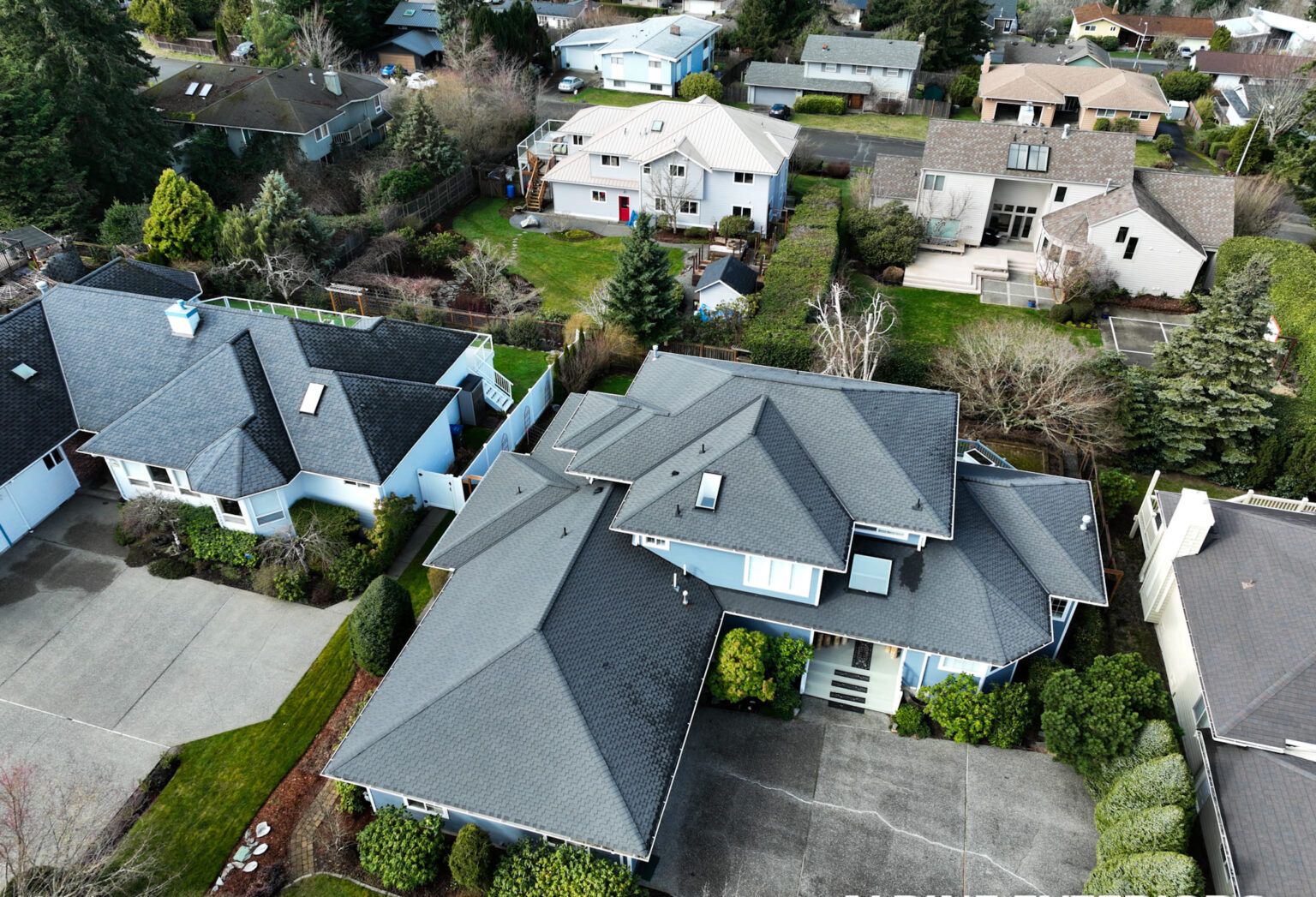
Here's how the realistic contenders stack up once you weigh them against a wooded, foothill-adjacent Whatcom County lot rather than a generic color guide.
Warm and "greige" grays are probably the safest all-around choice for Deming. They sit comfortably against a forest backdrop without disappearing into it, they don't show dust, pollen, or light green haze the way white does, and they pair easily with the black-metal roofing and cedar accents common on foothill homes. The honest downside: a true cool or "flat" gray can look sterile against a heavily wooded lot, and on the shadiest, dampest walls, gray can still develop a faint greenish moss tint over several years if gutters and downspouts aren't kept clear — it just shows less than it would on white.
These earthy, warm-neutral tones lean into the fact that most Deming homes are already surrounded by real wood — fir, cedar, alder along the river bottom. Used on fiber cement or engineered wood-look siding, they read as intentional and tend not to look dated the way a bold trend color can a decade later. The trade-off is that these tones can visually recede too much on a heavily treed lot, making the house harder to pick out from the road, and if you're using an actual wood or wood-look product, the color choice doesn't solve the underlying maintenance issue — wood-look siding in a shaded, rain-heavy setting still needs attention to caulking, flashing, and clearances from soil and plantings to avoid rot, regardless of what color sits on top of it.
Charcoal and black look striking against Deming's evergreen backdrop and have become a popular modern choice, especially as accents on garage doors, porch posts, or a partial feature wall. Used sparingly, they add real contrast without much downside. Used as a whole-house color, the drawbacks are more real here than in a sunnier climate: dark colors absorb more heat, which can stress some vinyl products over time and accelerates visible fading and chalking on fiber cement or wood-look siding, particularly on any wall that does get direct afternoon sun through the trees. Dark siding also shows water spotting, dust, and pollen streaks in a different, sometimes more noticeable way than lighter tones once it's had a few damp Whatcom County winters.
Classic and bright, off-white and cream read as clean and traditional, and they're an easy match with almost any trim or roof color. But this is the color family we'd flag hardest for a shaded Deming lot: light colors show algae and moss streaking the most visibly of any option, especially on north-facing walls or anywhere gutters overflow onto the siding below. On an open, sun-drenched lot this is manageable with an annual rinse; under heavy tree cover with limited direct sun to dry the wall between rain events, off-white can start looking tired faster than the maintenance schedule most homeowners actually keep up with.
A muted sage or forest green is one of the few colors that genuinely blends with — rather than just sits next to — Deming's tree line, and it can look excellent on a home tucked into a wooded lot. The catch is that green is harder to get right than gray or wood tone: too saturated and it can look dated within a few years as trends shift; too pale and it can wash out against the actual forest color behind it. Trim and accent color matter more here than with most other options, and if you're in a subdivision with covenants, green is more likely than a neutral to need a quick check against the approved palette.
A cooler blue-gray splits the difference between a coastal look and a straightforward neutral, and it reads well against a metal roof or stone accents. It's a reasonable pick for Deming, though it doesn't have a strong tie to the immediate landscape the way wood tones or sage do, and on a very shaded lot it can start to look a bit cold or flat rather than warm and inviting — something worth actually viewing on a large sample board on your own wall before committing to it for the whole house.
A few choices come up often in initial conversations that we'd steer people away from once we've actually walked a shaded Whatcom County foothill lot.
Most of Deming is unincorporated Whatcom County without a governing HOA, so many homeowners have full freedom to choose. That said, some newer platted developments and any property closer to a managed community like Sudden Valley do have color covenants, so it's worth pulling your plat documents or association rules before finalizing a color, even if you don't expect restrictions.
It depends on exposure more than the trees themselves. Walls that get filtered light and stay shaded most of the day generally hold color longer, since UV exposure is the main driver of fade and chalking. Walls that catch a few hours of direct afternoon sun through gaps in the canopy will still fade over the years, and darker, more saturated colors typically show that fade sooner and more visibly than lighter, muted tones.
Dark siding doesn't attract moss and algae more than light siding does — both are driven by moisture, shade, and organic debris like fir needles collecting in corners and gutters. What changes is visibility: algae streaking and green haze show up clearly against white or cream siding and are much less noticeable against gray, charcoal, or wood-tone finishes, even though the underlying moisture exposure is the same.
Factory-finished fiber cement, using a baked-on finish system, generally holds color longer and more evenly than field-painted wood or older vinyl products, particularly under the repeated wet-dry and freeze-thaw cycling Deming sees at its elevation. Vinyl is low-maintenance and never needs repainting, but darker vinyl colors can be more prone to warping under sustained heat than fiber cement. The right call depends on your budget, your home's exposure, and how much repainting you're willing to take on down the road — it's worth walking through with a contractor familiar with both.
Picking a siding color from a small swatch is a different exercise than seeing it against your actual tree line, roofline, and rock work in Deming's filtered light. Alpine Exteriors is a licensed Washington siding contractor (WA license ALPINI751OW) working throughout Whatcom County — Bellingham, Ferndale, Lynden, Blaine, Birch Bay, Sudden Valley, the islands, and out along the Mount Baker Highway into Deming. If you'd like to see full-size samples on your own wall before committing, or want a straight answer on how a color and material will actually hold up on your specific lot, reach out to Alpine Exteriors for a siding consultation.