
For most houses in and around Nooksack, fiber cement siding is the strongest overall choice, with engineered wood siding a close second for owners working with a tighter renovation budget. Both hold up well to the long wet season and to the freeze-thaw swings this end of the valley sees more often than Bellingham or the coastline, since Nooksack sits closer to the foothills below Mount Baker than most of the rest of Whatcom County. Steel siding deserves a look for shops, outbuildings, and homes on heavily treed lots where moss is a constant fight. Vinyl is still the least expensive option and works fine on some homes, but it has real limits once temperatures swing hard in the winter. Cedar and other real wood siding still make sense on older farmhouses and on homes where matching the original character matters, provided the owner is honestly willing to keep up with the maintenance. Alpine Exteriors works on all of these siding types across Whatcom County, and on Nooksack projects specifically we lean toward fiber cement or engineered wood more often than not, because the payoff from a slightly higher material cost tends to show up within the first few wet winters rather than decades down the road.
Nooksack's housing stock is a mix of older river-bottom farmhouses, mid-century ranch homes, and newer construction pushing up toward the foothills, so no single siding material is right for every property. We weighed each option against the conditions that actually matter here, not against a generic national checklist.
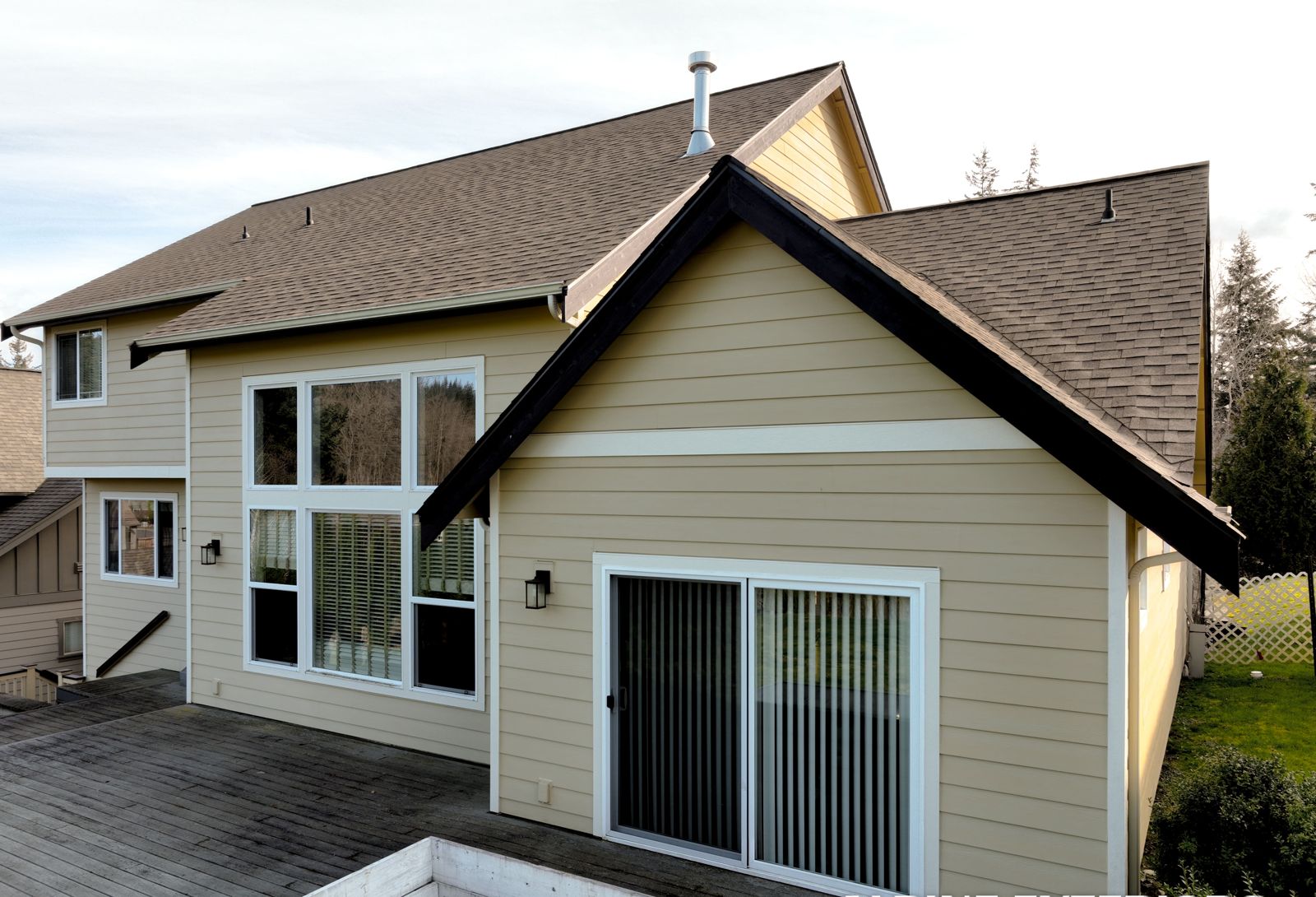
Fiber cement (the category that includes James Hardie-style lap and panel products) is a blend of cement, sand, and cellulose fiber pressed into planks or panels. It does not rot, it does not feed insects, and it holds paint or factory-applied color far longer than wood before it needs attention. For Nooksack's rain load, that rot resistance is the whole argument: fiber cement can stay wet against a wall for extended stretches without breaking down the way wood can. It also shrugs off the freeze-thaw cycling common in the foothill microclimate, since it is not absorbing and releasing moisture the way solid wood does. The downsides are real: it is heavier and more labor-intensive to install than vinyl or engineered wood, cuts generate silica dust that requires proper equipment, and it costs more up front, generally landing in the higher-middle range of installed siding costs. Factory-primed and pre-finished lines cut down on the repainting cycle, but caulked joints and cut ends still need periodic inspection.
Engineered wood products (LP SmartSide and similar strand-based panels and lap siding) use wood strands bonded with resin and coated with a resin-saturated overlay, which gives them much better moisture resistance than plain plywood or solid wood siding while keeping a similar look and a lighter installed weight than fiber cement. For a lot of Nooksack homes, especially remodels on older framing that cannot take on much extra dead load, this is a genuinely good middle-ground choice. It installs faster than fiber cement, costs less, and resists swelling and delamination better than the T1-11 plywood siding common on older homes in this area. The tradeoff is that engineered wood still depends heavily on correct flashing and caulking at every joint and penetration; if water gets behind a panel through a missed detail, it can wick and swell in a way fiber cement will not. It is a strong pick when it is installed carefully and a weak one when it is rushed.
Vinyl remains the most affordable siding option and it is not a bad choice on every home. Modern vinyl resists moisture completely, since it is a solid plastic that does not absorb water, and it needs no painting. The catch in a place like Nooksack is cold-weather brittleness: lower-grade, thinner vinyl can crack or shatter on a hard-frost morning if it is struck by a ladder, a branch, or hail, and panels can visibly warp if installed too tight against thermal movement. Thicker, higher-impact-rated vinyl performs better through the winter swings but narrows the price gap with engineered wood. Vinyl also does the least to hide an out-of-square or uneven wall, which matters on some of the older farmhouses in the area. It is a reasonable choice for a rental, a budget-driven remodel, or a home where the siding is not the main aesthetic statement, but it would not be our first recommendation as the best all-around fit for this particular climate.
Wood siding, especially cedar, is part of the visual character of a lot of older homes in Whatcom County, and on a farmhouse or a home with a lot of original wood trim, replacing it with something else can look out of place. Cedar has natural resistance to decay and insects compared to other softwoods, and it takes stain beautifully. But solid wood is the material most affected by everything this region throws at siding: persistent rain drives moisture into end grain and behind loose boards, shaded and low-airflow walls grow moss and algae faster on wood than on any other material, and the freeze-thaw cycling near the foothills accelerates checking and splitting over time. Wood siding needs a real maintenance commitment: recaulking, restaining or repainting on a multi-year cycle, and prompt repair of any board that starts to cup or rot before it spreads. For owners who want the look and are willing to keep up with it, it is a legitimate choice. For owners who want to install it and forget it, it usually is not.
Metal siding, typically a painted steel panel system, is worth considering more often than people expect, particularly for shops, barns, additions, and homes on shaded, moss-prone lots. It does not rot, does not feed insects, and resists algae and moss growth better than any material on this list since there is no organic surface for spores to take hold on. It also handles freeze-thaw cycling without issue. The downsides are cosmetic and practical: it reads as more of a modern or agricultural look than a traditional lap-siding profile, it can dent from a ladder or a thrown branch, and on a full residential remodel it tends to cost more than vinyl or engineered wood, running closer to or above fiber cement depending on the panel profile and gauge chosen. We see it most often paired with fiber cement as an accent rather than used across an entire house.
| Material | Rot/moisture resistance | Freeze-thaw performance | Maintenance | Relative installed cost |
|---|---|---|---|---|
| Fiber cement | Excellent | Excellent | Low | Higher-middle |
| Engineered wood | Good, detail-dependent | Good | Low-moderate | Middle |
| Vinyl | Excellent (does not absorb water) | Fair, thickness-dependent | Very low | Lower |
| Cedar/wood | Fair, needs upkeep | Fair | High | Middle-higher |
| Steel/metal | Excellent | Excellent | Low | Higher |
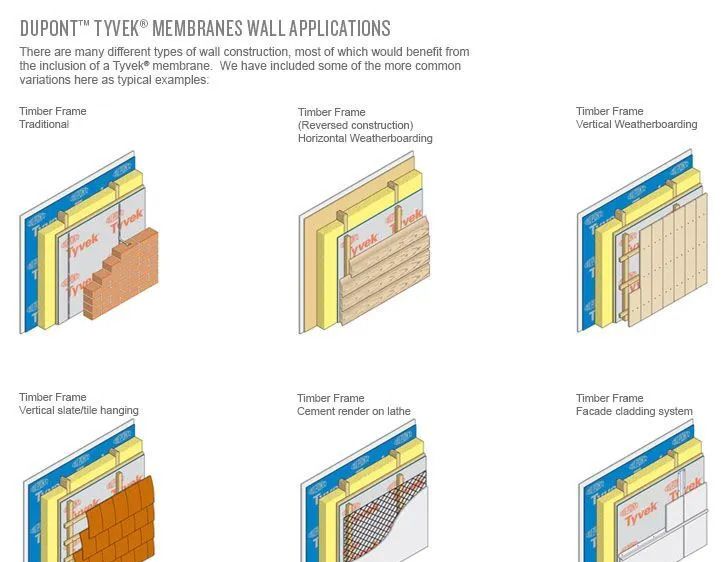
A handful of choices cause the repeat problems we see most often on Nooksack siding calls. The first is stucco or exterior insulation finish systems, which were never designed for a climate this consistently wet; without a drainage plane and meticulous detailing they trap moisture against the sheathing, and repairs are difficult to blend in. The second is reinstalling or patching old T1-11 plywood siding rather than replacing it outright once it starts to show soft spots, since plywood siding delaminates from the inside and the damage is usually further along than it looks from the driveway. The third is any siding installed without a drainage gap or rainscreen behind it, siding nailed flat against the weather-resistive barrier with no way for incidental moisture to escape; in a region with this much rainfall, that detail is often the difference between siding that lasts decades and siding that fails behind the surface in under ten years. Last, we would steer most owners away from the thinnest, lowest-cost vinyl products in this specific area, since the cold-weather brittleness shows up exactly when a branch comes down in a winter windstorm.
It depends heavily on the size of the home, how much of the existing siding and sheathing needs to come off, and how much trim, window flashing, and repair work is involved once the walls are opened up. As a rough guide, vinyl tends to sit at the lower end of installed siding costs, engineered wood and cedar in the middle, and fiber cement and steel toward the higher end, but the only way to get a real number is a walk-around estimate, since older Nooksack homes often need more sheathing repair than a newer build.
Not necessarily, but it is not our first recommendation here. Vinyl handles moisture well since it does not absorb water, but thinner, lower-grade panels can become brittle and crack during hard frosts or when struck by debris in a winter storm, which happens more often in this part of the valley than closer to the water. If a homeowner wants vinyl, choosing a thicker, higher impact-rated product makes a real difference.
Trimming back overhanging branches to improve airflow and sun exposure on shaded walls helps more than any siding choice by itself, since moss and algae need shade and standing moisture to take hold. Beyond that, fiber cement and metal siding resist regrowth better than wood because there is no organic surface for spores to establish on, and a properly vented rainscreen gap behind the siding keeps the wall drier overall, which also slows moss growth.
In most cases a straightforward re-side that does not touch structural framing is a lighter permitting process, but any project involving new sheathing, structural repairs, or window relocation typically requires a building permit, and all new siding assemblies still need to meet the current Washington State Energy Code for the wall assembly and weather-resistive barrier. We pull whatever permits a given project needs before work starts so an owner never has to sort that out mid-project.
Choosing between fiber cement, engineered wood, vinyl, cedar, and steel comes down to the specific house: its age, its exposure, how shaded the lot is, and what the owner wants to maintain over time. Alpine Exteriors works on siding projects throughout Whatcom County, from Bellingham and Ferndale out to Lynden, Blaine, Birch Bay, Sudden Valley, and Nooksack, and we are happy to walk a property, point out where the existing siding is failing, and lay out honest options rather than pushing one material for every home. Alpine Exteriors holds Washington contractor license ALPINI751OW; reach out to schedule a siding assessment and get a written estimate for your home.