
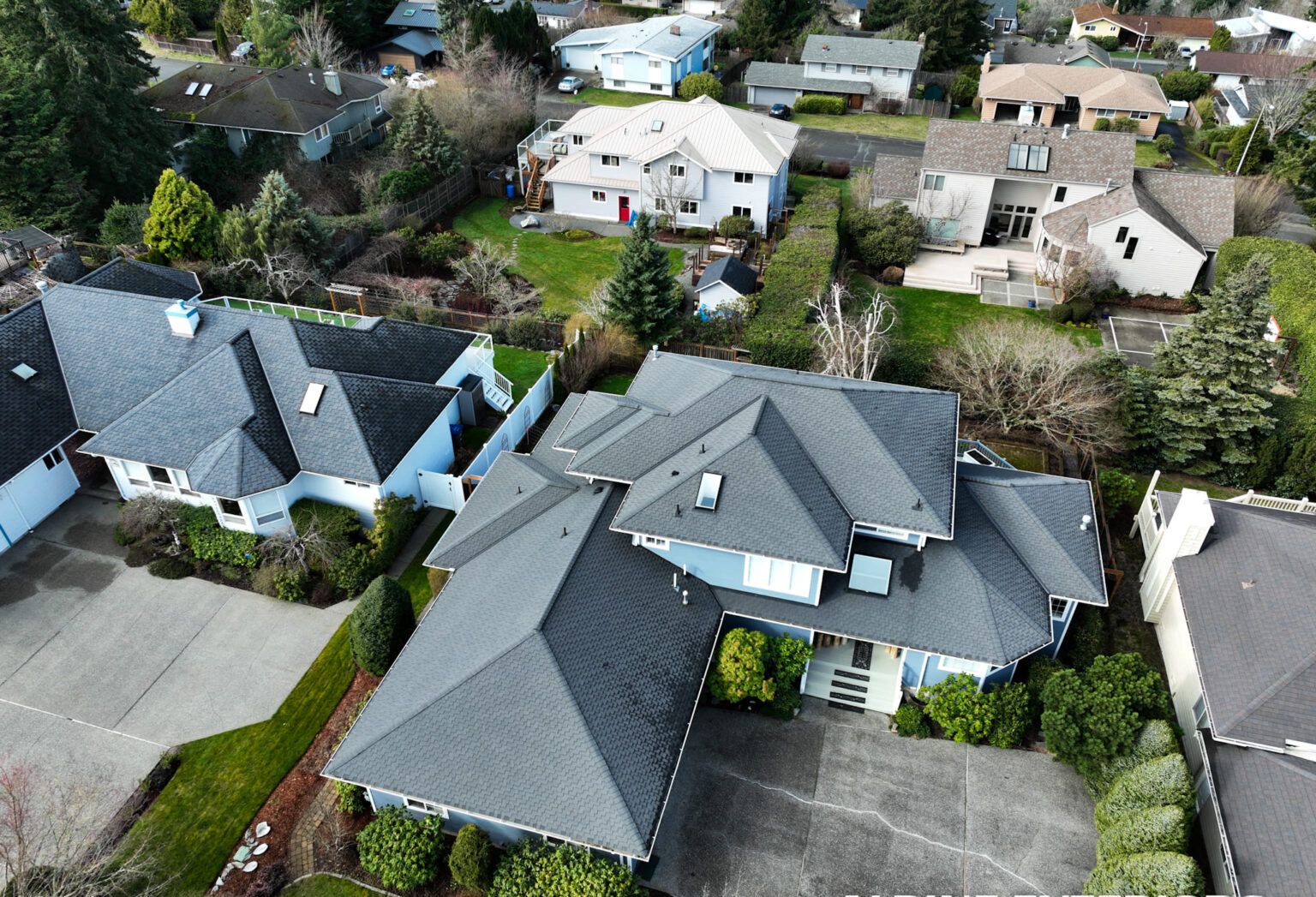
Cordata sits in north Bellingham along the Guide Meridian and Cordata Parkway corridor, and the housing stock reflects that growth pattern: a good number of 1970s-90s ranch and split-level homes on the older streets closer to the Cordata neighborhood core, mixed in with newer subdivisions and townhome clusters built from the 2000s onward near Bellingham Technical College and the I-5 interchange. That range matters when you're picking siding, because a 45-year-old ranch with original wood siding and a 12-year-old townhome with factory-primed fiber cement are starting from very different places. What doesn't change much block to block is the weather: Cordata gets the same steady marine rain, low winter sun angle, and humid air that the rest of the Puget Sound lowlands get, plus wind-driven rain that rolls in off Bellingham Bay and the Strait of Georgia during fall and winter storms. This page walks through what actually holds up here, what doesn't, and why — based on what we see replacing siding on homes across Bellingham, Ferndale, Lynden, Blaine, Birch Bay, Sudden Valley, and the islands.
For most Cordata homes, fiber cement siding and engineered wood siding (LP SmartSide-type products) are the two strongest all-around choices. Fiber cement holds up the best against moisture, moss, and UV fading over the long haul and needs the least intervention once it's installed correctly. Engineered wood gives you a similar look and easier, lighter installation at a somewhat lower material cost, with the tradeoff that its factory treatment and caulking need to stay intact to keep water out. Vinyl siding remains a reasonable option on a tighter budget or on rental and starter homes where lowest lifetime maintenance matters more than premium appearance, as long as it's installed with proper drainage behind it. Cedar siding still has a real place here — it's part of the region's architectural character, and plenty of Cordata and Sudden Valley homes wear it well — but it is the option that most rewards (or punishes) how well it's maintained. None of these is universally "best"; the right pick depends on your home's exposure, your budget, and how much upkeep you actually want to do.
We're not ranking these on looks alone. The criteria that actually separate a siding job that lasts twenty-plus years here from one that needs premature repair are:
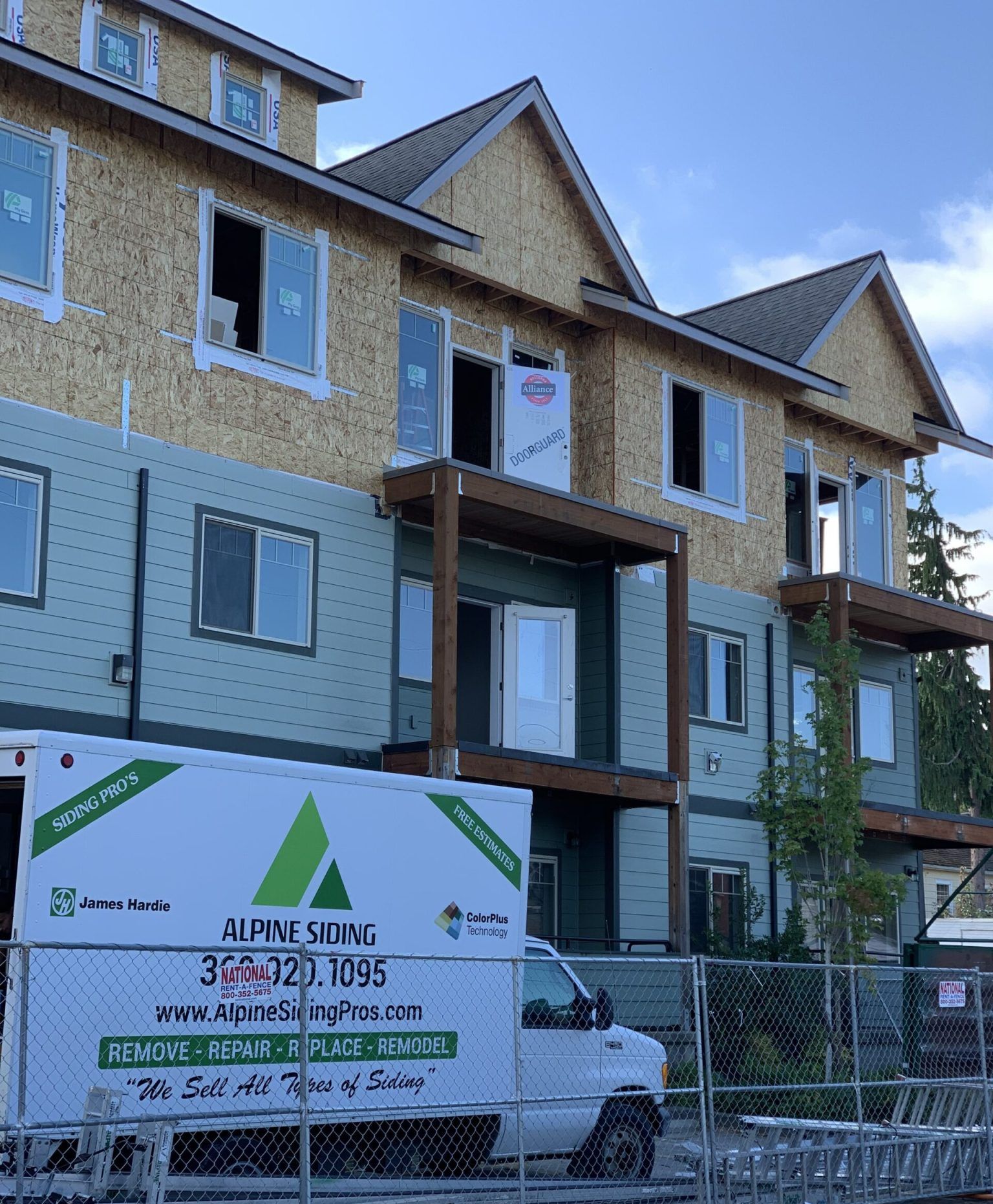
Fiber cement is a blend of cement, sand, and cellulose fibers, factory-primed or pre-finished, and it's become the default recommendation for most re-sides we do in this part of Whatcom County. It doesn't rot, it resists moss and algae far better than raw wood, and it holds paint or factory color for a long time without the fading you see on cheaper vinyl. It's heavy and needs to be installed by crews who know how to cut, nail, and caulk it correctly — done wrong, you get cracking at the nail lines and moisture intrusion at poorly sealed cuts, which is a real risk if it's installed by someone unfamiliar with the product. It's also one of the pricier options up front. On the plus side, once it's up with a proper rainscreen gap behind it, it's genuinely low-maintenance for a decade or more between repaints, and it stands up well to the wind-driven rain that hits west-facing walls near the bay.
Engineered wood siding is strand-based wood treated with resins and zinc borate for rot and insect resistance, then factory-primed. It looks close to traditional lap or panel wood siding, it's lighter and easier to install than fiber cement, and it typically costs somewhat less. The catch is that its rot resistance depends entirely on that factory treatment and finish staying intact — any cut edge, nail hole, or seam that isn't properly primed and caulked becomes a weak point, and in a climate this wet, water finds those weak points. We've replaced engineered wood siding on homes where the field cuts were never sealed and rot set in within five or six years, right alongside installations from the same era that are still holding up fine because the crew took the time to treat every cut end. It's a good product when installed carefully; it's a poor product when it isn't.
Vinyl siding is inexpensive, doesn't rot, never needs painting, and is genuinely fine for a lot of Cordata's townhomes and starter properties. Its real weaknesses here are less about rain and more about installation quality: vinyl needs room to expand and contract with temperature swings, and it needs a drainage plane behind it, not just a direct nail-up over old sheathing. Cheap, thin vinyl can also oil-can (ripple) and crack at fastener points over time, and its seams and J-channels are common spots for moisture to sneak behind the cladding if they weren't lapped correctly. It won't match the look of fiber cement or cedar up close, and it's the option most likely to look dated after fifteen or twenty years. For a budget-conscious re-side where lowest maintenance is the priority, it's a legitimate choice — just not a premium one.
A lot of the character in older Cordata and Sudden Valley neighborhoods comes from natural wood siding, and there's nothing wrong with keeping or replacing it with more cedar if you like the look and are willing to stay on top of it. Cedar has natural rot and insect resistance and takes stain beautifully, but it is the highest-maintenance option on this list in a climate that stays wet for months at a time. It needs to be re-stained or re-sealed every few years, checked for moss on shaded walls, and kept well back-ventilated so trapped moisture doesn't rot it from behind. Skip the maintenance for a decade and you'll likely be looking at board replacement, not just a repaint. It's also usually the most expensive option per square foot for quality material and skilled installation.
Metal (steel or aluminum) panel siding shows up occasionally on shop buildings and some modern-style homes around Whatcom County, and it holds up extremely well against moisture, moss, and rot — water simply doesn't have anything to soak into. Its downsides here are cosmetic and practical rather than weather-related: it dents, it can be noisy in heavy rain unless properly insulated and furred out, and it's a distinct architectural look that doesn't suit every home style, especially on traditional ranch and split-level houses that make up a lot of Cordata's older stock. It's worth considering for a modern remodel or an accent application, less so as a whole-house match for a conventional 1980s ranch.
Stucco and EIFS (synthetic stucco) systems are a poor match for this climate unless installed with a properly detailed rainscreen and drainage plane, which is often skipped or done incorrectly on older installations. Without that drainage layer, any water that gets behind the surface — through a hairline crack, a poorly flashed window, or wind-driven rain off the Strait — has nowhere to go, and it can sit against the sheathing for months given how little Whatcom County dries out between fall and spring. We see this show up as hidden rot behind stucco walls on older homes far more often than behind properly installed lap siding. Also avoid any siding installation, in any material, that skips the rainscreen gap or house wrap detailing to save a little labor time — that gap is what lets incidental moisture drain and the wall assembly dry, and it matters more here than in drier climates. Finally, be cautious with dark-colored vinyl on south- and west-facing walls; darker vinyl absorbs more heat and is more prone to warping over time, which becomes a bigger issue as summer afternoon sun angles increase.
Yes — the material matters less than the installation detailing in an absolute sense, but some materials make good detailing easier and more forgiving. Fiber cement and correctly installed vinyl tolerate the occasional missed maintenance cycle better than cedar or poorly sealed engineered wood, which is worth factoring in alongside how the siding looks.
Most re-side and new-construction projects now need to meet the Washington State Energy Code's continuous insulation and building envelope requirements, which often means adding a layer of rigid insulation under the new siding rather than just installing cladding over the existing wall. This is worth planning for early, since it affects window and trim depth, not just the siding material itself.
It depends on the material and how long it's been left. On fiber cement or properly sealed engineered wood, surface moss is mostly cosmetic and can usually be soft-washed off. On wood siding or anywhere moisture is staying trapped behind the cladding, persistent moss is often a sign that a wall isn't drying properly between rain events, which is worth having looked at before it becomes a rot issue.
Fiber cement and metal siding, installed correctly, commonly last several decades with periodic repainting. Engineered wood and quality vinyl typically run in the range of two to four decades depending on exposure and upkeep. Cedar's lifespan varies the most and depends heavily on how consistently it's maintained — well-kept cedar can last a long time, neglected cedar much less.
Every street in Cordata has its own mix of sun exposure, tree cover, and wind exposure off the bay, and the right siding for a shaded split-level near the wetlands is not always the right siding for an open lot near the parkway. Alpine Exteriors is a licensed Washington contractor (license ALPINI751OW) working throughout Whatcom County — Bellingham, Ferndale, Lynden, Blaine, Birch Bay, Sudden Valley, and the islands — and we're glad to walk your property, point out where moisture or moss is already a problem, and give you a straightforward comparison of the options above for your specific home before you commit to a material. Reach out to Alpine Exteriors to schedule a look at your siding and get a cost range based on what your house actually needs.