
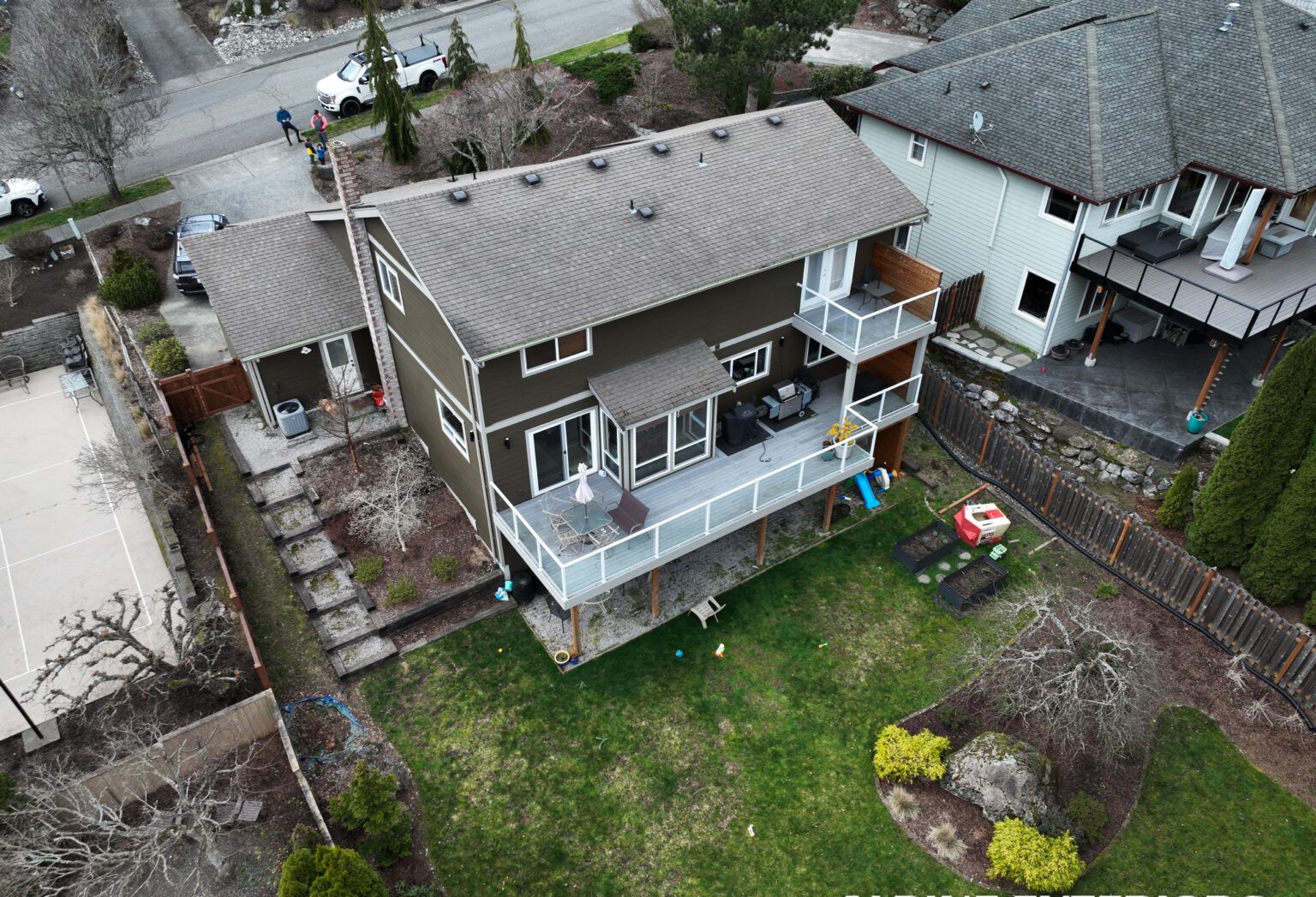
If you own a home in York — or anywhere in this pocket of Bellingham between Lake Whatcom's foothills and the salt air rolling off Bellingham Bay — the siding that holds up best over the long run is James Hardie fiber cement. That's not a marketing line; it's what we keep coming back to after years of tearing old siding off York homes and seeing exactly what failed and why. Fiber cement doesn't rot, it doesn't feed moss the way wood fiber does, and it shrugs off the wind-driven rain that comes sideways off the water during a fall or winter storm. For homeowners who want a lower-maintenance alternative and are willing to trade off some of fiber cement's rigidity and weight, LP SmartSide engineered wood is a reasonable second choice, particularly on additions or garages where matching an existing profile matters more than getting fifty years out of the wall. Vinyl and unprotected wood are both a mismatch for this climate, and we'll explain exactly why below rather than just asserting it.
Alpine Exteriors has worked on siding jobs across Whatcom County — Bellingham, Ferndale, Lynden, Blaine, Birch Bay, Sudden Valley, and the islands — long enough to have opinions grounded in call-backs, not just install day. This page lays out how we judge siding products for a York home specifically, what each option actually costs you in trade-offs, and what a correct installation looks like once the product choice is settled.
York sits close enough to Bellingham Bay that salt-laden air and driving rain are a daily fact of building envelope life, not an occasional event. A few miles inland toward Lake Whatcom and Sudden Valley, homes also deal with freeze-thaw cycling through the colder months, plus deep shade under conifers that keeps north-facing walls damp for days after a storm passes. Any siding recommendation that ignores those specifics is generic advice dressed up as local expertise. Here's what we actually weigh:
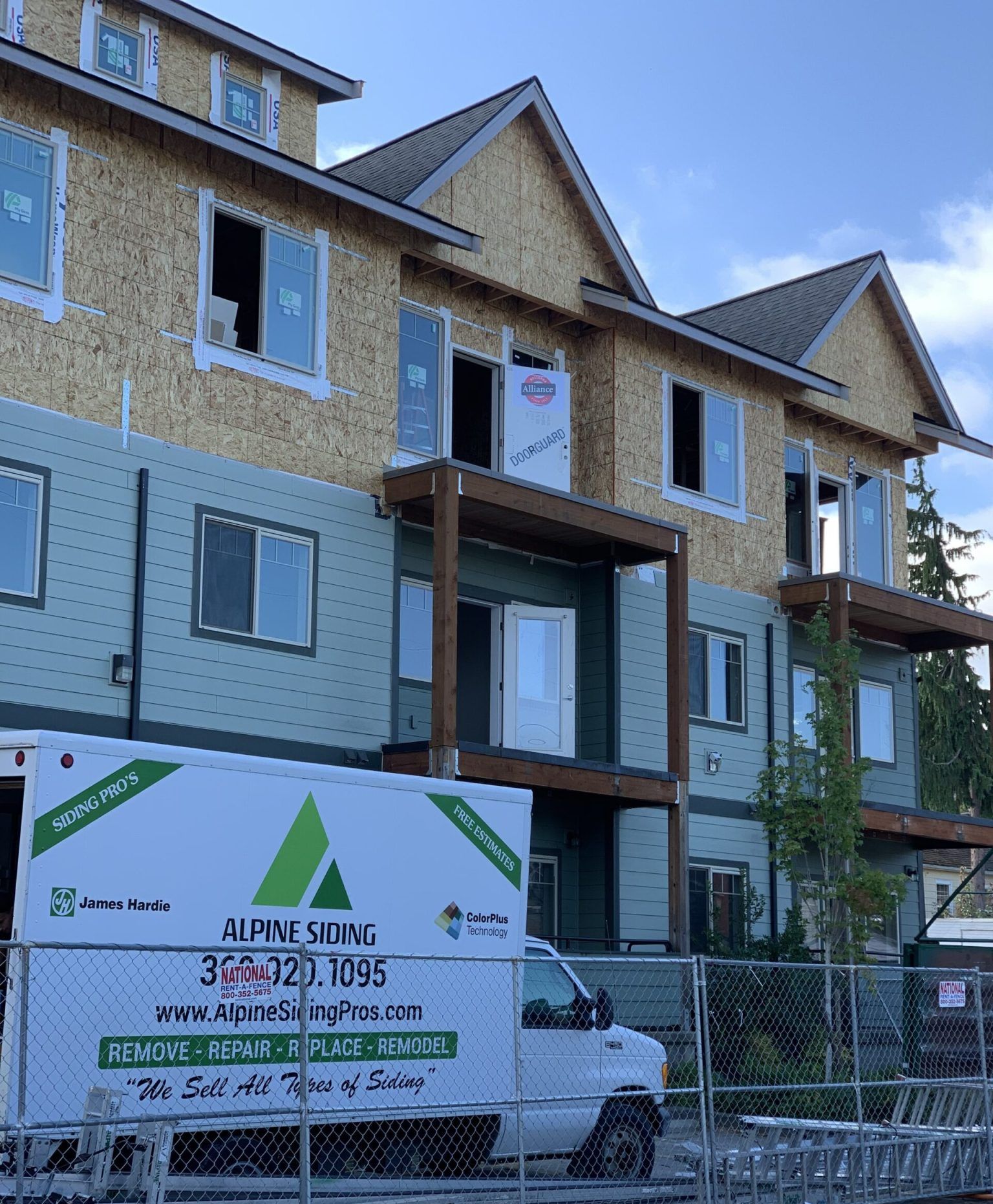
James Hardie fiber cement is a blend of Portland cement, sand, and cellulose fiber, engineered specifically for regional climates — Hardie sells a \"HZ5\" formulation intended for colder, wetter climates like ours, which is what we install on nearly every York project. It doesn't have organic wood fiber for moss and mildew to feed on the way cedar or engineered wood does, it doesn't absorb bulk water the way OSB-based products can, and once it's factory-primed and field-painted it holds a paint film far longer than wood because the substrate underneath isn't expanding and contracting with every wet-dry cycle.
Pros:
Cons:
What separates a correct James Hardie fiber cement installation from a mediocre one usually comes down to details most homeowners never see: starter strips set at the right height, minimum 1/4-inch gaps at butt joints filled with the manufacturer's sealant rather than caulked shut, and fasteners driven flush rather than overdriven (which cracks the board's face over time and lets water track behind it). We follow Hardie's published fastening and clearance specifications on every job, not because it's required to keep the warranty valid — though it is — but because that's genuinely what makes the wall perform for thirty-plus years instead of ten.
LP SmartSide engineered wood siding is strand-based, resin-treated, and zinc-borate protected against fungal decay and insects. It's lighter and easier to install than fiber cement, which can lower labor cost, and it takes paint and stain in a way that reads closer to real wood grain than fiber cement does if that traditional look matters to you.
Pros:
Cons:
We'll install SmartSide when a homeowner has a specific reason to want it — matching an existing product on an addition, or a budget that needs to come down from a full Hardie re-side — but for a primary York home exposed to Bellingham Bay's salt air and driving rain, fiber cement is the more durable choice over a 30-year horizon.
Vinyl is the least expensive option per square foot, and it's genuinely low-maintenance in the sense that it never needs painting. That's the entire case for it. In a marine climate with wind-driven rain and real temperature swings between summer and winter, vinyl has real limitations: it expands and contracts more than fiber cement or wood, which opens gaps at trim joints and corners over time; it can crack in a hard freeze; and because it's a cladding rather than a water-managed system in the way a correctly detailed Hardie or SmartSide wall is, a lot of vinyl's actual weather resistance depends entirely on the house wrap and flashing underneath it — which installers sometimes shortcut precisely because vinyl is priced and sold as a budget product.
We don't install vinyl siding on York or broader Whatcom County homes. That's a deliberate choice, not an oversight — it's simply not the product we'd want covering our own walls through a Pacific Northwest winter, and we'd rather turn down that work than install something we don't believe will perform.
Trim is worth its own mention because it fails faster than field siding on most York homes we've torn into. Builders have historically used finger-jointed primed spruce and cedar trim boards around windows, doors, and corners because they're inexpensive and easy to cut on site. The problem is that primed spruce and cedar trim, like any wood product, needs field-applied paint on every cut end and exposed face promptly after installation — skip that step, or let a coating thin out over a few winters, and the end grain wicks water straight into the board. Fiber cement trim alternatives — Hardie's own trim line, along with competitor products like Allura primed spruce-look boards and Cemplank Allura primed trim — solve that problem the same way Hardie siding does, by removing the organic wood fiber that rot needs to take hold. Worth knowing: some of these trim products carry their own finish warranty separate from the siding manufacturer's warranty, and that coverage is often conditioned on the same prompt field-applied paint requirement as wood trim, so it's not automatically maintenance-free just because it's fiber cement — read what you're actually buying.
A few patterns show up over and over on York tear-offs we've done, and they're worth naming specifically:
Choosing the right product only gets a York home part of the way there — a correct installation is what actually determines whether that product performs for thirty years or ten. Before new siding goes up, the existing substrate has to be inspected and, where necessary, repaired: soft or delaminated sheathing gets replaced, not covered over, and any framing that's already showing moisture damage gets dried out and addressed before it's sealed behind a new wall. Skipping that step is the single most common reason a \"new\" siding job fails early — the siding itself was never the problem.
From there, house wrap and flashing function as one continuous system, not separate steps. Window and door flashing has to integrate with the wrap using proper shingle-lap sequencing so water sheds outward at every layer, and any penetration — vents, hose bibs, light fixtures — needs its own flashing detail rather than a bead of caulk as an afterthought. Fastening comes next: for fiber cement specifically, that means the manufacturer's specified nail type, spacing, and depth, with butt joints gapped correctly and sealed with a flexible sealant rather than caulked tight. Corner boards, trim joints, and transitions get detailed last, and this is where a lot of the visible quality difference between contractors shows up — tight, consistent reveals and clean caulk lines aren't just cosmetic, they're evidence the crew paid attention to the parts that keep water out.
| Siding Product | Best Fit For | Watch-Outs in York's Climate |
|---|---|---|
| James Hardie fiber cement (lap, shingle, panel) | Primary siding on most York homes; waterfront and salt-air exposure | Higher upfront cost; needs correct fastening and gapped joints to perform as designed |
| LP SmartSide engineered wood | Additions, outbuildings, budget-conscious re-sides | Weaker than fiber cement on shaded north-facing walls; cut ends need immediate sealing |
| Vinyl siding | Lowest upfront budget only | Not installed by Alpine Exteriors in this climate; performance depends heavily on wrap and flashing quality underneath |
| Primed spruce/cedar or fiber cement trim (Hardie, Allura, Cemplank) | Window, door, and corner trim paired with fiber cement field siding | Wood trim needs prompt field-applied paint on cuts; some fiber cement trim has its own separate finish warranty terms |
We start with a walk-around inspection that looks at the whole envelope, not just the siding surface — soffits, trim, window flashing, and any spots where past moisture damage has already shown up as staining, soft wood, or bubbled paint. From there we put together a scope that separates true replacement needs from cosmetic ones, so a homeowner isn't paying to re-side a wall that only needed trim repair. Tear-off happens in sections rather than stripping the whole house at once where practical, which keeps the home weather-protected through a Whatcom County forecast that can turn on short notice. New house wrap and flashing go on as one integrated system before a single course of siding is hung, substrate repairs happen before new material covers them, and every fastening and clearance detail follows the manufacturer's published specifications rather than \"close enough\" field judgment. We finish with trim, caulking at trim joints, and a final walk-through against the original scope.
We don't publish flat per-square-foot prices because home size, wall complexity, and existing condition genuinely move the number more than the product line does. That said, here's what actually drives cost on the jobs we quote in York and nearby Bellingham neighborhoods:
| Factor | Why It Matters |
|---|---|
| Home size and wall complexity | More corners, dormers, and roof-to-wall intersections mean more flashing detail and cut waste, which adds labor beyond the raw square footage |
| Full tear-off vs. overlay | Removing old siding down to the sheathing costs more up front but lets us actually inspect and fix substrate issues; overlaying hides problems rather than solving them |
| Substrate and moisture damage repair | Rotted sheathing or framing found during tear-off adds cost, but repairing it now is far cheaper than a second re-side in five years |
| Trim scope | Full trim replacement in fiber cement or fresh primed wood costs more than reusing sound existing trim, but mismatched materials age differently |
| Siding profile and product | Fiber cement generally costs more installed than SmartSide or vinyl, offset by a longer service life and less frequent repainting |
| Access and site conditions | Steep lots, waterfront setbacks, and mature landscaping around Sudden Valley or Lake Whatcom properties can add staging and protection time |
As a general range for a full tear-off and James Hardie fiber cement re-side on a typical York-area single-family home, most projects land somewhere in the tens of thousands of dollars, with the specifics — size, trim scope, and substrate condition — swinging that number meaningfully in either direction. We'd rather walk a property and give a real number than guess in print.
James Hardie backs its fiber cement products with a manufacturer's non-prorated limited warranty on the material itself, separate from whatever labor or workmanship warranty the installing contractor provides — and those two warranties are not the same thing, which is worth asking about directly before hiring anyone. Alpine Exteriors, WA contractor license ALPINI751OW, stands behind our installation labor on top of the manufacturer coverage, because a warranty on the board doesn't help if the failure was in how it was hung. Over a full ownership cycle, the long-term value case for fiber cement comes down to fewer repaint cycles, no rot repair, and a material that isn't degrading the wall assembly behind it the way a failed wood or vinyl installation can.
Not every siding problem calls for a full re-side. Isolated soft spots near a downspout, a handful of cracked boards from storm debris, or failed caulk at a few trim joints are usually repair-scale problems. Full replacement becomes the right call when moisture damage shows up in multiple, unrelated areas of the house — a sign the underlying wrap and flashing system has failed broadly rather than in one spot — when siding is buckling, delaminating, or visibly separating from the wall across large sections, or when a home is old enough that the original siding has simply outlived its service life and repairs would just be chasing the next failure. A straightforward inspection is usually enough to tell which situation you're in, and it's worth getting one before assuming either way.
Whatcom County's microclimates genuinely differ block to block — a York lot two streets from Bellingham Bay deals with more direct salt air and wind-driven rain than one set back near the Lake Whatcom foothills, where freeze-thaw and deep shade under conifers matter more. A crew that already works this specific area has already seen how each product performs against those conditions locally, not in a generic climate zone from a manufacturer's install guide. That local pattern recognition is what catches problems — a marginal clearance at grade, a shaded wall section that needs extra flashing attention, trim that's due for repainting before it's obviously failing — before they turn into moisture damage behind the wall. We've done that work across Bellingham, Ferndale, Lynden, Blaine, Birch Bay, Sudden Valley, and the islands, and York is well within that footprint.
Fiber cement doesn't have organic wood fiber for moss, algae, and mildew to feed on, it holds up to wind-driven rain and salt air better than wood-based products, and it holds paint substantially longer than cedar or SmartSide. Vinyl is cheaper but manages water poorly compared to a correctly lapped fiber cement wall and expands and contracts more through our temperature swings; wood-based products, including SmartSide, need more diligent maintenance on shaded or exposed walls to avoid moisture getting into the substrate. Fiber cement isn't the cheapest option, but for a primary home in this climate it's the one that costs the least over a 30-year ownership horizon once repainting and repair cycles are factored in.
It starts before new siding ever goes up: substrate inspection and repair, then house wrap and flashing installed as one integrated water-management system rather than separate steps. Fastening has to follow the manufacturer's specified nail type, spacing, and depth, joints need proper gapping and sealant rather than caulk alone, and clearance at grade and roof intersections has to meet the published minimums — not just look close enough. Every one of those steps matters more to long-term performance than the siding product choice itself.
Because the right detailing changes block by block. A lot closer to Bellingham Bay needs more attention to salt air and wind-driven rain exposure; a shaded, tree-covered lot near Sudden Valley needs more attention to how slowly a north-facing wall dries out after a storm. A crew with local install history has already seen which details cause callbacks in this specific area and builds around them from the start, rather than applying a generic installation approach and hoping it holds up.
Moisture damage showing up in multiple, unconnected areas of the house is the clearest signal, since it usually means the wrap and flashing system has failed broadly rather than in one isolated spot. Widespread buckling, delaminating, or separating boards, along with siding that's simply old enough to have outlived its expected service life, also point toward full replacement. A handful of cracked boards or a failed caulk joint or two, by contrast, are usually repair-scale problems that don't require re-siding the whole house.
If your siding is showing its age, or you're planning ahead of a sale or a long-term hold, Alpine Exteriors will walk your property, tell you honestly whether you're looking at repair or full replacement, and put together a scope built around James Hardie fiber cement detailed correctly for Whatcom County's salt air, driving rain, and long moss season. We serve York and the rest of Bellingham along with Ferndale, Lynden, Blaine, Birch Bay, Sudden Valley, and the islands — reach out for a walk-through and a written estimate, WA contractor license ALPINI751OW.