

Sunnyland sits in one of the greener, more tree-shaded pockets of Bellingham, wedged between the Lake Whatcom foothills and the flats that run down toward the bay. That setting is part of what makes it a nice place to live, and it's also exactly why siding color deserves more thought here than a quick trip to the paint aisle. A color that looks sharp on a sunny showroom sample can turn patchy, streaked, or oddly cold-looking on a house that spends eight months of the year under low cloud, dripping cedars, and a steady film of moisture. Below is how Alpine Exteriors thinks through color choice for Sunnyland and the rest of Whatcom County, with honest tradeoffs included rather than a sales pitch.
For most Sunnyland lots, the safest long-term choices are warm mid-tone grays, greiges, and muted earth tones rather than pure white or true black. These colors do two things well in this climate: they hide the fine gray-green film that mildew and algae leave on shaded, north-facing walls, and they sit comfortably against the evergreen tree cover and cedar fencing that dominate the neighborhood instead of fighting it. A warm gray or greige body with a deeper charcoal-brown trim and black-bronze hardware is a combination Alpine Exteriors comes back to often in this part of Whatcom County, because it reads as intentional in both bright August light and flat November overcast, which is a real test few colors pass equally well.
None of these are dramatic or trendy choices. That's the point — in a climate this consistently damp, the color that still looks good in year six matters more than the color that looks best in the first photo after install.
Whatcom County's coastal-Pacific-Northwest climate sets the real test conditions, and they're different from what most national siding-color guides assume. We weighed each option against the following:
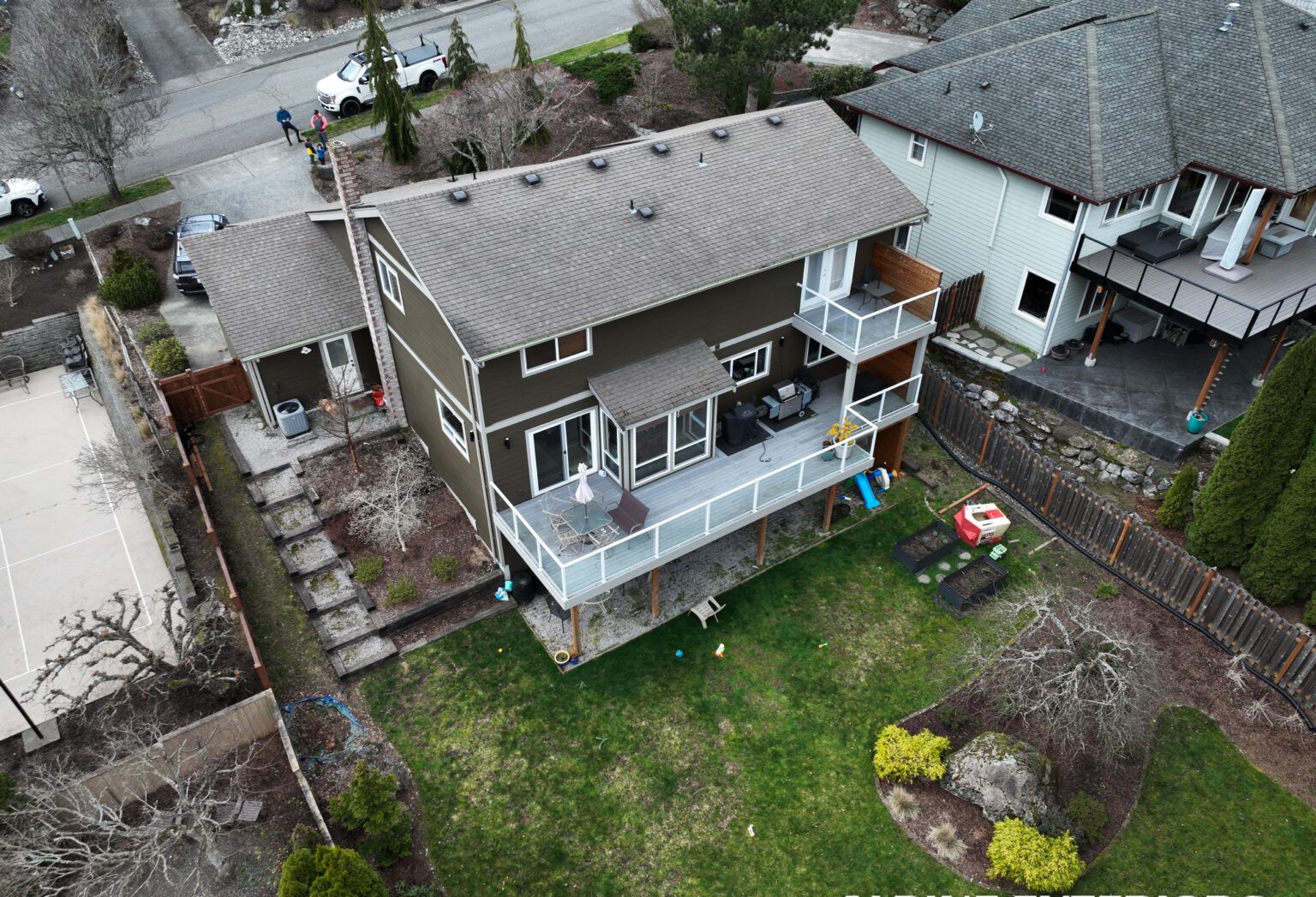
This is the workhorse choice for a reason. Warm grays and greiges (grays with a hint of brown or tan rather than a cool blue-gray) sit well against both cedar trees and gray Whatcom County skies, and they do an excellent job masking the light algae film that develops on shaded walls between cleanings. The drawback is that a poorly chosen cool gray can look flat and cold under this region's frequent overcast, so it's worth viewing a large sample outdoors on an actual cloudy day, not just under indoor lighting, before committing.
Used as a full body color, deep charcoal and near-black browns look striking against greenery and are increasingly common on newer Bellingham-area builds. They hide dirt and shadow lines well. The honest downside: on vinyl siding paired with continuous foam insulation under the Washington State Energy Code's prescriptive wall path, very dark colors can run into manufacturer heat-absorption limits, and on any material, dark colors show mineral streaking from gutters and downspouts more obviously than mid-tones. Reserve true dark colors for trim, shutters, or a smaller-footprint home where full sun exposure is limited, or confirm the specific product's dark-color rating first.
A soft, grayed-out green is one of the more forgiving choices for a heavily wooded Sunnyland lot, because it visually merges with the landscape rather than contrasting against it, and it hides moss growth almost by design. The tradeoff is that bright or true greens can start to look dated within a decade and clash with roofing in warmer tones, so staying in the muted, low-saturation end of the green family matters more here than the exact hue.
Deep blues read as classic Pacific Northwest coastal without being trendy, and they photograph well against overcast skies rather than washing out the way pale colors can. They do fade more visibly than neutrals over years of UV exposure on sun-facing walls, and like other dark tones, very dark navy over insulated vinyl assemblies can bump into the same manufacturer heat restrictions mentioned above.
White reads clean and traditional, and it's still a common choice on Whatcom County farmhouses out toward Lynden and Ferndale. In Sunnyland's shadier, tree-heavy lots, though, white is the color most likely to show algae and mildew staining first, particularly on north-facing walls that stay damp longest after rain. It also demands more frequent washing to keep looking crisp. A warm off-white or cream softens this somewhat and is a reasonable compromise on covered porches, gables, or sun-exposed elevations, but as a full-house color in a shaded Sunnyland setting, it's usually the highest-maintenance option on this list.
Cedar-look fiber cement or real cedar siding gives a warm, natural look that suits the tree cover here better than almost anything else, and it's a common request from owners who want their home to feel like it belongs in the landscape rather than standing apart from it. Real cedar left natural or lightly stained needs the most ongoing maintenance of any option on this list, since persistent Whatcom County rain accelerates graying, checking, and, if end cuts and joints aren't sealed and re-treated on schedule, wood rot. Fiber cement in a wood-look finish gets you most of the aesthetic with meaningfully less upkeep, at a higher upfront material cost.
A few choices tend to disappoint Whatcom County homeowners a few years in, even though they look fine on day one:
In practice, yes, especially on shaded, north-facing walls under mature trees, which describes a large share of Sunnyland lots. The fine gray-green film that algae and mildew leave shows up as visible blotching against bright white much sooner than it does against a mid-tone gray, greige, or warm brown, so white siding here typically needs washing more often to look consistently clean.
Dark colors aren't a code violation, but they can interact with the Washington State Energy Code's prescriptive continuous-insulation requirement in a way that matters. Some manufacturers cap how dark a vinyl siding color can be when it's installed over continuous foam insulation, because the added heat buildup can cause warping. Fiber cement and other materials are generally less sensitive to this, but it's worth confirming with your contractor or the manufacturer's color chart before committing to a very dark shade.
Sunnyland itself doesn't have a neighborhood-wide architectural review process, but several nearby Whatcom County communities do, including parts of Sudden Valley. If your property sits within a platted subdivision or a covenant-controlled development, it's worth checking with the HOA or architectural committee before finalizing a color, since some do require approval ahead of a re-side.
It varies by material, color, and sun exposure, but even in a cloudy climate, south- and west-facing walls take enough direct UV over several years to fade darker and more saturated colors unevenly compared to shaded elevations. Neutral, mid-tone colors tend to show this unevenness far less than deep reds, dark blues, or true black, which is one more reason they hold up better as a long-term choice here.
Every lot in Sunnyland faces a slightly different mix of shade, tree cover, and wind exposure, so the right siding color for a house on one street isn't automatically right two blocks over. Alpine Exteriors is a licensed Washington contractor (license ALPINI751OW) working throughout Whatcom County, including Bellingham, Ferndale, Lynden, Blaine, Birch Bay, Sudden Valley, and the islands, and can walk your specific property, check sun and shade patterns, and bring physical samples to view against your own roofline and landscaping before you commit to a color. If you're planning a re-side and want an honest read on what will actually hold up in this climate, reach out to Alpine Exteriors for a consultation.