
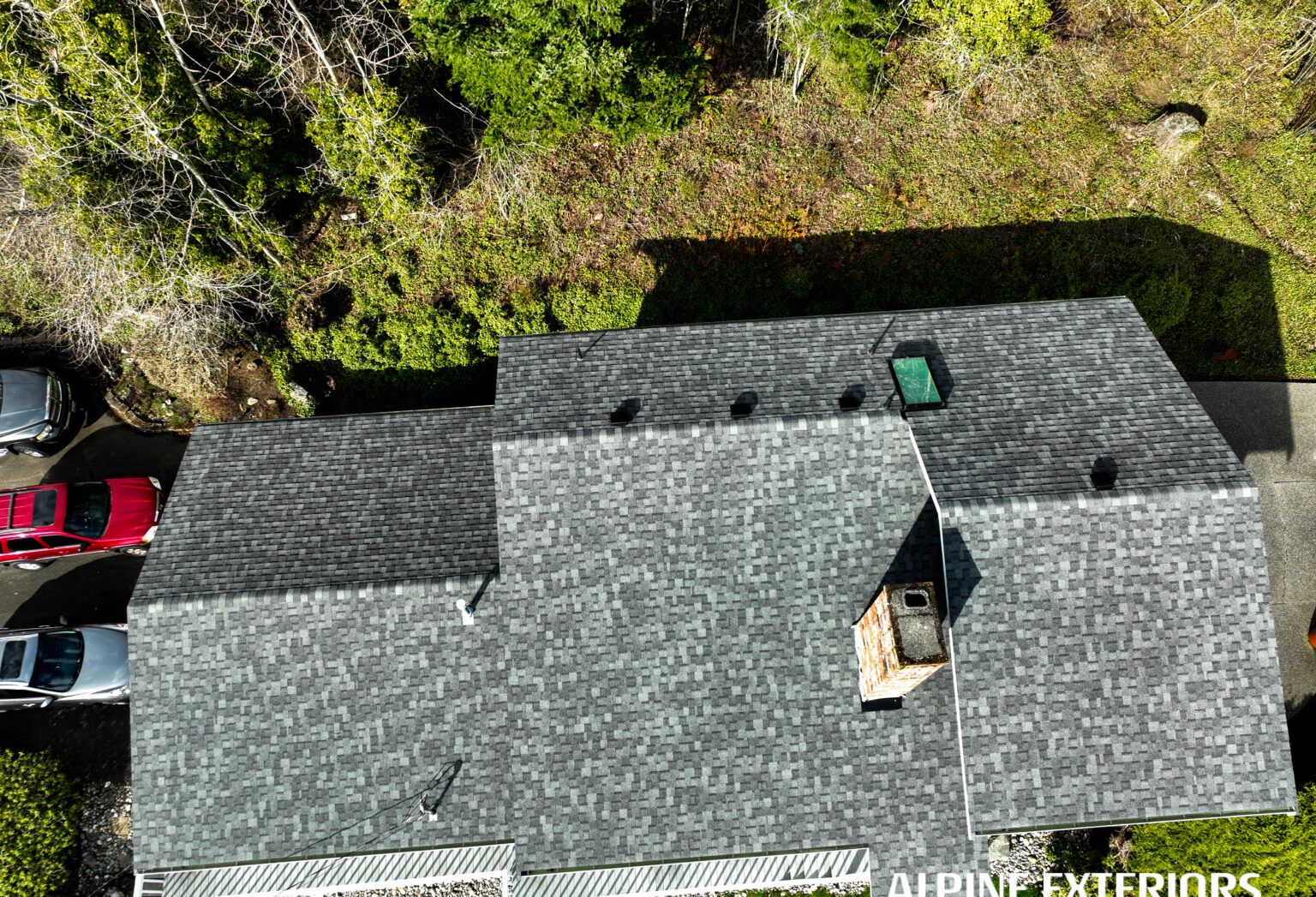
If your home sits in the Lake Samish area, you're in unincorporated Whatcom County, which means your siding permit — if you need one at all — comes from Whatcom County Planning & Development Services (PDS), not the City of Bellingham. A straightforward re-side that keeps the same wall assembly usually doesn't need a permit, but the moment the job touches sheathing, the water-resistive barrier, framing, or the home's insulation values, it almost always does.
Whatcom County's building code adopts the Washington State Building Code and the Washington State Energy Code, and PDS is the office that reviews plans and issues permits for anything outside Bellingham, Ferndale, Lynden, and Blaine city limits. Samish — meaning the Lake Samish neighborhoods south of Bellingham along Lake Samish Road, Old Samish Highway, and the properties tucked into the hills toward the Skagit County line — falls squarely in that unincorporated territory.
In practice, a permit gets triggered by what's underneath the new siding, not by the siding material itself. Peeling off old lap siding and nailing up new fiber cement or vinyl over intact sheathing and an intact water-resistive barrier is generally treated as exterior maintenance and doesn't require a building permit. But the county's rules kick in once a project crosses into any of the following:
When a permit is required, PDS reviews the scope, issues the permit, and schedules inspections at defined points in the work — typically a sheathing or weather-resistive-barrier inspection before the new siding goes on, and sometimes a final inspection once the job wraps up. Skipping that inspection isn't just a paperwork risk; it means nobody with code training ever looked at the flashing and barrier details that keep water out of your walls for the next twenty years.
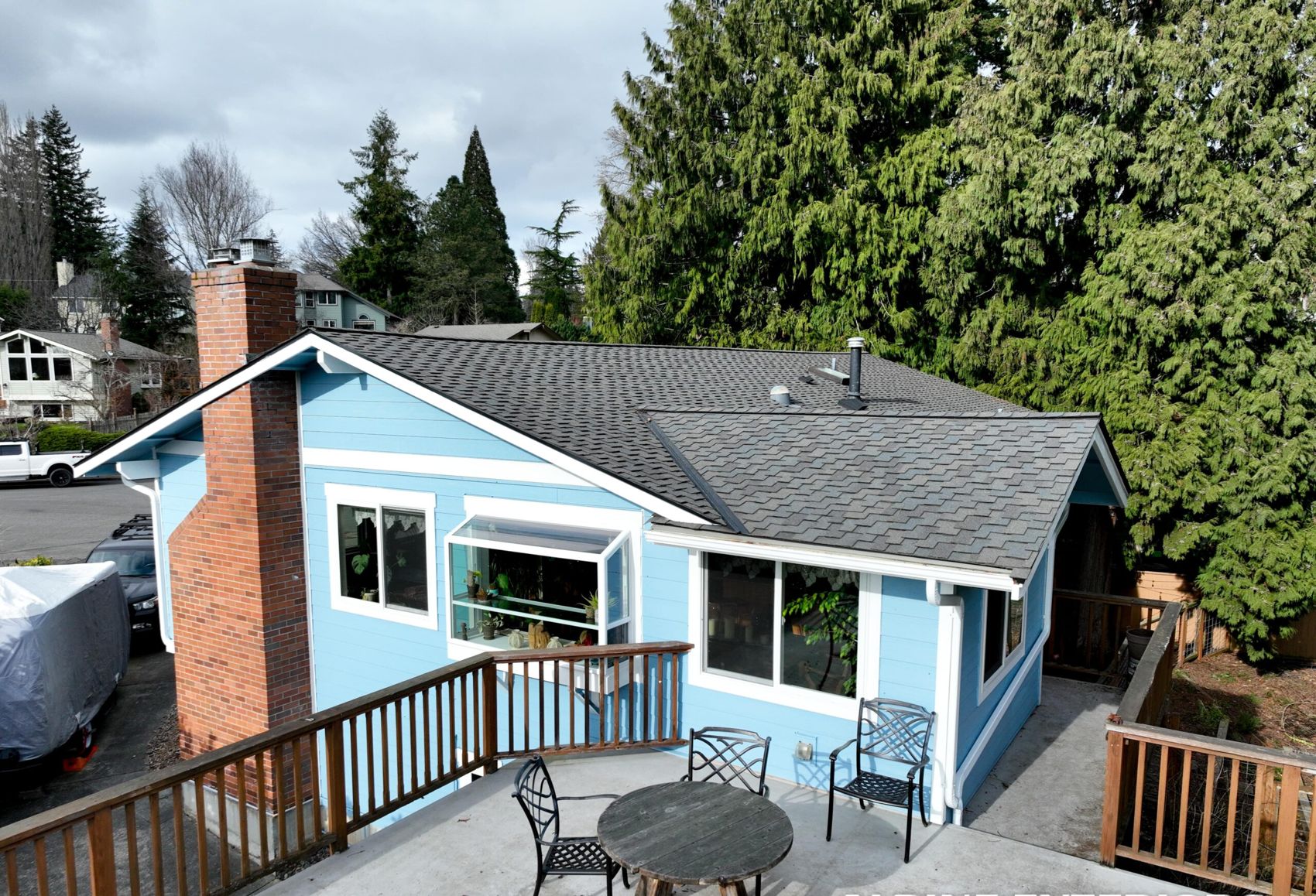
Lake Samish sits in a pocket where Whatcom County's general climate pattern gets a local twist. The area gets the same relentless, low-intensity rain that soaks the rest of the county for much of the year, but the lake itself and the surrounding tree cover keep humidity and shade levels high on north- and east-facing walls, which is exactly where we see moss and algae take hold fastest on siding and trim. Add wind-driven rain that funnels down off Bellingham Bay and the Strait of Georgia through the lowland gaps, and you get siding systems that take on moisture from more directions than a simple "it rains a lot" description suggests.
The foothill terrain around Lake Samish also means more freeze-thaw cycling than you'd find right on the water in downtown Bellingham. Elevation gain of even a few hundred feet changes how often caulking, trim joints, and fastener heads go through repeated freeze-thaw stress over a winter, which is one more reason a permit inspection that catches a bad flashing detail before the wall gets closed up is worth the extra step.
None of this is hurricane country, and nobody here needs to worry about wind-load product approvals the way a coastal Gulf or Atlantic market would. The concerns in Samish are quieter and slower-moving: sustained moisture intrusion, wood rot that hides behind siding for years before it shows up as a soft spot, and energy performance, since the Washington State Energy Code sets minimum insulation and air-sealing standards that any permitted wall-assembly work has to meet.
Start by figuring out, honestly, what your project actually involves. If a contractor tells you a full tear-off replacement doesn't need a permit because "it's just siding," push back and ask them to confirm that with Whatcom County PDS directly — a phone call or a quick look at the county's online permit portal settles it in minutes, and it's worth doing before any material gets ordered. Whatcom County PDS can also tell you whether your specific parcel falls inside a shoreline jurisdiction or critical areas buffer tied to Lake Samish, which can add a layer of review beyond a standard building permit.
Get a written scope from whoever bids the job that spells out whether sheathing, wrap, or insulation is being touched, since that's the detail that determines permit status. Ask to see the contractor's Washington state license number and confirm it's active before signing anything — a legitimate WA contractor should hand that number over without hesitation. Alpine Exteriors carries WA contractor license ALPINI751OW and pulls permits through Whatcom County PDS on any Samish-area job where the scope calls for it, rather than leaving that call to the homeowner after the fact.
If your project does need a permit, plan for the inspection to happen mid-project, after old siding and any damaged sheathing come off but before new siding closes the wall back up. That's an intentional pause, not a delay to avoid — it's the point where an inspector or a careful crew can actually see the framing, the flashing at windows and penetrations, and the condition of the water-resistive barrier. Budget a few extra days in the schedule for it rather than treating it as a surprise.
Also be realistic about cost. A permitted project with sheathing and wrap replacement runs meaningfully more than a straightforward re-side over sound sheathing, often landing in a wider range — think several thousand dollars more depending on how much rot or structural repair turns up once the old siding comes off. That's a real drawback of finding rot mid-project, but it's far cheaper than re-siding over a wall that keeps rotting underneath the new material.
Usually not, as long as the sheathing, water-resistive barrier, and framing underneath are sound and untouched. Whatcom County generally treats a like-for-like re-side over intact sheathing as maintenance rather than a permitted alteration, but the safest move is still to confirm with Whatcom County PDS before work starts, since inspectors — not homeowners or contractors — make the final call on borderline cases.
If sheathing or framing turns out to be damaged, the project shifts into permit-required territory even if it didn't start that way, because now you're doing structural repair and possibly changing the wall assembly. A contractor who planned for that possibility will pause, document the damage, and either amend an existing permit or apply for one before closing the wall back up — which is one reason it pays to work with a crew that treats permitting as part of the job rather than an afterthought.
It can. Properties within Whatcom County's shoreline jurisdiction or critical areas buffers around Lake Samish sometimes face additional review beyond a standard building permit, even for exterior work, depending on how close the structure sits to the water and how much the project changes the building's footprint or exterior. Whatcom County PDS can tell you within a few minutes on the phone whether your parcel falls inside one of those overlays.
Permit review time varies with PDS's current workload and the complexity of the scope, and a straightforward siding permit tends to move faster than one bundled with structural repairs or an addition. Once the permit is issued, the inspection itself is usually a single site visit timed to the sheathing and barrier stage, though homeowners should build a buffer into the schedule in case the inspector requests a follow-up visit or asks for a correction before the crew closes the wall.
Siding work around Lake Samish is as much about what's happening behind the panels as what you see from the road, and getting the permit question right up front saves headaches later. Alpine Exteriors serves Samish and the rest of Whatcom County under WA contractor license ALPINI751OW, and we handle the Whatcom County PDS permit conversation directly rather than leaving it to guesswork. If you're planning a siding project near Lake Samish, reach out to Alpine Exteriors for a walk-through of your home, an honest read on what's likely underneath your current siding, and a clear answer on whether your project needs a permit before a single panel comes off.