Best Siding Colors for Ferndale, WA Homes: A Whatcom County Guide
Updated August 2026 · Alpine Exteriors · WA contractor license ALPINI751OW
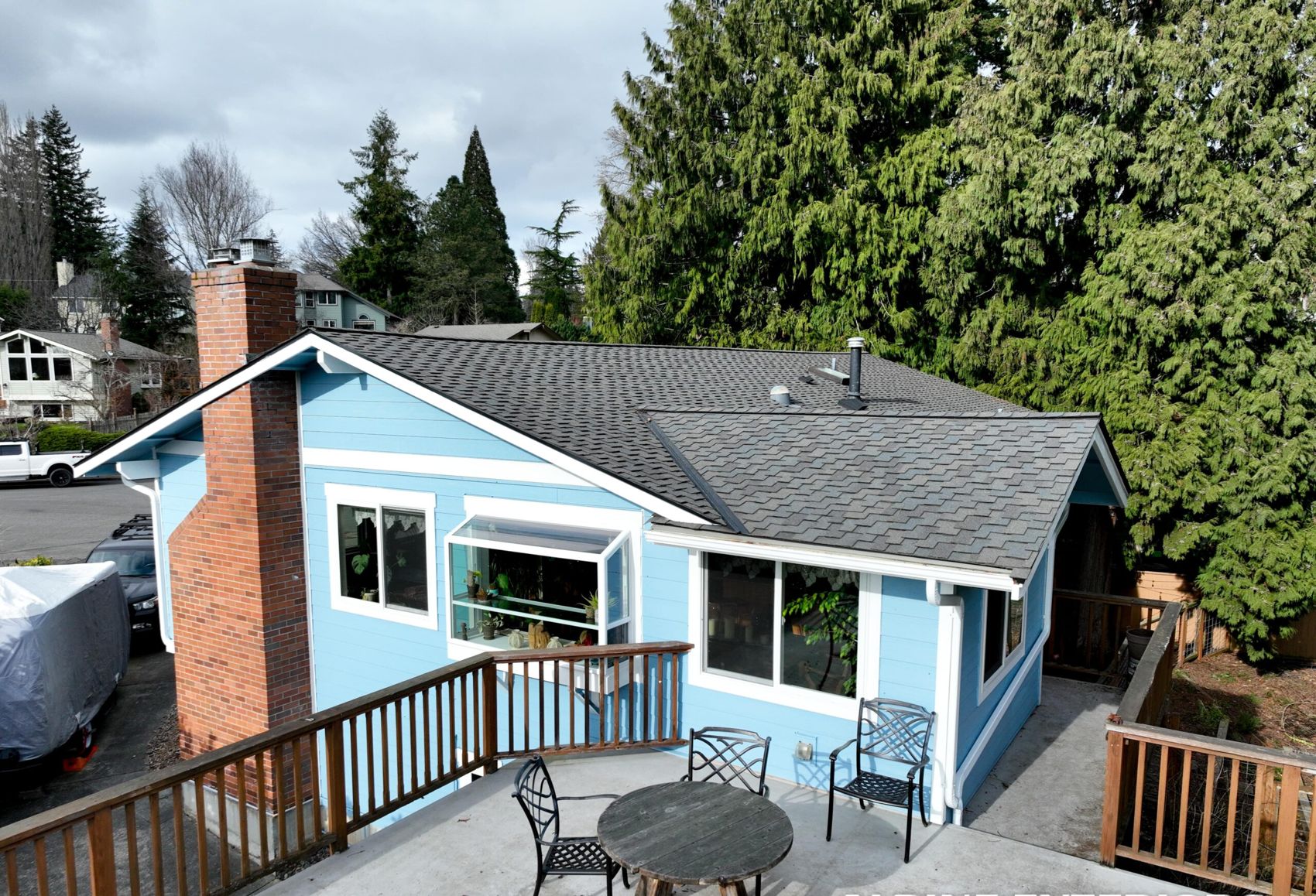
The Short Answer: Our Top Picks for This Region
If you want a straight answer before the details: warm greige, deep forest green, muted slate blue, and weathered clay tones consistently work best on Ferndale and greater Whatcom County homes. They read as intentional rather than trendy against a landscape of Douglas fir, big-leaf maple, and gray Salish Sea light, and they hide the two things that age a house here faster than anything else: moss streaking and water-line staining from wind-driven rain off Bellingham Bay and the Strait of Georgia. Bright whites and true blacks can look sharp on a mood board, but both carry real maintenance and fade trade-offs once they meet a Whatcom County winter.
None of this means color is one-size-fits-all — a Craftsman bungalow near downtown Ferndale, a farmhouse outside Lynden, and a waterfront place in Birch Bay each wear color differently. But the shortlist above is where we start most conversations with homeowners, and Alpine Exteriors can narrow it further once we've seen your lot, your elevation, and your HOA's fine print.
How We Judged: The Criteria That Actually Matter Here
Color advice written for a national audience mostly ignores the variables that decide how siding actually looks five years from now in a marine climate. We weighed each option against the conditions Whatcom County homes actually face, not generic curb-appeal trends.
- Moss and algae visibility. This county gets a long wet season, and north-facing walls, shaded lots near Lake Whatcom or Lummi Island tree lines, and anything close to conifers will develop moss and green algae film over time no matter what color you choose. The question isn't whether it happens — it's whether the color hides the early streaking or broadcasts it.
- Fade pattern under Pacific Northwest light. Whatcom County doesn't get intense, direct UV the way the Southwest does, but overcast skies still deliver steady diffuse UV exposure across many months, and the persistent moisture accelerates chalking and pigment breakdown on lower-quality finishes. Dark, saturated colors show this unevenly — often as a chalky haze on south- and west-facing elevations that catch the most exposure — while muted, mid-tone colors mask the same aging gracefully.
- Wind-driven rain and repair color-matching. Storms moving in off Bellingham Bay and the Strait push rain sideways into siding seams, corner boards, and anywhere flashing was cut short. That means occasional panel replacement is normal maintenance here, and colors that are custom-mixed or heavily pigmented can be hard to match years later. Factory-baked finishes and common stock colors age more predictably and are easier to patch.
- Landscape and light harmony. Whatcom County's backdrop is evergreen forest, farmland, and open water, under skies that are gray more often than blue. Colors that fight that palette — neon brights, stark white, glossy black — tend to look out of place next to a stand of fir trees or a foggy morning on Birch Bay.
- HOA and neighborhood norms. Sudden Valley's design guidelines, Semiahmoo's waterfront covenants, and several newer Ferndale and Lynden developments all have color review built into their bylaws, and even without a formal HOA, a lot of established streets in Bellingham, Ferndale, and Lynden lean toward a consistent, understated palette that a jarring color choice will visibly clash with.
- Maintenance burden given rainfall totals. Every siding color needs periodic washing here. Some just need it far more often, and that's a real long-term cost worth weighing against the up-front appeal of a color.

Siding Colors for Ferndale Homes, Option by Option
| Color family | Best fit | Fade risk here | Upkeep |
|---|
| Warm/cool gray (greige) | Most lots, most HOAs | Low — ages evenly | Standard washing |
| Deep charcoal / near-black | Fiber cement, modern builds | Higher on sun-exposed vinyl | Standard, harder to touch up |
| Forest / hunter green | Wooded lots (Lynden, Sudden Valley) | Low on shaded walls | Standard washing |
| Muted navy / slate blue | Waterfront (Blaine, Birch Bay, Semiahmoo) | Moderate on open exposure | Standard washing |
| Soft white / warm cream | Farmhouse-style, open lots | Low fade, high visible staining | Frequent washing |
| Clay / tan / earth tone | Open, farmland-adjacent lots | Low to moderate | Standard washing |
Warm and Cool Grays (Greige)
Greige — the warm gray-beige family — is the most requested color range we install in Whatcom County, and for good reason. It sits comfortably next to both evergreen tree lines and gray winter skies, it doesn't show dust or light road spray the way white does, and early moss growth tends to blend into the tone rather than standing out as a hard green line.
- Pros: broad HOA acceptance, easy to trim in white or black, resells well because it reads as neutral rather than trend-driven.
- Cons: the most common shades are common for a reason — a greige house can look unremarkable next to identical greige homes on the same street if you don't vary the trim or add a stone or shake accent.
Deep Charcoal and Near-Black
Charcoal has become popular on newer builds around Ferndale and north Bellingham, especially paired with black window frames and metal roofing. It photographs well and gives a clean, modern look.
- Pros: hides tannin streaking and minor dirt exceptionally well, strong contrast with white trim.
- Cons: dark colors absorb more heat on sun-exposed south and west walls, which over years can accelerate chalking and, on lower-grade vinyl, contribute to warping near the fastening edges — a material-grade issue more than a climate one, but it means charcoal is a better fit for fiber cement or engineered wood than for standard vinyl on a hot-exposure wall. Charcoal also shows fading unevenly rather than uniformly, since shaded and exposed sections weather at different rates, and touch-up matching on a years-old charcoal panel is harder than on a mid-tone.
Forest and Hunter Green
A true forest or hunter green is one of the few colors that essentially disappears into a Whatcom County lot rather than standing out from it, which makes it a strong choice on wooded parcels around Lynden, Sudden Valley, and the unincorporated county.
- Pros: excellent landscape harmony, hides moss transition zones better than almost any other color since the moss and the siding sit in a similar value range, timeless rather than trendy.
- Cons: on a lot with little tree cover — open farmland near Lynden, say, or a bare corner lot in Ferndale — the same green that looks natural in the woods can look heavy or dated without enough contrast from trim and landscaping.
Muted Navy and Slate Blue
Along the water — Blaine, Birch Bay, Semiahmoo, the Lummi Island shoreline — a muted navy or slate blue references the setting without being a literal beach-house cliché.
- Pros: strong curb appeal on waterfront and near-waterfront lots, pairs well with cedar or composite decking and white trim, doesn't read as trendy the way brighter "coastal" colors can.
- Cons: like charcoal, deep navy shows more visible fading on unshaded exposures over time than a mid-tone, and it's a bolder choice that a handful of stricter HOAs, including some sections of Semiahmoo, may want reviewed before approval.
Soft White and Warm Cream
White and cream sidings have real appeal, especially on farmhouse-style homes around Lynden's agricultural areas, but they're the color family most likely to disappoint a Whatcom County homeowner two or three years in.
- Pros: bright, classic, makes a home stand out on a street of muted colors, pairs with almost any roof or trim.
- Cons: white shows moss, algae, and water-line staining faster and more visibly than any other color on this list, particularly on north-facing walls and anywhere gutters overflow during heavy rain. Homeowners who choose white should plan on more frequent washing as routine upkeep, not as a sign anything went wrong.
Clay, Tan, and Earth Tones
Warm clay and tan tones are underused in this county but work well, especially on homes set against farmland, bluffs, or open fields rather than dense forest.
- Pros: hides road dust and dirt spray from gravel driveways well, warms up a home during the gray months, generally well received by HOA design committees since it reads as conservative.
- Cons: the warmest clay shades can clash rather than harmonize on a heavily wooded, deep-green lot — this family works best where the surrounding palette is more open and less conifer-dominated.
What to Avoid in Whatcom County, and Why
A few choices come up often enough, and cause enough regret, that they're worth calling out directly rather than burying in the option list above.
- Pure, bright white on shaded or north-facing elevations. It shows moss and green streaking faster than any other color here, and the contrast makes normal algae growth look like a maintenance failure even when it isn't.
- Glossy, saturated dark finishes on unshaded vinyl walls. The heat-absorption and chalking issues described above are worse with a high-gloss finish and a lower-grade vinyl product; if you want a dark, saturated look on a sun-exposed wall, fiber cement with a factory-baked finish holds up better than standard vinyl.
- Colors outside your HOA's approved range. Sudden Valley, Semiahmoo, and several newer Ferndale and Lynden subdivisions require design review before you paint or re-side, and a color that's technically beautiful but outside the approved palette can mean a costly repaint. Check your covenants before you commit, not after.
- Custom-mixed, hard-to-match colors on a home likely to need partial repairs. Given how often wind-driven rain finds a weak seam somewhere on a Whatcom County exterior over a couple of decades, a stock factory color you can reliably reorder is worth more than a custom blend that looked perfect on day one.
FAQ: Siding Colors in Whatcom County
Do Whatcom County HOAs actually restrict siding colors?
Yes, in several communities. Sudden Valley's design guidelines and Semiahmoo's waterfront covenants both include exterior color review, and a number of newer developments in Ferndale and Lynden have similar architectural control committees. Even where there's no formal HOA, older Bellingham and Ferndale neighborhoods often have an informal but noticeable color consistency that's worth respecting for resale value. Always check your specific covenants, or ask your siding contractor to pull them, before finalizing a color.
Will a dark siding color fade faster in Ferndale's climate?
It fades differently rather than simply faster. Whatcom County doesn't get the intense direct UV of a sunbelt climate, but persistent moisture combined with steady diffuse light causes uneven chalking on dark, sun-exposed elevations over years, while shaded sides of the same house age more slowly. A factory-applied, baked-on finish on fiber cement siding resists this better than field-applied paint or standard vinyl pigment.
How often will I need to wash or touch up my siding here?
Plan on an annual soft wash for most colors, and more frequently for white or very light colors on shaded or north-facing walls where moss and algae take hold fastest. This is normal upkeep in a marine climate rather than a defect, and it's far less expensive than repainting or replacing panels that were neglected for years.
Can I mix two siding colors on one house?
Yes, and it's common here — a body color paired with a contrasting trim, or a different color on a garage or accent gable, adds depth without violating most HOA guidelines as long as both colors are within the approved range. Alpine Exteriors can show color samples against your actual roof and trim before you commit, which matters more than any online swatch given how much our overcast light changes how a color reads.
Get a Color Consultation for Your Ferndale Home
Choosing a siding color from a small swatch or a screen is genuinely hard, especially under Whatcom County's shifting gray light, which is why we bring full-size samples to the house and hold them against your actual roof, trim, and landscaping before anyone commits to an order. Alpine Exteriors (WA contractor license ALPINI751OW) has worked on homes across Bellingham, Ferndale, Lynden, Blaine, Birch Bay, Sudden Valley, and the islands, and we can walk you through which materials and finishes hold color best on your specific exposure and the moisture-management standards required under the Washington State Energy Code. If you're planning a re-side in Ferndale or anywhere else in Whatcom County, contact Alpine Exteriors for an on-site color consultation.
Want a straight answer for your home? Alpine Exteriors gives free on-site assessments across Bellingham, Ferndale, Lynden, Blaine, Birch Bay, Sudden Valley and the islands.
Call (360) 543-4799 or
request an estimate.
