Siding, Wind Loads and the Building Code for Edgemoor Homes
Updated August 2026 · Alpine Exteriors · WA contractor license ALPINI751OW
The Direct Answer
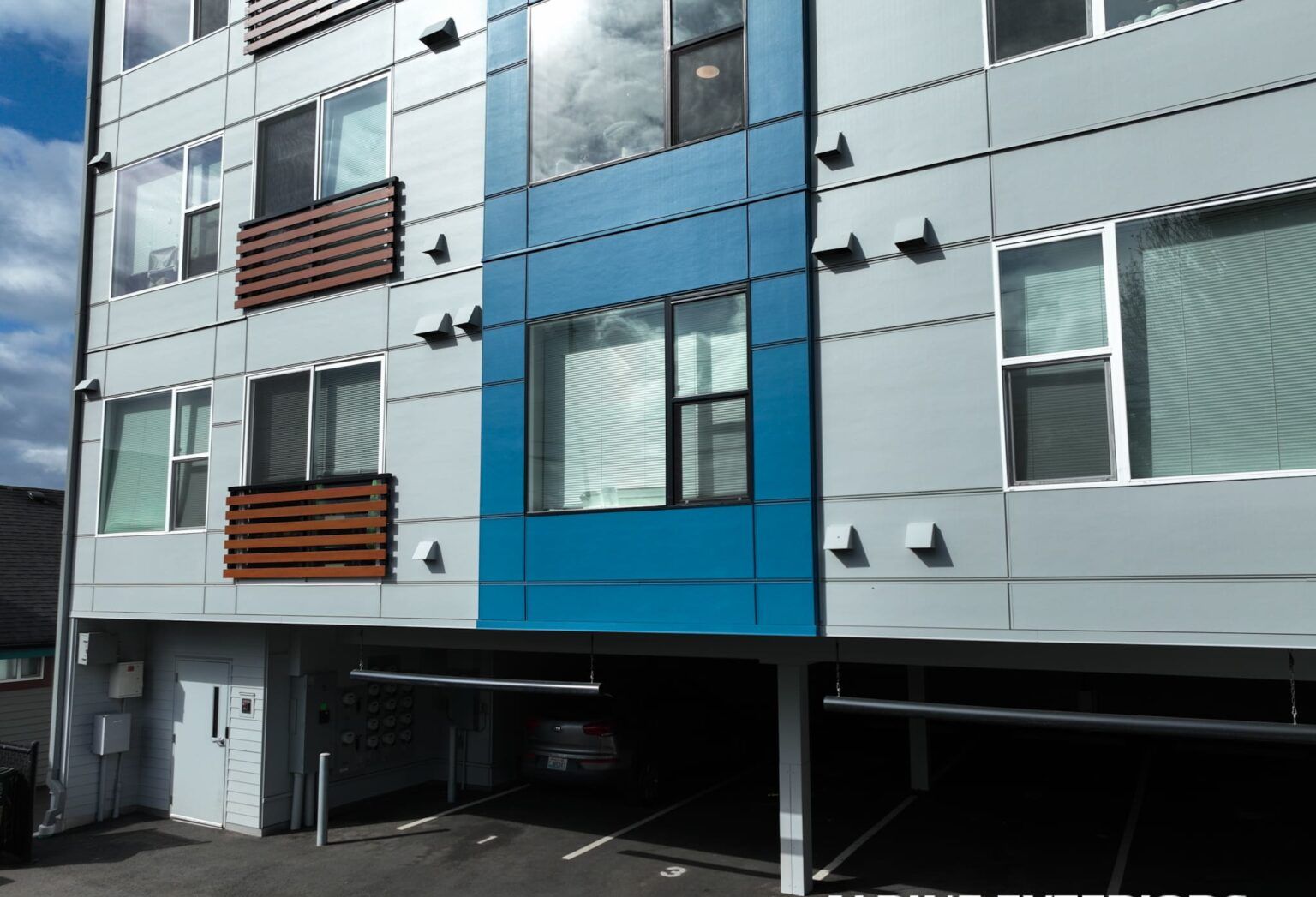
Edgemoor sits on a bluff facing Bellingham Bay, which means homes there take wind-driven rain and gusts that inland Whatcom County neighborhoods rarely see. Siding on these houses has to meet the same Washington State structural and energy code every other project does, but the fastening schedule, water management details, and product selection need to be tightened up for the exposure, not just picked off a standard spec sheet.
The Detail Behind It
Washington doesn't run a separate wind-zone siding code the way some coastal states do. Siding installation for wood-frame residential construction here falls under the International Residential Code as adopted and amended by Washington through the Washington State Building Code Council, plus the Washington State Energy Code for the assembly's water-resistive barrier, air sealing, and continuous insulation requirements where they apply. There's no coastal wind-mitigation inspection form in play here — what actually governs a siding job is a combination of the manufacturer's tested and published fastening schedule, the IRC's general attachment and water-resistive barrier requirements, and the local building department's read on exposure for that specific lot.
In practice, three things determine whether a siding installation is code-compliant and durable on a bluff-facing lot like the ones in Edgemoor:
- Product approval and testing. Fiber cement, vinyl, and engineered wood siding all carry manufacturer installation instructions that reference ASTM test standards for wind load resistance and water penetration specific to that product. Installing outside those instructions — wrong nail spacing, wrong fastener type, unapproved furring — can void the warranty and, if a building official checks it during inspection, trigger a correction notice.
- Fastening schedule. Every siding product has a minimum fastener count, spacing, and embedment depth tested for a rated wind pressure. Manufacturers publish tighter fastening patterns for high-exposure applications — corners, gable ends, and the top courses of a wall facing open water. Edgemoor homes on the bay side of the neighborhood often need the manufacturer's high-exposure fastening pattern applied across more of the wall than a standard install would use, even though the county doesn't formally designate it as a special wind zone.
- Water-resistive barrier and flashing detail. Wind-driven rain doesn't just test the siding surface, it tests every seam, penetration, and horizontal transition behind it. The Washington State Energy Code and IRC both call for a continuous water-resistive barrier with properly lapped and taped seams, plus flashing at windows, doors, and any horizontal trim. On exposed lots this detail matters more than the siding product itself — a well-flashed, correctly lapped weather barrier under standard vinyl siding will often outperform premium siding installed over sloppy flashing.
What Makes This Region Different
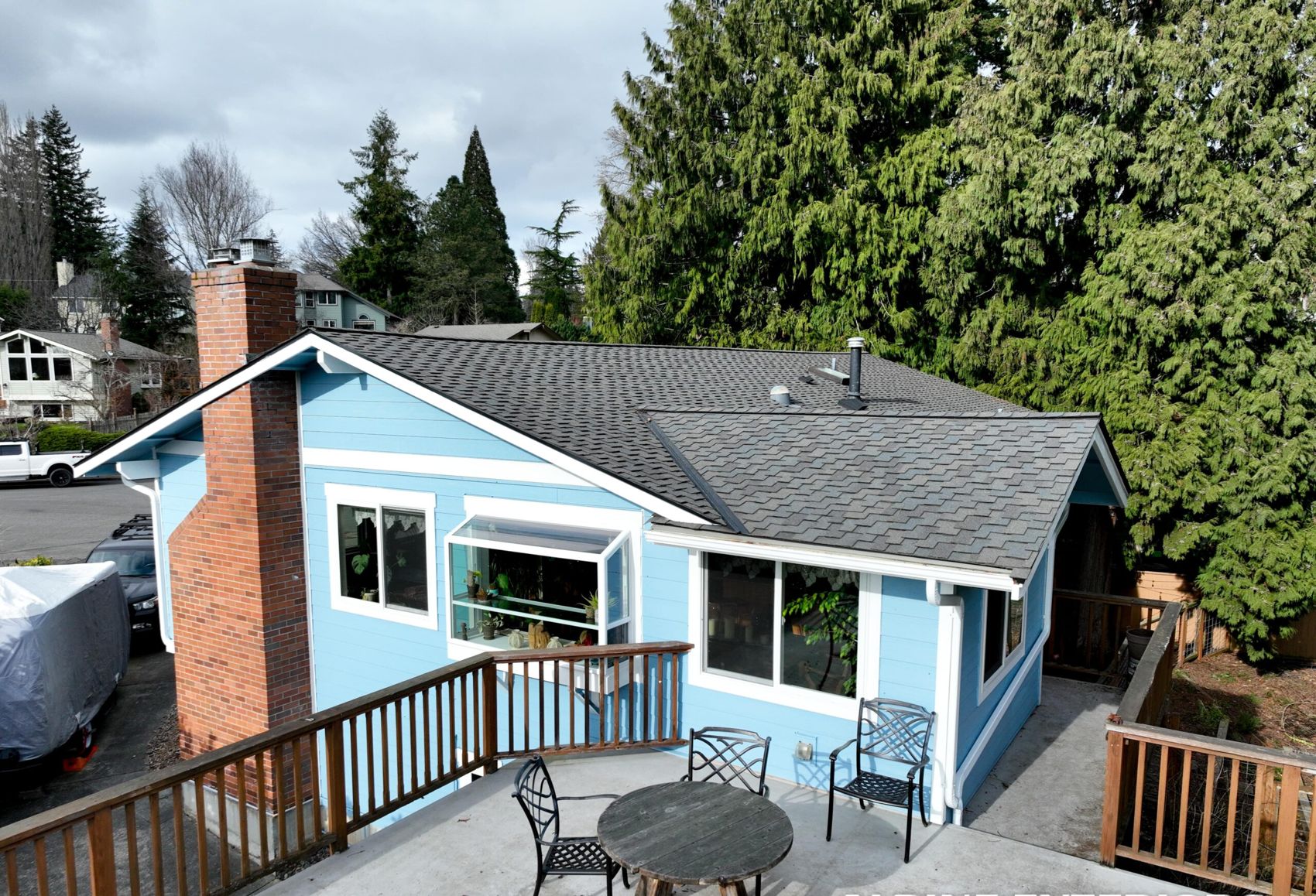
Whatcom County as a whole deals with persistent rain, but Edgemoor's specific position — an exposed bluff facing Bellingham Bay and, beyond it, the Strait of Georgia — adds wind-driven rain to the mix in a way that inland Bellingham neighborhoods, Ferndale, or Lynden don't experience the same way. That distinction matters for siding because wind-driven rain doesn't behave like ordinary rainfall running down a wall. It gets pushed sideways and upward under laps, around corners, and into any gap in the water-resistive barrier that still-air rain would never reach.
A few conditions specific to this stretch of coastline show up repeatedly on siding jobs:
- Wind-driven rain intrusion. Homes with unobstructed exposure toward the bay see water pushed into lap joints and around penetrations that would stay dry on a sheltered inland lot. This is the single biggest argument for over-specifying flashing and lap detail rather than relying on siding alone to keep water out.
- Moss and algae growth. The same persistent moisture that affects roofs across Whatcom County affects siding, especially on north- and west-facing walls that stay shaded and damp longer after a storm. Some fiber cement and engineered wood products now come with algae-resistant coatings; vinyl doesn't grow algae itself but can trap it against trim and J-channel if drainage paths get blocked.
- Wood rot at grade and behind trim. Older Edgemoor homes with real wood siding or trim, or newer homes where trim boards weren't back-primed and flashed correctly, are prone to rot where siding meets grade, decks, or roof-to-wall intersections. This is less about wind and more about the sheer volume of annual rainfall combined with limited drying time between storms.
- Freeze-thaw cycling. Edgemoor itself, being close to sea level and moderated by the bay, sees fewer hard freezes than the foothill communities toward Deming or Acme, but Whatcom County as a whole gets enough freeze-thaw cycling that trapped moisture behind siding can still cause problems — swelling, fastener backout, or cracked caulk joints — over a few winters if the assembly isn't ventilated and drained properly.
Whatcom County's exposure problem is persistent moisture pushed by onshore wind, not a single catastrophic wind event — which is why the fix here is mostly about water management and fastening discipline rather than impact-rated products or storm-specific hardware.
What the Homeowner Should Actually Do
If you own or are about to re-side a home in Edgemoor, a few practical steps go a long way beyond hiring someone and hoping for the best:
- Ask which exposure the contractor is designing to. A reputable contractor should be able to tell you whether they're using standard or high-exposure fastening schedules for your specific elevation, not just a blanket spec for the whole house. Corners, gable ends, and the bay-facing wall usually warrant the tighter pattern even if the rest of the house doesn't strictly require it.
- Don't skip the water-resistive barrier conversation. Ask what barrier product is being used, how seams are lapped and taped, and how window and door openings are flashed. This is the part of the job that's invisible once the siding goes up, and it's also the part most likely to cause a leak years later if it's rushed.
- Get the permit and inspection right. Whatcom County and the City of Bellingham both require permits for most siding replacement, particularly when it involves removing sheathing or altering the water-resistive barrier. Skipping the permit might save a week, but it also means no inspector ever verifies the fastening schedule or flashing detail — which matters more here than in a drier climate.
- Weigh product choice against maintenance reality. Fiber cement holds up well against moisture and algae but is heavier and pricier to install, generally landing at the higher end of a typical siding budget range. Vinyl is less expensive and low-maintenance but can become brittle over decades and won't stop wind-driven rain on its own without correct flashing behind it. Wood siding looks right on some of Edgemoor's older homes but requires the most ongoing maintenance to avoid the rot problems described above. There isn't a single correct answer — it's a real tradeoff between upfront cost, appearance, and how much maintenance you're willing to keep up with.
- Have someone check the trim and grade details, not just the field of the wall. Most siding failures in this climate start at a transition — a deck ledger, a roof-to-wall intersection, a trim board near grade — not in the flat field of siding itself.
Alpine Exteriors works on siding projects across Whatcom County, including bluff-facing homes in Edgemoor, and holds Washington contractor license ALPINI751OW. On these lots specifically, the conversation with homeowners usually starts with exposure and flashing detail before it ever gets to color or product line, because that's what determines whether the installation actually performs through a wet winter.
FAQ
Does Edgemoor require special wind-rated siding because it's on the bay?
There's no separate wind-rated siding code specific to Edgemoor or Bellingham Bay. What changes is how the standard Washington State Building Code and manufacturer installation instructions get applied — installers should be using tighter fastening schedules and more careful flashing on exposed elevations, based on the product manufacturer's published high-exposure guidance, rather than a uniform pattern across the whole house.
What does a building inspector actually check on a siding job in Whatcom County?
Inspectors typically verify that the water-resistive barrier is installed and lapped correctly, that flashing is in place at windows, doors, and horizontal trim, and that the siding is fastened according to the manufacturer's published schedule for the product being installed. They're generally not measuring wind speeds or filling out a wind-mitigation form — that level of wind-specific inspection isn't part of how Washington's building code approaches siding.
Is fiber cement worth the extra cost over vinyl for a home this exposed?
It depends on priorities. Fiber cement generally resists moisture, algae growth, and wind-driven rain intrusion better over the long run and holds paint well, but it costs more upfront and is heavier to install correctly. Vinyl is more budget-friendly and low-maintenance but relies more heavily on the flashing and water-resistive barrier behind it to keep wind-driven rain out, since the panels themselves aren't as rigid at the seams. Either can work well on an Edgemoor home if the water management details behind it are done correctly.
How often should siding on a bay-facing home in Edgemoor be inspected for problems?
A visual check once a year, ideally after the wetter fall and winter months, catches most early issues — cracked caulk at trim joints, moss buildup on shaded walls, soft spots near grade, or fastener backout at corners. Homes with direct bay exposure benefit from a closer look every few years at flashing details around windows and roof-to-wall intersections, since those are the points most likely to fail first under wind-driven rain.
Get a Straight Assessment
If you're planning a siding replacement or repair on a bay-facing lot in Edgemoor, or anywhere else in Whatcom County, Alpine Exteriors can walk your specific elevation with you and explain what fastening and flashing detail actually makes sense for your exposure — not a generic answer. Contact Alpine Exteriors to schedule an assessment and get a written estimate before any work begins.
Want a straight answer for your home? Alpine Exteriors gives free on-site assessments across Bellingham, Ferndale, Lynden, Blaine, Birch Bay, Sudden Valley and the islands.
Call (360) 543-4799 or
request an estimate.