
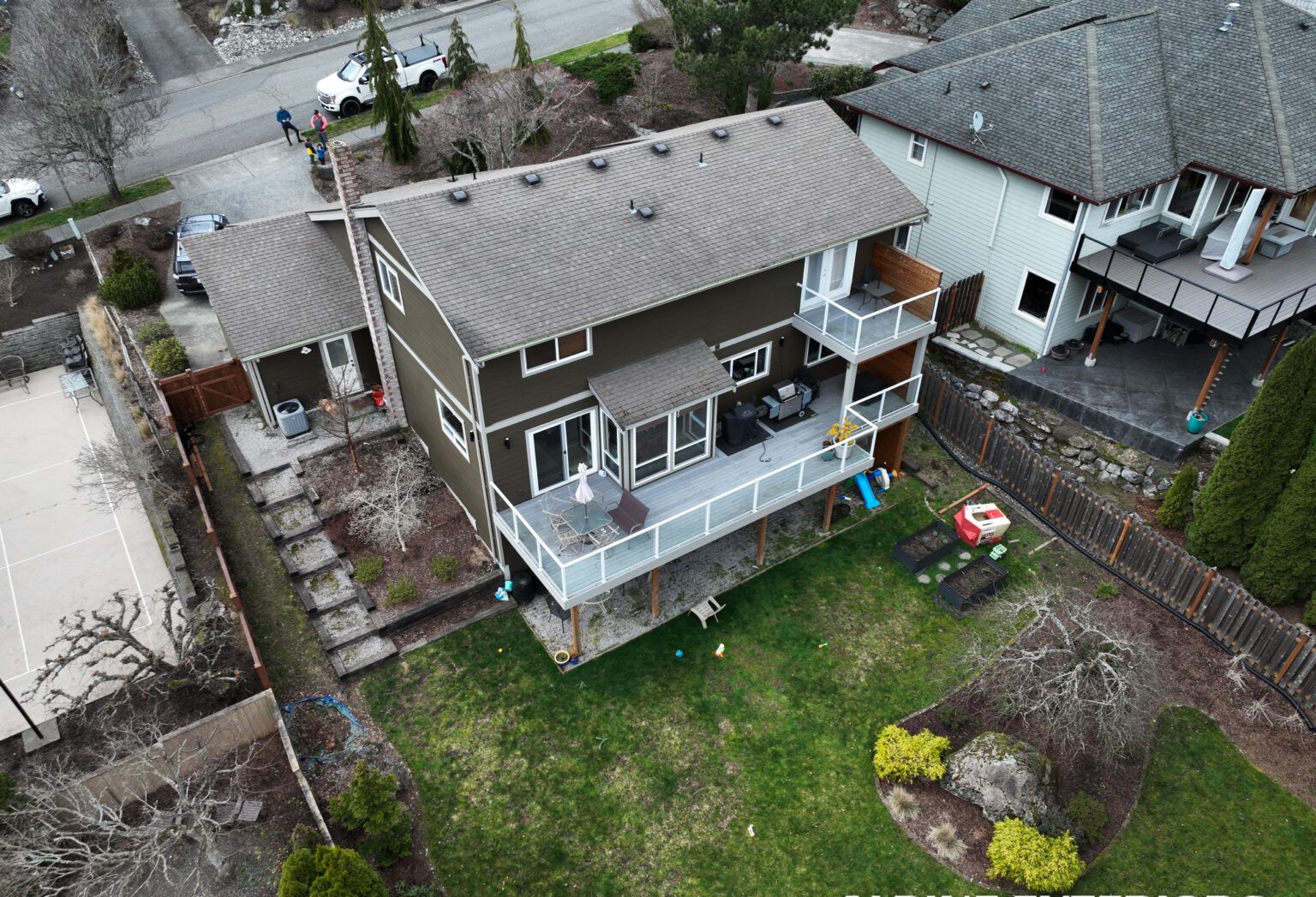
Happy Valley sits close enough to Bellingham Bay that wind-driven rain off the water is a regular fact of life, and far enough into the trees on its western and southern edges that shade, moss, and standing moisture never really go away between October and May. If you own a home here, or anywhere else in Whatcom County from Blaine down through Ferndale, Lynden, Bellingham, Sudden Valley, or the islands, your siding is doing more work than siding does in drier parts of the state. This checklist walks through what to look at, why it matters in this specific climate, and what your next step should be depending on what you find.
Whatcom County doesn't get hurricanes or hail the way other regions do, so a lot of generic siding advice written for other climates doesn't apply here. What does apply is persistence: months of low-intensity rain, high humidity, limited direct sun on north- and west-facing walls, and wind gusts that come off the Strait of Georgia and Bellingham Bay carrying rain sideways into wall assemblies that were only ever designed to shed water falling straight down. In Happy Valley specifically, homes closer to the water or on higher, more exposed lots tend to see more of that wind-driven rain pattern on their west and southwest elevations, while homes tucked under tree cover deal more with moss, algae, and slower drying times.
Add in the freeze-thaw cycles that show up in the foothill areas around Sudden Valley and the higher elevations east of town — where a wet siding surface can freeze overnight in winter and then thaw the next day — and you get a slow, cumulative kind of wear that's easy to miss until it's already caused wood rot or trapped moisture behind the cladding. None of this means your siding is doomed; it means a walk-around inspection twice a year, ideally in early fall before the wet season and again in spring, catches small problems while they're still small and cheap to fix.
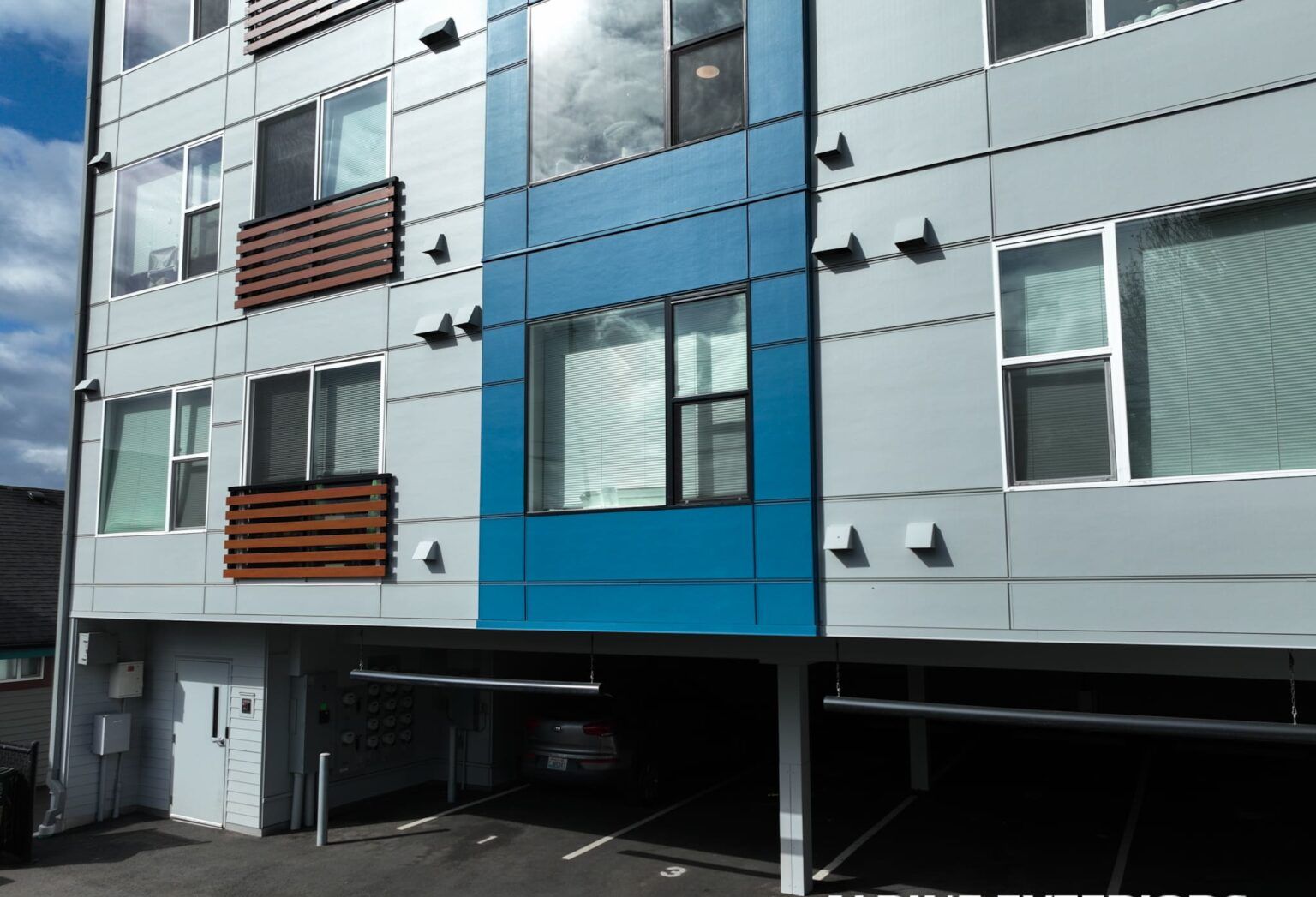
Not every failed item on this list means a full re-side. A single cracked piece of trim or a patch of algae on a shaded wall is often a maintenance fix: clean it, reseal it, replace the one damaged piece, and keep an eye on it going forward. Where it gets more serious is when you find soft or spongy siding, staining that lines up between the exterior and an interior wall, or growth thick enough to hold water against the surface for extended periods. Those findings usually mean moisture has already reached the sheathing or framing behind the siding, and covering that up with paint or caulk without addressing what's underneath just delays a bigger repair.
A reasonable next step for a moderate problem — a soft section in one spot, a failed flashing detail, a small area of rot around a window — is to have that specific area opened up and inspected rather than assuming it's isolated. Rot spreads along wood grain and behind house wrap in ways you can't always see from the outside, so a proper inspection sometimes reveals the problem is bigger, or smaller, than the visible surface suggested.
Call a professional siding contractor when you find rot, soft sheathing, or interior water staining, when flashing at a roof-to-wall transition looks damaged or missing, when more than a small section of siding needs replacement, or when you're not sure whether what you're looking at is cosmetic or structural. It's also worth getting a professional opinion before any re-side or major repair so the work is planned around proper water management and current Washington State Energy Code requirements rather than just matching the old siding. Alpine Exteriors inspects and repairs siding throughout Whatcom County — Bellingham neighborhoods like Happy Valley, plus Ferndale, Lynden, Blaine, Birch Bay, Sudden Valley, and the islands — and can tell you honestly whether you're looking at a patch job or something more involved.
Twice a year is a reasonable baseline — once in early fall before the wet season sets in, and once in spring after winter storms and any freeze-thaw cycles have had their effect. Homes on more exposed lots near the bay, or homes under heavy tree cover, may benefit from checking shaded and windward walls more often since those are the areas that show problems first.
It depends on how thick it is and how long it's been there. A light surface film is mostly a cosmetic issue and a maintenance-level cleaning job. Thick, established moss mats are a different story — they hold moisture directly against the siding surface for days at a time, which speeds up wood rot and can eventually affect the sheathing underneath, especially on shaded north-facing walls that don't get enough sun or airflow to dry out between rain events.
It can, and often in a good way. Re-siding exposes the wall assembly, which gives you a practical opportunity to add or correct house wrap, address gaps in insulation, and bring the wall closer to what the Washington State Energy Code expects from newer construction. It's not automatic — a re-side that just swaps old siding for new without touching what's underneath won't improve energy performance on its own — but it's worth discussing with your contractor if energy efficiency matters to you.
Yes. The bottom few feet of siding, especially near grade, take the most sustained exposure from splashback and standing moisture, and problems there often aren't visible from a normal standing vantage point. Crouching down and looking closely — or checking for a proper gap between siding and the ground — catches issues that a quick glance from the driveway will miss entirely.
If this checklist turned up something you're unsure about, or if it's just been a while since anyone looked closely at your siding, Alpine Exteriors is a WA-licensed contractor (license ALPINI751OW) working throughout Whatcom County, including Happy Valley and the rest of Bellingham, Ferndale, Lynden, Blaine, Birch Bay, Sudden Valley, and the islands. Reach out for an honest inspection — we'll tell you plainly whether you're looking at a small repair, a bigger issue worth addressing now, or something that can reasonably wait.