
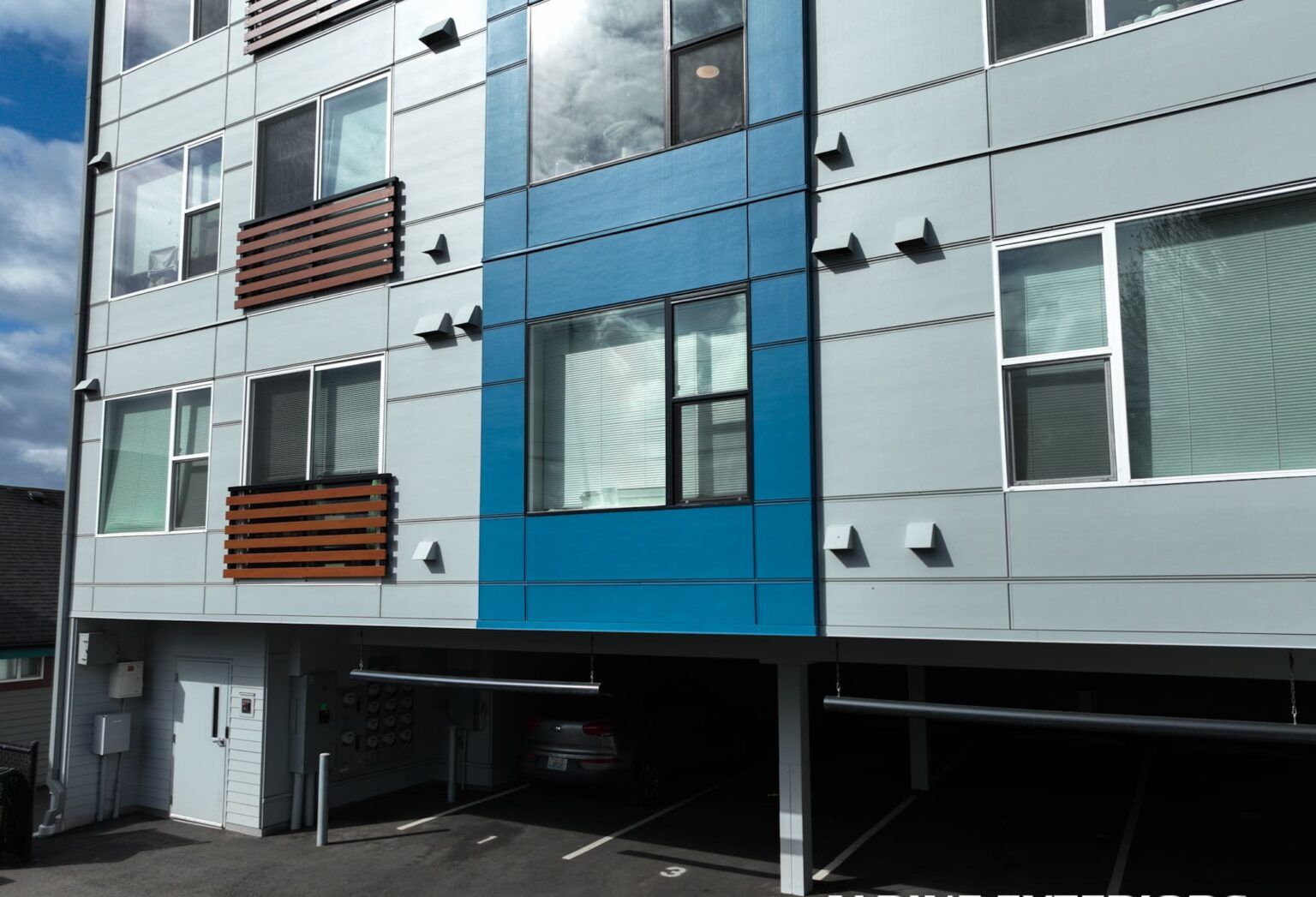
South Hill sits above Bellingham Bay, which means it catches wind-driven rain off the Strait of Georgia almost every fall and winter, along with the steady, low-intensity drizzle that defines a Whatcom County winter. Siding here doesn't fail from a single dramatic storm — it fails slowly, from months of moisture sitting against a wall, moss and algae holding dampness against the surface, and wood trim quietly rotting behind paint that still looks fine from the sidewalk. Add the neighborhood's tree cover, which keeps shaded north- and west-facing walls damp for days after a storm, and you have conditions that reward a homeowner who actually looks at their siding twice a year rather than waiting for a leak to show up on the inside of a wall.
The elevation and older tree canopy in South Hill also mean some homes see light freeze-thaw cycling in the coldest snaps of the year — water gets into a hairline crack in caulk or trim, freezes, expands, and widens the gap. It's not the deep freeze-thaw damage you'd see up in the foothills, but it's enough to turn a small gap into a real entry point for water over two or three winters. None of this is exotic or catastrophic; it's ordinary Pacific Northwest weather doing what it does, which is exactly why a plain, unhurried checklist is the most useful tool a homeowner has.
This checklist is built around the rhythm of a Whatcom County year: a dry-ish inspection in late summer before the rains return, and a follow-up look in early spring once the wettest months have passed. Twenty minutes with a garden hose, a ladder you're comfortable on, and this list will catch most problems while they're still cheap to fix.
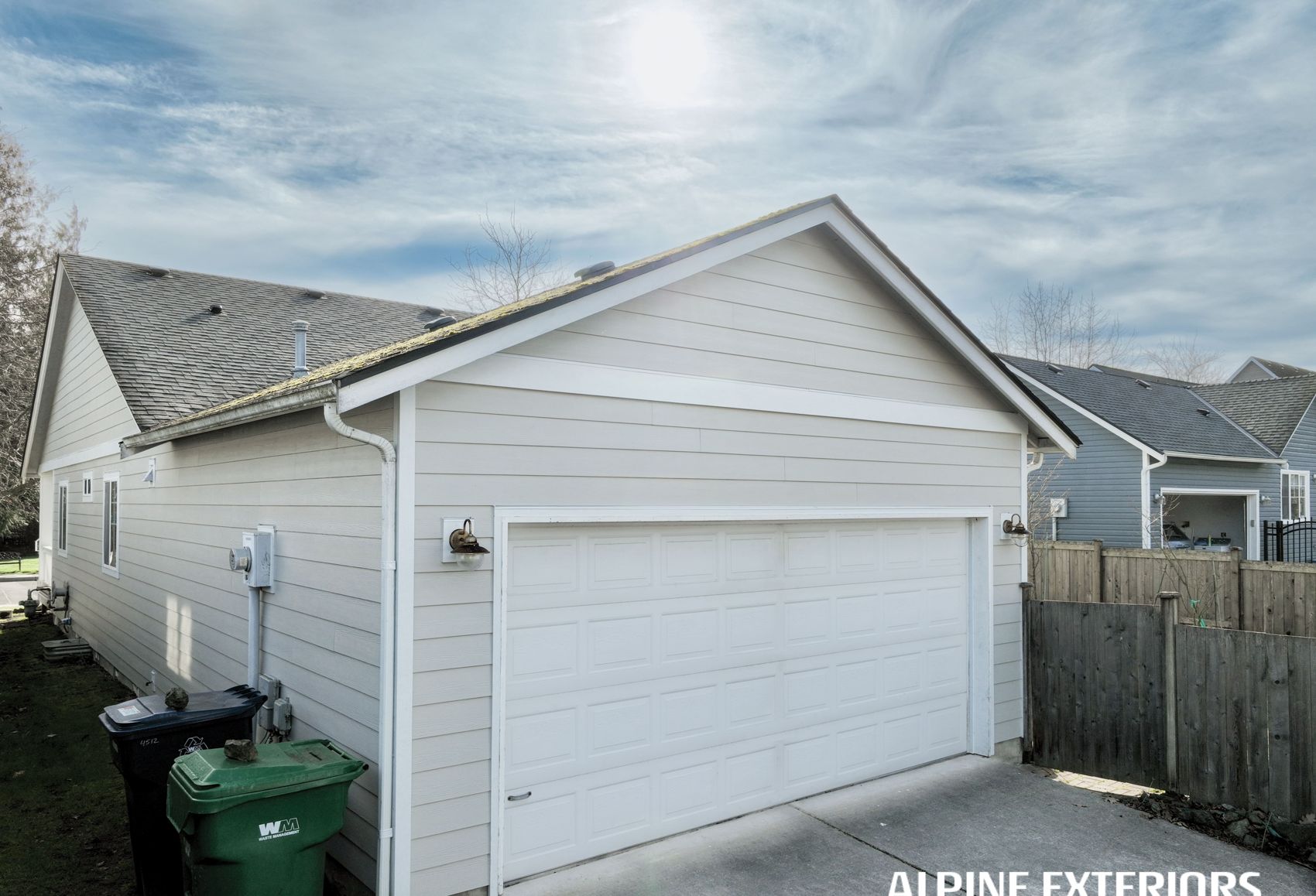
Not every failed item on this list means a full siding job. A single soft spot near a window, one popped nail, or a short run of missing caulk is a targeted repair — often a half-day fix once someone is up on a ladder with the right materials. The mistake most South Hill homeowners make isn't ignoring damage; it's treating a small, localized repair as something that can wait until "next summer," which in this climate usually means another wet season working on the exposed wood underneath.
If you find surface moss or algae without soft wood underneath, a gentle wash — not a high-pressure blast, which can force water behind panels and under seams — plus a look at what's keeping that section damp (shade, splashback, poor airflow) will usually solve the problem without any repair at all. If you find soft wood, staining that traces back to a specific point of entry, or more than one or two failed items clustered on the same wall, that's a sign moisture has been getting in for a while and it's worth having someone open up the area to see how far it's traveled before just patching the visible surface.
Write down what you find and roughly when — a phone photo with a date is enough. A pattern of the same wall showing problems two years running tells a contractor a lot more than a single snapshot, and it helps you decide whether you're looking at routine maintenance or something that's been quietly getting worse.
Some items on this checklist are reasonable for a homeowner to handle directly — re-caulking a window perimeter, clearing vegetation off a wall, cleaning gutters, or regrading a patch of soil that's crept too close to the siding. Others are worth a professional's eyes even if you're handy, because siding failures are often bigger underneath than they look from outside.
Call a professional when you find soft or spongy wood anywhere, when staining traces back to flashing or a roof-wall intersection rather than an obvious surface issue, when several items fail on the same section of wall, or when you're not confident about what's happening behind a panel you can't safely remove yourself. It's also worth a professional look before any repainting or recoating project, since paint over compromised siding just hides a problem instead of fixing it. Alpine Exteriors, licensed in Washington under ALPINI751OW, inspects Whatcom County homes from Bellingham and Ferndale out to Lynden, Blaine, Birch Bay, Sudden Valley, and the islands, and can tell you honestly whether you're looking at a repair, a partial re-side, or a full replacement — not every inspection ends in a big job, and a straightforward answer is worth more than an inflated one.
Twice a year is a reasonable rhythm for this climate — once in late summer before the fall rains set in, and again in early spring once the wettest months have passed. A quick look after any unusually windy storm off the bay is also worth doing, since wind-driven rain is what tends to find the small gaps this checklist is built to catch.
Moss itself doesn't eat siding, but it holds moisture against the surface far longer than bare siding would stay wet, and that constant dampness is what eventually leads to rot, coating failure, or algae working into seams. Treat moss as an early warning to check the wood or fastening underneath, not as a purely cosmetic issue to ignore.
Careful, low-pressure washing with the right nozzle and technique is generally fine, but high-pressure washing is one of the more common ways homeowners accidentally force water behind siding panels and under trim, especially at seams and window edges. A soft-wash approach, or simply a garden hose and a scrub brush for stubborn spots, is usually the safer route.
The energy code doesn't regulate siding as a standalone product, but it does set expectations for the building envelope — the combined performance of siding, weather-resistant barrier, insulation, and air sealing working together. When siding fails and lets moisture or air past the weather barrier, it can compromise that envelope performance, which is part of why a draft or an unexplained jump in heating costs is worth investigating alongside the visible signs of siding damage.
If this checklist turned up more than a couple of failed items, or if you'd simply rather have a second set of eyes before winter rain rolls back in off the Strait, Alpine Exteriors offers siding inspections across South Hill and the rest of Whatcom County — Bellingham, Ferndale, Lynden, Blaine, Birch Bay, Sudden Valley, and the islands. Licensed under ALPINI751OW, Alpine Exteriors will walk your home with you, point out exactly what needs attention, and give you a straightforward, no-pressure read on whether you're looking at a small repair or something larger, so you can plan the work on your own timeline instead of waiting for a leak to force the issue.