
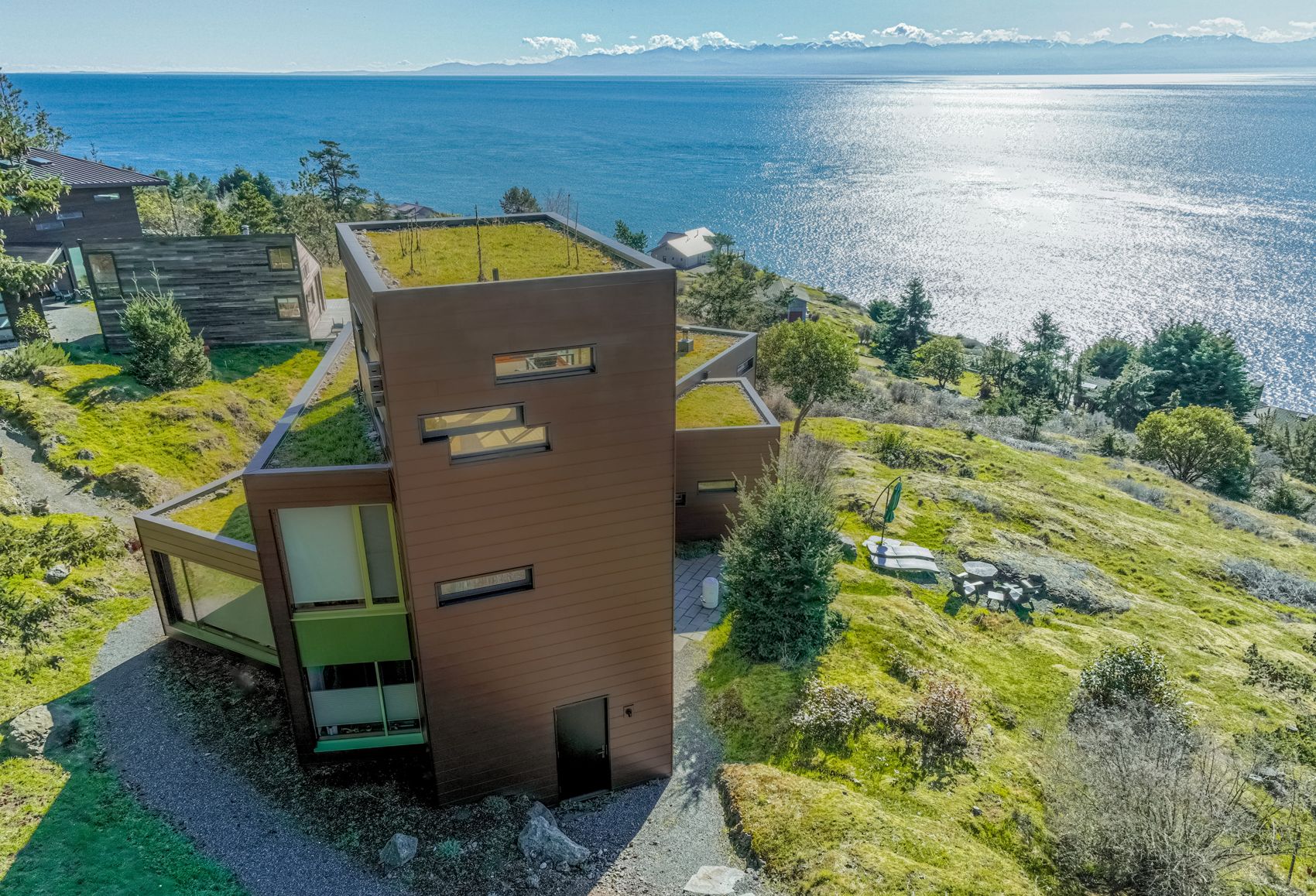
Kendall sits back in the Whatcom County foothills, tucked under fir and cedar canopy on the way toward Mount Baker, and that setting changes the siding-color conversation compared to a wide-open lot in Ferndale or a bluff-top property in Birch Bay. Less direct sun, more shade-grown moss, and colder winter nights all push the right answer in a specific direction. This guide walks through the colors we come back to most often on Kendall projects, why they work, and the honest tradeoffs of each, so you make a choice you will still like in ten years and not just on install day.
If you want the short version before the details: mid-tone warm grays and greiges, deep forest green, charcoal or near-black trim accents, and warm wood-grain fiber cement tend to hold up best on Kendall homes. They read well in the filtered, dappled light common under tree cover instead of looking flat or chalky the way some pale colors do, they hide the fine mineral streaking that a season of rain leaves on a wall, and they sit comfortably next to the stone, timber, and evergreen backdrop most Kendall lots already have.
None of these are the only acceptable choices, and lighter or bolder colors can still work with the right maintenance plan. We go through the full lineup below, drawbacks included.
We are not ranking colors by trend or by how they photograph on a rare sunny day, because Kendall does not get many of those in a row between October and May. The criteria that actually decide whether a color choice ages well here are more practical than aesthetic alone.
First is how a color reads in the soft, filtered light Kendall gets beneath tree cover. Colors that look crisp in direct sun can look muddy or washed out in shade, while colors that look flat on a showroom chip can look rich once they are on a full wall in indirect light. Second is moss and algae visibility. Persistent rain and shade support algae and moss growth on almost any exterior surface in Whatcom County, and it shows differently by base color and sheen — flat, pale colors generally show green and black streaking sooner and more visibly than mid-tones do. Third is streak and stain visibility from wind-driven rain; even where a property sits back from the exposed shoreline stretches near Bellingham Bay and the Strait, driving rain still runs down every wall and pools at trim and butt joints, and lighter colors show the resulting mineral streaks and dirt lines faster than mid-tones. Fourth is how a color and substrate combination holds up through repeated freeze-thaw cycles, which are more of a factor in the Kendall foothills than at sea level in Bellingham or Blaine, since freeze-thaw stresses caulk joints, paint film, and factory finishes over time. Fifth, we check whether color choice interacts with the Washington State Energy Code at all, and the honest answer is that the code governs insulation, air sealing, and continuous-insulation requirements in the building envelope, not paint color — code compliance is really about the siding assembly you choose, not the hue on top of it. Sixth, we check local rules, because some Whatcom County developments, including parts of Sudden Valley, carry HOA covenants or design guidelines that restrict palette choices, and it is worth checking those before settling on a color.
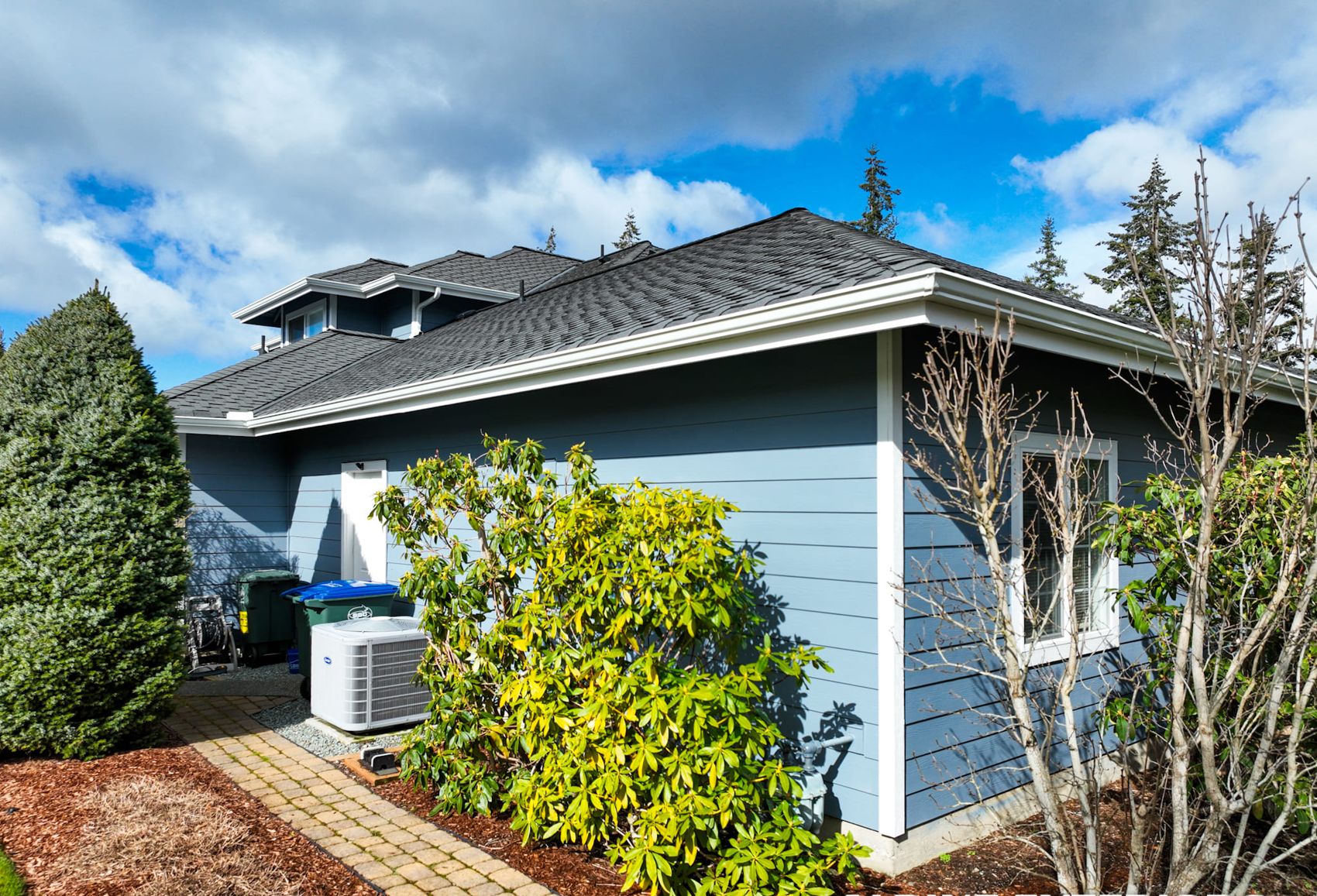
Gray and greige are the safest broad category for Kendall because they hold their look in both overcast light and the brief bursts of direct sun the area does get, and they do not show algae streaking as obviously as pure white does. The tradeoff is that gray has become extremely common across Whatcom County over the last several years, so a Kendall street can start to look repetitive, and some warmer grays can drift slightly green or lavender in certain light, which not everyone likes once it covers a whole house rather than a paint chip.
Green siding sits naturally against a Kendall backdrop of firs and cedars, and a deep, saturated green does a good job camouflaging the light moss haze that develops on north-facing walls under heavy shade. The drawback is that very dark greens can look almost black in low winter light, and if a property does get real afternoon sun on a west wall, dark colors run warmer and can fade unevenly between shaded and sun-exposed elevations over many years.
Charcoal works well as a full body color on some home styles and as a trim, fascia, and window accent on nearly any of them. It reads crisp against the muted greens and grays of the surrounding tree line, and it hides road grime and rain streaking better than almost anything lighter. The honest downside is that charcoal on large, unshaded wall areas can show fine surface dust and pollen film more than a mid-tone would, simply because any variation shows more against a flat, very dark background, and an all-charcoal home can look severe without enough warm material — wood accents, stone — to balance it.
A warm, cedar-toned wood-grain finish on fiber cement lap or shingle siding leans into the natural materials already present in most Kendall landscapes rather than fighting them, and it tends to look striking against evergreens and exposed timber trim. The tradeoff is that wood-look factory finishes vary quite a bit in quality between manufacturers; a lower-grade finish can look convincing on day one and then fade or streak unevenly faster than a solid color would, so this option leans hard on choosing a reputable factory finish rather than a generic one.
White still has real appeal for a clean, traditional look, and it can look striking against a dark tree line. But white is the color most likely to show algae and moss growth clearly in a shaded, humid setting like Kendall, and it needs more frequent washing to keep that fresh look than a mid-tone will. If you want white, plan on it being a maintenance commitment rather than a set-it-and-forget-it choice.
Slate blue and navy read well here because they sit between the gray of an overcast Whatcom County sky and the green of the tree canopy without competing with either, and navy in particular hides streaking almost as well as charcoal. The drawback is that blue is a more polarizing choice for resale than gray, green, or wood tones, and very saturated blues can look cold and flat during the long stretch of gray winter days Kendall gets every year.
Taupe and warm clay tones split the difference between gray's practicality and wood tone's warmth, and they tend to age gracefully because they already read as a slightly weathered, muted color even when new. The downside is that a poorly chosen taupe can lean pink or too tan depending on the light, so it is worth viewing a full-size sample outdoors on an overcast Kendall day, not just under a showroom light, before committing.
The clearest thing to avoid is a very pale, flat, low-sheen color on a heavily shaded elevation, since that combination shows moss and algae fastest and needs the most frequent washing to keep its intended look. Bright, highly saturated colors outside the neutral-to-earth-tone range are also worth avoiding if a property falls inside an HOA or platted development with design covenants, since Sudden Valley and several other Whatcom County developments do restrict exterior palettes, and a mismatched color can turn into a compliance headache after the siding is already up. High-gloss trim finishes deserve a second thought too — gloss sheds water well, but it also highlights every small surface imperfection and any minor movement at trim joints, which shows up more as freeze-thaw cycles work on caulk lines through a Kendall winter. Finally, avoid choosing a color purely from a small paint chip or an online rendering; Kendall's filtered, tree-shaded light changes how a color looks more than most people expect, and a color that looked perfect on a screen can read very differently once it covers an entire wall in real conditions.
Some developments in this part of Whatcom County, including sections of Sudden Valley, do have design covenants or architectural guidelines that limit exterior color palettes, so it is worth checking your HOA documents or asking your homeowners association directly before finalizing a color, since a restricted or unusual choice can require a variance or resubmission.
Dark colors absorb more heat and can show fading sooner on elevations that get direct afternoon sun, but in a heavily shaded, tree-covered setting like much of Kendall, sun-driven fading is generally a smaller factor than it would be on an open lot, while moss, algae, and rain streaking tend to show up faster on light colors than fading shows up on dark ones.
It is one of the bigger practical factors in this climate. Persistent rain and shade support moss and algae growth on almost any exterior surface in Whatcom County, and it is simply more visible on pale, flat colors than on mid-tone or darker ones, so color choice affects how often you will want to wash the siding to keep its original look rather than whether growth happens at all.
The Washington State Energy Code governs the building envelope, including insulation values and air sealing, not exterior paint or finish color, so code compliance comes down to the siding assembly and insulation approach you choose rather than the color on top of it. Your contractor should be able to walk through how a given siding product meets code requirements separately from the color decision.
Picking a siding color for a Kendall home really comes down to matching the color to your lot's tree cover, sun exposure, and any HOA rules that apply, not just picking a favorite off a chip. Alpine Exteriors has worked across Whatcom County long enough to know which colors hold up under Kendall's shade and rain and which ones turn into a washing chore within a couple of seasons. If you want to see full-size samples against your own home instead of guessing from a small chip, reach out to Alpine Exteriors for a color consultation — we are licensed to do this work in Washington under contractor license ALPINI751OW, and we are glad to bring samples out to your property in Kendall or anywhere else in Whatcom County.