
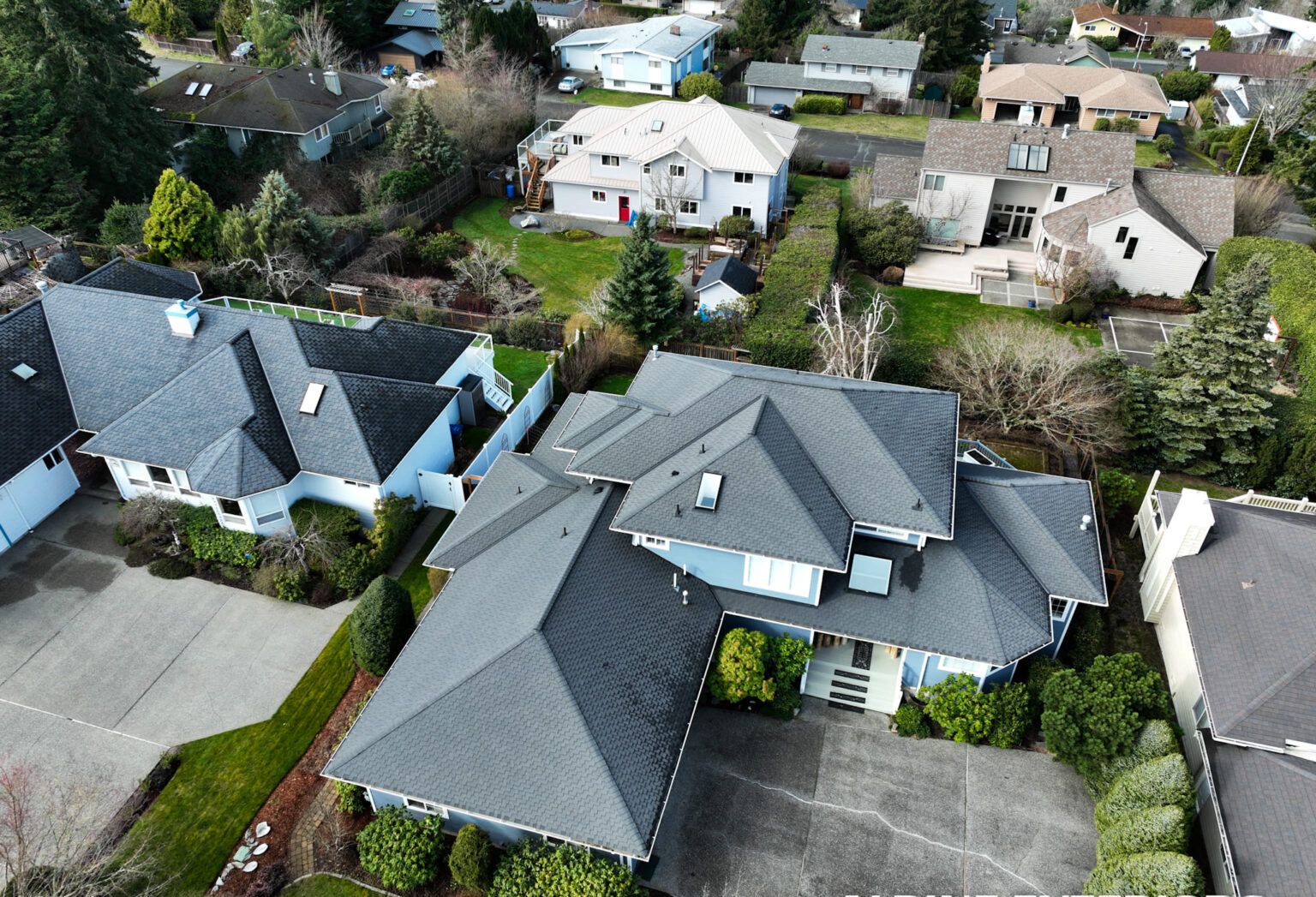
Sudden Valley sits against Lake Whatcom with tree cover on most lots, moisture that lingers in the shade well after a storm has passed, and a mix of older cabins and newer builds that both eventually need a siding decision. Homeowners here usually narrow it down to two materials: James Hardie fiber cement and vinyl. Both can look good and both are sold by installers all over Whatcom County, but they behave very differently once they're exposed to years of Pacific Northwest rain, filtered light, and the freeze-thaw swings that show up in the foothills around the lake. This page walks through both options honestly, compares them side by side, and explains which one Alpine Exteriors tends to recommend for Sudden Valley specifically and why.
If your home is shaded by conifers, sits close to the lake where humidity stays high, or has any history of moss, algae staining, or soft trim boards, James Hardie fiber cement is usually the better long-term fit. It resists moisture intrusion better, holds paint longer in low-light conditions, and doesn't warp the way vinyl can when it's pinned against damp siding underlayment for months at a time. If your home is on a more open, sunnier lot, you're working with a tighter renovation budget, or you're re-siding a rental or secondary property where lowest lifetime cost matters more than resale polish, vinyl is a reasonable and legitimate choice — as long as it's installed correctly with proper flashing and starter strips, which matters more in our climate than in drier parts of the state.
Neither material is wrong. The mistake we see most often in Sudden Valley is choosing based on upfront price alone and ignoring how much shade and moisture the specific lot actually gets. A south-facing lot near the marina behaves nothing like a north-facing lot tucked under second-growth timber a quarter mile up the hill.
James Hardie fiber cement siding is a blend of cement, sand, and cellulose fiber pressed into planks, panels, or shingle-style pieces and then factory-primed or factory-finished with Hardie's ColorPlus coating. It's noncombustible, dimensionally stable, and doesn't absorb water the way wood does, which is the main reason it holds up well in a lake environment where morning dew and shaded dampness are a daily occurrence rather than an occasional storm event.
In Sudden Valley specifically, the advantages that matter most are moisture resistance and rot resistance. Because fiber cement doesn't swell, cup, or delaminate when it stays damp, it's a strong match for lots with heavy tree cover where siding can stay wet for days after a rain system moves through. It also takes paint well over the long run, so touch-ups on trim or repainting down the road blend in rather than looking patched. On the downside, fiber cement is heavier and more labor-intensive to install than vinyl, it needs to be cut and handled correctly to control silica dust, and it costs more upfront both in materials and labor. It also still requires periodic caulking and repainting on unfinished cut edges and around penetrations — it's low-maintenance compared to wood, not maintenance-free.
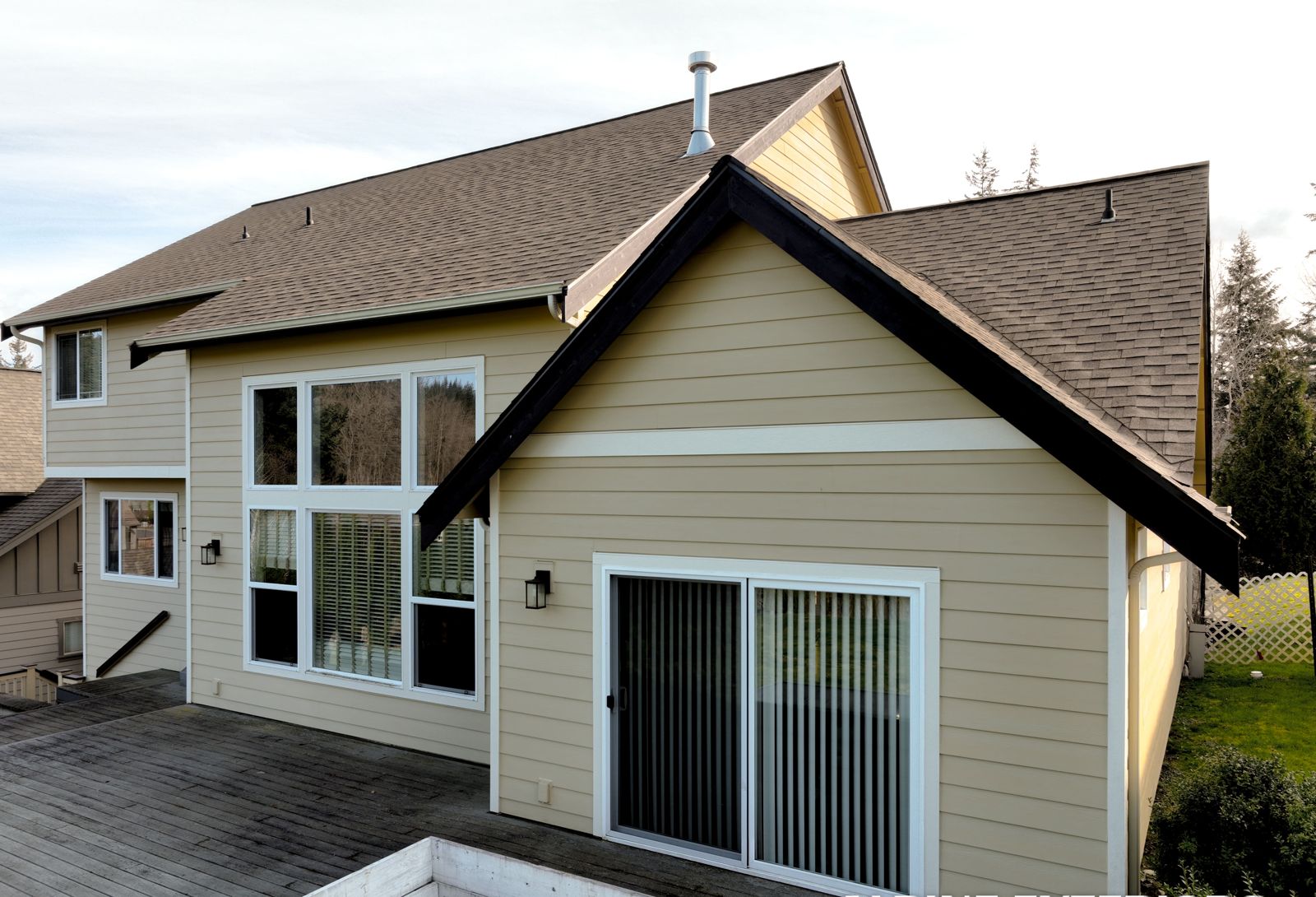
Vinyl siding is an extruded PVC product that comes pre-colored, so there's no painting required, and it's noticeably lighter and faster to install than fiber cement. For straightforward, sun-exposed elevations, that speed and lower material cost make it an attractive option, and modern vinyl profiles have gotten better at resisting fading and cracking than the vinyl of even ten or fifteen years ago.
The tradeoffs show up more in our specific conditions than they would in a drier climate. Vinyl expands and contracts with temperature, and in the freeze-thaw swings we get in the Sudden Valley foothills, panels installed too tight can buckle, while panels installed too loose can rattle or blow loose in wind-driven rain off the lake or, on more exposed lots, gusts funneling in from the direction of Bellingham Bay. Vinyl also doesn't stop moisture from reaching the wall assembly the way people assume — it relies entirely on the water-resistive barrier and flashing behind it, so any shortcuts in the underlayment become a hidden rot problem years before the vinyl itself shows a flaw. And because vinyl can't be painted (or at best takes specialty paint poorly), a homeowner who wants to change the exterior color later is looking at a full tear-off, not a repaint.
| Factor | James Hardie Fiber Cement | Vinyl Siding |
|---|---|---|
| Installed cost | Higher — roughly the top tier of common siding options, driven by material weight, factory finish, and slower, more careful installation | Lower — generally the most budget-friendly common siding material, with faster labor and lighter handling |
| Typical lifespan | Long-lived when properly installed and maintained; well-documented track record of multiple decades in wet Pacific Northwest climates | Moderate to long, but more variable — sun exposure, freeze-thaw cycling, and installation quality affect how long panels stay flat and tight |
| Maintenance | Periodic recaulking and repainting of trim and cut edges; resists moss and algae better but shaded sections still need occasional washing | Occasional washing to remove algae film in shaded, damp areas; no repainting, but damaged panels are replaced rather than repaired |
| Appearance / resale | Wood-grain or smooth finishes, deep factory color options, generally read as a premium upgrade to buyers and appraisers | Wide color and profile range, continues to improve, but can look and feel less substantial up close and near seams |
For most Sudden Valley homes, Alpine Exteriors leans toward recommending James Hardie fiber cement, and the reasoning is specific to this neighborhood rather than a blanket preference. Lots around Lake Whatcom hold moisture longer than lots in open, drained areas of Bellingham or Ferndale because of the tree canopy and the lake's own microclimate — shaded north walls can stay damp for days, which is exactly the condition where wood rot gets started and where vinyl's reliance on a perfect water-resistive barrier becomes a real risk rather than a theoretical one. Fiber cement's resistance to moss, algae staining, and moisture-driven swelling directly addresses the failure patterns we see most often on re-siding calls in this area.
That said, vinyl isn't automatically the wrong answer. If a home sits on a cleared, sun-exposed lot with good drainage, if the project is budget-constrained, or if the property is a secondary or rental home where the owner's priority is a clean, low-cost exterior rather than a decades-long investment, vinyl installed with correct flashing, starter strips, and expansion gaps is a legitimate choice that will perform reasonably well. The Washington State Energy Code also comes into play on any full re-side that touches the wall assembly — continuous insulation and air-sealing requirements can affect which siding system integrates most cleanly with the wall, and that's worth reviewing before a material is locked in rather than after. Either way, the installation details — flashing at windows and doors, proper lap and fastening, correct clearance from grade and roof lines — matter as much as the material choice itself, and a rushed vinyl or fiber cement job will underperform a well-installed version of the "wrong" material.
Fiber cement doesn't feed mold or algae growth the way a moisture-retaining surface can, and its factory finish tends to shed surface grime more evenly, but nothing is immune to moss and algae staining in a shaded, humid lot near the lake. Both materials will need occasional washing on north-facing or heavily treed elevations; fiber cement just tends to need it less often and shows less permanent staining over time than vinyl left unwashed for years.
Not necessarily, but installation quality matters more with vinyl in windier, wetter conditions than it does in a calm, dry climate. Panels need correct nailing (not driven tight), proper overlap, and intact flashing so that wind-driven rain doesn't get pushed behind the panels at seams and corners. A poorly installed vinyl job is far more likely to leak in our conditions than a poorly installed fiber cement job, simply because vinyl depends more heavily on the barrier behind it.
The foothill areas around the lake see more freeze-thaw cycling than lower, closer-to-the-water parts of Bellingham, and that cycling is harder on vinyl than on fiber cement because vinyl expands and contracts more with temperature swings. Correctly installed vinyl accounts for this with expansion gaps, but a tight or improperly fastened installation is more likely to buckle or crack over repeated freeze-thaw seasons. Fiber cement is more dimensionally stable across those swings.
The Washington State Energy Code sets requirements for wall insulation and air-sealing on re-sides that expose the wall assembly, and those requirements can influence which continuous insulation or house wrap system pairs best with either material. It doesn't favor one siding brand over another, but it does mean the underlying wall assembly — not just the visible siding — needs to be planned correctly, which is worth discussing with your contractor before the material choice is finalized.
Every lot around Sudden Valley gets a slightly different mix of shade, wind, and moisture, and that mix should drive the siding decision more than a generic preference for one material over another. Alpine Exteriors is a licensed Washington contractor (license ALPINI751OW) serving Sudden Valley, Bellingham, Ferndale, Lynden, Blaine, Birch Bay, and the islands, and we're glad to walk your specific property, point out where moisture and rot risk are highest, and give you an honest recommendation — James Hardie, vinyl, or a mix depending on elevation — along with a real cost range before any work begins.