
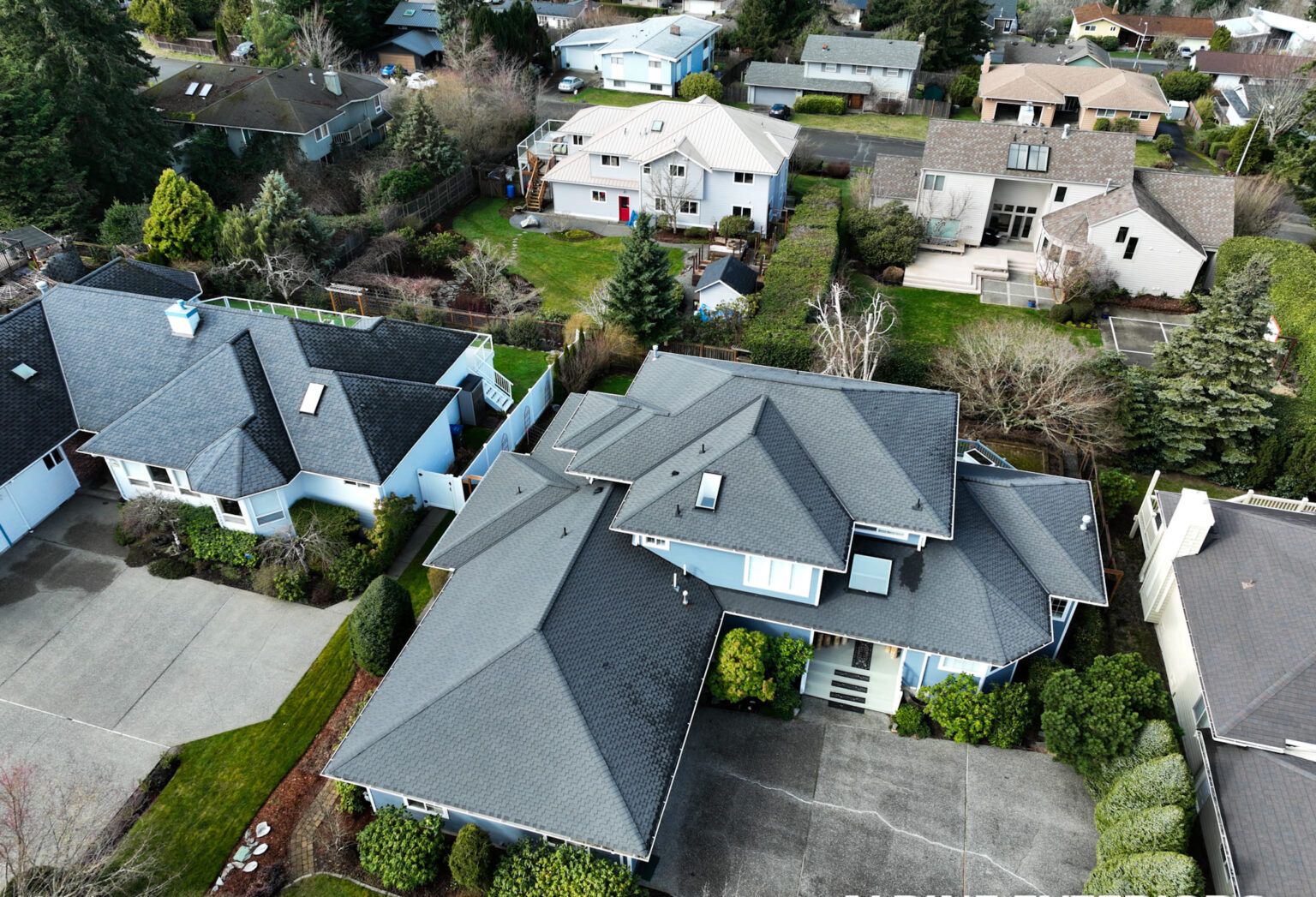
Meridian sits in that in-between stretch of Whatcom County — past Bellingham's city limits, short of Lynden, tucked against the open farmland and low foothills that run up toward the Nooksack valley. Houses out here take a specific kind of weather beating: long stretches of steady, low-intensity rain from fall through spring, damp air that never fully dries between storms, and cold snaps that bring frost and the occasional freeze-thaw cycle in the shoulder seasons. None of that is dramatic on any given day. It's the accumulation over ten, fifteen, twenty years that does the damage, and siding failure on Meridian homes tends to show up quietly — a soft spot here, a dark streak there — long before anyone notices the bigger problem underneath.
This page walks through what to actually look for, what's likely causing it on a house in this part of the county, and how to tell the difference between something you can watch for a season and something that needs a contractor now. We wrote it after looking at a lot of siding calls in Meridian, Lynden, and the surrounding rural routes, not from a script.
Any one of these on its own might be minor. Two or three together, especially clustered on the same wall, usually means moisture has been getting behind the siding for a while.
This is moss and algae growth, and it's about as common on Meridian homes as it gets. The county's rain pattern — frequent, low-intensity, and often paired with overcast skies that slow drying — creates ideal conditions on any wall that doesn't get direct afternoon sun. North and east-facing walls, areas shaded by fir or cedar trees, and sections near gutters that overflow are the usual spots. On its own, surface growth is mostly cosmetic and can often be cleaned. The concern is what it signals: if moss is thriving on the siding surface, the material is staying wet longer than it should, which is the same condition that eventually leads to rot underneath, particularly with wood and older engineered wood products.
Vinyl and some fiber-cement or hardboard sidings can warp when moisture gets trapped behind them and the panel expands unevenly, or when repeated wet-dry cycling stresses the material over years. On Meridian homes this shows up most on walls that catch wind-driven rain during winter storms moving in off the Strait and Georgia Basin weather systems — even inland from the bay, a hard southwesterly storm can drive rain sideways into a wall for hours. Once a panel warps, it usually doesn't flatten back out on its own, and the distortion often means the fastening or the water-resistive barrier behind it has already been compromised.
This is the one that matters most and is easy to miss until it's advanced. Press on the siding near the bottom of a wall, around window and door trim, and near any spot where two materials meet — deck ledger boards, hose bib penetrations, old satellite mount holes. If it gives like a wet sponge or crumbles, water has been sitting in that wood long enough to break it down. Whatcom County's damp, cool climate is close to ideal for wood-decay fungi: they need moisture and moderate temperatures, and we supply both for most of the year. Rot rarely stays contained to the siding itself — by the time it's visible on the surface, it has often reached the sheathing behind it.
Freeze-thaw cycling plays a real role here, more so on properties near Meridian's edge of the foothills where nighttime temperatures drop faster than they do closer to the water. Water that's worked its way into a hairline crack or a fastener hole expands when it freezes, widening the crack. It's a slow process, but it's a one-way one — small cracks become bigger cracks, and eventually water gets behind the panel entirely. Impact damage (branches, hail, string trimmers) can also crack siding, but the pattern is different: impact cracks are usually isolated and localized, while freeze-thaw cracking tends to spread along panel edges and fastener lines over multiple winters.
On painted wood or fiber-cement siding, paint that's bubbling or peeling in patches (rather than just fading) is often a sign that moisture is trying to escape from inside the wall assembly and is pushing the paint film off from behind. This is different from ordinary weathering, and it's worth investigating rather than just repainting over it, since a fresh coat won't hold if the moisture source underneath isn't addressed first.
Siding is designed to overlap and shed water down and away from the wall. When panels shift, gap, or lose their fasteners — often from wind pressure during winter storm events, or from the wall sheathing behind them softening — that shingling effect breaks down, and rain gets a direct path behind the cladding instead of running off the surface.
By the time moisture problems show up inside the house — a musty smell in a bedroom closet along an exterior wall, a faint brown ring on drywall, or peeling interior paint — the exterior siding failure has usually been going on for a while. This is one of the later-stage signs, not an early one.
Washington State Energy Code has required increasingly tight wall assemblies and insulation performance for new construction and major renovations for years now, and older Meridian homes built before those standards often relied on siding and building paper alone to manage moisture and air movement. When siding fails and water gets into wall cavities, it compresses or degrades insulation, and a wall that's supposed to hold a certain R-value starts losing heat. A gradual, unexplained increase in heating costs — especially isolated to rooms along one wall — is a legitimate, if indirect, siding symptom.
Not every sign on this list means calling someone tomorrow. Here's a rough way to sort them.
Address soon (weeks, not months): soft or spongy spots anywhere on the siding, panels that have visibly separated from the wall, interior staining or musty smells, and any area where you can see daylight or feel airflow through a gap. These indicate active water intrusion, and every additional rainy week in this climate adds to the damage. Winter is the worst time to let these sit, since Whatcom County's wettest months are exactly when the exposed wall assembly is taking on the most water.
Can be monitored (through the next dry season): surface moss and algae with no soft spots underneath, minor fading, small isolated cracks from an identifiable impact, and light gapping that doesn't move in the wind. These are worth photographing and rechecking after a few months, but they aren't typically emergencies. That said, "can wait" is not "can be ignored" — a monitored issue that's gotten visibly worse at the next check should move into the urgent category.
When in doubt, the honest answer is that a five-minute visual check often isn't enough to tell rot from surface staining, especially on painted wood siding where discoloration can hide what's underneath. That's really a case for an in-person look rather than guessing from the sidewalk.
A few practical steps, roughly in order:
Alpine Exteriors inspects siding on homes throughout Meridian and the rest of Whatcom County and gives a straight answer on repair versus replacement — we'd rather tell a homeowner they need a $400 flashing fix than sell a job that isn't needed yet. We're a licensed Washington contractor (license ALPINI751OW), and our estimates spell out labor and material separately so it's clear what's driving the cost.
It depends heavily on square footage, siding material, and how much of the underlying sheathing or trim needs repair once the old siding comes off — that last part is genuinely unknown until a contractor gets a panel or two open. As a rough range, partial repairs on a section of wall often run in the low thousands, while a full re-side on an average-size single-family home commonly falls somewhere in the mid five figures depending on material choice; fiber-cement generally costs more than vinyl but tends to hold up better against moss and moisture in this climate. Get a written, itemized estimate rather than relying on a ballpark, since hidden rot behind old siding is common enough here to meaningfully change the number.
Surface moss by itself is mostly cosmetic and can often be washed off without damaging the siding, especially on vinyl. It becomes a bigger concern when it's growing on wood or hardboard siding, when it's persistent even after cleaning, or when you find softness underneath it — moss thrives in the same damp conditions that promote rot, so it's a useful early warning even when it isn't the direct cause of structural damage.
Sometimes, but not always. If the cracking or peeling is surface-level and the material underneath is still sound, cleaning, patching, and repainting can extend the siding's life for a reasonable stretch. If the paint is bubbling because moisture is escaping from behind the wall, or if there's any soft or rotted material under the crack, painting over it just hides the problem while it keeps getting worse underneath. A quick press-test before you reach for the caulk gun tells you which situation you're in.
It varies a lot by material and installation quality, but the persistent rain and damp air here tend to shorten the practical lifespan compared to drier climates. Vinyl siding installed correctly can often perform well for a couple of decades or more, while wood siding without diligent maintenance can show rot in considerably less time, especially in shaded or poorly ventilated wall sections. Regular gutter maintenance, keeping vegetation trimmed back from walls, and addressing small issues early all extend that lifespan meaningfully — the homes we see failing earliest are almost always the ones where a small problem sat unaddressed through a few wet winters.
If you're seeing any of these signs on a Meridian home, it's worth getting an in-person look before deciding between a repair and a full replacement. Alpine Exteriors serves Meridian and the surrounding Whatcom County communities — Bellingham, Ferndale, Lynden, Blaine, Birch Bay, Sudden Valley, and the islands — and can walk your property, point out what's cosmetic versus what's urgent, and put together a clear, itemized estimate for whatever the siding actually needs.