
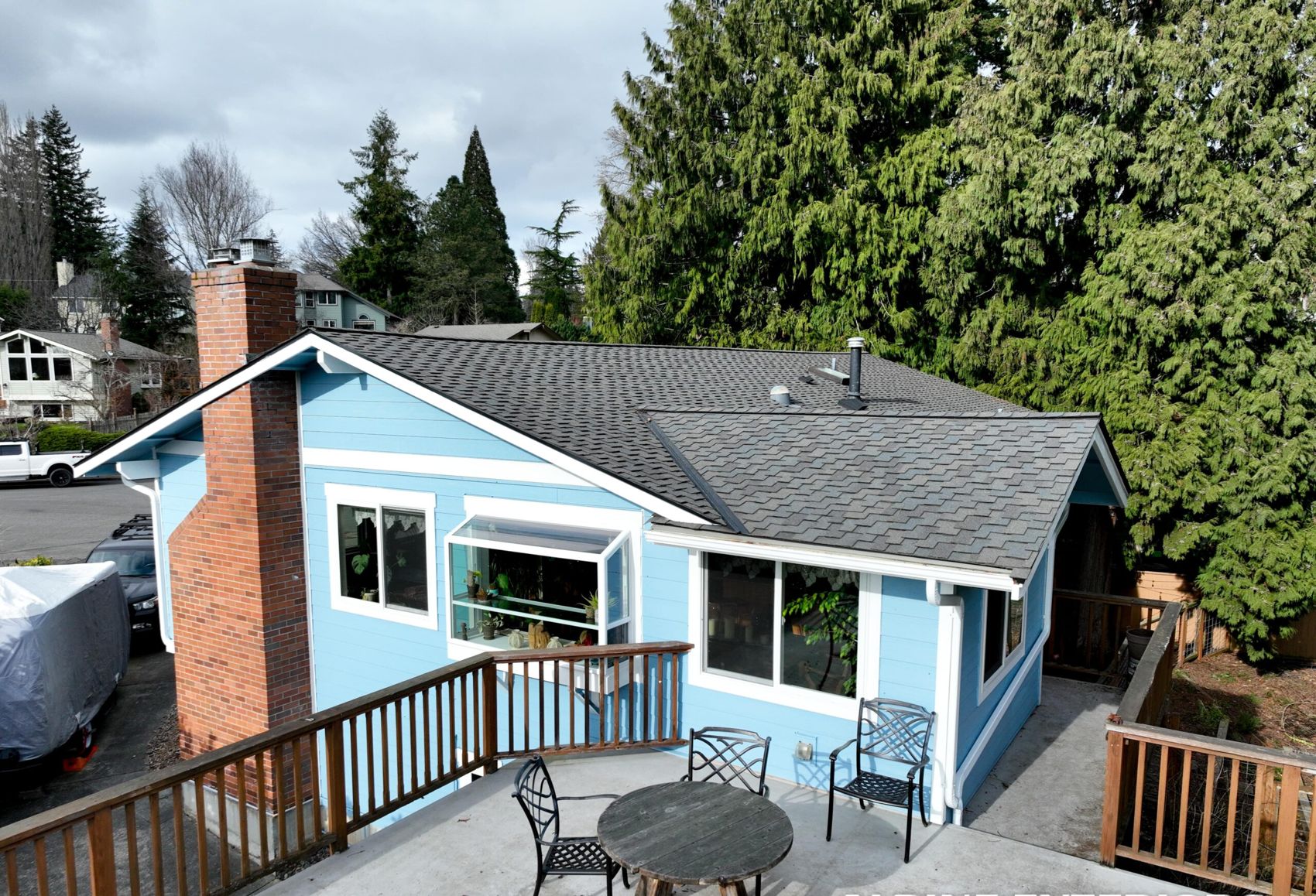
If you own a home in the Roosevelt neighborhood or anywhere else around Bellingham, you already know the siding on a house here works harder than siding almost anywhere else in the state. Roosevelt sits close enough to Bellingham Bay and the Strait of Georgia that wind-driven rain hits west- and south-facing walls directly, and the same marine air that makes the neighborhood pleasant in July also keeps siding damp for long stretches between October and April. Homeowners researching a siding replacement usually want two things: a realistic sense of what the job costs, and an explanation of why one bid came in so much higher than another. This page covers both, using ranges rather than fixed numbers, because the honest answer to “what will my siding cost” always depends on the specifics of your house.
Siding replacement pricing in this part of Washington swings widely because the variables stack on top of each other. A small, single-story rambler with simple walls and vinyl siding sits at the low end of the range. A two-story home with a lot of trim, dormers, a steep roof pitch that complicates staging, and fiber cement or cedar siding sits at the high end, sometimes well above it. Rather than quote a single number that would be misleading either way, it is more useful to break the job into the factors that actually move the price, most of which apply whether you're in Roosevelt, downtown Bellingham, Ferndale, or out toward Lynden.
The table below groups the major cost drivers into low and high ranges as a share of a typical project. These are relative ranges, not dollar figures — a contractor walking your specific property is the only reliable source for an actual number, and even then it should come as a range until the tear-off reveals what's under the old siding.
| Cost factor | Low end of range | High end of range |
|---|---|---|
| Siding material (vinyl vs. fiber cement vs. cedar/wood) | Vinyl, basic profile | Fiber cement or real cedar with a premium finish |
| House size and wall complexity | Single story, simple rectangular footprint | Two-plus stories, multiple gables, dormers, bump-outs |
| Existing sheathing and rot damage | Sound sheathing, no rot found at tear-off | Widespread rot requiring sheathing and framing repair |
| Trim, corner boards, and window/door detailing | Minimal trim, few openings | Extensive trim, many windows, decorative elements |
| Moisture barrier and rainscreen upgrade | Standard weather-resistive barrier | Full rainscreen gap system for wind-driven rain resistance |
| Insulation and energy code work | No insulation changes needed | Continuous insulation added to meet Washington State Energy Code |
| Access and site conditions | Ground-level walls, easy staging | Steep terrain, tall walls, limited crane/lift access |
| Paint or factory finish | Factory-finished vinyl or fiber cement | Job-site painted cedar or custom color-matched fiber cement |
Two things tend to surprise homeowners the most. First, the material line item is usually not the biggest swing factor — the condition of what's underneath the old siding is. Second, energy code compliance can add real cost even on a straightforward re-side, because the Washington State Energy Code has gotten stricter about continuous insulation and air sealing over the past several code cycles, and a full siding tear-off is often the most practical time to address it.
Beyond the categories in the table, a handful of realities specific to Whatcom County change the math on almost every project:
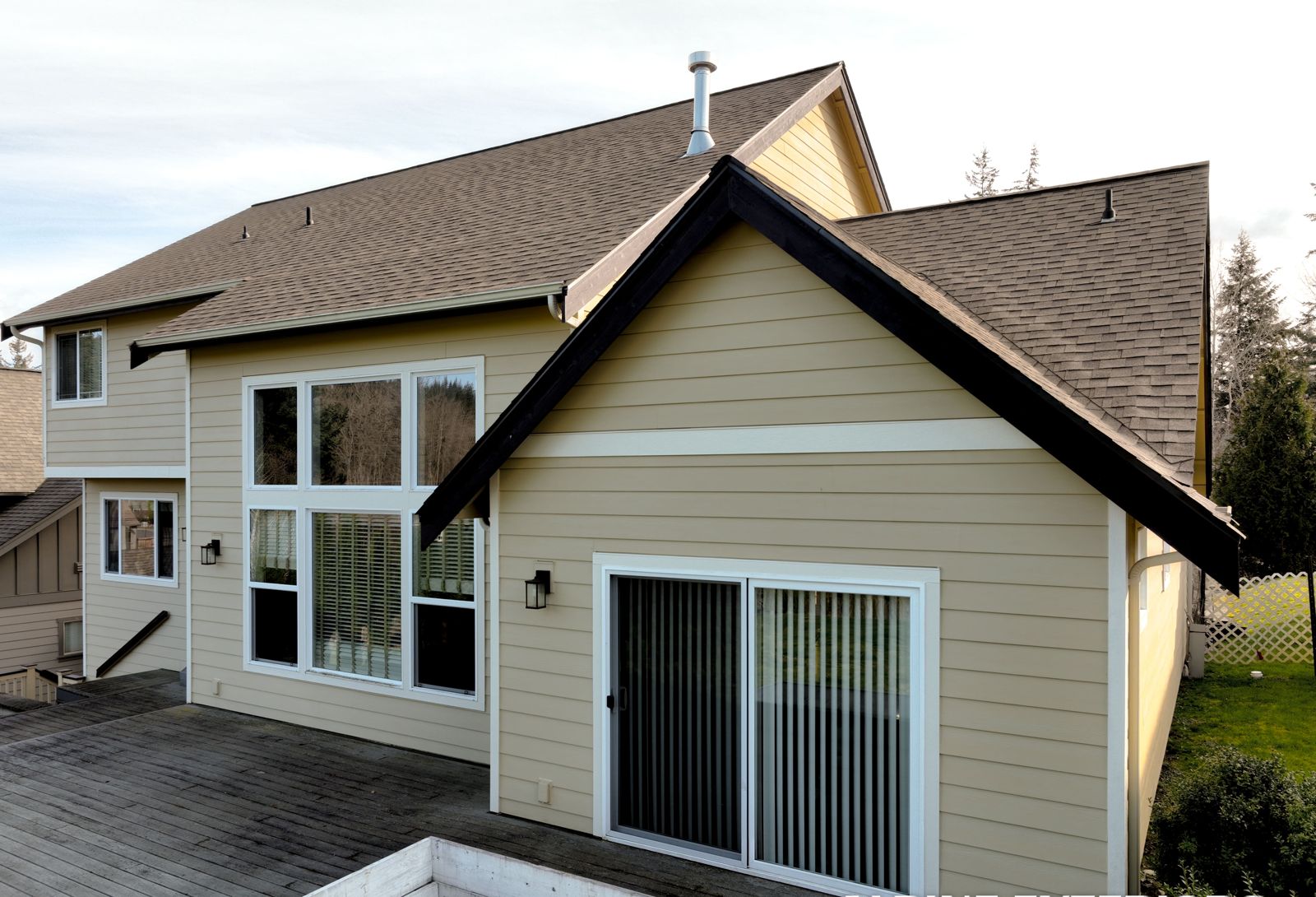
A siding quote that's actually useful for comparison should spell out more than a bottom-line number. At minimum, look for these elements in writing:
Alpine Exteriors provides written quotes that break out material, labor, and any sheathing or moisture-barrier work separately, specifically so homeowners can see where the money goes rather than comparing one lump-sum number against another. We hold Washington contractor license ALPINI751OW, and we'll walk a Roosevelt or wider Whatcom County property in person before putting a number in writing.
The single biggest mistake homeowners make when comparing siding bids is lining up the bottom-line totals without checking whether the scope behind each number is the same. A lower bid that excludes sheathing repair, uses a thinner-gauge vinyl, or skips the moisture barrier upgrade isn't actually cheaper — it's a different, smaller job. Before comparing dollar figures, line up the following across every bid:
It's also worth asking each contractor directly how they plan to handle wind-driven rain on your most exposed walls and what they found, or expect to find, in terms of existing rot. A contractor who gives you a vague answer to either question hasn't looked closely enough at your specific house yet, and that shows up later as change orders once the siding comes off.
Siding replacement is rarely an impulse purchase, and most homeowners in Whatcom County pay for it through some combination of savings, a home equity line of credit, or a contractor-arranged financing plan. If financing is part of your plan, get the total cost including interest in writing before signing, and confirm whether the rate is fixed for the loan term. Some manufacturers also offer financing tied to their siding products, which can come with promotional terms worth comparing against a general home equity line.
On the insurance side, siding replacement is sometimes covered in part by a homeowner's policy if the damage triggering the project came from a specific covered event — a wind storm that tore siding loose, or a sudden water intrusion event, for example. Ordinary wear, moss growth, or age-related rot from long-term moisture exposure is typically treated as a maintenance issue rather than a covered loss, so it's worth reading your policy's specific language rather than assuming coverage either way. If you do have storm damage that might be covered, document it with photos before any tear-off begins and loop in your adjuster early, since a contractor can provide a written scope of damage but can't make coverage decisions on your insurer's behalf.
Almost always this comes down to scope, not markup. One bid may include a full sheathing inspection and repair allowance, a rainscreen gap, and code-compliant insulation work, while another assumes the walls underneath are sound and quotes a bare material-and-labor job. Ask each contractor to itemize what's included so you're comparing the same project rather than two different ones wearing the same total price.
Both have a place here. Vinyl costs less up front and holds up reasonably well against the region's rain when installed with proper flashing and drainage, though it can look and perform poorly if installed cheaply. Fiber cement costs more but generally resists moisture, moss growth, and wind-driven rain better over the long run, and it takes paint well if you want to match a specific neighborhood look in Roosevelt or elsewhere in Bellingham. The right choice depends on your budget, how long you plan to stay in the home, and how exposed your walls are to weather.
Most siding replacement projects require a building permit, and if the project involves adding insulation or changing the wall assembly, it will also need to meet current Washington State Energy Code requirements. Permit rules and review can vary depending on whether the property is inside Bellingham city limits or in unincorporated Whatcom County, so it's worth confirming with the relevant jurisdiction or having your contractor confirm that as part of the project.
Timeline depends heavily on house size, how much sheathing repair is needed, and the weather window you're working in. A straightforward single-story home can move faster than a large two-story house with extensive trim and rot repair. Because the region gets extended wet stretches, especially from fall through spring, scheduling during a drier window and having a crew that actively manages weather exposure both matter more here than in a drier climate.
The most useful thing a Whatcom County homeowner can do before committing to a siding project is get more than one detailed, itemized quote and compare them scope-to-scope rather than total-to-total. Alpine Exteriors serves Roosevelt and the rest of Bellingham along with Ferndale, Lynden, Blaine, Birch Bay, Sudden Valley, and the islands, and we're glad to walk your property, point out what we see at the exterior before any siding comes off, and put a clear, itemized range in writing. Reach out to Alpine Exteriors to schedule a walkthrough and get a straightforward assessment of what your specific home needs.