
Maple Falls sits up against the North Cascades foothills, where tall firs, second-growth cedar, and a low, filtered light dominate most of the year. That setting changes what "looks good" actually means compared to a color chosen off a chip in a showroom. A siding color here has to hold its own against dark evergreen backdrops, survive genuinely wet winters, and resist the moss and algae bloom that shows up on the north and shaded sides of nearly every home in this part of Whatcom County. This guide walks through the colors that tend to work, the ones that tend to disappoint, and why, based on what we see going in and coming off houses across Maple Falls, Kendall, and the rest of the foothill communities we serve out of Alpine Exteriors.
For most Maple Falls homes, the top-performing colors fall into three families: mid-tone warm grays and greiges, deep forest or charcoal tones used as a dominant color with a lighter trim, and earthy browns that read as an extension of the cedar and bark tones already on the lot. These work for a few overlapping reasons: they hide the fine grime and moss shadowing that wet, shaded siding collects, they read as intentional rather than stark against a forest backdrop, and they tend to sail through the informal and formal color-approval processes used by the area's foothill community associations. None of these are flashy picks, and that's the point — siding color in a heavily treed, high-rainfall setting is as much a maintenance decision as an aesthetic one.
If you want a single default recommendation for a typical Maple Falls lot with mature trees and partial shade, a warm mid-gray field color with a charcoal or black-brown trim and a natural wood or fiber-cement accent at the entry is the safest combination we'd point a homeowner toward. It's not the only good option, but it's the one least likely to look tired in five years or clash with the setting.
Color choice for siding in this specific area isn't just about taste. We weighed each option against five criteria that actually matter for a foothill Whatcom County property:
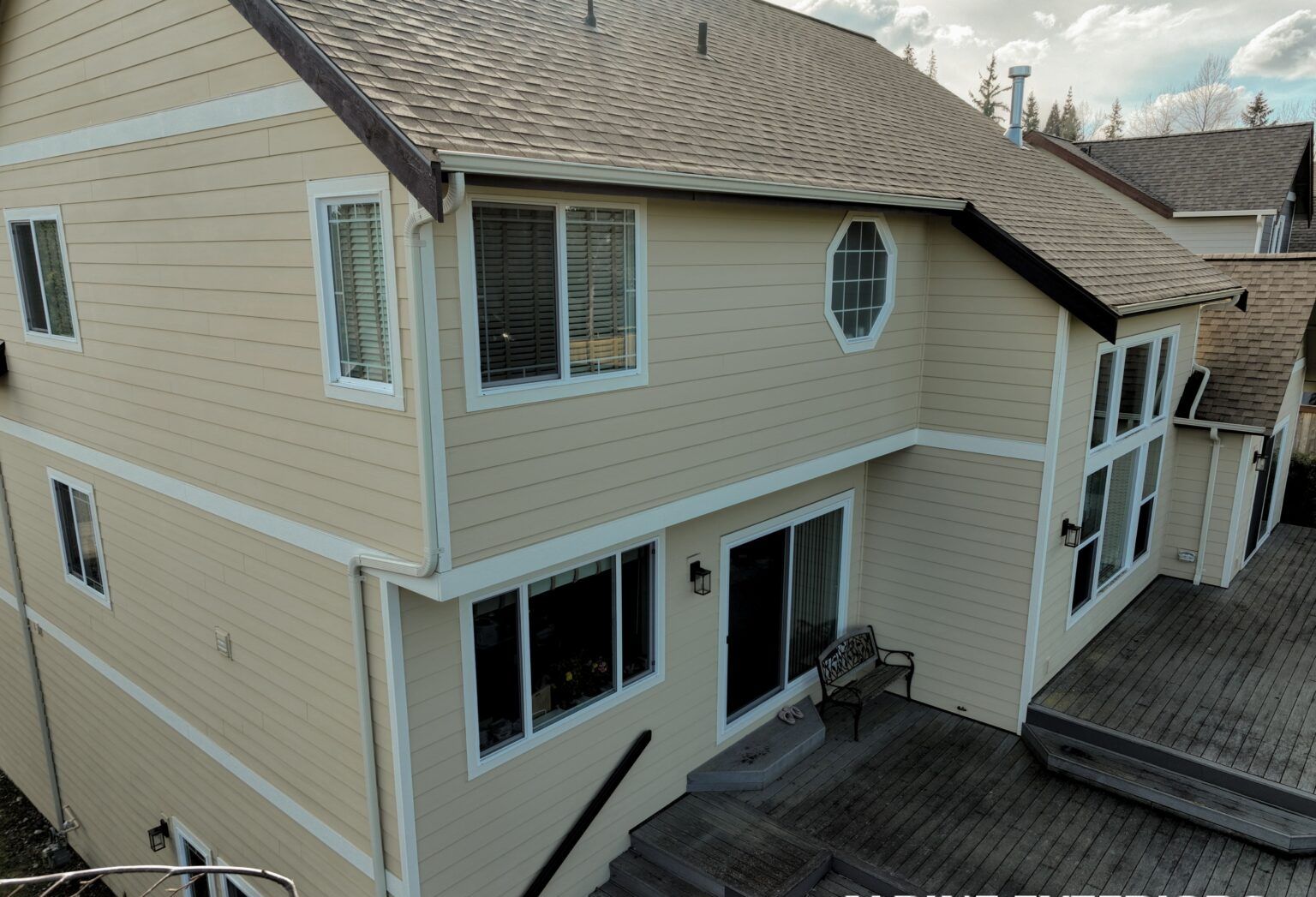
This is the workhorse choice for Maple Falls, and for good reason. A gray with warm undertones — leaning slightly taupe rather than cool blue-gray — sits comfortably against both the green of the forest and the gray of a typical overcast sky, so it never looks out of place no matter the season.
Pros: Mid-tone grays do an unusually good job of masking the light pollen film, water spotting, and early moss shadowing that shaded walls pick up between cleanings. They photograph well for resale, and they're close to the default expectation in most rural Whatcom subdivisions, so they rarely raise questions in an HOA review.
Cons: Mid-tone gray is common enough now that a home can look generic if the trim and door don't add contrast. Very light grays edge toward the same streaking issues as white. Cheaper vinyl in this color family can also look slightly plasticky in flat, overcast light, which is most of the year here.
Used as a dominant field color rather than an accent, dark forest green or a true charcoal (not quite black) does something a lot of lighter colors can't: it lets the house recede into the tree line instead of standing out against it, which a lot of Maple Falls buyers actually want.
Pros: Dark, cool colors hide algae streaking and moss shadow better than almost anything lighter, simply because the contrast between the color and the stain is smaller. They also tend to read as high-end rather than trendy, and they age gracefully — a slightly faded forest green still looks like forest green.
Cons: Heat absorption is the real trade-off. On vinyl siding specifically, darker pigments run hotter in direct sun and can distort or bow over time unless the product is rated for dark colors or backed with foam insulation — this is exactly where the wall's underlying energy-code insulation matters, since a continuously insulated wall assembly changes how the siding sheds heat compared to an older, uninsulated one. Fiber cement and engineered wood siding don't have this heat-distortion issue and are usually the better substrate if you want to go dark. Dark colors also show dust, pollen, and water spotting differently than lighter tones — not worse, just more visibly in bright light, which matters on the walls that do get afternoon sun.
Warm brown siding, especially in a tone close to the bark and cedar shake already common on older Maple Falls homes, tends to look like it belongs rather than like it was chosen from a catalog.
Pros: Brown hides dirt, tannin runoff from overhanging trees, and general grime exceptionally well. It's also the color family most likely to blend seamlessly if you're only replacing part of a home's siding now and the rest later, since undertone mismatches are less noticeable in brown than in gray or white.
Cons: Cheaper brown finishes can look dated fast if the undertone leans too orange or too red — the difference between a brown that looks like cedar and one that looks like 1990s vinyl is subtle but real. Brown also absorbs heat similarly to dark gray, so the same vinyl heat-distortion caution applies.
Crisp white or very light gray can look striking on a clear day, and it's a legitimate choice for a home with good sun exposure and an owner willing to keep up with cleaning.
Pros: Bright trim and light fields make a home stand out and can brighten a lot that's otherwise shaded most of the day. Light colors also stay cooler in direct sun, which removes the vinyl heat-distortion concern entirely.
Cons: This is the color family most likely to disappoint in Maple Falls specifically. Wet, shaded siding grows moss and mildew fastest where there's the most contrast to show it, and white shows green-black streaking, tannin drip lines from overhanging cedars, and general road and yard dust far sooner than a mid-tone or dark color. Owners who choose white here should plan on more frequent soft-washing than they would in a drier or more open part of the county.
A dusty, low-saturation slate blue can work well on a home with more open sky exposure — near the lake or on a cleared lot rather than deep under the canopy.
Pros: Slate blue pairs nicely with natural wood accents and white trim, and it reads as coastal-adjacent without being a bold, saturated color that clashes with the surrounding green.
Cons: Saturated or cool "true" blues can look cold and out of place against a forest backdrop, and some community associations near Maple Falls treat bold blues as an outlier color requiring extra design review. Blue pigments in lower-grade products are also among the more fade-prone over time.
It depends on the plat. Some foothill communities near Maple Falls and Glacier have formal architectural guidelines with an approved color list, others rely on informal neighborhood expectations, and some unincorporated parcels have no review process at all. Before ordering material, check your specific association's covenants or ask a neighbor who's re-sided recently — it's a faster and cheaper step than repainting or reordering siding after installation.
Generally yes, especially on north-facing or tree-shaded walls that stay damp longer between dry stretches. The contrast between light siding and dark moss or mildew growth is simply more visible than it is against a mid-tone or dark color. Light colors aren't a bad choice, but they do call for more frequent gentle washing to stay looking sharp.
Dark colors do tend to fade and chalk somewhat faster than mid-tones over many years of UV exposure, even with the area's frequent cloud cover, because dark pigments absorb more UV energy per hour of exposure. The bigger practical issue with dark colors in Maple Falls is usually heat-related warping on lower-grade vinyl rather than color fade itself — choosing a fiber-cement or heat-rated vinyl product largely solves both concerns.
Factory-finished fiber cement and quality vinyl with UV-stable pigment both perform well here, generally outlasting field-painted wood siding, which needs repainting on a regular cycle to keep its color and to stay ahead of moisture-driven wood rot at seams and end cuts. Whatever material you choose, the finish and installation detailing around trim, flashing, and ventilation matter as much as the pigment for how the color holds up over time.
Choosing a siding color that actually holds up in Maple Falls comes down to matching the finish to this area's rain, shade, and forest setting rather than to a showroom sample under bright lights. Alpine Exteriors works with homeowners across Maple Falls and the rest of Whatcom County — Bellingham, Ferndale, Lynden, Blaine, Birch Bay, Sudden Valley, and the islands — to pick materials and colors suited to each lot's sun exposure, tree cover, and any community design guidelines, then install them correctly the first time. Alpine Exteriors holds Washington contractor license ALPINI751OW. Reach out for an on-site color and material consultation before you commit to an order.