
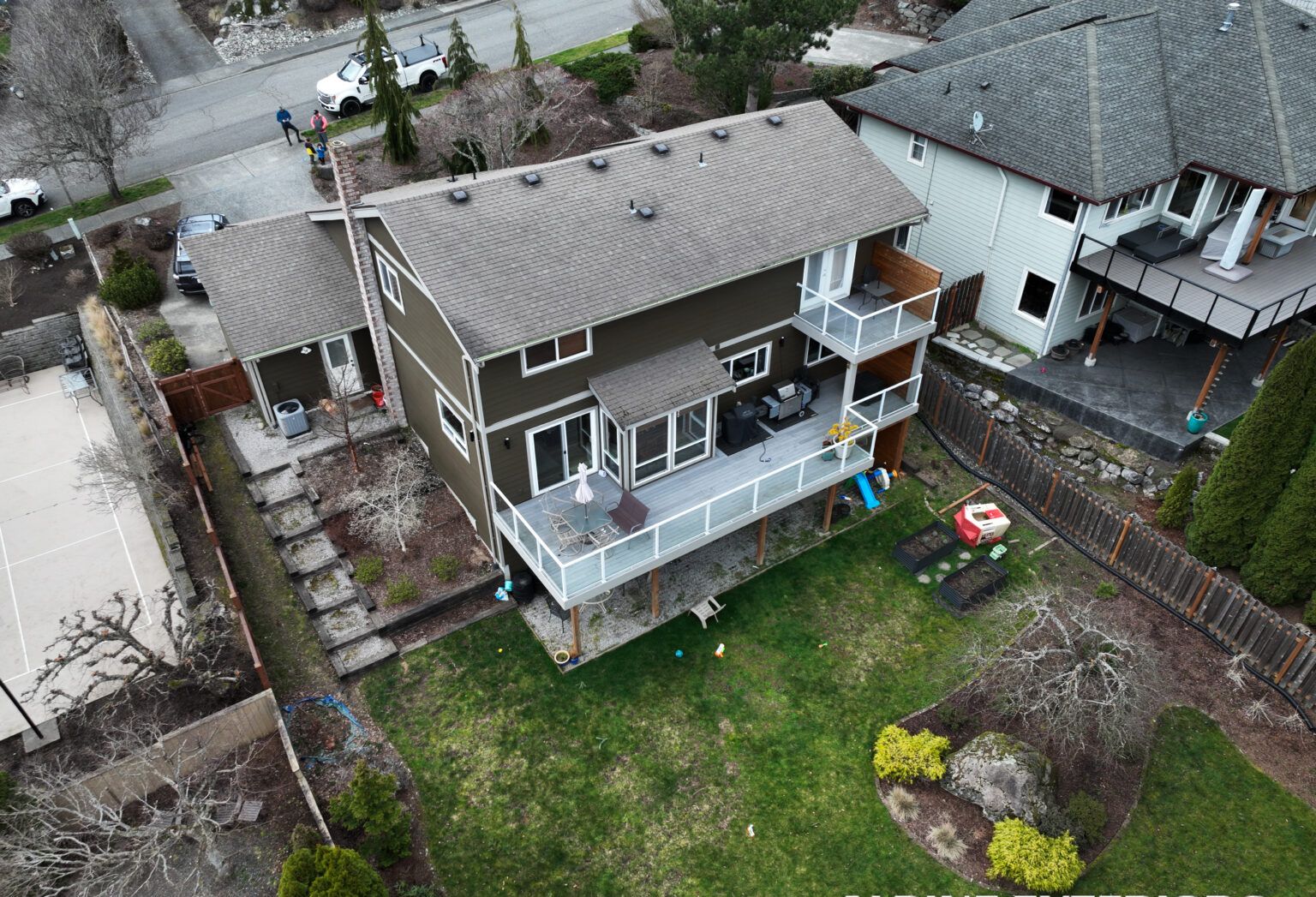
Birch Bay sits right on the water, which means every siding decision here is really a decision about how much weather a wall assembly can absorb over twenty or thirty years. Homes along Birch Bay Drive and the waterfront lots take wind-driven rain straight off the bay and the Strait of Georgia, plus a steady dose of salt-laden air that most inland Whatcom County homes never see. Add the region's long, wet stretches between October and May, the shade from mature evergreens that keeps north-facing walls damp for days at a time, and a housing stock that ranges from 1960s and '70s beach cabins to newer year-round builds, and you end up with a siding question that doesn't have one universal answer. This guide walks through the options we see most often on Birch Bay homes, judged honestly against the conditions that actually cause failures here, not against a generic checklist.
For most Birch Bay homes, fiber cement siding and engineered wood siding are the two products that consistently hold up best against the combination of driving rain, moss and algae growth, and salt exposure this stretch of coastline gets. Fiber cement edges ahead for homes with direct water-side exposure because it doesn't absorb moisture the way wood-based products can, and it shrugs off salt air without the coating concerns that some metal panels carry. Engineered wood siding is a strong, more budget-friendly alternative for homes set back from the water or shielded by trees, where wind-driven rain is less of a factor. Vinyl still has a place on tighter budgets and rental or secondary properties, but it comes with real trade-offs in this climate that we'll walk through below. Alpine Exteriors installs all of these products across Whatcom County, and what we tell Birch Bay homeowners specifically is that the siding material matters less than the installation detail behind it — house wrap, rainscreen gap, and flashing decide whether any of these products actually perform over decades near saltwater.
We weighed each option against six things that matter specifically for Birch Bay and the wider Whatcom County coastline, rather than generic "best siding" criteria that assume a dry climate.
Fiber cement is a blend of cement, sand, and cellulose fibers, formed into planks or panels and factory-primed or pre-finished. It's the product we recommend most often for homes with direct exposure to the bay.
Pros: It doesn't rot, and it doesn't absorb water the way wood-based sidings can, which matters directly for wind-driven rain off the water. It resists moss and algae better than raw wood, though it isn't immune, especially on shaded walls that stay damp. It holds paint or factory finish for a long service life and stands up well to salt air without the corrosion concerns of some metal trims. It's also non-combustible, which some homeowners value given the region's dry-summer wildfire smoke seasons, even though wildfire itself isn't a major coastal risk here.
Cons: It's heavier than vinyl or engineered wood, so installation takes longer and costs more in labor. It has to be field-cut with the right tools and dust controls, which adds to install time. Fastener corrosion is a real issue if the crew uses the wrong nails near saltwater — stainless or coated fasteners matter more here than in inland Whatcom County. Cost runs meaningfully higher than vinyl, and repainting is eventually needed on non-factory-finished products, though on a much longer cycle than wood siding.
Engineered wood siding (the LP SmartSide type of product) is wood strand material bonded with resins and treated with a zinc borate preservative, then finished with a factory coating. It looks and installs much like traditional wood lap siding but resists rot better than raw cedar.
Pros: It's noticeably cheaper to install than fiber cement while still resisting moisture and pests better than untreated wood. It takes standard carpentry tools, so labor costs and installation time run lower. It handles the region's damp winters reasonably well when properly flashed and painted, and it gives a warmer, more traditional look than fiber cement or vinyl, which matters to owners of the area's older cabin-style homes who want to keep that character.
Cons: It's more vulnerable than fiber cement to sustained direct wind-driven rain, so it's a better fit for homes with some tree cover or setback from the water than for lots with unobstructed bay exposure. Cut edges have to be sealed carefully during installation, or moisture will find its way into the strand material over time. It still needs periodic repainting, and any gap in the factory coating becomes a weak point faster than it would on fiber cement. Warranty terms often specifically address coastal or high-moisture exposure, so it's worth reading the fine print rather than assuming standard coverage applies.
Vinyl remains common across Whatcom County because it's inexpensive and low-maintenance in the way that matters most to budget-conscious owners: no repainting.
Pros: It's the least expensive option up front and doesn't rot, so it holds up fine against plain rain exposure. It requires essentially no repainting, which appeals to owners of rental units and secondary or seasonal homes around Birch Bay who don't want an ongoing maintenance schedule. Lighter weight also means faster installation.
Cons: Standard-grade vinyl can crack or become brittle in cold snaps, and while Birch Bay's coastal winters are milder than the foothills further inland, cold nights still happen. Wind-driven rain can drive moisture behind vinyl panels at gaps and seams if the underlying weather-resistive barrier and flashing aren't done correctly, and because vinyl doesn't breathe the way fiber cement does, trapped moisture behind it can sit against the sheathing longer. It also tends to show moss and algae streaking on shaded, north-facing walls faster than fiber cement, since its surface texture holds organic growth well. Heavier storm-driven gusts off the Strait can occasionally pull loose poorly fastened panels, so installation quality matters more here than the product spec sheet suggests.
Traditional cedar siding has real history in this region and still shows up on older Birch Bay homes and some newer builds chasing a Pacific Northwest look.
Pros: Nothing matches cedar's natural appearance, and it has genuine rot resistance built into the wood's natural oils when it's properly finished and maintained. It's a renewable material that many homeowners simply prefer aesthetically for a coastal cabin.
Cons: This is where we see the most honest trade-off. Cedar demands a real maintenance commitment — refinishing on a regular cycle, careful caulking, and prompt repair of any failed boards — and Birch Bay's combination of persistent rain, shade from evergreens, and salt air is close to a worst case for unmaintained wood siding. We regularly see older cabins in the area with wood rot at butt joints, corners, and anywhere flashing was skipped or has failed, because once water gets behind a cedar board here, it doesn't dry out quickly. If you want cedar's look without that maintenance burden, engineered wood siding is worth considering as a lower-upkeep substitute.
Steel and aluminum panel siding shows up less often residentially here but comes up in renovation conversations, especially for modern-style builds.
Pros: It's highly durable against rain and doesn't rot or feed moss growth the way wood-based products can. Good-quality steel panel systems handle wind-driven rain well when properly lapped and flashed.
Cons: Salt air is the real concern — lower-grade coatings and fasteners can develop corrosion streaking near saltwater faster than the manufacturer's inland warranty terms would suggest, so coating quality and fastener spec matter more here than almost anywhere else in the county. It also carries a higher material cost and a more contemporary look that doesn't suit every home style in a neighborhood of cabins and traditional builds. Dents from debris in wind events are possible, though not a frequent issue in practice.
A few mistakes show up repeatedly on re-siding jobs in this area, and they're worth naming directly. Skipping a rainscreen gap — a drainage space between the siding and the weather-resistive barrier — is the single biggest issue we find behind failed siding near the water, because it leaves no path for wind-driven moisture that gets past the outer layer to drain and dry. Reusing old flashing at windows, doors, and roof-to-wall transitions during a re-side is another common shortcut that causes rot to reappear within a few years, even under brand-new siding. Standard uncoated steel fasteners are a bad fit for anything close to the waterfront — they corrode faster than the siding around them ages, leaving rust streaking and eventually loosening panels. And installing any siding without accounting for the Washington State Energy Code's current wall insulation and air-sealing requirements can leave a home under-insulated behind a new exterior, which shows up later as higher heating bills rather than as a visible defect. None of these are about the siding material itself — they're installation details that determine whether any of the products above actually perform for the twenty-plus years they're rated for.
Yes, in practical terms it mostly changes the hardware rather than the siding panel itself. Homes directly along the waterfront benefit from stainless or coated fasteners, corrosion-resistant trim, and finishes rated for coastal exposure, while a home even a short distance inland with tree cover has a bit more flexibility in fastener and trim choice.
The code sets minimum requirements for wall insulation and air sealing on new construction and major remodels, which typically means adding or verifying continuous insulation and a proper weather-resistive barrier behind the new siding rather than just swapping the exterior finish. Your contractor should be able to show how the wall assembly meets current code requirements as part of the permit process.
It depends on the condition of what's underneath. If the existing siding and sheathing are sound and dry, some products can go over it with furring strips to create a rainscreen gap, but on many of Birch Bay's older cabins we find hidden rot or missing flashing once the old siding comes off, which makes a full tear-off the safer and often necessary choice.
Timelines vary with house size, product choice, and how much repair work turns up once old siding is removed, but most single-family re-siding projects in this area run from one to a few weeks of active work, with weather windows during the wetter months sometimes extending that schedule.
If you're weighing these options for a waterfront cabin, a year-round home, or a remodel anywhere between Blaine and Bellingham, Alpine Exteriors can walk your specific walls and give you a straight read on what's actually happening behind the existing siding before recommending a replacement. We're licensed in Washington under contractor license ALPINI751OW and work across Whatcom County, including Birch Bay, Ferndale, Lynden, Sudden Valley, and the islands. Reach out for an on-site look at your home before you commit to a material.