
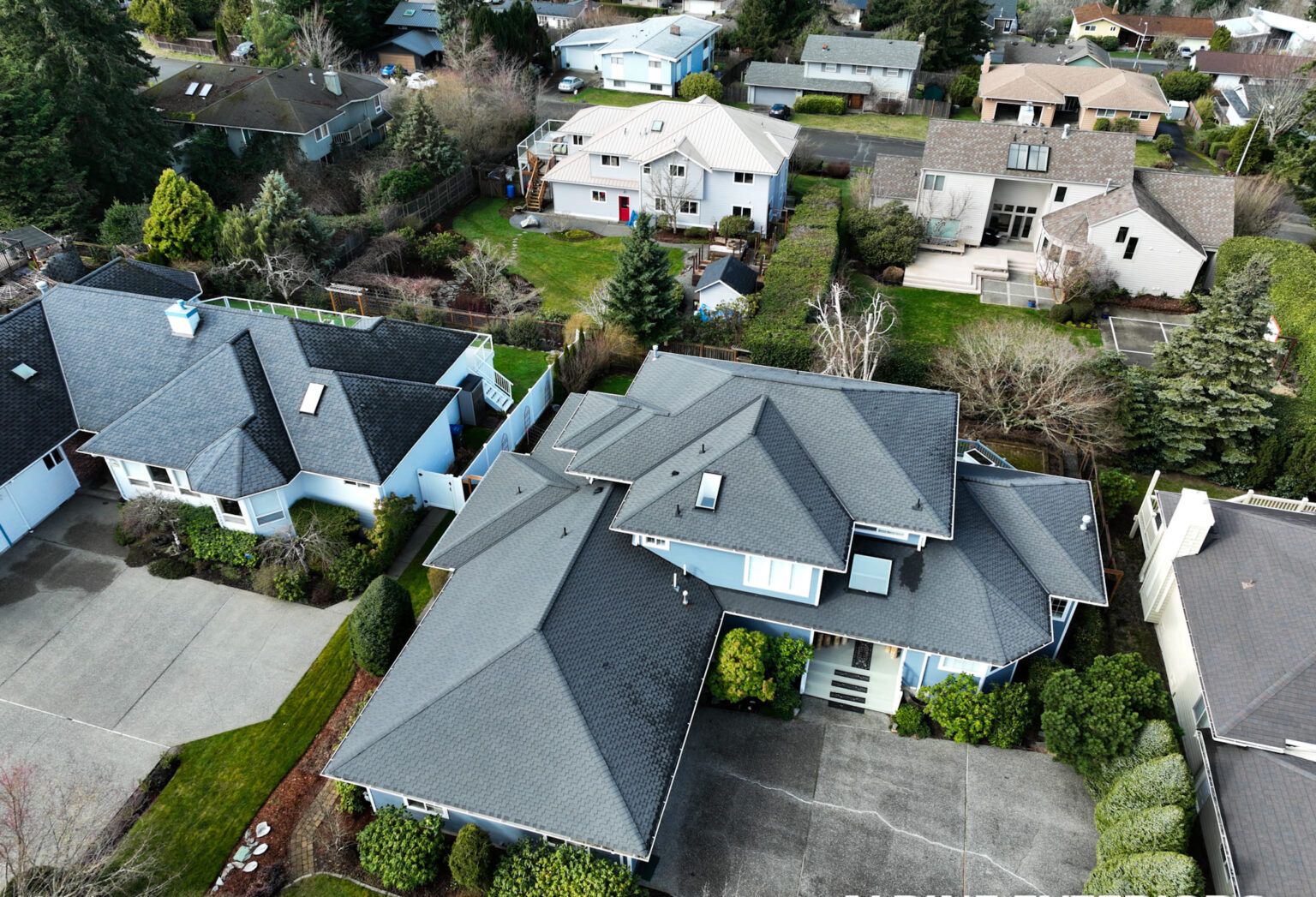
Maple Falls sits higher and further into the foothills than most of Whatcom County — closer to Mt. Baker, ringed by conifers, and colder in the winter than Bellingham or the lowland towns near the bay. That combination of elevation, shade, and moisture changes which siding actually holds up. A product that's a fine choice on a sunny lot in Ferndale can struggle on a shaded, north-facing wall outside Maple Falls where snow lingers and the wood underneath never fully dries out between storms. This guide breaks down the materials that make sense here, the ones we'd steer clients away from, and why.
For most Maple Falls homes, our top pick is fiber cement siding (James Hardie and comparable products), followed closely by engineered wood siding such as LP SmartSide for owners who want a warmer, more traditional look at a somewhat lower cost. Both resist the two things that do the most damage to siding up here: sustained moisture and the freeze-thaw cycling that comes with foothill winters. Vinyl remains a reasonable budget option on homes with good roof overhangs and full sun exposure, but it's a worse fit on the shaded, tree-covered lots that are common around Maple Falls. Solid cedar still has a place on homes where the look matters more than the maintenance schedule, but it demands more attention than any other option on this list. There's no single "right" siding for every lot — a lot buried in second-growth fir on the north side of the valley has different needs than an open parcel closer to Kendall Road — but the ranking above holds for the majority of the housing stock we see out here.
We weighed each material against the conditions that actually show up on Whatcom County job sites, not generic marketing claims. The criteria that matter most in Maple Falls specifically:
Fiber cement is a blend of cement, sand, and cellulose fibers formed into planks or panels. It doesn't absorb water the way wood does, it won't rot, and it holds paint far longer than wood siding, which matters on a home that only gets repainted every decade or so.
Pros: Excellent resistance to moisture and rot, which is the top failure point we see on older Maple Falls homes. Doesn't support moss growth the way bare wood or some vinyl textures do, and painted surfaces clean up well with a gentle wash. Handles freeze-thaw cycling without cracking when installed correctly. Available in lap, shingle, and panel styles, so it can match the look of an older cabin or a newer build.
Cons: It's heavier and more labor-intensive to install than vinyl, which raises upfront cost — expect it to sit in the mid-to-upper range of siding options. It needs to be painted (factory-finished products reduce this, but touch-ups are still paint, not color-through material). It's also brittle to impact compared to wood or vinyl, so a hard strike from a fallen branch — not uncommon on a wooded Maple Falls lot — can chip a panel, though repairs are straightforward.
Products like LP SmartSide use wood strands bonded with resin and treated with a zinc borate additive for rot and insect resistance, then finished with a resin-saturated overlay. It gives a more traditional wood-grain look than fiber cement at a somewhat lower installed cost.
Pros: Lighter and easier to install than fiber cement, which can trim labor cost. The engineered core resists moisture better than solid wood, and the treatment helps fend off the rot that plagues untreated wood siding in a wet, shaded climate like this one. Takes paint well and holds a natural wood look that a lot of Maple Falls homeowners want for cabin-style homes.
Cons: It's still a wood-based product, so if the factory finish is ever breached — a deep scratch, a poorly sealed cut edge at a window trim — moisture can get into the core and cause swelling at that spot. Panel edges need to be properly sealed and caulked during installation, and that detail work matters more here than in a drier climate. Manufacturer warranties are typically conditioned on following their installation and finishing instructions closely.
Vinyl is the most affordable siding option by a wide margin and remains common across Whatcom County. It doesn't rot, never needs painting, and installs quickly.
Pros: Lowest material and labor cost of the options here, no repainting, and no rot risk since it's not wood-based. Modern vinyl profiles have improved impact resistance over older generations.
Cons: On shaded, tree-covered Maple Falls lots, vinyl's textured surface can collect moss and algae in the channels and laps, and it's harder to scrub clean without damaging the finish than fiber cement's smoother, painted surface. Cold weather makes vinyl more brittle — a concern on the colder nights this area sees compared to the lowlands — so it's more prone to cracking from an impact in winter. It's also a poor fit if a homeowner wants a genuine wood-shake or board-and-batten look, since even good vinyl reads as vinyl up close. And because it's a cladding layer, not a water barrier itself, the housewrap and flashing details underneath still have to be done right — vinyl doesn't forgive sloppy work behind it any better than other sidings do.
A lot of the original housing stock around Maple Falls — older cabins, A-frames, and homes built before fiber cement and engineered products were common — still wears cedar siding, and plenty of owners want to keep or replace it in kind for the look.
Pros: Nothing else matches real cedar's look and texture, and it's a natural, time-tested material for this climate when properly maintained. Cedar has some natural rot resistance built into the wood itself.
Cons: Natural resistance only goes so far against the amount of moisture this area sees, especially on shaded walls that don't get enough sun to dry out between rain events. Cedar needs re-staining or repainting on a regular cycle, more often than fiber cement or engineered wood, and skipping a cycle lets moisture in fast. It's also the material most susceptible to moss and algae staining of anything on this list, and the most vulnerable to the wood rot we see at the bottom courses of older Maple Falls homes where snow piles against the wall through the winter. We only recommend it when the owner has already committed to the upkeep or is restoring a home where matching the original material matters more than minimizing maintenance.
We'd steer most Maple Falls homeowners away from a few choices that work fine elsewhere but underperform here. Stucco and EIFS systems, popular in drier climates, are a poor match for this much sustained rainfall — they rely on the exterior finish staying largely watertight, and any crack lets moisture in behind a wall assembly that then has nowhere to dry out. Untreated or minimally treated wood siding without a real maintenance plan is another one we discourage; we see the results on older homes where a coat of paint got skipped for a few years and rot took hold in the sheathing before anyone noticed. And we're cautious about very low-end vinyl in deep shade — the thin, budget-tier panels stain with moss faster and show UV and cold-weather brittleness sooner than mid- or upper-tier products, so if a homeowner is going vinyl on a shaded Maple Falls lot, it's worth spending up a tier rather than buying the cheapest option available.
For most of the wooded, shaded lots common around Maple Falls, yes — the added upfront cost buys real resistance to the moss, algae, and moisture issues that show up faster on vinyl in low-light conditions, and fiber cement typically holds its paint and appearance longer before needing attention. On an open, sunny lot with good roof overhangs, the gap between the two materials narrows and vinyl becomes a more reasonable value choice.
Siding itself isn't the primary insulation layer, but the wall assembly behind it — sheathing, house wrap, insulation, and air sealing — has to meet current Washington State Energy Code requirements, and some siding types pair more easily with continuous exterior insulation than others. On a re-side or new build, it's worth discussing the full wall assembly with your contractor, not just the visible cladding, since that's what determines code compliance.
It depends heavily on the material and how well it was maintained, not just its age. A cedar-sided home that missed a few repainting cycles can develop rot at 15–20 years, while a well-installed fiber cement or engineered wood job can often go several decades with routine cleaning and occasional touch-ups. Shaded, north-facing walls with heavy moss exposure tend to show problems earlier than sunnier elevations on the same house.
Sometimes, yes — moss and light algae staining on fiber cement or vinyl can often be addressed with a gentle wash rather than a full re-side, and that's worth trying before assuming replacement is necessary. But if there's soft or spongy material underneath, visible gaps at seams and trim, or staining that keeps returning within a season of cleaning, that usually points to moisture getting behind the siding, and a professional inspection is worth having before deciding between cleaning and replacement.
Every lot in Maple Falls carries its own mix of shade, elevation, and exposure, and the right siding choice depends on those specifics as much as on personal taste. Alpine Exteriors has worked on homes throughout Whatcom County, from the shoreline exposure near Blaine and Birch Bay to the shaded foothill lots around Maple Falls and Sudden Valley, and we're glad to walk your property, talk through what we're seeing, and lay out honest options rather than a one-size-fits-all pitch. Alpine Exteriors holds Washington contractor license ALPINI751OW — reach out and we'll schedule a time to take a look at your home.