
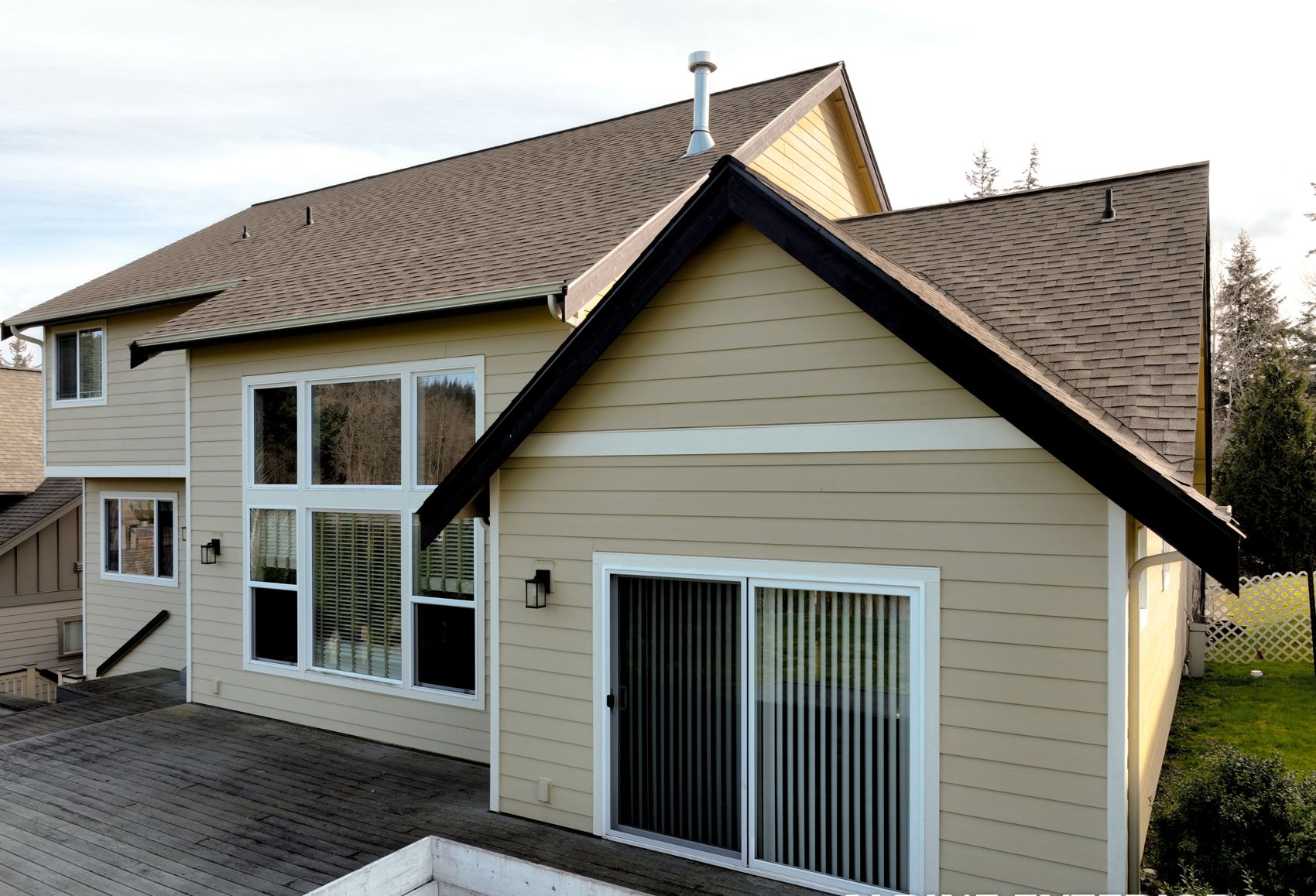
If you're re-siding a home in Birch Bay, the product you choose and the way it's fastened both have to satisfy the Washington State Building Code, which is built on the International Residential Code with Washington-specific amendments. In practice that means the siding has to carry an ICC-ES evaluation report or equivalent testing that backs up its wind and water-resistance claims, and it has to be installed to the manufacturer's printed instructions, fastener count included, or the installation itself is the code violation, not the product.
Most homeowners never see this part of the process. They see a color and a brand name. The inspector, and Alpine Exteriors' crews, are looking at nailing patterns, penetration depth, and the water-resistive barrier underneath — because that's what actually keeps a wall assembly dry and attached through a Birch Bay winter.
Washington doesn't run a separate statewide "product approval" list the way some coastal states do. Instead, code officials rely on the manufacturer's ICC-ES Evaluation Service Report (ESR) or a comparable third-party test report to confirm a siding product's tested wind pressure rating, water penetration performance, and approved fastening schedule. That report is what an inspector — or Whatcom County's building department, which covers unincorporated Birch Bay — will ask to see if there's any question about a product being used outside its tested assembly.
The structural side of the equation comes from the wind provisions of the International Residential Code as adopted in the Washington State Building Code, which reference the wind speed and exposure maps in ASCE 7. Birch Bay sits in an area where a fair number of lots — waterfront, bluff-top, or open field — fall into Exposure Category C, meaning open terrain with few obstructions, rather than Exposure B, which assumes a more sheltered, built-up neighborhood. That single classification changes the design wind pressure a wall assembly is expected to resist, and it's a factor the design or installation should account for, not something to eyeball.
Fastening is where most of the real-world failures show up, and it's also where the code is the most specific. Manufacturers publish a nailing schedule — nail type, minimum penetration into structural framing (typically at least an inch and a quarter into solid wood framing, more for engineered studs), spacing along the panel, and clearance at the top of each course to allow for expansion. Fiber cement, vinyl, and engineered wood siding each have different tolerances for over-driving a nail or nailing too tight, and a fastening pattern that would be fine in a low-wind interior county isn't automatically fine on an exposed Birch Bay shoreline lot. On top of the fastening schedule, the Washington State Energy Code (WSEC) increasingly pushes continuous exterior insulation and taped, code-recognized water-resistive barriers on new construction and larger remodels, which changes the effective fastener length needed to reach framing through the extra thickness — a detail that's easy to miss if the crew is working from a generic install sheet instead of the specific wall assembly on that job.
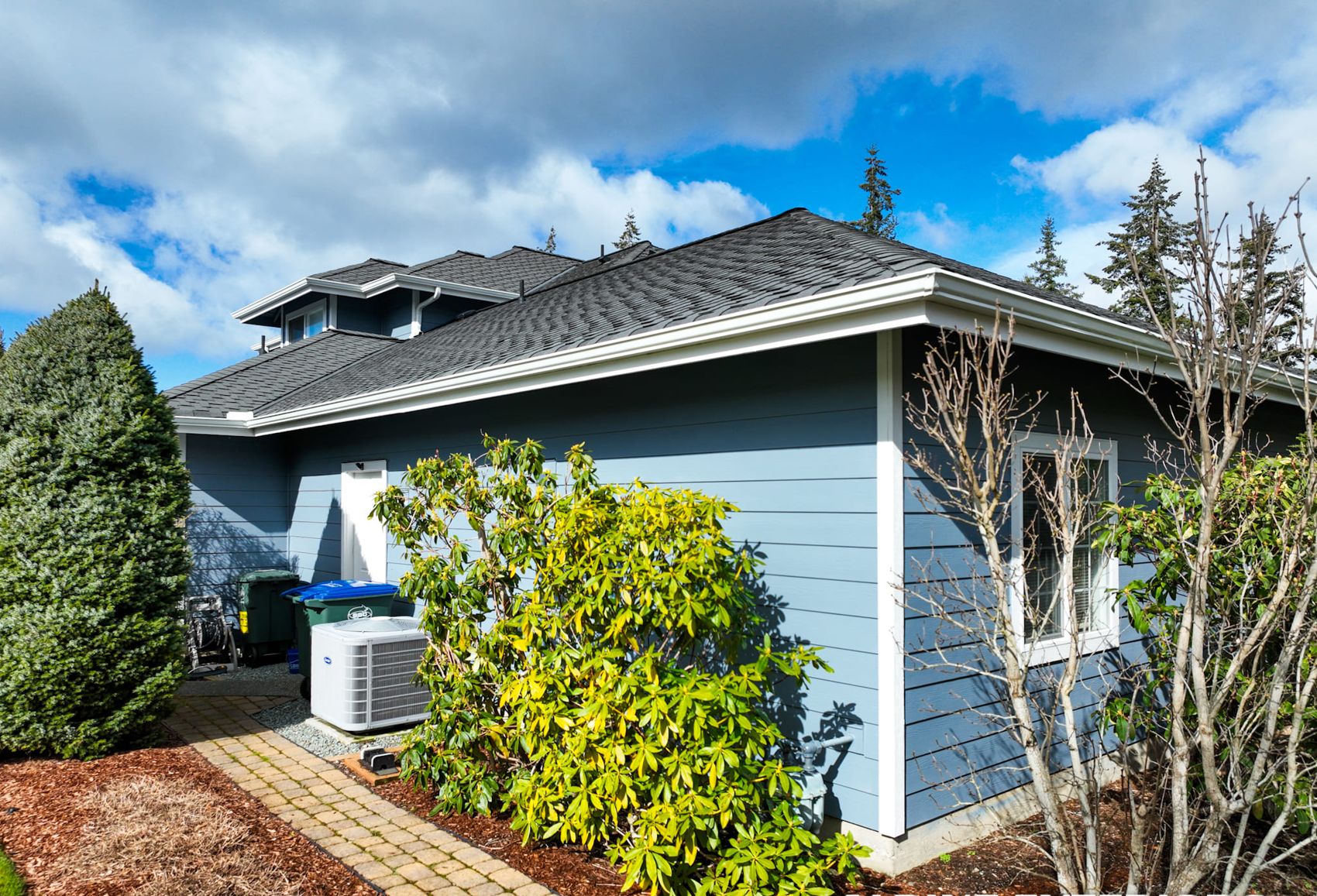
Birch Bay's exposure to wind-driven rain off Bellingham Bay and the Strait of Georgia is the biggest variable that a generic siding installation doesn't account for. A storm coming across open water doesn't just drop rain — it drives it sideways into a wall, and it does that repeatedly over a winter, not as a one-time event. That's a fundamentally different stress than what a sheltered Bellingham neighborhood or an inland Lynden farmhouse sees. Siding on a Birch Bay waterfront or bluff-facing wall needs a water-resistive barrier that's properly lapped and taped, flashing at every window, door, and penetration, and ideally a rain screen gap behind the siding so that any water that does get past the cladding has somewhere to drain and dry out instead of sitting against the sheathing.
That persistent moisture load is also why moss, algae, and eventual wood rot show up faster on north- and west-facing walls in Birch Bay than they might in a drier climate. Vinyl and fiber cement resist rot outright but still need clean drainage paths behind them to avoid trapping moisture that feeds mildew staining. Any wood trim, fascia, or cedar accent — still common on Whatcom County homes — needs real ventilation behind it and a maintenance plan, because wood siding directly exposed to this kind of driving rain and shade is the first thing to fail.
Freeze-thaw cycling is a smaller factor right on Birch Bay's shoreline than it is up in the foothills — Sudden Valley and the higher terrain east of Bellingham see harder frosts and more freeze-thaw stress on siding joints and caulk than the marine-moderated bay does. But it's not zero here either. A cold snap combined with saturated siding is still enough to stress fastener holes and caulked joints over several winters, which is one more reason the fastening schedule and sealant choice matter more than the color of the product.
We should be direct about a real limitation: no siding product, no matter how well it's rated, fixes an underlying water intrusion or ventilation problem. Alpine Exteriors has re-sided Birch Bay homes where the old siding looked fine from the street but the sheathing underneath was already soft from years of trapped moisture. In those cases, replacing the siding is only half the job; the wall assembly has to be corrected first, or the new siding just delays the same failure.
Start by asking whoever is bidding your siding job two direct questions: what is the product's tested wind pressure rating and fastening schedule, and has that been matched to your lot's actual wind exposure — not a generic assumption. A contractor who can't answer that, or who plans to install every job with the same nail pattern regardless of exposure, is skipping a step that Whatcom County's inspectors do check.
Cost is the other honest conversation. Straightforward vinyl re-siding on a modest Birch Bay home typically runs in the lower range of siding projects; fiber cement with proper rain screen detailing, new flashing, and code-driven insulation work costs meaningfully more — often somewhere in the middle-to-upper range for the region — because you're paying for the water management system behind the panels, not just the panels themselves. Skimping on that system to hit a lower number is the single most common regret we hear about from homeowners who had siding replaced by someone else and are calling us back a few years later.
Not a separate local wind ordinance, but many Birch Bay lots — particularly waterfront and open bluff parcels — fall under Exposure Category C in the ASCE 7 wind provisions referenced by the International Residential Code, rather than the more sheltered Exposure B common in built-up inland neighborhoods. That classification, not a Birch Bay-specific rule, is what pushes the required wind pressure resistance higher on some of these lots.
Inspectors are generally checking that the water-resistive barrier is installed and lapped correctly, that flashing is present at windows, doors, and penetrations, that the fastening pattern and fastener penetration match the manufacturer's tested installation instructions, and that the product itself is one with valid testing (ICC-ES or equivalent) backing its use. They're not evaluating color or aesthetics — the check is entirely about whether the assembly will keep water out and stay attached.
Both can perform well when they're rated for the exposure and installed with the correct drainage plane behind them; the meaningful difference is less about wind resistance and more about how each handles the region's persistent moisture — fiber cement holds paint and resists moss staining longer on shaded, damp walls, while vinyl is lower-maintenance but can show more visible stress at fastener points over time if the nailing schedule wasn't followed precisely.
Sometimes, but it's risky on a Birch Bay home specifically because it means whatever moisture or rot issue may already be building up behind the old siding gets sealed in rather than found and fixed. Given how much of the region's siding failures trace back to trapped moisture rather than the cladding itself, we generally recommend removing the old siding to inspect the sheathing and water-resistive barrier before deciding whether an over-siding approach is actually safe for that specific wall.
Getting siding right in Birch Bay means matching the product's tested rating to your lot's real wind exposure, getting the water-resistive barrier and flashing details right the first time, and being honest about what's underneath the old siding before covering it back up. Alpine Exteriors, licensed in Washington under contractor license ALPINI751OW, has been through this exact set of decisions on homes across Whatcom County, from Birch Bay's shoreline to Bellingham, Ferndale, Lynden, Blaine, and Sudden Valley. If you want a straight assessment of what your home's siding and wall assembly actually need — not just a quote on panels — reach out to Alpine Exteriors and we'll walk the property with you.