
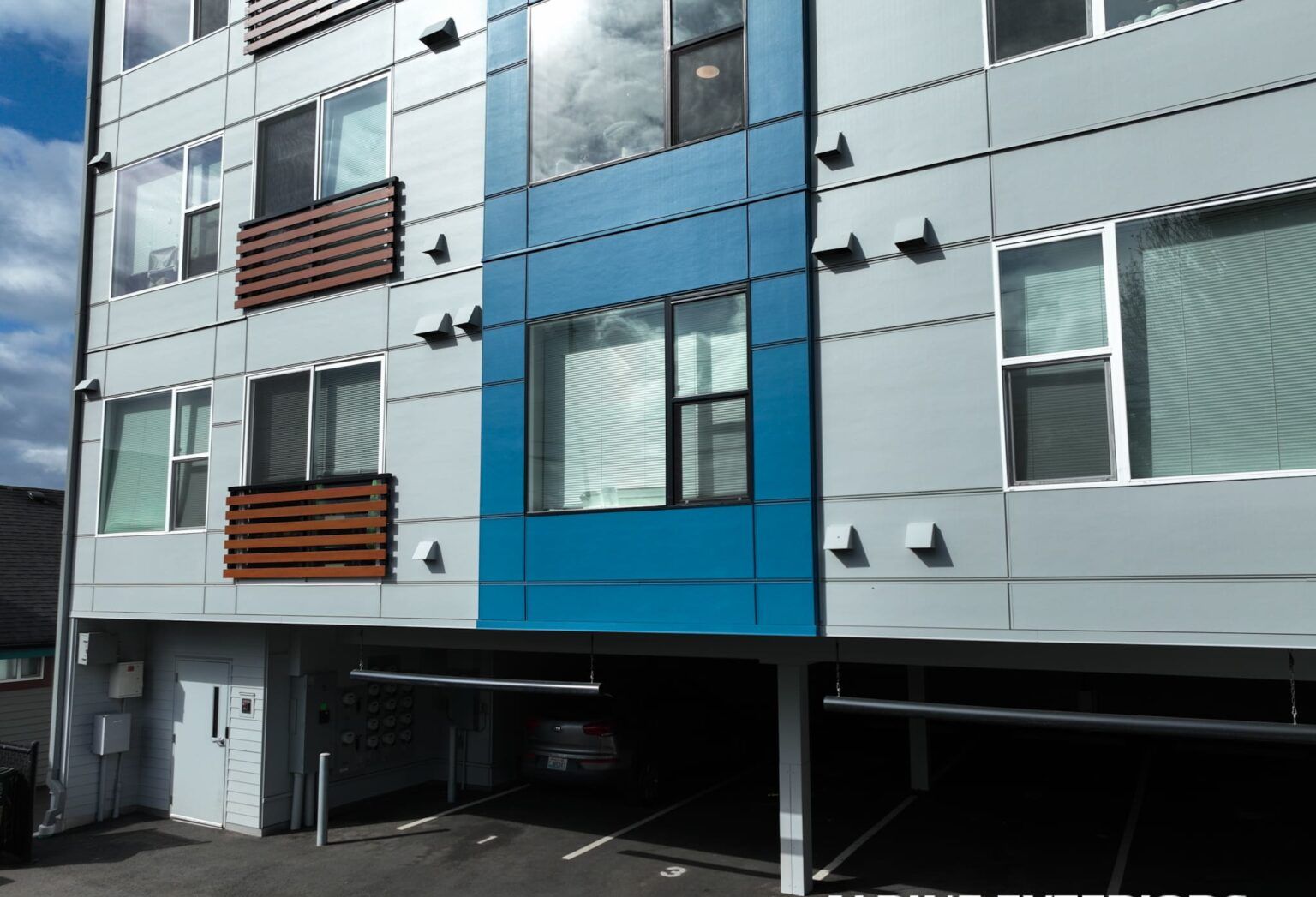
Most siding damage in Deming shows up as soft or bubbled spots near the bottom courses, around window trim, and on the north-facing wall that never fully dries out. If the damage is limited to a few boards or panels and the wall sheathing underneath is still solid, repair is usually the right call. If the rot has spread along a seam, if more than a third of one elevation is affected, or if the siding is an older discontinued style, full or partial replacement tends to save money over repeated patch jobs.
Deming sits along the Nooksack River at the foot of the Mount Baker foothills, which means houses here take on a mix of problems that Bellingham's flatter, more urban lots don't see as often. The most common issues we run into on siding calls in this area are:
Determining whether a given spot is repairable comes down to how far the moisture has traveled. A soft board that hasn't reached the house wrap or sheathing is a straightforward swap. Rot that has reached the sheathing, or that shows up as staining on the interior drywall, usually means opening up a larger section to check for hidden damage before any new siding goes on — patching over a wet wall just seals the problem in.
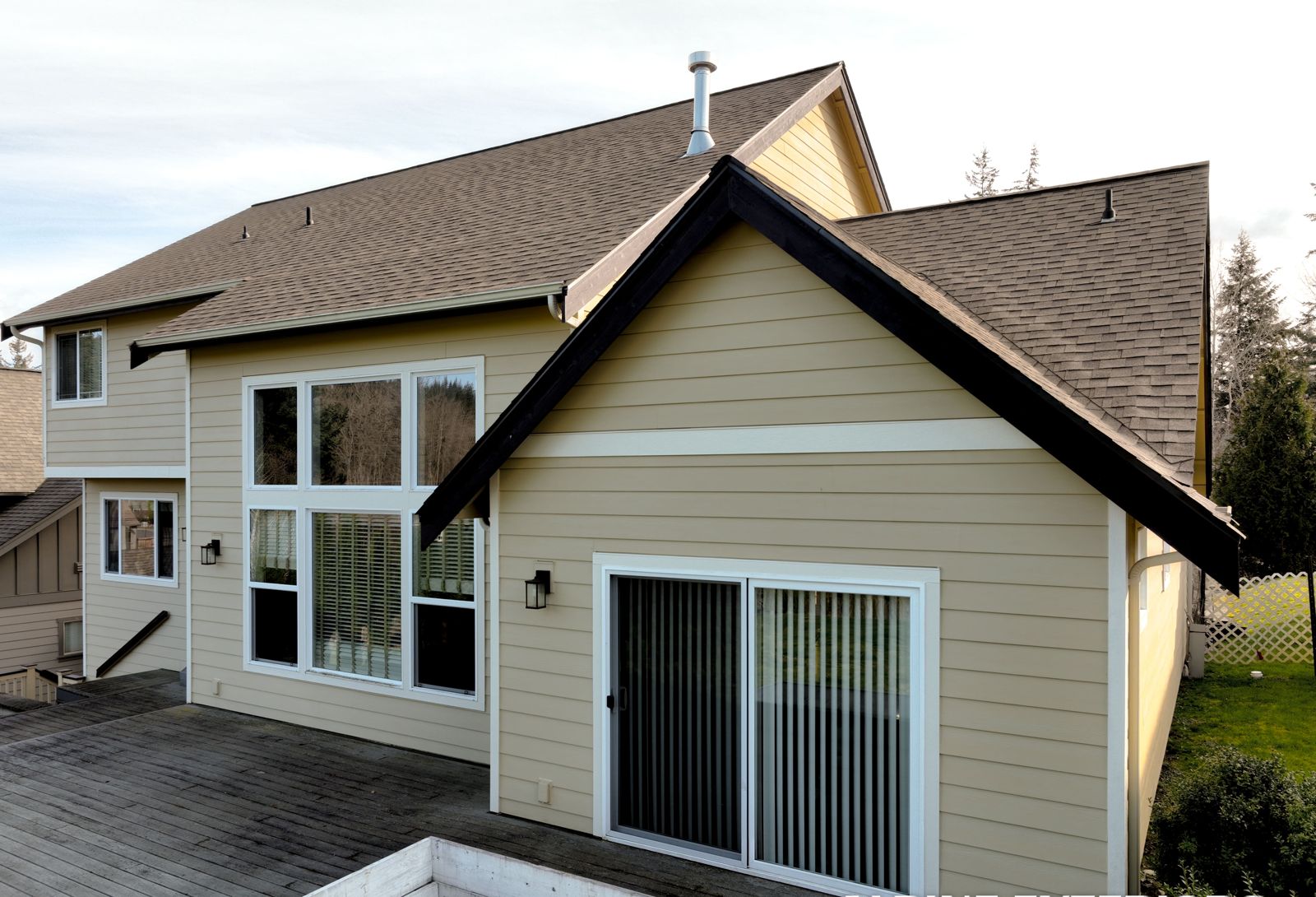
A lot of general siding advice online is written for climates that don't apply here — homes that deal with hurricane wind loads, hail, or long dry summers. None of that describes Whatcom County. What actually drives siding failure in Deming and the surrounding valley is sustained, low-intensity moisture: persistent rain through fall and winter, humidity that lingers under tree canopy, and the freeze-thaw swings that are sharper here than they are closer to the water in Bellingham, Ferndale, or Blaine.
That combination means two things for homeowners. First, the Washington State Energy Code's requirements for wall assemblies and weather-resistive barriers matter more here than a warmer, drier climate would suggest — a code-compliant house wrap and properly lapped flashing behind the siding is what actually keeps a repair from becoming a repeat repair. Second, houses in Deming and other inland or foothill-adjacent parts of the county often see more freeze-thaw cycling on their siding than homes right on Bellingham Bay, even though the coastal properties take more wind-driven rain. Repair decisions that only account for one of those factors and not the other tend to under-treat the actual cause of the damage.
Matching existing siding is also a bigger issue here than in newer subdivisions. A meaningful share of homes around Deming, Sudden Valley, and the older parts of Lynden were sided decades ago with cedar or discontinued panel profiles that current manufacturers don't make anymore. Even when a manufacturer's product line is still active, sun fading and weathering mean a brand-new panel next to twenty-year-old siding will look visibly different for a season or two until it weathers in, if it ever matches closely at all.
Start with a close visual inspection rather than assuming the worst. Walk the exterior after a dry stretch and press on any board that looks discolored, bubbled, or has visible moss buildup — a slight give under thumb pressure means the wood underneath has already started to soften. Pay particular attention to the base of the walls, under window sills, and around any spot where a deck, porch roof, or planter box meets the siding, since those transitions are where flashing gaps most often let water in.
From there, the repair-versus-replace decision generally comes down to a few honest questions:
Cost is going to vary a lot by scope — a targeted repair of a few boards is commonly in the low hundreds to low thousands of dollars, while a full elevation or whole-house re-side climbs well into five figures depending on material and square footage. Get an actual on-site quote rather than relying on a national average, since siding pricing swings a lot based on material choice, wall access, and how much hidden damage turns up once the old siding comes off.
Alpine Exteriors inspects for exactly this pattern of hidden versus surface damage when we go out on a repair call in Deming — we'd rather tell a homeowner a repair will hold for years than sell a replacement that isn't needed yet, and we'll say so plainly if a wall's damage is limited enough that a patch is the honest answer.
The deciding factor is usually how far the moisture has traveled, not how bad the surface looks. If a soft or discolored section is limited to a few boards and the underlying sheathing is still dry and firm when probed, a targeted repair is typically enough. If the rot has reached the sheathing, spread along a horizontal seam across several boards, or shown up as staining on an interior wall, that usually means opening up a larger area and very likely replacing that whole section or elevation rather than patching individual spots.
North and shaded walls in Deming dry out much more slowly after rain than south- and west-facing walls, especially where tree cover blocks sun and wind. That extended dampness lets moss and algae establish and hold moisture directly against the siding surface, which accelerates rot on wood siding and can cause staining and surface breakdown on fiber cement and vinyl as well. Regularly clearing moss and keeping tree branches trimmed back from the wall reduces this significantly.
Sometimes, but not always exactly. If the original product line is still in production, a close match is possible, though a brand-new panel will look noticeably different from weathered siding until it ages in over a season or two. If the siding is a discontinued profile, which is common on older homes around Deming and Lynden, an exact match usually isn't available, and the more realistic options are replacing a full wall or elevation at once for a consistent look, or accepting a visible transition on a smaller patch repair.
It's most directly relevant to new construction and full re-sides, since that's when the wall assembly — including the weather-resistive barrier, insulation, and vapor control — gets built or rebuilt to current code. A small spot repair generally doesn't trigger a full code review, but any repair that opens up the wall to the sheathing is a good opportunity to confirm the house wrap and flashing details are intact and properly lapped, since that's what actually prevents the same rot from coming back in a few years.
If you're seeing soft spots, moss buildup, or cracked panels on a home in Deming or anywhere else in Whatcom County, it's worth getting an in-person look before deciding between a repair and a full re-side. Alpine Exteriors is a licensed Washington contractor (license ALPINI751OW) serving Deming, Bellingham, Ferndale, Lynden, Blaine, Birch Bay, Sudden Valley, and the islands, and we'll give you an honest read on what your siding actually needs — not just an upsell.