
Most siding problems in Glacier show up as soft or discolored boards near roof lines, deck ledgers, and anywhere tree cover keeps a wall damp for days at a time — and a good chunk of that damage can be repaired in sections rather than replaced wholesale. The exception is when moisture has been sitting behind the siding long enough to reach the sheathing, in which case patching the surface just hides a problem that keeps spreading underneath.
Glacier sits up the North Fork Nooksack valley in the shadow of Mt. Baker, and the siding damage we see there follows a pretty consistent pattern. The town is heavily forested, which means most homes get long stretches of shade and very slow drying times after rain — a wall that would dry out in an afternoon in open sun can stay damp for days under a canopy of firs and cedars. That constant dampness is the single biggest driver of the problems homeowners call us about.
The most common issue is wood rot at the bottom courses of lap siding, around window sills, and at inside corners where two walls meet and water tends to collect instead of running off. Once wood siding or trim starts absorbing moisture, it softens, and a screwdriver or awl pushed gently into the board will sink in rather than meet resistance — that's the simplest field test for rot, and it's one we use on every inspection. Fiber cement and vinyl siding don't rot the same way, but they have their own failure points: fiber cement can delaminate or crack at butt joints where caulking has failed, and vinyl can crack or warp where it's been exposed to repeated freeze-thaw cycling or where a panel wasn't left enough room to expand and contract.
Moss and algae are the other constant. On the shaded, north-facing walls that are common on wooded Glacier lots, you'll often see a greenish-black film building up on siding within a couple of seasons of a paint or stain job. That growth isn't just cosmetic — it holds moisture against the surface and, on wood siding especially, accelerates the rot process underneath. On fiber cement and engineered wood products, moss and algae growth is mostly an appearance and maintenance issue, but it's still worth addressing before it works into seams and fastener holes.
Glacier's elevation and setting in the Mt. Baker foothills change the math compared with lowland Whatcom County towns like Ferndale or Lynden. The area gets meaningfully more precipitation than Bellingham and the valley floor, and a larger share of that precipitation falls as snow or freezes overnight during the shoulder seasons. That matters for siding because freeze-thaw cycling — water soaking into a crack, joint, or piece of exposed wood, then freezing and expanding overnight before thawing again the next day — is a mechanical stress that lowland sites see far less often. Over a few winters, freeze-thaw cycling will widen a hairline crack in fiber cement, pop a loose piece of trim further away from the wall, or split a board that's already started to soften from rot.
The tree cover that defines Glacier also changes how siding ages here versus in more open parts of the county. Homes with long sun exposure dry out fast after a storm and tend to fight moss more than rot. Glacier homes, by contrast, often stay damp long enough that moss becomes secondary to actual wood decay. We also see more debris buildup — needles, cones, and leaf litter collecting in siding laps, behind shutters, and along foundation lines — which holds water directly against the wall in a way that open, sunnier sites simply don't experience as often.
One thing that does not apply in Glacier the way it does along the Bellingham waterfront or out toward Blaine and Birch Bay is wind-driven rain off open water. Glacier is well inland and shielded by terrain, so siding failures tied to wind-forced water intrusion around windows and doors — a real concern on exposed coastal and bay-front walls — aren't the driving issue here. The driving issue in Glacier is sustained dampness and cold, not wind.
Start with an honest look at how much of the wall is actually affected, not just how bad the worst spot looks. A single rotted board at a downspout, a cracked panel from a fallen branch, or a section of trim with failed caulking are all straightforward repairs — replace the damaged pieces, correct whatever is feeding the moisture (a bad gutter, missing flashing, a plugged weep hole), and reseal. Where we tell homeowners to slow down is when soft spots show up in multiple, unrelated areas of the same wall, or when the siding feels spongy over a large continuous section. That pattern usually means the water intrusion started behind the siding — often from a flashing or house-wrap failure — and by the time it shows on the surface, the sheathing underneath may already be compromised. In that case, replacing boards without opening the wall just buys a season or two before the same spot fails again.
| Signs it's a repair | Signs it's time to replace a section (or more) |
|---|---|
| Damage limited to one or two boards or panels | Soft or spongy siding across a large, continuous area |
| Cause is clearly external (fallen branch, failed caulk, blocked gutter) | No obvious external cause — moisture is likely coming from behind the wall |
| Siding elsewhere on the wall is firm and sound | Multiple unrelated soft spots on the same elevation |
| House wrap and flashing are intact where checked | Visible gaps in flashing, or water staining on interior sheathing when a board is pulled |
Matching existing siding is the other piece homeowners underestimate. Lap siding, whether wood, fiber cement, or vinyl, fades and weathers over years, and a brand-new board dropped into a fifteen-year-old wall will stand out even after painting, because the reveal, profile, and sometimes the exact width can differ between manufacturing runs. Fiber cement in particular has gone through profile changes over the past couple of decades, so a repair on an older home may need a custom-matched or hand-selected board rather than whatever's on the shelf at the yard. Vinyl is its own challenge because color fades unevenly with UV exposure, so a perfectly matched color sample today may still look slightly off next to siding that's had ten years of weathering — sometimes the more honest fix is to reside the full elevation rather than chase an exact match on one wall. We walk Glacier homeowners through that trade-off directly: a visible patch that's structurally sound versus the added cost of a full wall replacement for the sake of appearance, and let the homeowner decide based on how much it actually bothers them.
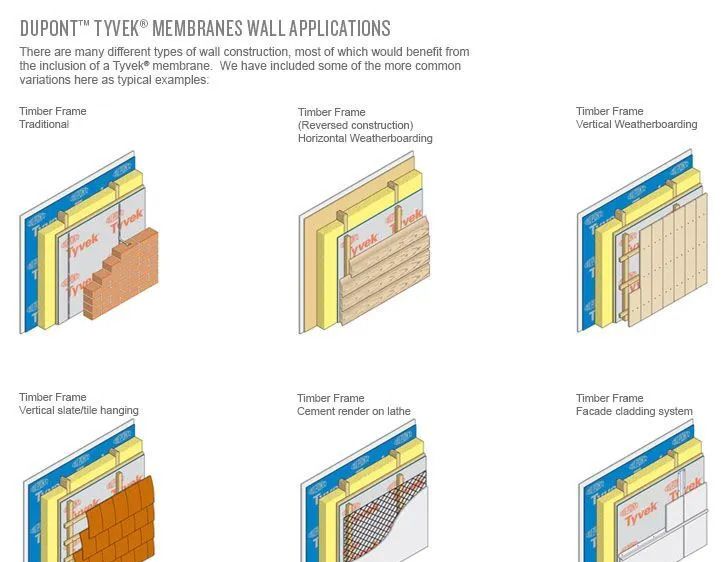
Any siding repair or replacement work in Washington also has to account for the Washington State Energy Code, which sets minimum requirements for the wall assembly's insulation and air-sealing whenever exterior work opens up the wall. That means a rot repair that involves pulling siding down to the sheathing is also a chance — and sometimes a requirement — to correct insulation gaps or missing house wrap while the wall is open, rather than closing it back up exactly as it was.
Surface staining from moss, algae, or dirt will wipe or scrub off and the board underneath stays firm when you press on it. Rot feels soft or spongy under light pressure, and a small screwdriver or awl will sink into the wood rather than meet resistance. If you're not sure, it's worth having someone check a few suspect spots before deciding whether you're looking at a cleaning job or a repair.
In most cases a section repair is enough, as long as the damage is localized and the cause has been fixed — for example, a leaking gutter that's been corrected, or a single cracked panel from storm debris. Full-wall or full-elevation replacement usually only makes sense when rot has spread across multiple areas, when the siding material is discontinued and can't be reasonably matched, or when the homeowner decides a visible patch isn't worth living with long-term.
Shade and airflow are usually the difference. A wall tucked under trees or on the north side of a house dries out far more slowly after rain than a wall in open sun, and that extra dampness is exactly what moss and algae need to establish. Homes on more open Glacier lots, or with siding cleaned and sealed on a regular schedule, tend to stay noticeably cleaner than homes surrounded by heavy tree cover.
Sometimes, but it depends on the cause. Damage from a specific, sudden event — a fallen branch, wind-driven debris — is more likely to be covered than gradual deterioration from moisture or age, which most policies treat as a maintenance issue rather than a covered loss. If you suspect storm damage, it's worth documenting it with photos and calling your insurer before starting repairs, since some policies require an inspection first.
If you're looking at a soft board, a cracked panel, or a wall that just doesn't look right anymore, Alpine Exteriors can come out, check the actual condition of the siding and the wall behind it, and tell you plainly whether you're looking at a repair or something bigger — no pressure toward the more expensive option either way. Alpine Exteriors is a licensed Washington contractor (ALPINI751OW) serving Glacier and the rest of Whatcom County, and we're happy to walk your property with you and explain what we're seeing before any work starts.