
Before a siding crew starts work, pull mulch, gravel, and plants back at least two to three feet from every wall of the house, and clear the side yards and back yard enough for a crew to walk a full loop around the structure with ladders and material. Move anything breakable off the exterior walls entirely — planters, yard art, wind chimes, hanging baskets — because old siding and trim come down in pieces and land closer to the house than most homeowners expect.
That two-to-three-foot buffer isn't arbitrary. It gives the crew room to set ladders and scaffolding without crushing beds, keeps falling fasteners and old caulk out of soil you'll want to replant later, and gives everyone a clear sightline to spot problems — soft sheathing, hidden rot, an old dryer vent that was never properly flashed — before they get covered back up.
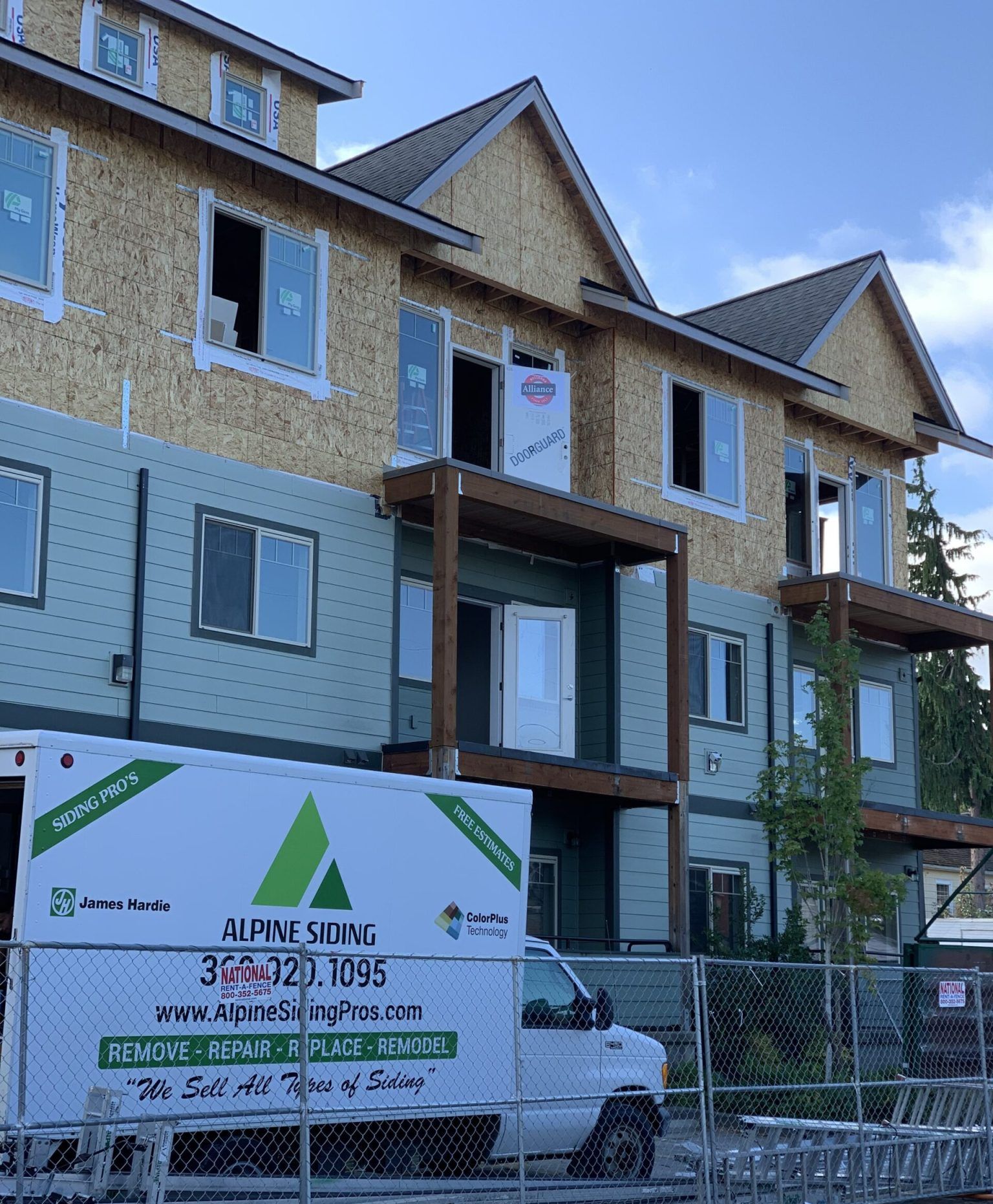
A full siding replacement isn't a one-day job, and it isn't a quiet one. Crews strip the old siding down to the sheathing, which means a few days of exposed walls, dropped fasteners, curls of old house wrap, and dust from cutting fiber cement or trimming fascia. Expect a dumpster or debris trailer parked in the driveway or on the street for the duration, ladders and possibly scaffolding along every elevation, and foot traffic through side yards that don't normally see much use.
Underneath the old siding, crews often find things that weren't visible from the yard — soft or delaminated sheathing near downspouts, old moisture staining around window flanges, sometimes evidence of carpenter ants or rot that had been quietly working under intact-looking siding for years. That isn't prep work you can do yourself, but knowing it's likely explains why the crew needs full access, and why a job can run a day or two longer than the original estimate if repairs turn up once the walls are opened.
Because the work circles the whole house, there's no yard that stays untouched. Even a fenced dog run or a side-yard garden bed against the wall will see foot traffic and falling debris if it's within reach of the siding.
The prep that matters here isn't generic — it's shaped by this corner of Washington specifically. A few conditions come up on nearly every job Alpine Exteriors runs in this area:
Most of the useful prep work takes an afternoon, not a weekend. Homeowners are typically asked to handle the following before a crew shows up:
None of this eliminates disruption entirely. Even a well-prepped yard will have some flattened grass, a few dropped fasteners, and mud tracked near entry points by the time the job wraps up — that's ordinary for a project that touches every wall of the house, and it's worth setting that expectation rather than being surprised by it partway through.
Two to three feet is the minimum for most jobs, and more for larger shrubs or anything with soft, easily crushed growth. If a plant is already close to the foundation and hard to move, it's often better to accept that it may not survive the project than to try to work around it — crews need real access to inspect and repair sheathing, not just enough room to hang new siding.
Buried lines and sprinkler heads near the foundation are the most common thing damaged during yard prep, usually by accident rather than carelessness. Flagging their locations before the crew arrives is the single most effective thing a homeowner can do, and it's worth doing even if you think the lines are set back far enough — ladder feet and staged material tend to land in places you wouldn't expect.
Light, steady rain sometimes allows limited work to continue, but tear-off and any stage that leaves sheathing exposed generally pauses in sustained rain — closing in a wall properly matters more than holding to a tight schedule. That's part of why scheduling in this region builds in some flexibility, and why an open sheathing phase shouldn't sit overnight if heavier rain is expected.
You don't need to be present for every work day, but it helps to be reachable, especially on the first day when the crew is confirming dumpster placement, irrigation locations, and access points. Being around for the initial walkthrough avoids most of the small miscommunications that cause delays later in the job.
A siding replacement goes smoother when the yard is ready before the crew arrives, and most of that prep is straightforward once you know what a job in this climate actually requires. Alpine Exteriors works throughout Whatcom County — Bellingham, Ferndale, Lynden, Blaine, Birch Bay, Sudden Valley, and the islands — and holds Washington contractor license ALPINI751OW. Reach out to talk through your yard, your timeline, and what a re-side will actually involve at your address, and the crew will walk you through prep specific to your property before scheduling a start date.