
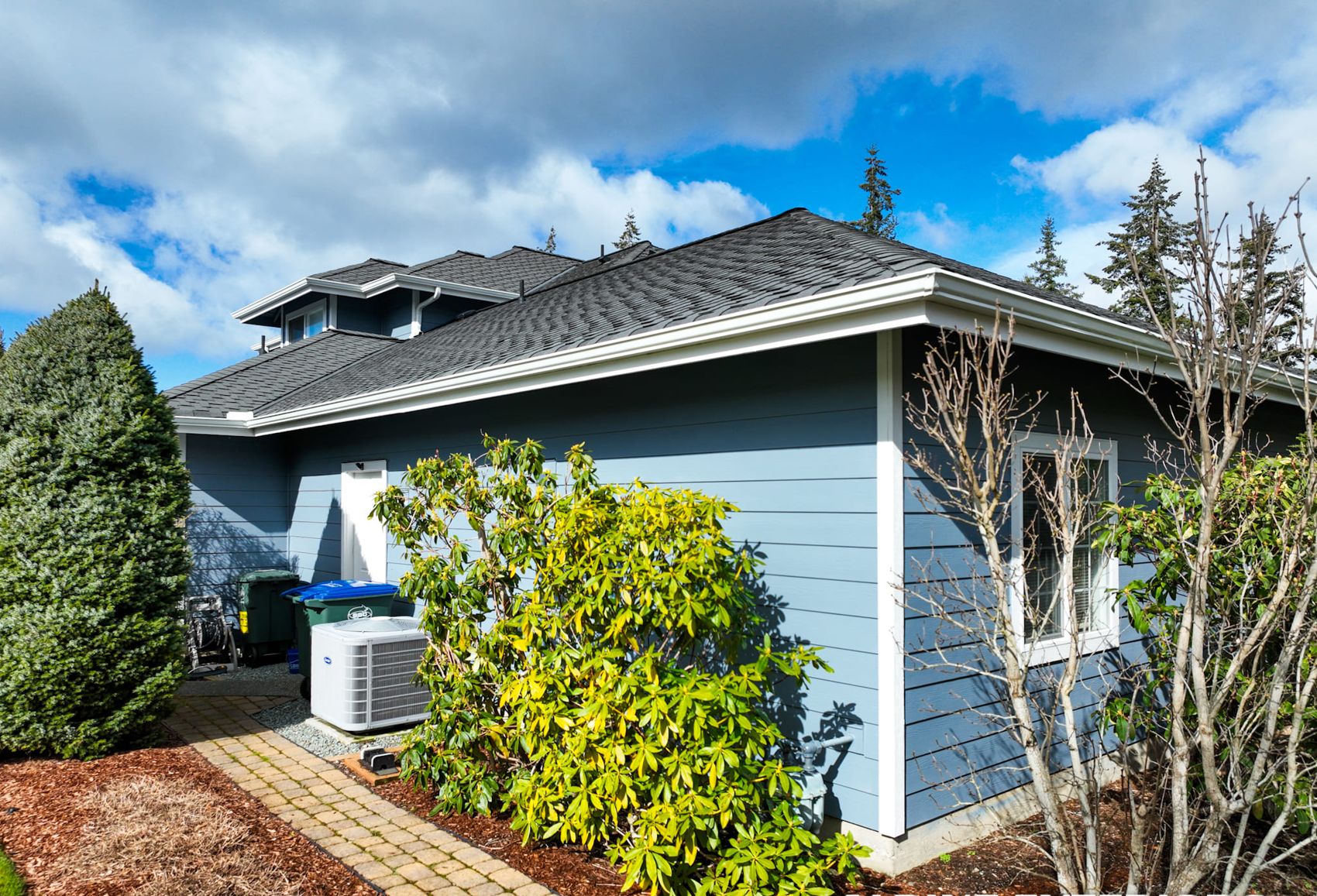
Yes — in Whatcom County, housewrap paired with correctly installed flashing is worth the money on almost every siding project, whether it's new construction, a full re-side, or a partial repair that opens up a wall section. The only homes where it isn't worth revisiting are ones where the existing water-resistive barrier and flashing are already sound and undisturbed, in which case tearing into a working wall just to add a product does more harm than good.
That caveat matters more than it sounds like it should. Housewrap is not magic and it is not a substitute for good flashing details, proper siding overlaps, or maintained caulk joints. It is one layer in a system, and the system only works if every layer is installed in the right order. A homeowner who pays for premium housewrap but gets sloppy window flashing has bought a false sense of security, not a drier wall.
Housewrap — the synthetic sheet material stapled or taped over sheathing before siding goes on — is a water-resistive barrier, not a waterproofing membrane. Its job is to stop bulk water that gets past the siding from reaching the sheathing and framing, while still letting water vapor from inside the house escape outward. Modern siding, no matter how well installed, is not a watertight skin. Wind can drive rain up under laps, capillary action can pull moisture sideways through seams, and every penetration — a hose bib, a light fixture, a deck ledger — is a place water can find a way in. Housewrap is the backstop for all of that.
Flashing does the more targeted work: directing water at specific vulnerable points — window and door openings, deck ledgers, roof-to-wall intersections, horizontal trim boards — so it sheds outward and downward instead of sitting against the wall assembly or working its way behind it. Flashing has to integrate with the housewrap in the right sequence (generally shingle-lapped so upper layers overlap lower ones, the same way roof shingles work) or the two systems fight each other instead of cooperating. A window flashed on top of the housewrap instead of woven into it, for example, can actually funnel water behind the barrier rather than in front of it.
Where this gets undersold is the seams and penetrations, not the flat field of wall. Housewrap performs well as a sheet; it performs only as well as its tape and flashing at every seam, corner, and fastener hole. On a lot of older Whatcom County homes we open up, the housewrap itself is intact after twenty or thirty years, but the flashing at a window head or a deck ledger failed years earlier and the rot pattern radiates out from that one point. That's the practical argument for treating housewrap and flashing as one decision, not two line items.
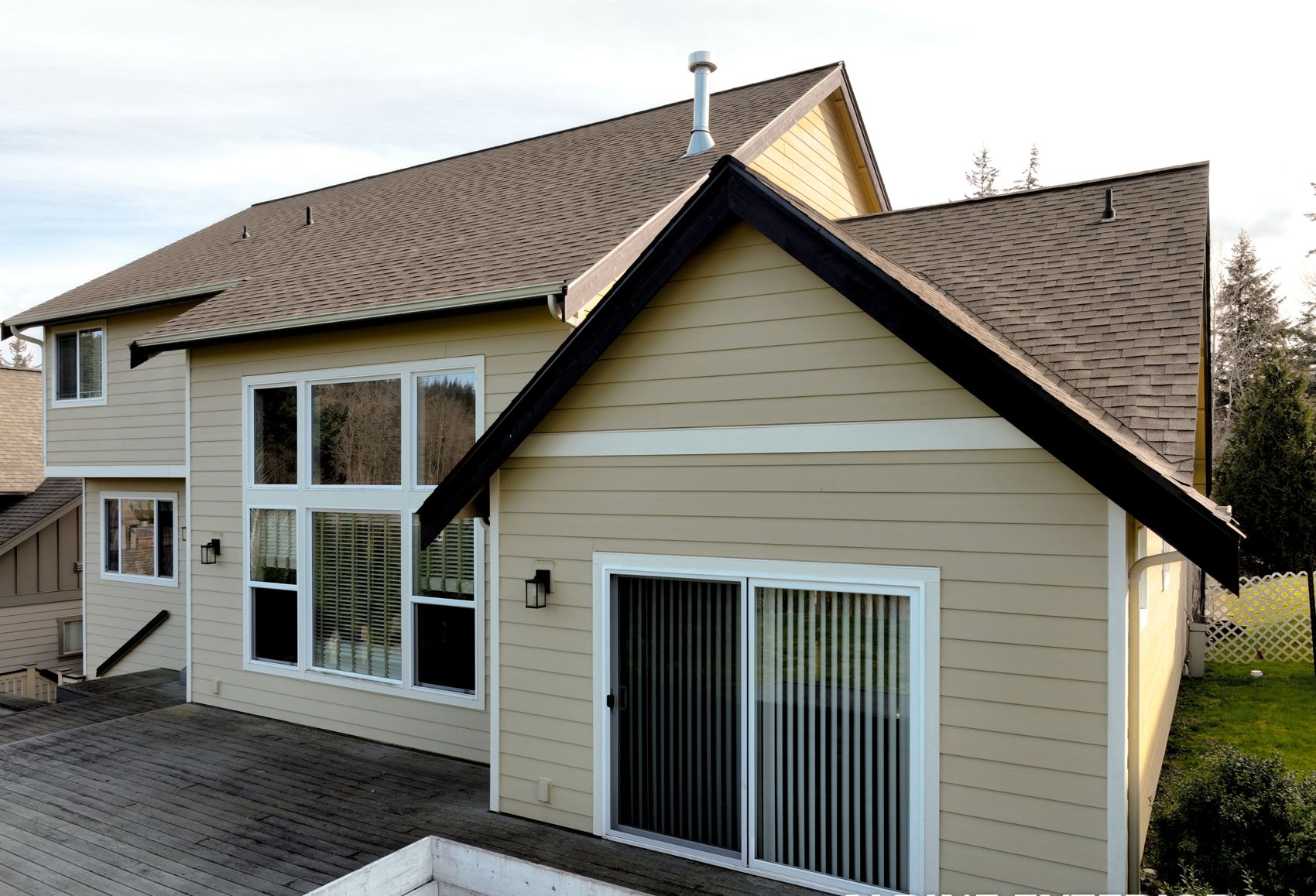
Whatcom County's exterior wall assemblies deal with a specific combination of stresses that doesn't match what siding is sold to handle in drier parts of the country, and it's worth naming them plainly.
None of these are exotic conditions — they're just the everyday reality of siding a house in this part of Washington. But taken together, they're the reason a housewrap-and-flashing shortcut that might go unnoticed for a decade in a dry climate can show up as a soft spot behind a window in Whatcom County in three or four years.
Start by finding out what's already there before assuming you need to add anything. If your siding is coming off for any reason — storm damage, a remodel, or simple end-of-life replacement — that's the moment to inspect the sheathing and existing barrier, not after the new siding is up. Alpine Exteriors pulls test sections during estimates specifically because the visible siding tells you almost nothing about the condition of what's behind it.
If you're re-siding and the old barrier is missing, brittle, or torn, budget for full housewrap replacement rather than trying to patch around it. Housewrap is inexpensive relative to the labor of installing siding over it; the cost difference between doing it right and skipping it almost never justifies the risk. As a rough range, expect housewrap material and installation labor to add a modest per-square-foot amount to a re-side — a small fraction of total project cost — while a rot repair from a failed detail years later can run into thousands of dollars in structural and interior repair on top of the re-side you'd have to do anyway.
Pay close attention to sequencing at flashing points, not just whether flashing exists. Ask your contractor to walk through, specifically, how window heads, deck ledgers, and any roof-to-wall intersections will be flashed and how that flashing integrates with the housewrap laps. A good answer will describe an order of operations, not just a product name.
In wind-exposed locations — waterfront lots in Blaine, Birch Bay, and the islands, and anywhere with a clear fetch off the bay or the Strait — consider a rainscreen approach, where furring strips create a small air gap and drainage plane behind the siding. It costs more upfront but gives any water that does get past the siding somewhere to drain and dry, which matters more here than in a sheltered inland lot.
Finally, don't let moss and algae growth go untreated for years. It's a maintenance issue as much as a materials one, and staying ahead of it protects the barrier system you've already paid for.
No. Housewrap reduces the amount of water reaching the sheathing, but it can't compensate for poor flashing at windows, doors, and penetrations. Most of the rot Alpine Exteriors finds behind Whatcom County siding traces back to a flashing detail that failed, with an otherwise intact housewrap sheet right next to it. Treat the two as one system.
Generally no, if the existing barrier and flashing are confirmed sound through an inspection. Removing functioning siding just to install housewrap usually costs more than the risk it's meant to prevent. It becomes worth it once siding is already coming off for another reason, or once there's evidence — soft spots, staining, past leaks — that the current barrier has already failed.
In wind-exposed, water-facing locations around Bellingham Bay, Birch Bay, Blaine, and the islands, yes — a drainage gap gives incidental water somewhere to go and dry out instead of sitting against the wall. On sheltered inland lots in Lynden or Ferndale with less direct wind-driven rain exposure, the benefit is smaller and standard housewrap with good flashing is often sufficient.
The energy code focuses on insulation continuity and air-sealing performance rather than naming housewrap as a required product, but the continuous exterior insulation and tighter assemblies it pushes toward make a well-sequenced water-resistive barrier and flashing plan more important, since a tighter wall has less ability to dry out on its own if water gets in.
If you're weighing a re-side, a repair, or new construction anywhere from Bellingham to Blaine, Lynden to the islands, Alpine Exteriors will open up a test section, show you what's actually behind your current siding, and give you a straight recommendation on housewrap and flashing based on what we find — not a blanket upsell. Alpine Exteriors is licensed in Washington under license ALPINI751OW. Reach out for an on-site look before you commit to a materials list.