
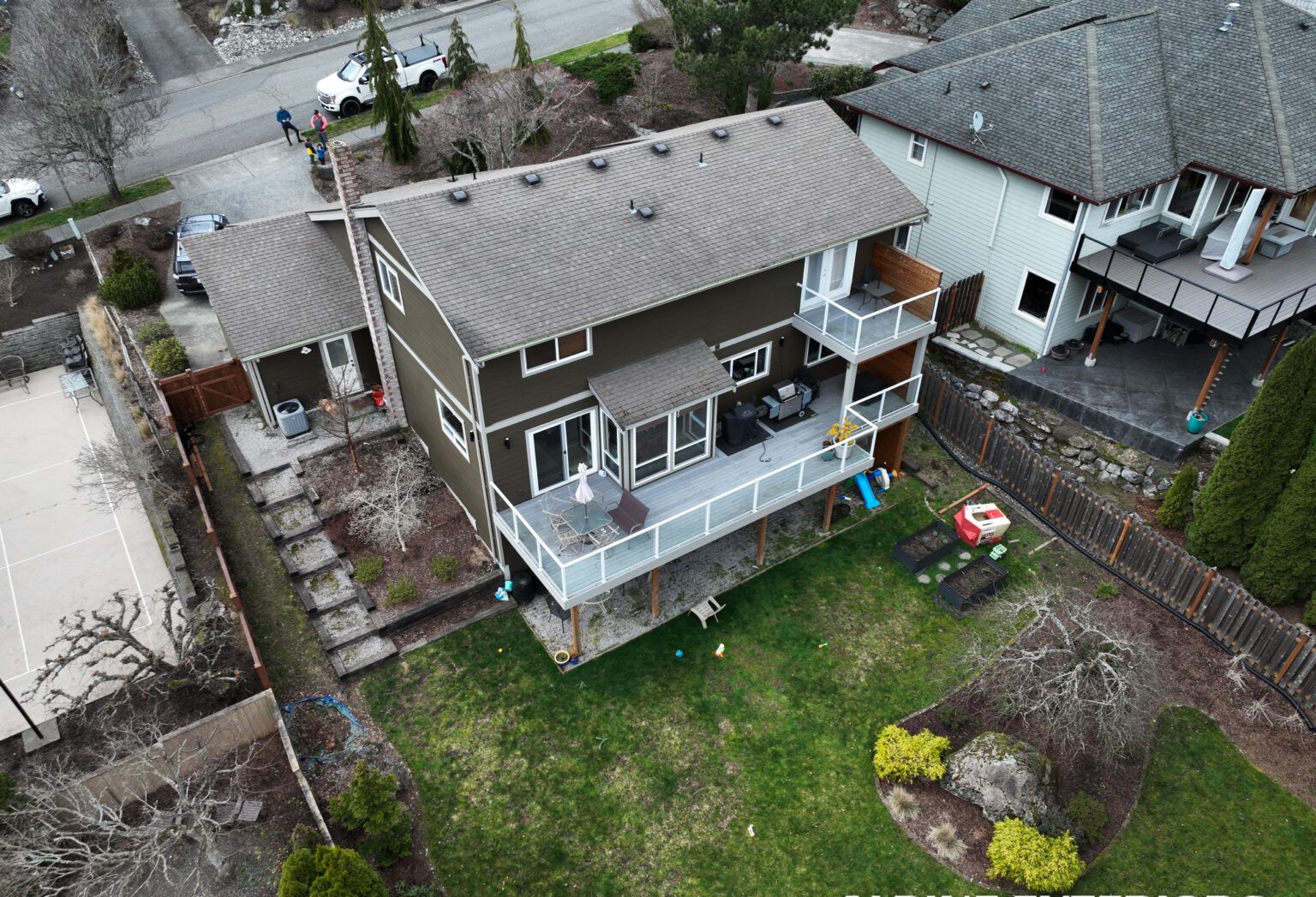
If your home sits inside Bellingham's Lettered Streets neighborhood — the older grid of lettered avenues between downtown and Western Washington University — your siding permit is issued by the City of Bellingham's Permit Center, not Whatcom County. Most full or partial tear-off-and-replace siding jobs need one; a small cosmetic patch of matching material on a wall section that's already weathertight often doesn't, though it's the Permit Center's call to make, not a contractor's guess.
That distinction matters more than it should, because "who issues it" changes the moment you cross a city line. Homes in Ferndale, Lynden, and Blaine go through those cities' own building departments, each with its own counter, its own fee schedule, and its own turnaround time. Homes in Birch Bay, Sudden Valley, the Lake Whatcom foothills, and the unincorporated pockets near the water and the islands go through Whatcom County Planning & Development Services instead. Same siding job, same materials, same crew — a different desk to walk the paperwork to depending on which side of an invisible line your foundation sits on.
| Area | Permit Authority |
|---|---|
| Lettered Streets, downtown, and the rest of Bellingham city limits | City of Bellingham Permit Center |
| Ferndale | City of Ferndale Building Department |
| Lynden | City of Lynden Building Department |
| Blaine | City of Blaine Building Department |
| Birch Bay, Sudden Valley, other unincorporated county land, county-served islands | Whatcom County Planning & Development Services |
Siding permitting isn't a single yes-or-no switch — it's a handful of separate triggers, and a given project can hit more than one. The most common ones we see on Lettered Streets homes and elsewhere in Whatcom County are:
On the other side of the line, small in-kind repairs — replacing a few damaged boards or shingles with matching material, patching a section that a tree limb dented, touching up caulk and trim — usually don't need a permit because they don't change the assembly or expose the underlying structure in a meaningful way. The honest answer is that the boundary between "repair" and "reclad" isn't always crisp, and the Permit Center has final say. Calling ahead with a description of the scope, before signing a contract, is the cheapest insurance available.
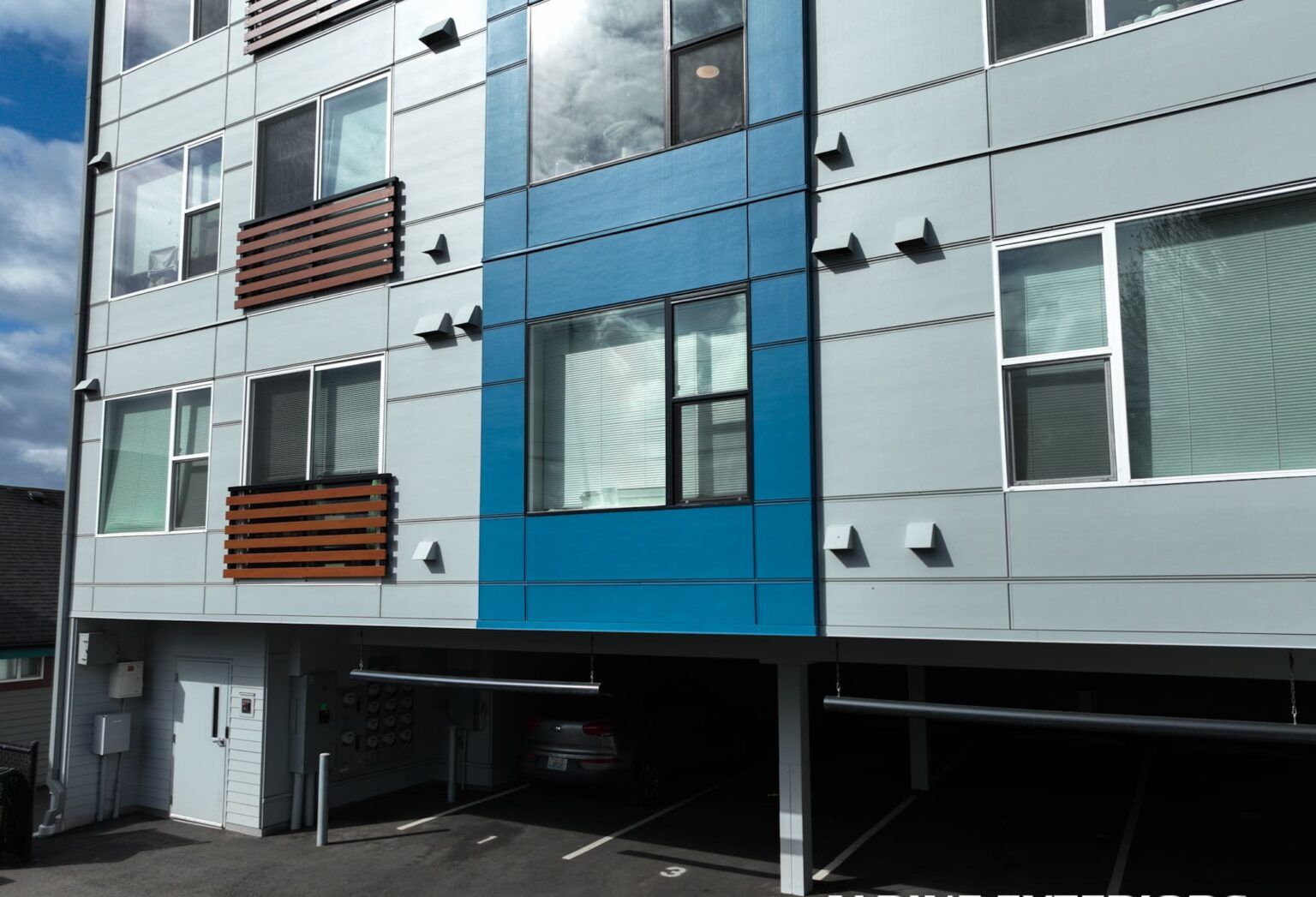
A permit guide written for a generic house doesn't fit Lettered Streets particularly well, and it's worth being specific about why.
First, the housing stock is old. Many of these homes date to the early 1900s, built with wood drop siding or cedar shingles over board sheathing and, in some cases, nothing more than tar paper for a weather barrier — housewrap as we know it didn't exist yet. When a crew opens up a wall on one of these houses, it's common to find that the original assembly doesn't meet current expectations for a drainage plane, which is precisely the situation that turns a routine re-side into a permit conversation about how the new wall assembly needs to perform.
Second, exposure varies block to block in a way that surprises people who haven't lived through a full Bellingham winter here. Southwest-facing walls catch wind-driven rain coming off Bellingham Bay and the Strait of Georgia, and those elevations show weathering, caulk failure, and paint breakdown faster than the rest of the house. North-facing walls, especially ones shaded by mature street trees that Lettered Streets is known for, stay damp longer between storms and grow moss and algae at a rate that flat, sun-exposed walls elsewhere in the county don't. Wood rot tends to start at butt joints, window sills, and anywhere trim meets siding without enough of a drip edge — and once a contractor opens that area up to fix it, they've usually crossed into permit territory whether that was the original plan or not.
Third, freeze-thaw cycling is a bigger factor for homes up in the Lake Whatcom foothills and around Sudden Valley than it is for Lettered Streets itself, which sits close to sea level and rarely sees hard, sustained freezes. It's still worth knowing about if you're comparing notes with someone on the other side of the county, because it changes how quickly caulk joints and unpainted trim fail up there compared to in town.
Fourth — and this surprises people — Lettered Streets does not carry a formal historic-district design-review overlay the way some older neighborhoods in other cities do. That means a siding permit here is evaluated against the building code and the energy code, not against an architectural review board's opinion of your color choice or trim profile. That's a genuine point in the neighborhood's favor: it keeps the process closer to what a homeowner in a newer part of Bellingham would go through, rather than adding a design-review layer on top of the building permit itself.
The practical sequence, in order:
This is the point where hiring matters more than the permit paperwork itself. Alpine Exteriors pulls permits as a standard part of full re-siding jobs across Whatcom County, including inside Bellingham city limits, and treats the sheathing inspection as a normal step in the schedule rather than an obstacle to work around. A contractor who's uneasy talking through permit scope before bidding the job is telling you something about how the rest of the project will go.
In most cases, yes — a full or majority re-side of the exterior requires a permit through the City of Bellingham's Permit Center, since Lettered Streets is inside city limits. Small, in-kind repairs to a limited section of already-sound siding are the main exception, and even then it's worth a quick call to confirm rather than assuming.
Those three cities each run their own building department and issue their own permits, separate from both Bellingham and Whatcom County. The general triggers — full recladding, a change in material, exposed sheathing, structural repair — are similar everywhere in the state, but the intake process, fee schedule, and inspection scheduling are specific to each city, so a permit pulled for a Ferndale job doesn't transfer to a Lynden or Blaine address.
On a permitted job, the two inspections that matter most are the sheathing and weather-resistive-barrier inspection, done after tear-off but before the new siding covers everything up, and the final inspection once the job is complete. The first one is the one people are tempted to skip because it slows the schedule down, but it's also the only chance an inspector has to see the wall assembly before it disappears behind new cladding for another few decades.
It can, depending on how much of the wall assembly gets opened up. The Washington State Energy Code sets prescriptive requirements for exterior wall insulation, and when a significant portion of siding comes off down to the sheathing, that can trigger a requirement to add continuous insulation that wasn't part of the original wall. It's not automatic on every job, which is exactly why it's worth confirming with the permit reviewer before ordering materials rather than assuming a like-for-like replacement is exempt.
Whether your home is on one of the Lettered Streets, out toward Ferndale or Lynden, or tucked into the Birch Bay or Sudden Valley shoreline, getting the permit question answered before demolition starts saves real time and money later. Alpine Exteriors, WA contractor license ALPINI751OW, handles the permit conversation as part of every full siding estimate across Whatcom County and can walk you through what your specific project will and won't require before a single board comes off the house. Reach out for a walk-through and a straight answer on what your home's siding job actually needs.