
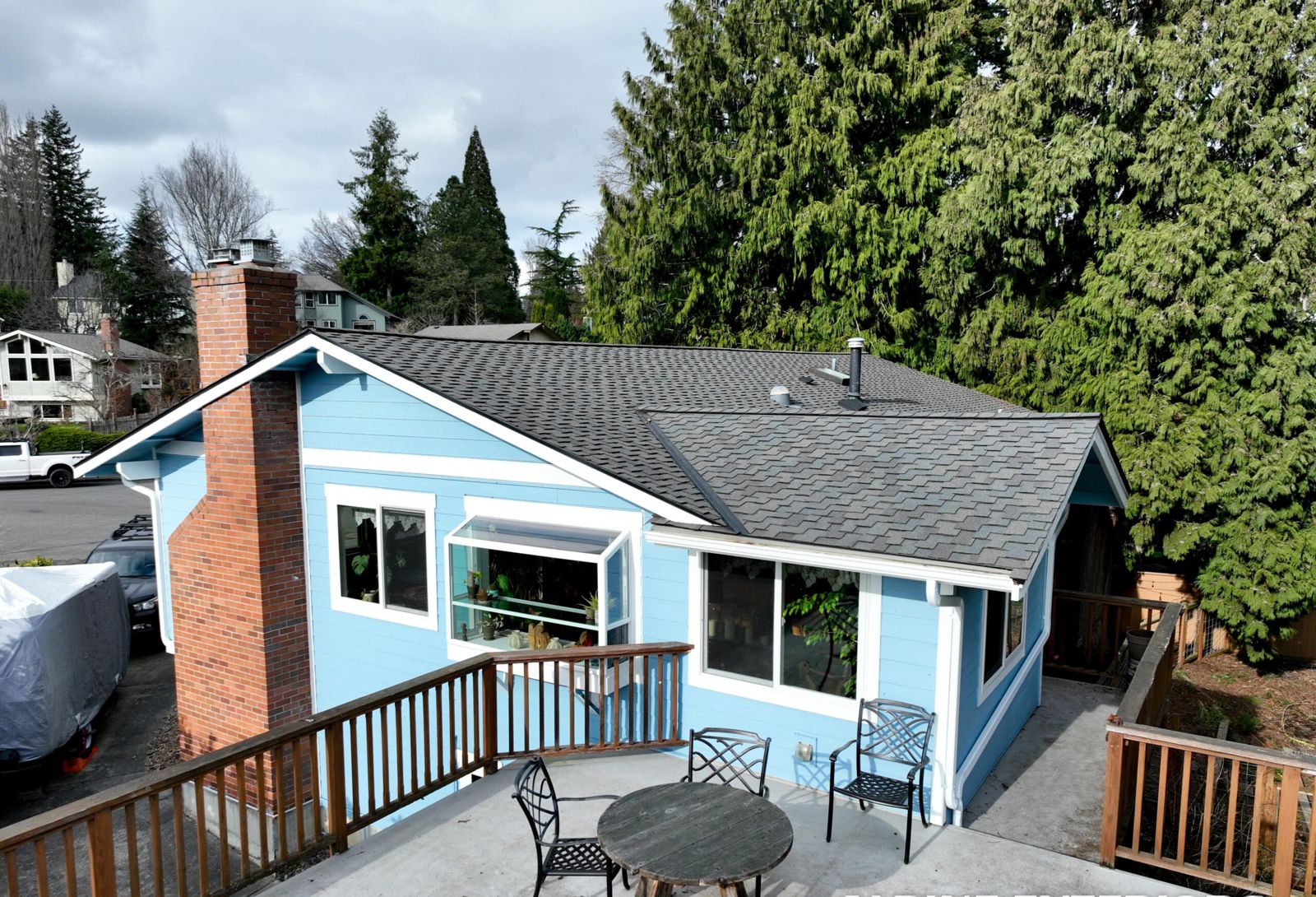
Siding permits on Lummi Island are issued by Whatcom County Planning & Development Services (PDS), not by a separate island authority, because Lummi Island is unincorporated Whatcom County land. Most full siding replacement jobs require a building permit, while small, like-for-like patch repairs on a limited area of wall often do not — the line between the two is where most homeowners get tripped up.
Lummi Island has no city hall and no local building department of its own. Every permit application, plan review, and inspection request for a home on the island routes through the same Whatcom County office that handles Bellingham, Ferndale, Lynden, and the rest of the unincorporated county. That single fact shapes almost everything else about how a siding project on the island actually moves forward, including how long it takes to get an inspector to your door.
Whatcom County administers building permits under the Washington State Building Code, which is the state's adopted version of the International Residential Code with Washington-specific amendments. For siding work specifically, the permit trigger usually comes down to scope rather than the word "siding" itself. Replacing a small, damaged section of lap siding or fixing a rotted piece of trim is typically treated as maintenance and doesn't need a permit. Re-siding an entire wall, an entire house, or any project that opens up the wall assembly down to the sheathing or house wrap is a different matter — that's a building permit in the eyes of the county, because at that point you're touching the weather-resistive barrier, flashing details, and in many cases the wall's insulation value.
That last point matters because full re-siding jobs on older Whatcom County homes frequently intersect with the Washington State Energy Code. If a project exposes the wall cavity or adds new exterior sheathing, the energy code's requirements for continuous insulation or air-sealing at the wall assembly can come into play, even though the homeowner only set out to replace tired old siding. This is one of the more common surprises on Lummi Island, where a lot of the housing stock is older cabins and farmhouses that were never built to current energy code assumptions. A licensed contractor who has actually pulled permits in Whatcom County — not just worked on the mainland somewhere else — will know how PDS is currently interpreting that overlap, because it does shift from year to year as code cycles update.
There's also a shoreline layer that's easy to miss. Lummi Island is small and almost entirely ringed by marine shoreline — Hale Passage on one side, the Strait of Georgia and Rosario Strait waters on the other. Whatcom County's Shoreline Master Program applies within a set distance of that shoreline, and while re-siding an existing house in place is usually exempt from a full shoreline substantial development permit, the county still wants that exemption documented rather than assumed. Skipping this step doesn't usually blow up a straightforward re-side, but it's one more form that a contractor unfamiliar with the island might not know to check.
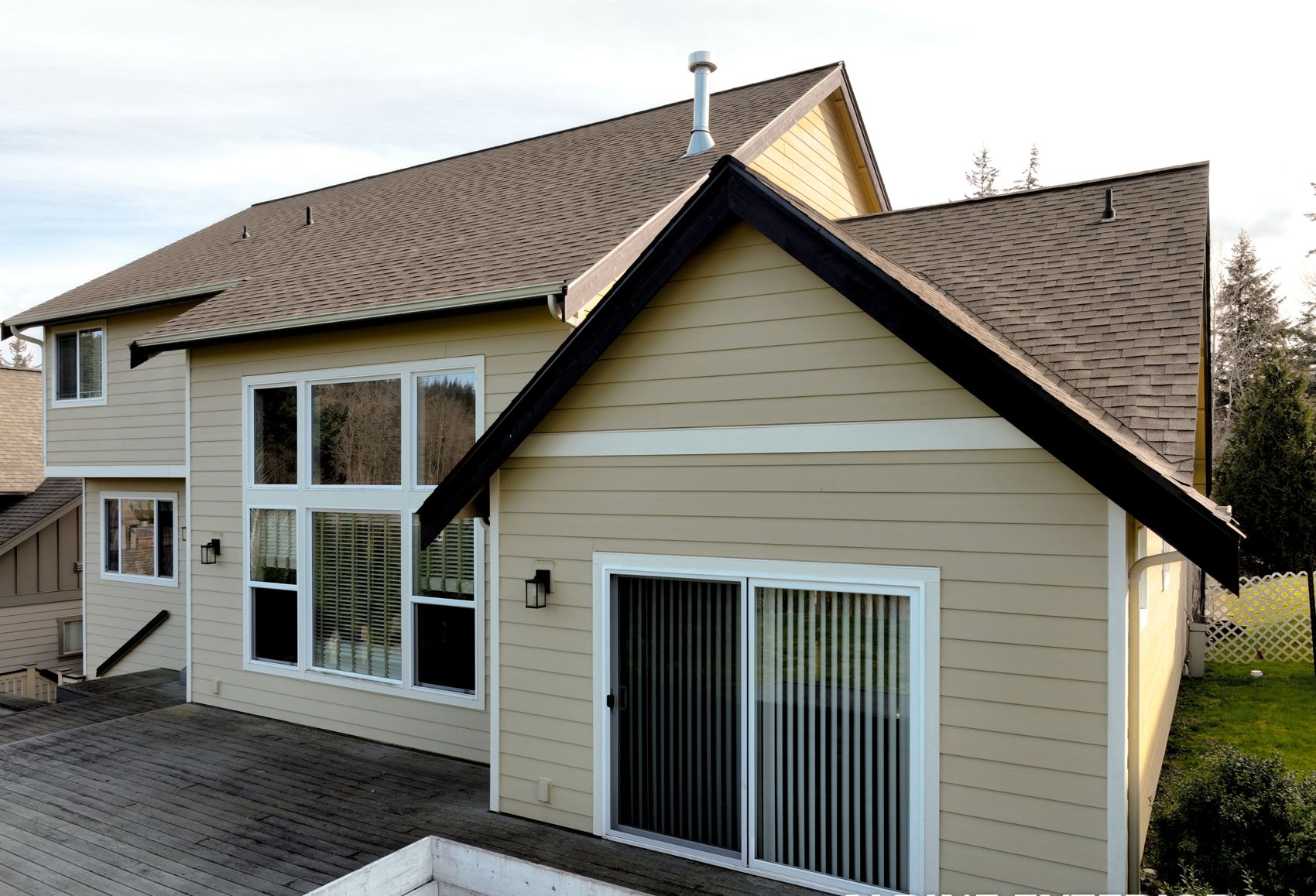
Lummi Island's permitting process runs through the same office as the rest of Whatcom County, but the practical experience of getting a permit approved and inspected is genuinely different, for reasons that have nothing to do with paperwork.
Start by finding out what's already on file for your property. Whatcom County keeps permit history searchable, and knowing whether prior work — a re-roof, a remodel, an addition — was permitted correctly can save you from inheriting someone else's unpermitted shortcut. Next, call or check with Whatcom County PDS before you sign a contract, and describe the actual scope: is this patch repair on one wall, or a full tear-off and re-side of the house? That distinction is what determines whether you need a permit at all, and getting that answer from the county directly, rather than assuming, avoids a stop-work order partway through the job.
If your property sits close to the water, ask specifically whether your project needs a shoreline exemption filed alongside the building permit. It's a small step, but it's the kind of thing that causes delays when it's discovered after work has already started rather than before. Then factor the ferry into your timeline from the start — if a permit and an inspection are both required, build in real slack rather than assuming an inspector can be on-site within a day or two of your request.
Finally, hire a contractor who has actually pulled permits and passed inspections on Lummi Island before, not just somewhere on the Whatcom County mainland. Alpine Exteriors has handled siding permitting and inspection scheduling for homes across Whatcom County, including island properties where the ferry schedule has to be worked around, and holds Washington contractor license ALPINI751OW. A contractor who already understands the shoreline exemption question, the energy code overlap on full re-sides, and the realistic inspection timeline on the island will save you from the delays that catch first-time island homeowners off guard.
Whatcom County Planning & Development Services is the office that issues building permits for Lummi Island, the same as for any unincorporated part of the county — there is no separate island permitting authority, so applications, questions, and inspection requests all go through that one county office.
Generally no — repairing a limited section of damaged or rotted siding is usually treated as maintenance and doesn't trigger a building permit, but a full re-side of a wall or the entire house almost always does, since that scope typically involves the sheathing, weather-resistive barrier, and sometimes the wall's insulation, which the Washington State Energy Code has requirements around.
Inspectors reach the island by the county ferry from Gooseneck Point rather than driving directly to the site, so island inspections are often grouped together rather than scheduled the same way as mainland requests — building extra time into your project schedule for inspection turnaround is a practical necessity, not a bureaucratic delay.
No — Lummi Island is private land under Whatcom County jurisdiction, while the Lummi Nation reservation on the nearby Lummi Peninsula is tribal trust land permitted through the Lummi Nation rather than Whatcom County, so it's worth confirming which jurisdiction actually applies to your specific property before assuming the county is the right office.
Permitting questions on Lummi Island are rarely complicated once someone walks through them properly, but getting the scope, the shoreline question, and the inspection timeline right before work starts is what keeps a siding project from stalling out. Alpine Exteriors works across Whatcom County — from Bellingham and Ferndale to Lynden, Blaine, Birch Bay, Sudden Valley, and the islands — and can walk through what your specific Lummi Island project will actually require before a contract is signed. Reach out for a straightforward assessment of your siding project and what Whatcom County will expect from it.