
Birch Bay sits right on the water, which means every siding project here has to answer to conditions that inland Whatcom County jobs don't face in the same way: wind-driven rain coming off Bellingham Bay and the Strait of Georgia, salt-laden air, and long stretches of gray, wet weather that give moss and algae plenty of time to take hold on north-facing walls. A siding replacement on an average single-family home in Birch Bay, Blaine, or along the Semiahmoo waterfront typically runs two to four weeks from the day crews arrive with material to the final walkthrough, though that window can widen if the crew finds rot under the old siding or if a run of heavy rain forces a pause. Larger homes, homes with a lot of trim and window-wrap detail, or homes where the sheathing needs partial replacement can run longer. This is a realistic range, not a promise — Whatcom County weather in the shoulder seasons (October through April especially) can add days that have nothing to do with the crew's pace.
It helps to think of the timeline in two parts: the weeks before a single piece of siding comes off the house, and the on-site work itself. The prep phase — permitting, HOA sign-off if applicable, and ordering material — often takes longer than the physical installation, especially for fiber cement siding or a specific color-matched trim that isn't sitting on a local shelf.
Whatcom County and the City of Blaine both require a building permit for siding replacement in most cases, particularly when the job involves removing sheathing down to the studs, changing the water-resistive barrier, or altering window and door flashing. A straightforward re-side that keeps the same wall assembly may qualify for a simpler permit path, but any project that touches insulation or the exterior wall assembly has to meet the Washington State Energy Code, which sets minimum requirements for continuous insulation and air sealing on exterior walls. Alpine Exteriors pulls the permit as part of the contract and coordinates the required inspections, but homeowners should expect this step to add one to three weeks before demolition starts, longer if the jurisdiction's inspection queue is backed up.
If the home is in a homeowners' association — common in newer Birch Bay developments and some Sudden Valley phases — check the covenants for approved siding colors, materials, and any process for submitting a change request before signing a contract. HOA review can add its own two-to-four-week delay, and it's far cheaper to sort that out before material is ordered than to special-order a different color after the fact.
Material lead time is the other variable worth planning around. Fiber cement siding, certain vinyl profiles, and custom trim colors are frequently backordered, and lead times of four to eight weeks from order to delivery aren't unusual, especially heading into the busier summer building season. Homeowners on the islands should budget extra time and cost for material delivery, since not every supplier will barge or ferry material out on short notice.
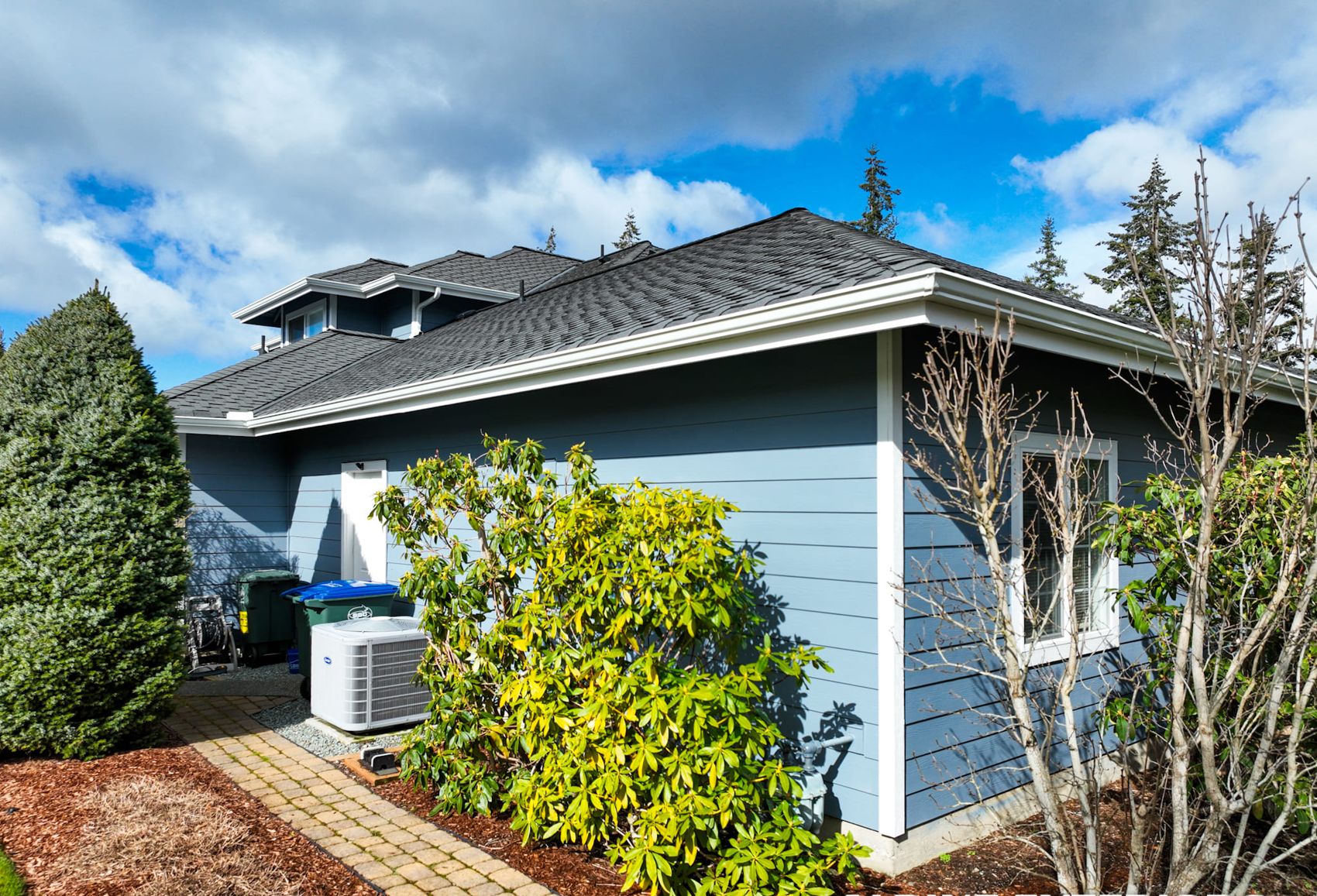
Once material is on site and the permit is in hand, the physical work generally follows this sequence:
Weather governs the pace of nearly every one of these stages. Fiber cement and most paints have minimum temperature and dry-time requirements, and a string of wet days in November or December can stretch a job that would take two weeks in July into three or four.
A few things ahead of the crew's arrival make the job go more smoothly and protect the property:
Any part of the project that touched sheathing, the water-resistive barrier, or insulation typically requires a Whatcom County or City of Blaine building inspection before the walls get closed up with new siding — this is a hold point in the schedule, not a formality that can be skipped, since it protects the homeowner as much as it satisfies the jurisdiction. Crews should not be covering flashing or barrier work until that inspection has passed.
Daily cleanup matters more here than it might in a drier climate — cut-offs, packaging, and old siding left on wet ground overnight can stain grass, and nails left in a yard are a real hazard for bare feet and for mowers and lawn equipment. A crew that leaves the site reasonably tidy at the end of each day, magnet-sweeps for stray fasteners, and hauls debris off promptly rather than letting a dumpster sit for weeks is doing the job the way it should be done.
At completion, the final walkthrough should cover the whole house, not just the street-facing elevation: check caulk lines at trim and windows, confirm siding laps are consistent and that gaps at the bottom of walls are clear (not caulked shut, which traps moisture), and look closely at inside corners and any spot where two roof planes or a deck meets the wall — these are the details that separate a job that will hold up through a Whatcom County winter from one that won't. It's reasonable to walk the yard afterward and check for leftover nails, staples, or debris in flower beds and gutters.
New siding still needs some attention from the homeowner. In this climate, moss and algae growth on north- and west-facing walls, especially under trees or in shaded areas near Birch Bay's tree line, is close to inevitable over time regardless of material — a soft wash with a garden-hose attachment or a low-pressure cleaning once a year or two keeps it from building up and staining the finish. Avoid pressure-washing siding directly, since high pressure can force water behind laps and joints and undo the drainage detailing that was built in during installation.
Caulk joints, especially at trim and window casings, should get a visual check every year or two, since UV exposure and the freeze-thaw cycling that shows up more in the foothills east of Bellingham than right on the water can eventually crack a caulk line. A cracked joint is a small fix if caught early and a rot problem if ignored for several winters.
Alpine Exteriors provides a workmanship warranty on the installation, separate from the manufacturer's warranty on the siding material itself, and reviews both with the homeowner at the final walkthrough so it's clear what's covered by whom. As a WA-licensed contractor (license ALPINI751OW), the company stands behind the installation work specifically — manufacturer defects in the material are handled through the siding maker's own warranty process, and it's worth keeping the paperwork from both in one place.
For a typical single-family home, plan on two to four weeks of on-site work from removal through final trim and caulk, though a job that uncovers significant rot, or one that runs through a stretch of heavy fall or winter rain, can take longer. This is separate from the weeks needed beforehand for permitting and material ordering.
Sometimes, and it's worth budgeting for as a possibility rather than being caught off guard. Homes older than fifteen or twenty years, especially those with older window flashing details or areas that take direct wind-driven rain off the bay, have a real chance of hidden sheathing or framing damage that only becomes visible once the old siding is off. A contract should spell out how that's priced and approved before repair work happens, not after.
In most cases, yes, particularly for any project that removes sheathing, changes the water-resistive barrier, or touches wall insulation, since that scope falls under the Washington State Energy Code's requirements for exterior walls. A simpler like-for-like re-side may qualify for a lighter permit path, but that determination should be made with the local building department, not assumed.
Crews work one elevation at a time rather than opening the whole house at once, and any wall left exposed at the end of a day gets temporary weather protection until the new water-resistive barrier and flashing are in place. Given how much of the year Whatcom County sees rain, this staged approach matters more here than it would in a drier climate.
Every home on the water side of Birch Bay, up toward Blaine, or back through Ferndale and Lynden takes weather differently, and a siding plan that works for a sheltered Sudden Valley lot isn't necessarily right for a place that takes wind straight off the Strait. Alpine Exteriors can walk your home's exterior with you, point out what the current siding and trim are actually telling us about past moisture problems, and lay out a realistic scope, timeline, and cost range before any contract is signed. Reach out to schedule a walkthrough and get a straight answer about what your home needs.