
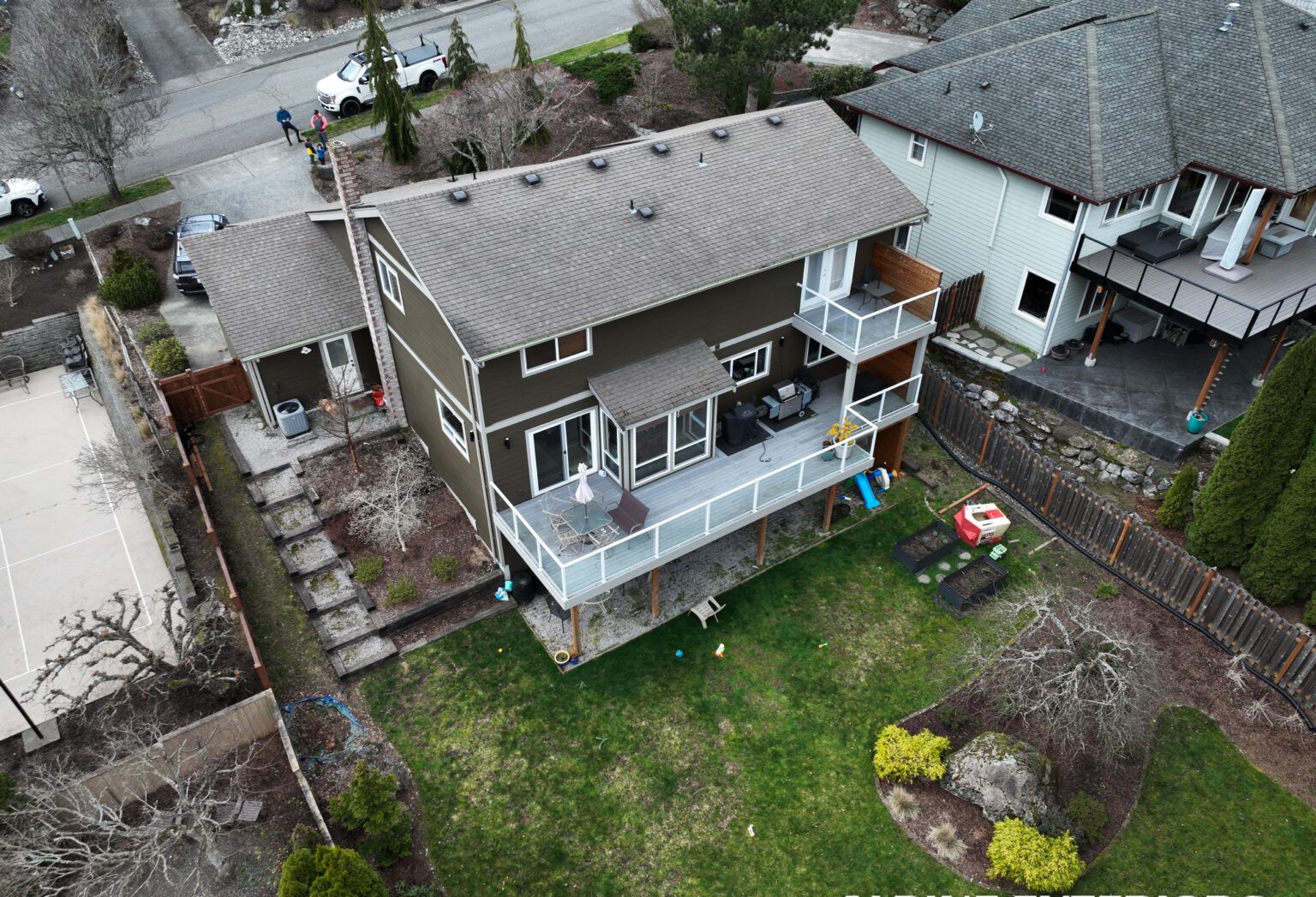
In Roosevelt and the rest of Bellingham, siding has to be installed to the manufacturer's tested fastening schedule and to the wind exposure and code requirements the City of Bellingham and Whatcom County apply under the Washington State Building Code, and it also has to meet the Washington State Energy Code for the wall assembly behind it. There is no separate hurricane-zone product approval system here like you'd see on the Gulf Coast — instead, the inspector is checking that the siding, the water-resistive barrier underneath it, and the fastening pattern match what was actually engineered and tested for the product, and that the wall can shed the wind-driven rain this part of the county gets.
Washington adopts the International Residential Code (IRC) with state amendments, and that's the baseline every siding job in Roosevelt has to meet. The IRC references wind design values from ASCE 7, and Whatcom County sits in a wind zone that's moderate compared to the coast or the Gorge, but Bellingham's local terrain adds a wrinkle: homes on bluffs or open lots near Bellingham Bay, Chuckanut, or the waterfront-facing slopes of Roosevelt and the South Hill can see meaningfully higher local wind exposure than a home a half-mile inland in a treed neighborhood. That exposure category matters because it changes how much pressure the wind puts on the wall, and that pressure is what the fastening schedule is designed to resist.
For most siding products — fiber cement, vinyl, engineered wood, and cedar — the actual fastening requirements don't come from a state-issued product approval number the way they would in a hurricane state. They come from the manufacturer's ICC-ES evaluation report or published installation instructions, which the IRC requires be followed as a condition of code compliance. That means the nail type, nail spacing, penetration depth into framing, and clearance from panel edges are all spelled out by the manufacturer and enforced by the local building inspector as part of the code, not as an optional best practice. Get those wrong — nails driven too tight, spaced too far apart, or missing framing — and the siding can rack, buckle, or blow off in a wind event well below what the product was rated to handle.
Behind the siding, Whatcom County inspectors are also checking the water-resistive barrier (WRB) — housewrap or building paper — for correct lap direction and sealed penetrations, because in a climate this wet, a code-compliant WRB is doing as much structural protection work as the siding fasteners are. And because Washington's Energy Code requires continuous insulation or a specific cavity-insulation approach on most new and re-sided exterior walls, an inspector may also be looking at how the siding attachment deals with rigid foam or exterior insulation — long-fastener systems and correct furring are common here, and skipping them is one of the more frequent code corrections we see on re-side jobs in this area.
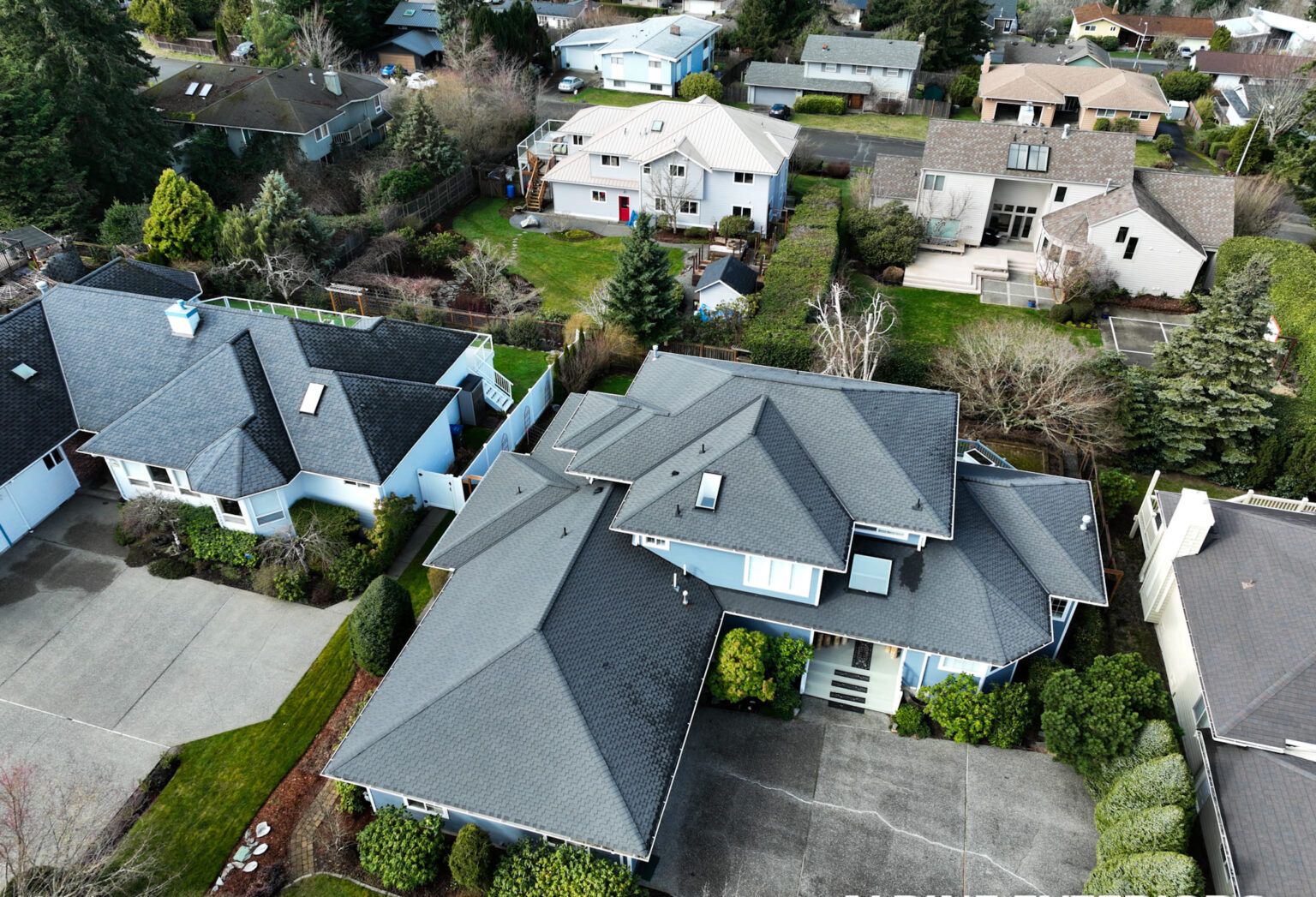
Roosevelt and greater Bellingham don't deal with hurricane wind speeds, but three things make the wind and moisture picture here different from a lot of the country. First is wind-driven rain: storms rolling in off the Strait of Georgia and up Bellingham Bay push horizontal rain against west- and northwest-facing walls for hours at a time during fall and winter systems, which is a very different load on flashing and laps than an occasional downpour. Second is the near-constant humidity that keeps north-facing and shaded walls damp for long stretches, which is exactly the environment moss, algae, and eventually wood rot need to take hold — especially at butt joints, inside corners, and anywhere caulk has failed. Third, homes up in the foothills and higher elevations around Whatcom County see real freeze-thaw cycling in winter, which stresses caulked joints and trim differently than the milder, more static conditions closer to sea level in town.
None of that shows up as a hurricane clause in the code, but it shows up in how inspectors and experienced contractors actually evaluate a siding job. A fastening pattern that would pass in a dry climate can still fail here if the WRB detailing, flashing, and drainage plane behind it aren't right, because the siding is being asked to perform in sustained wet conditions, not just resist a wind gust once in a while.
If you're planning a re-side or new siding installation in Roosevelt, there are a handful of things worth doing before a single panel goes up.
To be candid about drawbacks: no siding material is maintenance-free here. Fiber cement resists rot well but needs its caulking and paint maintained. Cedar looks right for the region but needs the most upkeep against moisture and requires re-staining. Vinyl is low-maintenance but can become brittle in hard freezes and shows fastener mistakes more visibly than other products. Whatever you choose, the code minimums are a floor, not a guarantee — the quality of the installation crew matters as much as the product spec sheet.
Alpine Exteriors works on siding projects throughout Whatcom County, including Roosevelt, Bellingham, Ferndale, Lynden, Blaine, Birch Bay, and Sudden Valley, and we build every job to the manufacturer's tested fastening schedule and the current Washington State Building and Energy Code requirements rather than a generic minimum.
No. Washington doesn't run a hurricane-style product approval program. Siding here is governed by the Washington State Building Code (based on the IRC), the manufacturer's tested installation instructions or ICC-ES evaluation report, and local wind exposure factors, all of which the building inspector checks at permit and inspection rather than through a separate statewide approval number.
Yes, if the job is permitted and inspected, which it should be. Inspectors commonly check nail type, spacing, penetration into framing, and clearance from panel edges against the manufacturer's published instructions, along with the water-resistive barrier lap direction and flashing at penetrations, since those details drive both wind performance and long-term moisture protection.
Moss and algae themselves aren't a code item, but the moisture retention that lets them grow is often a sign that drainage, lap spacing, or caulking behind the siding isn't performing the way it was designed to. Persistent growth at inside corners or butt joints is worth investigating early, since it's frequently the first visible clue to a flashing or WRB problem underneath.
Yes. On most re-side and new-construction jobs, the Energy Code's requirements for continuous exterior insulation or cavity insulation change the wall thickness the siding is fastened through, which means longer fasteners and correct furring are often required to still hit the manufacturer's structural fastening depth into framing.
If you're weighing a re-side in Roosevelt or anywhere else in Whatcom County, Alpine Exteriors can walk your home's specific exposure, wall assembly, and Energy Code requirements with you before any work starts. Alpine Exteriors holds Washington contractor license ALPINI751OW — reach out for a straightforward, code-focused assessment of what your home actually needs.