
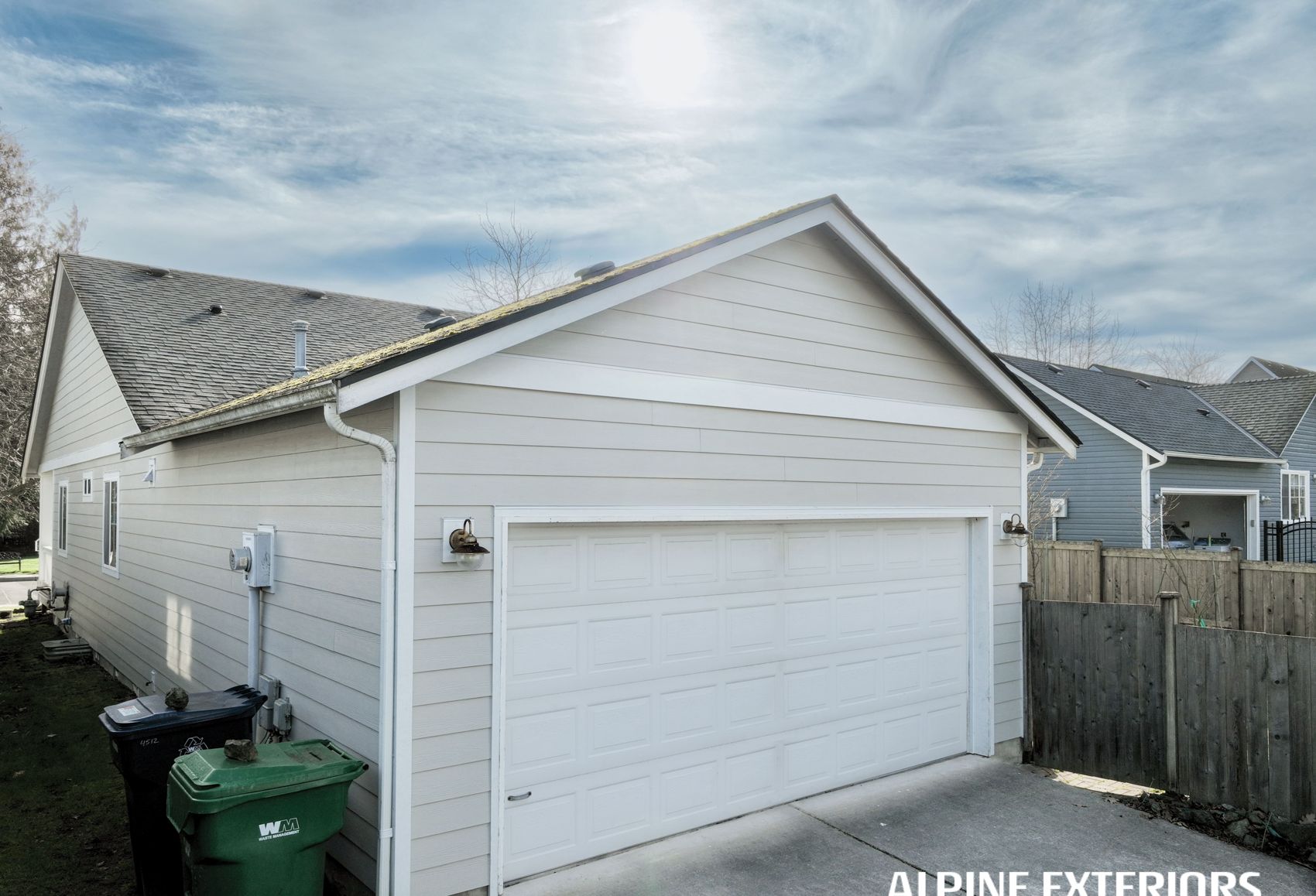
In most cases, yes. If your siding project in Roosevelt goes beyond a small board-for-board repair, you need a building permit, and because Roosevelt sits inside Bellingham city limits, that permit comes from the City of Bellingham Permit Center rather than Whatcom County Planning & Development Services.
That distinction matters more than most homeowners expect. Whatcom County has a patchwork of jurisdictions — Bellingham, Ferndale, and Blaine each run their own permit counters and review staff, while unincorporated pockets like Sudden Valley, parts of Birch Bay, and the county islands fall under the county's own building division. Roosevelt, tucked between Whatcom Falls Park and the Sehome/York neighborhoods, is fully inside the city, so its permit path, fee schedule, and inspection scheduling all run through Bellingham's process. A contractor who normally pulls permits for a job out near Lynden or Blaine will follow a different intake process for a Roosevelt address, even though the underlying building code is the same statewide code.
Not every siding job needs a permit, and not every jurisdiction defines the trigger the same way, but a few patterns hold true across Bellingham and most of Washington:
What usually does not require a permit: spot repair of a handful of damaged boards or panels, cosmetic touch-ups, or replacing trim without disturbing the weather barrier. The safest move is to describe the actual scope to the Bellingham Permit Center or have your contractor do it — verbal guesses about what's exempt are a common source of stop-work orders mid-project.
Roosevelt's building conditions are shaped by its proximity to Bellingham Bay and the Strait of Georgia. Wind-driven rain off the water pushes moisture sideways into wall assemblies far more aggressively than a straight-down rain would, which is why inspectors here pay close attention to how house wrap laps, how flashing tapes are lapped at seams, and how weep paths are left open at the base of the wall. A siding job that looks fine from the ground can still trap water behind it if the WRB details were rushed, and that's exactly the kind of defect a permitted inspection is designed to catch before the new siding closes it in.
Persistent regional rainfall also feeds moss and algae growth, especially on north- and west-facing walls shaded by mature trees — common throughout Roosevelt's older, tree-lined blocks. Moss holds moisture against the cladding long after a rain event ends, which accelerates wood rot at butt joints, corner boards, and anywhere caulking has failed. Homes built before rainscreen gaps and modern house wraps became standard practice are especially prone to this, and it's often the reason a homeowner calls a contractor for what they think is a minor repair and learns the sheathing underneath needs attention too.
Whatcom County's inland and foothill areas also see freeze-thaw cycles that Roosevelt, closer to the moderating influence of the bay, experiences less severely — but not never. A hard cold snap can still crack caulking or stress marginal flashing details that were already compromised by trapped moisture, which is one more reason permitted, inspected work tends to hold up better over a Whatcom County winter than a quick uninspected patch job.
Start by getting the actual scope of work defined before assuming you know whether a permit applies. A short call to the City of Bellingham Permit Center, or a conversation with an established local contractor, will settle it faster than guessing. Alpine Exteriors, which holds Washington contractor license ALPINI751OW, typically handles the permit application directly as part of a full re-side, since the contractor of record is usually the one submitting the plans and scheduling inspections.
From there, a typical permitted siding project in Roosevelt moves through a few checkpoints:
| Stage | What's Checked | When It Happens |
|---|---|---|
| Permit application | Scope of work, wall assembly details, energy code compliance path | Before any demolition begins |
| Sheathing / WRB inspection | House wrap laps, flashing at windows and penetrations, weep paths | After old siding is removed, before new siding goes on |
| Rough-in tie-ins (if applicable) | Electrical, plumbing, or structural elements exposed by the re-side | Same visit as the WRB inspection, if relevant |
| Final inspection | Completed siding installation, trim, caulking, and overall weatherproofing | After the job is finished |
A few practical habits go a long way: confirm your contractor is licensed and bonded before signing anything, ask to see the permit number once it's pulled, and don't let anyone close in the wall before the WRB inspection has passed — that inspection is the one point in the process where a problem is cheap to fix, versus expensive to find later. It's also worth asking what happens if hidden rot is found once old siding comes off; a reputable contractor will flag it and get it addressed as part of the permitted scope rather than covering it up. Alpine Exteriors treats that kind of mid-project discovery as a normal part of re-siding an older Whatcom County home, not a surprise upcharge sprung on the homeowner.
Because Roosevelt is within Bellingham city limits, the City of Bellingham Permit Center issues the permit and schedules the inspections — not Whatcom County. Homeowners just outside city limits, in unincorporated areas of the county, would go through Whatcom County Planning & Development Services instead, so it's worth double-checking your exact jurisdiction if you're near a boundary.
Small, localized repairs that don't expose or disturb the water-resistive barrier typically fall outside permit requirements, but there's no universal size cutoff — it depends on whether the repair touches the underlying wall assembly. If rot has spread behind the boards you're replacing, that repair can cross into permitted territory once sheathing work is involved.
Timelines vary with the Permit Center's current workload and the complexity of the project, so it's not something to promise a firm number on. A straightforward residential re-side generally moves faster than a project tied to a larger remodel or one that requires energy code review, but building in a buffer for review time and inspection scheduling is the safer approach when planning a project timeline.
Yes, in a general sense — unpermitted exterior work can surface during a home inspection or a title search when you go to sell, and it can complicate an insurance claim if storm or water damage is later traced to work that was never inspected. Keeping the permit paperwork and final inspection sign-off with your home records is a small step that protects you well beyond the project itself.
If you're weighing a re-side in Roosevelt or elsewhere in Whatcom County, Alpine Exteriors can walk through the actual scope of your project, tell you plainly whether it needs a permit, and handle the City of Bellingham paperwork and inspections if it does. Reach out for a straightforward assessment of what your home actually needs before any siding comes off the wall.