
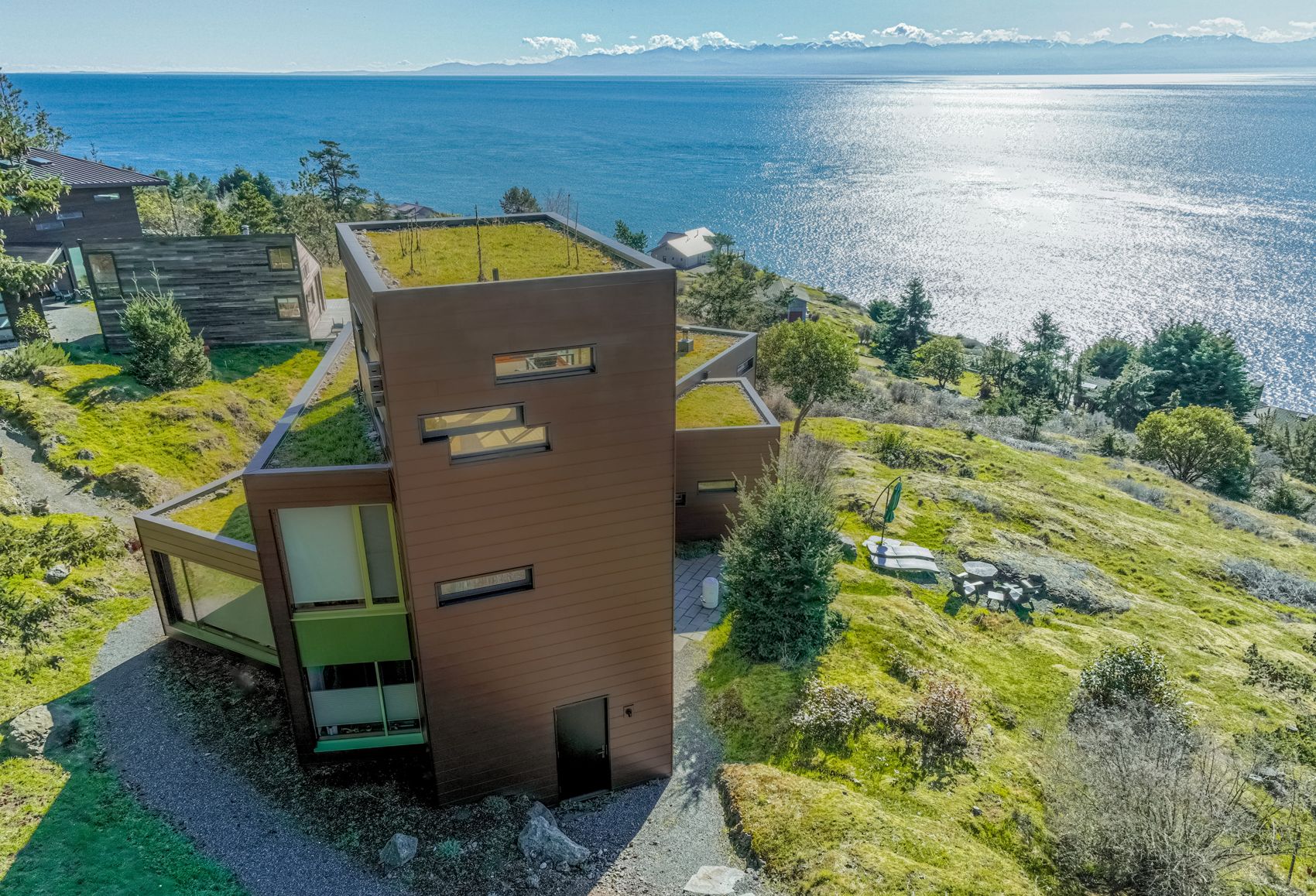
Samish sits in the shallow valley around Lake Samish, tucked between the Chuckanut foothills and the I-5 corridor south of Bellingham. It's a beautiful spot to own a home, but the same features that make it scenic — tall conifer cover, close-in hillsides, and a lake that holds humidity in the air well after a storm passes — also make siding age differently here than it does on an open lot near the water. Walls that sit in shade most of the day stay damp far longer than sun-exposed walls a few miles away, and that extra dry-time gap is exactly what moss, algae, and slow-developing rot need to get established.
Add in the rest of the county's weather pattern — long stretches of persistent rain from fall through spring, and wind-driven rain that funnels down Bellingham Bay and the Strait of Georgia during winter storms — and siding takes on moisture from more directions than most homeowners expect: not just top-down from rain, but sideways through laps and joints when wind pushes water uphill against a wall. In the foothill areas around Samish and Sudden Valley, cold air also pools in low spots on clear winter nights, so siding and trim go through more freeze-thaw cycling than you'd see right on the Bellingham waterfront. None of this is unique to any one house — it's a regional pattern — but it means a siding inspection here has to look for things that a generic checklist written for a drier climate would miss entirely.
There's also a code angle worth knowing about before problems start: the Washington State Energy Code sets requirements for continuous insulation and air/moisture barriers whenever exterior walls are opened up for re-siding or major repair. That doesn't affect a simple inspection, but it matters the moment a failed section needs to come off, because the fix has to meet current code, not just match what was there before. Keeping tabs on your siding's condition now is what keeps that kind of work a planned project instead of an emergency one.
Surface and finish
Trim, flashing, and joints
Ground level and foundation contact
Gutters, roofline, and attic interface
Fasteners and structural signs
Not every failed item is an emergency, but every one deserves a note and a photo with a date, even if you're not ready to act yet. A hairline gap in caulking around a window trim board is a fair weekend DIY fix — clean out the old bead, let the surface dry fully, and apply a quality exterior sealant rated for the Pacific Northwest's wet season. That kind of small, proactive sealing is genuinely useful and doesn't require a contractor.
Soft or spongy panels are a different situation. It's tempting to caulk over a soft spot or paint it and hope the finish seals it, but that only traps the moisture that's already inside and speeds up hidden rot underneath. The honest answer is that you can't tell how far rot has spread just by looking at the surface — it has to be opened up to see whether it's confined to a single panel or has reached the sheathing and framing behind it. Don't pressure wash a soft or stained area either; high-pressure water tends to drive moisture further into seams and joints rather than cleaning them out, which can make a cosmetic problem worse.
For moss and algae staining without soft spots, a soft wash with a mild cleaning solution and a garden hose (not a pressure washer) usually handles the surface issue. If the same shaded wall grows moss back within a season or two, that's a sign the underlying moisture or airflow problem hasn't been addressed, and cleaning alone won't fix it long-term.
If you find popped fasteners or minor gapping at trim joints, monitor the area after the next significant rain to see whether water is actually getting behind the siding or if it's a cosmetic movement issue. A flashlight and a dry rag pressed against the interior wall in the same location (if accessible from inside, such as a garage or unfinished basement wall) can sometimes confirm whether moisture is actually making it through.
Some findings are worth a phone call rather than a weekend project. Multiple soft or spongy panels, especially if they're spread across more than one wall, usually mean moisture has been getting in for a while and the extent isn't something you can safely judge from the outside. The same goes for any active leak you can see or feel from inside the house, visible mold or mildew on interior drywall near an exterior wall, or rot discovered at a structural connection point like a deck ledger or porch post base — those affect more than the siding itself and need an assessment that can look behind the surface.
Age matters too. Most siding materials have a serviceable life measured in decades, not years, but once a system gets into its final stretch, small issues tend to compound faster and repairs stop making economic sense compared to planning a full re-side. If your home's siding is old enough that you're not sure when it was last replaced, that uncertainty alone is a reason to get a professional opinion rather than keep patching individual spots.
It's also worth calling in a professional before any project that involves removing siding down to the sheathing, since that's the point where the Washington State Energy Code's continuous insulation and air-sealing requirements come into play. A contractor familiar with current code can make sure a repair or partial re-side doesn't create a compliance gap that becomes a problem at resale or during a future permit.
Alpine Exteriors serves homeowners throughout Whatcom County, including Samish, Bellingham, Ferndale, Lynden, Blaine, Birch Bay, and Sudden Valley, and works under Washington contractor license ALPINI751OW. A professional inspection typically includes photos of anything found, a plain-language explanation of what's cosmetic versus structural, and a written scope if repair or replacement is warranted — worth asking for regardless of which contractor you call, so you have a clear record to compare against future changes.
Twice a year is a reasonable baseline for this climate — once in early fall before the heavy rains set in, and again in spring once the wettest months have passed. That timing lets you catch anything the wet season caused while it's still fresh and easier to address, rather than finding it a year later after it's had another rainy season to get worse.
Not on its own. Moss and algae are a surface response to shade and moisture, and in many cases a gentle wash resolves the cosmetic issue without any repair needed. It becomes a bigger concern only when moss keeps returning quickly on the same wall despite cleaning, or when you find soft or discolored siding underneath it — at that point the moss is a symptom of a moisture problem rather than the problem itself.
It can, depending on how much of the wall assembly gets opened up. The Washington State Energy Code includes requirements for continuous insulation and air sealing that apply when exterior walls are exposed for significant repair or replacement, not just when building new. If you're planning anything beyond a small patch, it's worth discussing with your contractor upfront so the finished work meets current code rather than just replicating what was removed.
Most of this checklist is designed for a homeowner to walk through with a ladder, a flashlight, and a bit of patience — visible staining, caulk condition, gutter overflow, and obvious soft spots are all things you can reasonably check yourself. What you can't do from the outside is confirm how far hidden rot or moisture has spread once it's found, or whether it's reached structural framing. That's the point where opening up a section of wall, which is a professional job, becomes necessary.
A siding inspection doesn't need to turn into a sales pitch, and it shouldn't. Walking your own home with this checklist once or twice a year will catch most problems while they're still small and inexpensive to fix. When you do find something that needs a closer look — a soft panel, a persistent leak, or a wall you're just not sure about — Alpine Exteriors is available to take a look, explain honestly what's cosmetic versus what needs attention, and put together a written scope if work is warranted. Homeowners in Samish and throughout Whatcom County can reach out to schedule a walk-through with a licensed contractor (WA license ALPINI751OW) before small issues turn into bigger ones.