
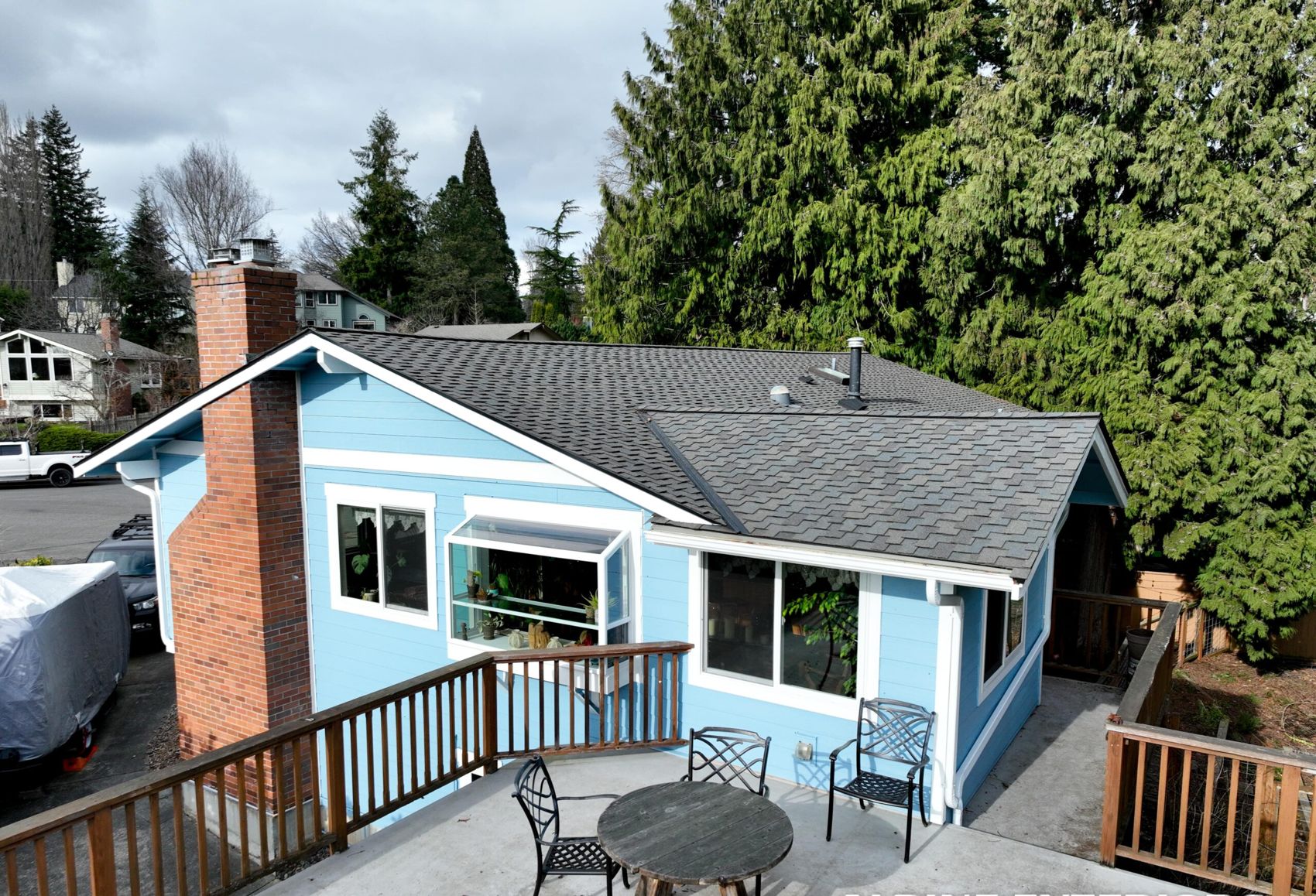
Homes around Lake Whatcom live under a nearly continuous tree canopy, and that canopy is a mixed blessing. It cuts summer heat gain, but it also holds moisture against exterior walls long after a storm has passed. Add the fact that many properties around Sudden Valley, the North Shore, and the south end of the lake sit in partial shade most of the day, and you get siding that simply does not dry out at the same rate as a home on open ground in, say, Lynden or Ferndale. That slower drying cycle is the single biggest reason siding here needs a more deliberate inspection routine than a generic checklist written for a drier climate.
Whatcom County's wet season typically runs from October through May, and it is not just rainfall totals that matter — it is duration. Long stretches of drizzle keep wood trim, fiber cement seams, and caulk joints damp for days at a time, which is exactly the condition moss, algae, and eventually rot need to get established. Closer to the water — Blaine, Birch Bay, Sudden Valley's exposed shoreline lots, and parts of Bellingham that face the bay — wind-driven rain off Bellingham Bay and the Strait of Georgia pushes water sideways into laps, seams, and trim joints that would stay dry in a calmer setting. That's a different failure mode than simple standing moisture, and it tends to show up first at outside corners and window heads on north- and west-facing walls.
Up in the foothill neighborhoods near Lake Whatcom and toward the Mount Baker foothills, winter brings occasional freeze-thaw cycles. Water that has worked its way into a crack in caulking or behind a loose panel can freeze, expand, and pry the gap wider — then thaw and let more water in. It's a slow, repeating cycle that turns a small cosmetic flaw into a real entry point for moisture over a season or two. None of this is hurricane-country wind loading; it's a steadier, wetter kind of stress that rewards homeowners who check their siding on a schedule rather than waiting for a visible problem.
Finally, the Washington State Energy Code sets requirements for the water-resistive barrier and continuous insulation behind the cladding on most homes built or re-sided in recent years. That matters for this checklist because it means the siding isn't just a weather shell — it's part of a layered wall assembly. A failure that looks minor from the outside (a gapped J-channel, a cracked caulk bead) can let water reach that barrier, and repeated wetting there is a slower, less visible problem than staining on the siding face itself. Alpine Exteriors gets called out to a fair number of homes in this area where the siding surface still looked presentable but the layer behind it had already been compromised for a year or more — which is exactly why a periodic walk-around inspection earns its keep.
Walk the full exterior on a dry day if you can, and bring a flashlight and a pair of binoculars for anything above ladder-comfortable height. Work section by section rather than trying to eyeball the whole house at once.
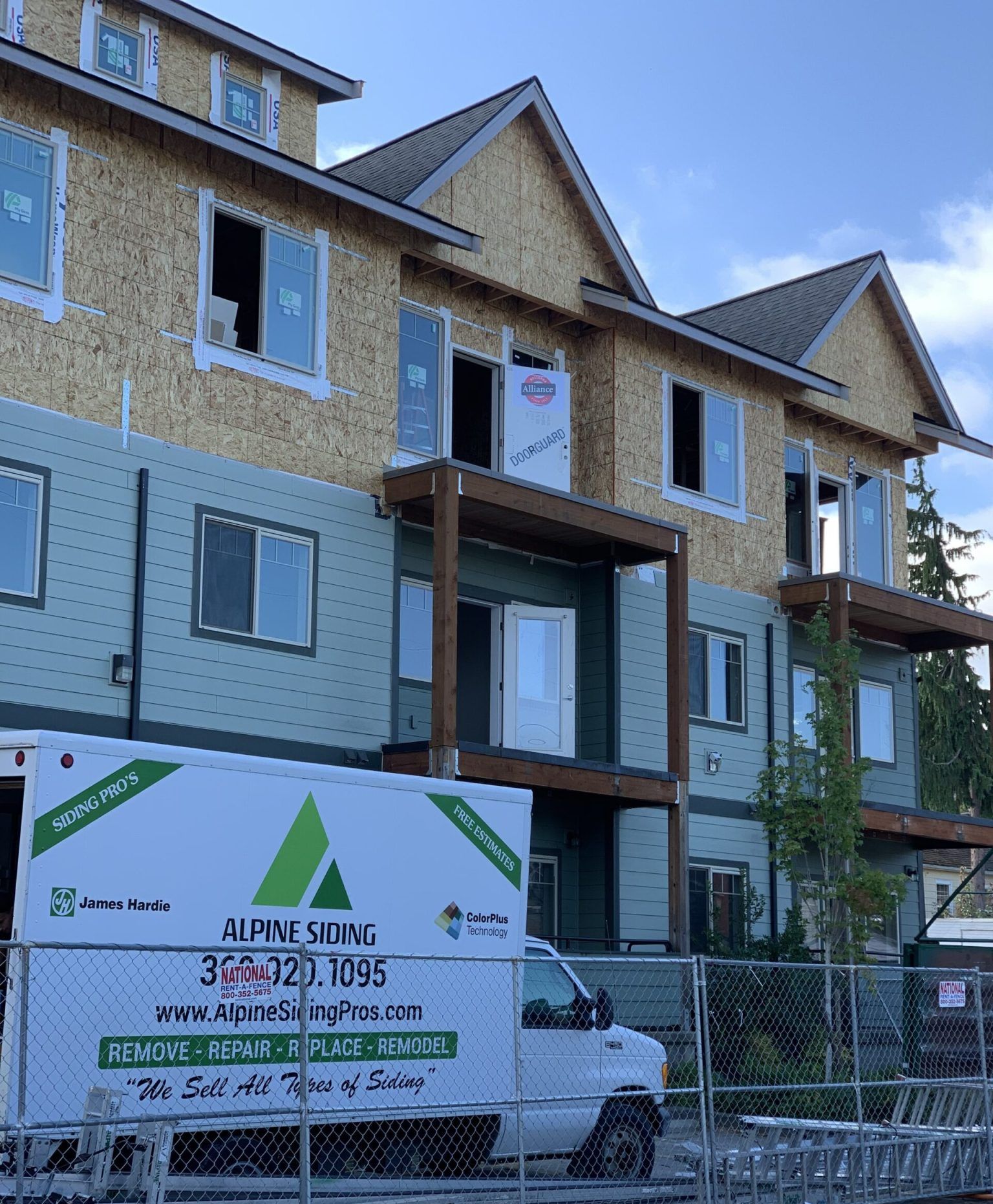
Not every failed item on this list is an emergency, and it's worth being honest about that. A single hairline caulk crack or a light moss film on a shaded wall is normal wear in this climate and can often wait for a scheduled maintenance visit rather than an urgent repair. What changes the calculus is scale and location: a cracked caulk joint above a window facing the prevailing wind off the bay deserves faster attention than the same crack on a sheltered, south-facing wall.
For small, contained issues — a re-caulk, a re-set panel, a gutter cleared of debris — many homeowners can handle the fix themselves if they're comfortable on a ladder and use exterior-grade sealant rated for the Pacific Northwest's wet cycle. For anything involving suspected rot, soft sheathing, or a gap behind the siding rather than on its surface, resist the urge to just caulk over it. Sealing the outside of a problem that already has moisture trapped behind it can make things worse by locking that moisture in.
Document what you find with photos and a rough date, even for minor items. A pattern of recurring moss in the same spot, or caulk that keeps failing at the same joint every year, tells a professional a lot more than a single snapshot — it usually points to a design or ventilation issue rather than simple wear.
Bring in a licensed contractor when you find soft or spongy siding, visible rot, staining that keeps reappearing after you've cleaned it, or any sign that moisture has reached the wall assembly behind the cladding rather than just its surface. The same goes for flashing problems at roof-to-wall intersections — these are safety-sensitive to access and easy to get wrong from a ladder, and a flashing detail installed slightly wrong can undo the benefit of an otherwise sound siding job.
It's also worth a professional opinion any time a repair would touch the water-resistive barrier required under the Washington State Energy Code, since that layer needs to be restored correctly to keep the wall assembly performing as designed — not just patched over. Alpine Exteriors, WA contractor license ALPINI751OW, inspects homes throughout Whatcom County — from Lake Whatcom and Sudden Valley out to Bellingham, Ferndale, Lynden, Blaine, Birch Bay, and the islands — and can tell you honestly whether an item on this list is a weekend fix or something that needs a proper repair plan.
Twice a year is a reasonable baseline for most homes in this area — once in early fall before the wet season sets in, and again in spring once freeze-thaw cycles have passed. Homes in heavy shade or close to the shoreline may benefit from an additional quick check in mid-winter, since that's when moss and trapped moisture tend to do the most damage unnoticed.
A light surface film of algae is mostly cosmetic, but rooted moss is different — it holds water directly against the siding material for extended periods, which speeds up wear on wood trim in particular and can contribute to rot over time. It's worth removing moss with a soft wash rather than a pressure washer, since high-pressure water can force moisture behind panels and seams.
Fiber cement resists rot far better than wood, but the joints, caulking, and any exposed cut edges still need the same attention. Most fiber cement failures in this region show up at seams, trim intersections, and fastener points rather than across the panel face, so those are the areas worth focusing on during an inspection.
You can, but it's not always the right move. Caulking over a joint that already has trapped moisture behind it can seal that moisture in rather than let it dry out. It's better to inspect first, address any active moisture or rot, and then re-caulk sound joints as part of routine upkeep rather than as a blanket fix for unknown problems.
A checklist can catch a lot, but it can't tell you what's happening behind the siding once a problem has gotten past the surface. If this walk-through turned up anything that gave you pause — or if it's simply been a while since your home's siding had a professional look — Alpine Exteriors serves homeowners throughout Whatcom County, including Lake Whatcom, Sudden Valley, Bellingham, Ferndale, Lynden, Blaine, Birch Bay, and the islands, and can walk your property with you to sort out what's routine maintenance and what needs a real repair.