
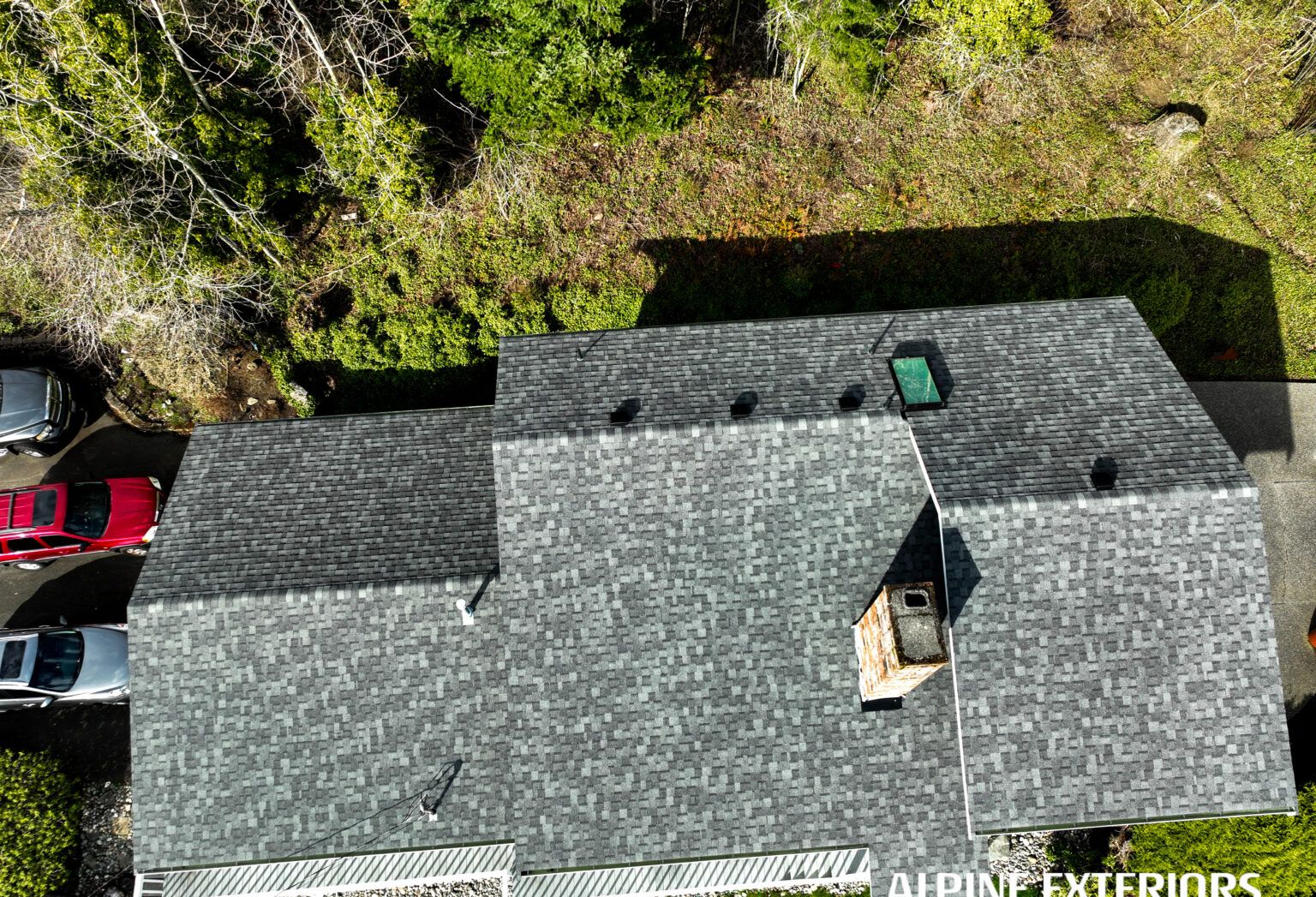
Acme sits back from the water, tucked against the foothills east of Deming where the tree canopy is thick, the driveways are often gravel, and the air stays damp longer than it does closer to Bellingham Bay. That combination — shade, standing moisture, and colder nights at elevation — is hard on siding in ways that are easy to miss from the street. A wall can look fine from twenty feet away and still be soft, rotted, or letting water into the wall cavity underneath. Alpine Exteriors works on homes across Whatcom County, from in-town Bellingham lots to acreage out toward Acme and Van Zandt, and the failure patterns we see on forested, foothill properties are different enough from what shows up in Blaine or Birch Bay that it's worth walking through them specifically.
Press a knuckle or the flat of your hand against the siding at chest height and down near the base of the wall. If it gives even slightly, or feels spongy rather than solid, water has already gotten in behind the surface. On Acme properties this shows up most on north- and east-facing walls that sit under tree cover and rarely get direct sun to dry out between rain events. Wood and engineered wood siding are the most vulnerable here, since they absorb moisture readily once the factory finish is compromised. Vinyl won't go soft the same way, but it can bubble or ripple where trapped moisture and heat build up behind it.
A wall that looks rippled or uneven when you sight down its length is telling you the panels are expanding, contracting, or pulling away from the sheathing unevenly. In the foothills, freeze-thaw cycling plays a bigger role in this than it does right on the water in Bellingham — moisture that soaks into a panel or its fasteners during a wet stretch can freeze on a cold foothill night, expand, and loosen the material. Repeat that cycle over a few winters and panels start to bow or pop off their nailing.
Cracks are a straightforward physical failure — impact, age, or freeze-thaw stress splitting the material outright. On tree-heavy lots, falling limbs and windthrow during fall and winter storms are a common cause we don't see as often on open, in-town lots. Any crack, even a hairline one, is an entry point for water, and it will get worse with the next freeze, not better.
Some moss and algae staining is normal on almost any Whatcom County exterior — it's a wet climate. What's not normal is thick moss growth that keeps returning within weeks of cleaning, or streaking that's actually growing through the paint film rather than sitting on top of it. Shaded, low-airflow walls under a dense canopy — which describes a lot of Acme lots — hold moisture long after a storm has passed, and that constant dampness is exactly what moss and mildew need to establish themselves in seams and behind trim. Heavy, persistent growth usually means the siding surface is failing and holding water rather than shedding it.
Look closely at the seams between panels, the inside and outside corners, and the trim around windows and doors. Gaps that have opened up, caulk that's cracked and pulled away, or panels that flex when you push on the edge all point to fasteners or the underlying structure loosening. These gaps are a direct path for wind-driven rain to get behind the cladding, and while Acme doesn't see the same exposure to gusts coming off Bellingham Bay and the Strait of Georgia that homes in Blaine, Birch Bay, or Sudden Valley's open shoreline stretches do, any driving rain during a fall or winter storm will still find an open seam.
The bottom few feet of a wall, especially near a gravel driveway, a downspout, or a spot where grade slopes toward the house, takes the most abuse. Splash-back from rain hitting gravel or bare soil keeps that lower band of siding wetter than the rest of the wall, and on wood or wood-composite products that's where rot typically starts. Push a screwdriver or an awl gently into the material near the bottom edge — if it sinks in without much resistance, the wood has already begun to break down.
Siding isn't just a weather shell — on most homes it works alongside the house wrap and insulation behind it. When siding fails and lets moisture into the wall cavity, insulation gets wet and loses much of its R-value, and gaps that let water in also let conditioned air out. If heating bills have crept up over the past couple of winters without an obvious cause, or a room near an exterior wall stays noticeably colder than the rest of the house, it's worth checking whether the siding — not just the furnace — is the reason.
This is usually the last sign homeowners notice, and by the time it shows up inside, the problem has been developing outside for a while. Paint that bubbles or peels along an interior exterior wall, a musty smell in a closet or bedroom, or visible mold in a corner near a window are all signs that moisture has worked its way all the way through the wall assembly.
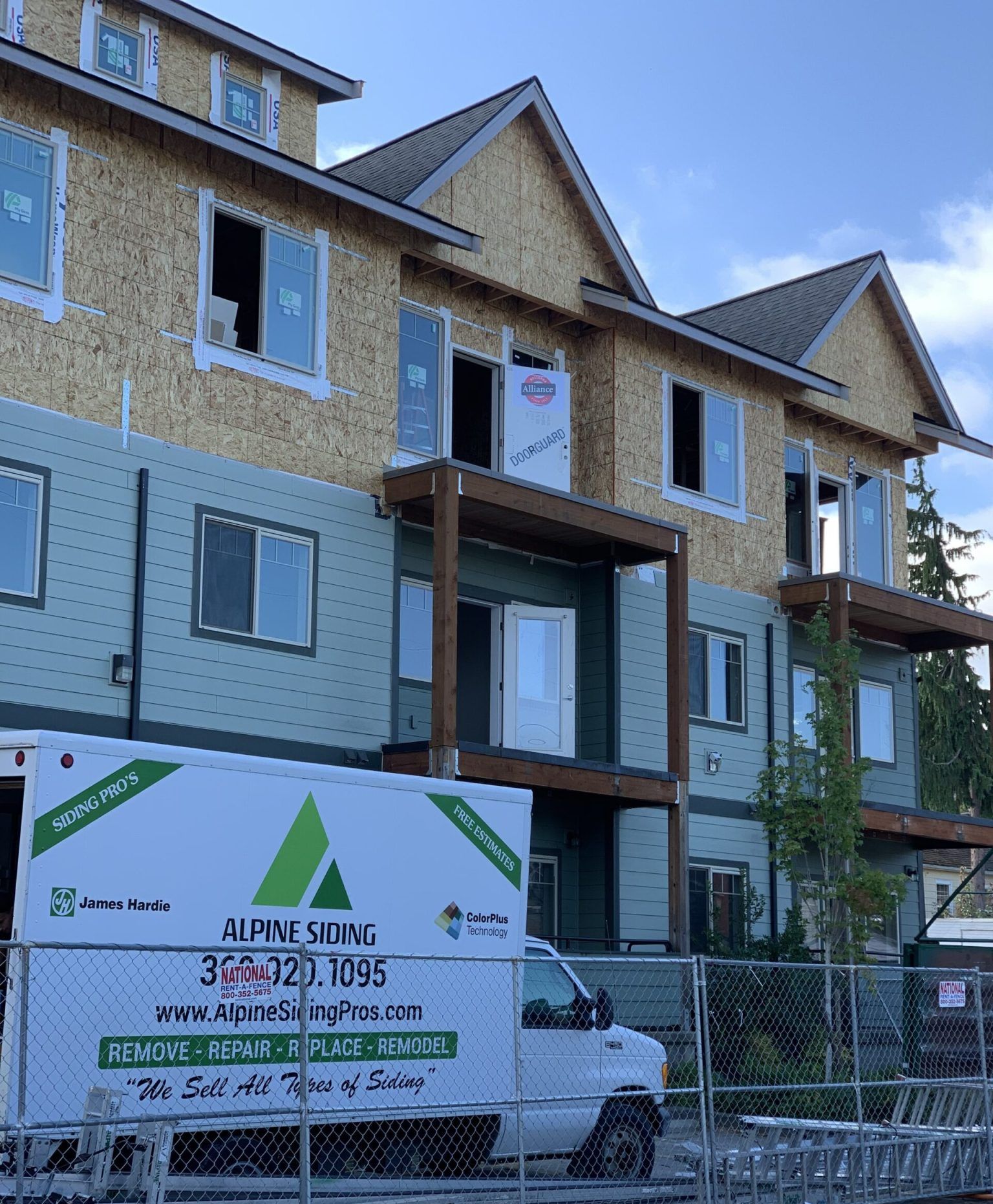
Not every sign on this list means you need a crew out this week. Soft spots, active rot, water stains spreading on interior walls, or siding that's come loose enough to flap in wind are urgent — they're actively letting water into the structure, and the damage compounds every time it rains, which in Whatcom County is often. Get those looked at promptly, especially heading into the wetter fall and winter months.
Cosmetic moss and algae staining, minor fading, small hairline cracks in a single panel, or slightly worn caulk at a seam can generally wait for a planned inspection or a seasonal maintenance visit, as long as you're keeping an eye on them and they aren't spreading. The distinction that matters most is whether water is actively getting behind the cladding or just sitting on top of it. When in doubt, a short inspection is a lot cheaper than guessing wrong.
Start with a slow walk around the entire house, including areas that are harder to see — behind shrubs, under eaves, and any wall that faces the tree line. Take photos of anything that looks off; comparing photos season to season is one of the easiest ways to catch a slow-developing problem before it becomes an expensive one. If you find soft spots, press gently with a screwdriver in an inconspicuous area to get a sense of how far the damage goes, but don't force it — you're checking, not demolishing.
For anything beyond light surface staining, have it looked at by someone who can get behind the siding, not just assess it from the ground. A proper inspection checks the house wrap or building paper, the condition of the sheathing underneath, and whether the damage is isolated to a few panels or spread across a wall. Alpine Exteriors, WA contractor license ALPINI751OW, does this kind of inspection for homeowners across Whatcom County, including out toward Acme, and gives a straightforward read on whether you're looking at a patch repair, a partial re-side of one or two walls, or a full replacement.
Surface staining, fading, and minor caulk wear are cosmetic — they affect appearance but not the wall's ability to keep water out. Structural concerns show up as softness when you press on the material, visible rot, panels that have separated from the wall, or interior signs like peeling paint and musty smells. The safest way to know for sure is a hands-on inspection, since some structural damage doesn't show any obvious signs from the outside until it's fairly advanced.
It depends on how far the moisture has traveled. If rot or water intrusion is limited to a small area — say, the bottom two feet near a downspout — a section repair that matches the existing siding is often reasonable. If the sheathing or house wrap underneath has been compromised over a wider area, patching over it just traps the problem, and a full wall or full-side replacement is the more honest recommendation, even though it costs more upfront.
Yes — when siding is replaced as part of a project that also involves the wall assembly (new house wrap, added insulation, or work that exposes the sheathing), the work needs to meet current Washington State Energy Code requirements for the wall assembly's performance. That's part of why a proper re-side is a good opportunity to correct any gaps in the weather barrier or insulation while the wall is open, rather than just swapping old siding for new and leaving the same underlying issues in place.
A single-wall repair might be done in a day or two once materials are on hand. A full re-side of an average-size home usually runs from about one to three weeks depending on the home's size, the siding material chosen, and how much of the underlying sheathing and moisture barrier needs to be addressed along the way. Weather is a real factor here — a stretch of steady fall or winter rain can push a timeline out, since certain steps need dry conditions to do properly.
If your Acme home is showing any of these signs, the honest first step is getting eyes on it before another wet season adds to the damage. Alpine Exteriors inspects siding on homes throughout Whatcom County — Bellingham, Ferndale, Lynden, Blaine, Birch Bay, Sudden Valley, and the surrounding communities including Acme — and will tell you plainly whether you're looking at a minor repair or something more, with no pressure to do more work than the house actually needs.