
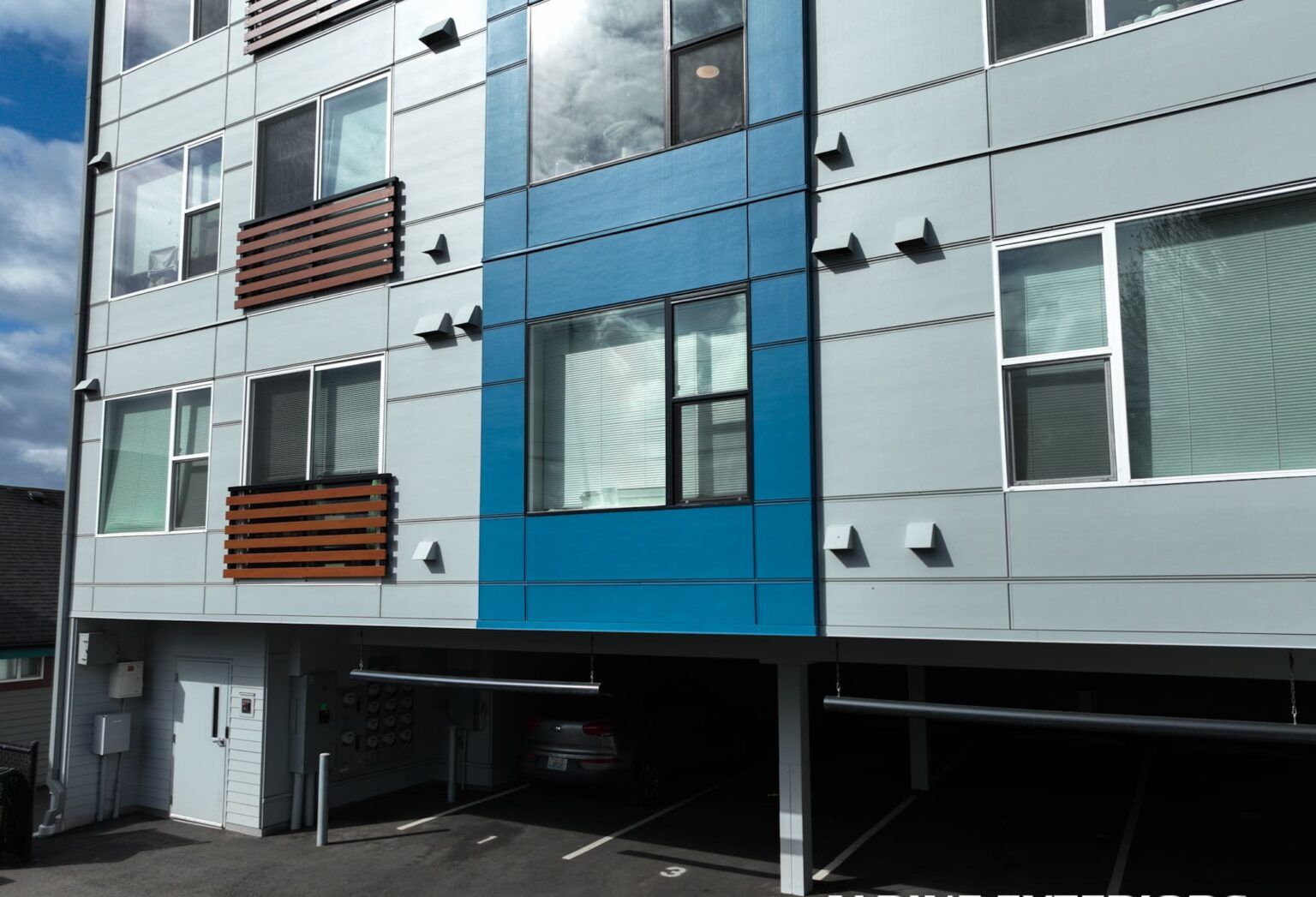
Geneva sits on the north shore of Lake Whatcom, tucked into the trees above Bellingham, and that setting is beautiful right up until it starts working against your siding. The lake holds moisture in the air long after a storm has passed, the tree canopy keeps yards and walls shaded and damp, and the elevation gain into the foothills means Geneva sees more freeze-thaw cycling in winter than flatter parts of Bellingham. None of that means your siding is doomed, but it does mean small problems here tend to turn into bigger ones faster than they would in a drier climate. This page walks through the warning signs worth knowing, what's actually causing them in this neighborhood, and how to tell the difference between something you can watch and something you need to deal with now.
Press a knuckle or a screwdriver handle against the bottom few feet of a wall, around window trim, or near a deck ledger board. If it gives like wet cardboard instead of resisting like solid wood, water has already gotten into the substrate and started breaking down the wood fibers underneath the paint. In Geneva this shows up most often on walls that face the lake or sit under overhanging cedars and firs, where siding stays wet for days after a storm instead of drying out between rains the way it would on a more open, sun-exposed lot.
Paint failure on siding almost always means moisture is trying to push its way out from behind the surface, not just that the paint job is old. When water gets trapped behind a coat of paint — from a failed caulk joint, a cracked board, or condensation building up inside the wall — it has nowhere to go and lifts the paint film as it evaporates. North- and west-facing walls in Geneva take the brunt of this because they get the least direct sun to dry out and the most exposure to Pacific frontal systems moving in off the Strait and Bellingham Bay.
Whatcom County's long wet season and heavy tree cover make moss and algae close to unavoidable on shaded siding, and Geneva's forested lots and lake-side humidity make it worse than most Bellingham neighborhoods. A light green film on lap siding is mostly cosmetic and can often be cleaned. The problem is what moss does once it's established: it holds water against the surface, keeps that spot from ever fully drying, and slowly works into seams and laps where it accelerates rot underneath. Black streaking, especially near roof lines or gutters, is usually algae feeding off runoff and is a sign that water is sheeting down the wall in a pattern that isn't shedding the way it should.
Wood and engineered wood siding expands and contracts with moisture, and repeated wetting and drying cycles — common here given how often Whatcom County swings between soaked and merely damp — eventually work fasteners loose. You'll see boards that have bowed outward at the ends, laps that have opened up into visible gaps, or corner boards that no longer sit flush. Once a gap opens, wind-driven rain off the bay finds its way behind the cladding on storm days, and the problem compounds every time it rains after that.
If a room along an exterior wall smells damp even when it's clean, or if your heating costs have crept up without an obvious reason, moisture may already be inside the wall assembly rather than just on the surface. Wet insulation loses most of its R-value, which works against the continuous insulation and air-sealing performance the Washington State Energy Code assumes your wall assembly is delivering. This is one of the harder signs to catch early because there's often nothing visible from the yard — it shows up in comfort and utility bills before it shows up on the siding itself.
Older fiber cement siding can crack from impact or from freeze-thaw cycling when water gets into a hairline crack and expands as it freezes on a cold foothills night. Delamination — where the surface layer starts to separate and flake — is often a sign the factory finish failed years ago and moisture has been wicking in at the edges since. Rust streaks bleeding down from nail heads usually mean the original fasteners weren't corrosion-resistant, which was common on installations from a couple of decades ago and is worth flagging even if the siding itself still looks fine.
A brown ring on drywall, peeling interior paint, or a soft spot in interior trim that sits on the same wall as an exterior sign of trouble is one of the more reliable indicators that water has fully penetrated the wall assembly, not just the siding surface. By the time it shows up inside, the sheathing and framing behind that section of wall have usually been wet for a while.
Not every sign on this list means drop everything. Cosmetic moss and light algae on siding that's otherwise solid, sound, and well-caulked is a maintenance item — clean it, keep an eye on it, and plan to address it on your normal repaint or recaulk schedule. Faded paint on siding that still feels hard and tight to the wall is also a can-wait item, though it's worth repainting before the substrate underneath starts absorbing water directly.
Soft or spongy siding, boards that have visibly separated from the wall, any interior staining, or a musty smell along an exterior wall should move to the top of the list. Those signs mean water has already gotten past the surface, and every additional wet season adds to the area of wood or sheathing that needs to be replaced rather than just resurfaced. Winter is the worst time to let this sit in Geneva specifically, because freeze-thaw cycling turns a damp board into a cracked one and pushes existing gaps open further.
Start with a close-up look rather than a glance from the driveway. Walk the perimeter, press on suspect areas, check the bottom courses near grade and any wall below a deck or roof valley, and look at trim and window returns where caulk tends to fail first. Photograph anything soft, cracked, or stained so you have a record if the damage turns out to extend further once siding comes off.
From there, get an actual inspection rather than guessing from the outside. A contractor can pull a suspect board or two to see how far rot has traveled into the sheathing, check whether the weather-resistive barrier behind the siding is still doing its job, and give you a realistic sense of whether you're looking at a patch repair, a partial re-side of the affected elevations, or a full re-side. Costs vary a lot depending on how much of the wall assembly is affected — a few damaged boards and some corner trim is a modest repair, while sheathing replacement across an entire wall runs well into a full siding project, so get eyes on it before assuming either direction. If a re-side does turn out to be the right call, it's also a chance to bring the wall assembly up to current Washington State Energy Code expectations for insulation and air sealing rather than just replacing what was there before. Alpine Exteriors, WA contractor license ALPINI751OW, handles this kind of inspection and repair work for homes throughout Whatcom County, including Geneva, Sudden Valley, and the rest of the Lake Whatcom shoreline.
Light moss on siding that's otherwise sound is mostly a cosmetic issue, but it shouldn't be ignored indefinitely. Moss holds moisture against the surface far longer than bare siding would dry on its own, and over time that constant dampness softens paint, works into seams, and gives rot a foothold — especially on the shaded, tree-covered walls common in Geneva. Cleaning it periodically and trimming back branches that shade the wall keeps it a cosmetic problem instead of letting it become a structural one.
A visual check only tells you so much. Surface rot usually looks patchy and stays shallow when you probe it with a screwdriver, while deeper rot lets the tool sink in with little resistance across a wider area. The only way to know for certain how far it has traveled is to pull the affected board and look at the sheathing and framing behind it, which is why an in-person inspection is worth doing before deciding between a small repair and a larger re-side.
It can, depending on the scope of the work. Projects that go beyond a like-for-like repair — particularly ones that open up the wall assembly or involve a substantial re-side — typically need to meet current Washington State Energy Code requirements for insulation and air sealing, not just replace the old cladding. That's worth factoring in early, since it can change both the scope and the materials involved.
Location matters more than most homeowners expect. Geneva's mix of lake-side humidity, dense tree canopy, and elevation into the foothills means walls here often stay wetter longer after a storm than homes on more open, lower-elevation lots closer to downtown Bellingham. That doesn't mean the siding was installed wrong — it means the site conditions demand more attention to drainage, drying, and maintenance than a drier lot would.
If you're seeing any of the signs above on a Geneva home, the sooner someone gets a real look at it, the more options you'll have. Alpine Exteriors inspects and repairs siding for homeowners throughout Whatcom County — Bellingham, Ferndale, Lynden, Blaine, Birch Bay, Sudden Valley, and the islands — and can tell you honestly whether you're dealing with a maintenance item, a targeted repair, or a full re-side, along with a realistic cost range before any work begins.