
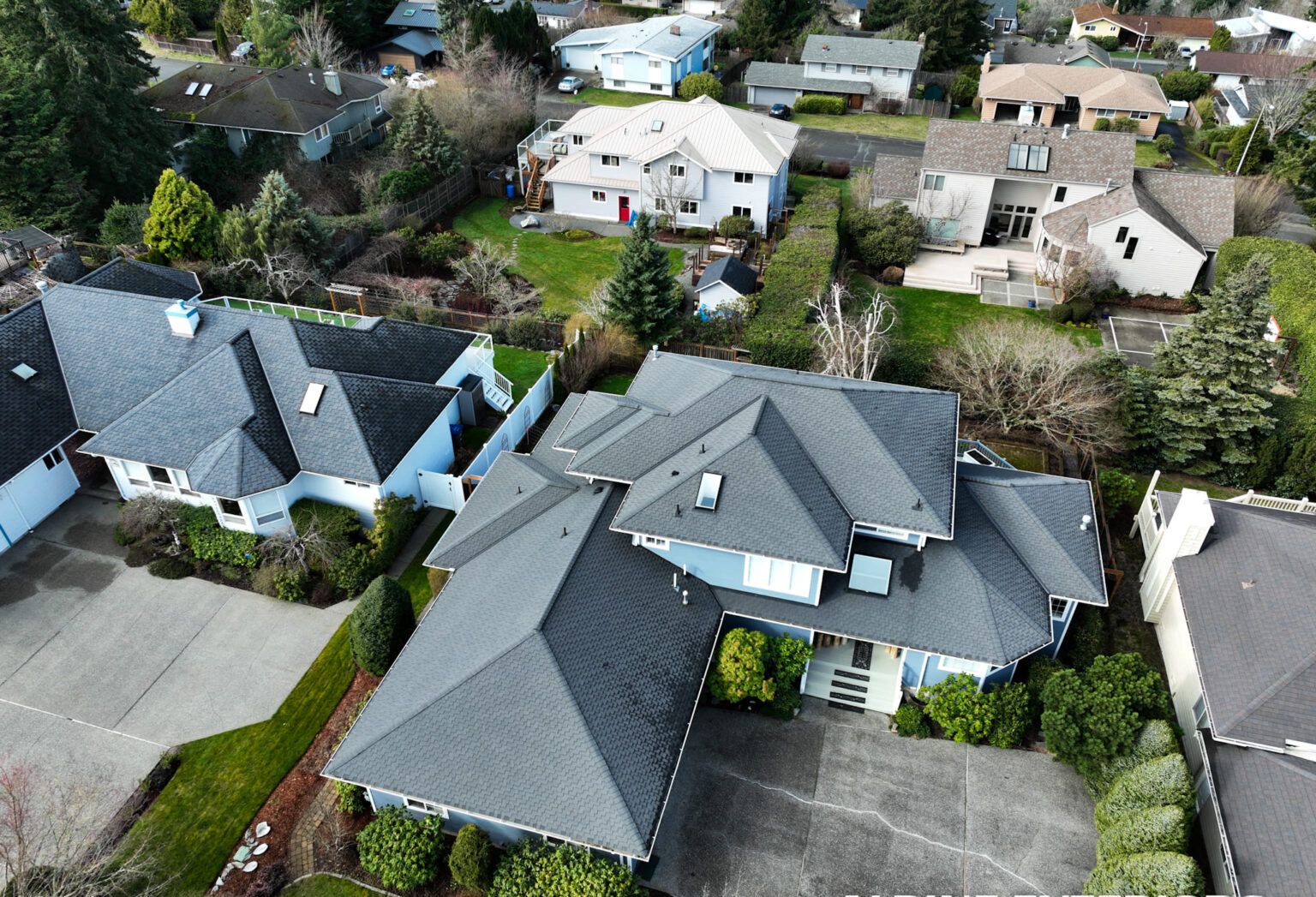
Sunnyland is one of Bellingham's older, established neighborhoods, and a lot of its homes are still wearing the siding they were built or re-sided with decades ago. Between the tree canopy along the ridge above Sunset Pond, the moisture that settles into yards near the Squalicum Creek corridor, and the wind-driven rain that rolls in off Bellingham Bay most of the winter, siding here works harder than siding in drier parts of the state. Alpine Exteriors gets calls from Sunnyland homeowners every year who noticed a soft spot, a stain, or a strange smell and want to know whether it's a small fix or the start of something bigger. This page walks through the warning signs we actually see on Whatcom County homes, what typically causes each one, and how to tell the difference between "put it on the list" and "deal with it now."
This is usually the most visible sign and the one that finally gets homeowners to call. Look at the siding from an angle, not straight on — wavy, rippled, or bulging panels show up much more clearly in low, raking light, like early morning or evening sun. In Sunnyland this most often shows up on south- and west-facing walls, where afternoon sun heats the siding and then Whatcom County's evening cool-down and moisture cause it to expand and contract repeatedly. Vinyl siding that wasn't installed with proper nail slack, or that's aged past its flexibility, is especially prone to this. Wood and hardboard siding can also buckle when moisture gets trapped behind it and the substrate starts to swell. A panel or two of minor waviness isn't an emergency, but widespread buckling usually means moisture is already behind the cladding, not just in front of it.
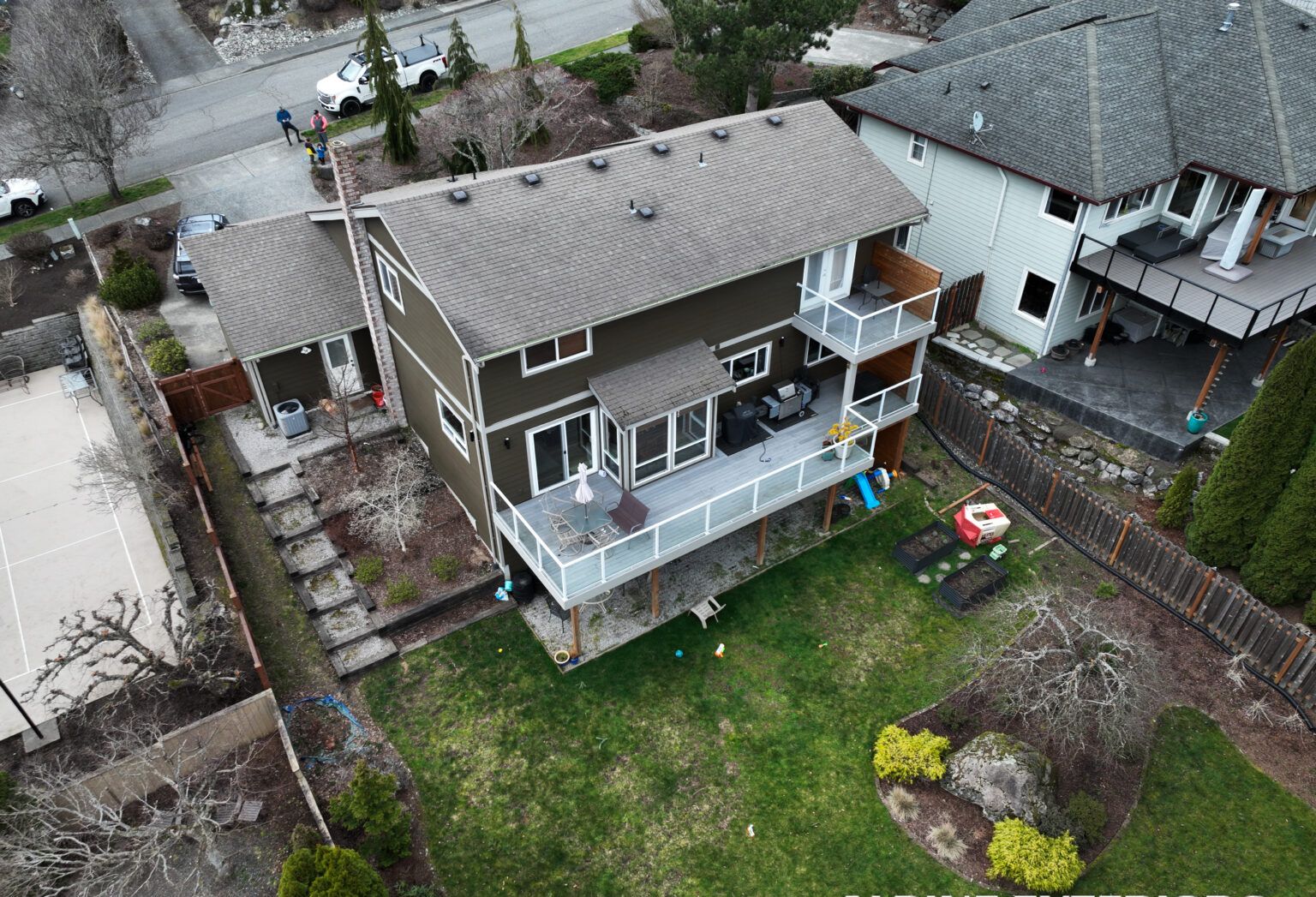
Cracks are common wherever freeze-thaw cycling happens, and while Sunnyland proper doesn't see hard freezes as often as the foothill neighborhoods around Sudden Valley and Lake Whatcom, we still get enough cold snaps most winters to stress siding that's already brittle from age or sun exposure. Water gets into a hairline crack, freezes, expands, and the crack grows. Impact damage — a ladder, a stray branch, a weed-eater — creates the same opening for water. A single small crack that's dry and hasn't spread is a low-priority patch. Multiple cracks, or a crack that's grown noticeably since you last looked at it, means water has likely been getting behind the panel every time it rains, which in this climate is most of the year.
Paint failure on siding almost always means moisture, not just an old paint job. When water is trapped in the wood or fiber cement underneath, it pushes outward and lifts the paint film from the inside, which is why you'll see bubbling and peeling concentrated in specific spots rather than spread evenly across a wall. In Whatcom County, the usual culprits are a failed caulk joint above the affected area, a downspout dumping water against the wall, or inadequate ventilation behind the cladding. If paint is failing evenly across a whole wall and the surface underneath still feels solid, that can be a normal recoat. If it's failing in patches and the substrate underneath feels soft, that's a moisture problem that repainting won't fix.
Press firmly on the siding, especially near the bottom courses, around window and door trim, and anywhere a deck or porch roof ties into the wall. If it gives like a sponge or your finger leaves an indent, you're feeling active wood rot. This is one of the more serious signs because rot doesn't stay contained to the visible siding — it's frequently already into the sheathing behind it by the time it's soft to the touch from outside. Persistent rain is the main driver here; Bellingham's long wet season means any spot where water collects or can't dry out fully between storms is at risk. Older wood siding and hardboard siding, common on Sunnyland homes from the 1970s through 1990s, are the most vulnerable, since both absorb and hold moisture more readily than vinyl or fiber cement.
Some green tinge or a light film of algae is close to unavoidable on a shaded, north-facing wall in this climate, and by itself it isn't a structural problem — it's cosmetic and can often be pressure-washed or treated. What matters more is the pattern. Moss that keeps regrowing thick within weeks of cleaning, or black streaking that follows the seams and laps of the siding rather than sitting evenly across the surface, usually means water is sitting somewhere it shouldn't — a clogged gutter, poor grading against the foundation, or vegetation crowding the wall and blocking airflow. Sunnyland's tree cover is part of what makes the neighborhood pleasant to live in, but it also means more shade, more leaf litter in gutters, and slower drying after every rain, so this is one of the more common calls we get from the area.
Run a hand along the seams where panels overlap, the corner posts, and the trim around windows and doors. Gaps here are an open invitation for wind-driven rain, and Sunnyland gets a fair amount of it — storms coming off Bellingham Bay and the Strait of Georgia routinely push rain sideways into west- and northwest-facing walls rather than letting it simply run down the face of the house. A gap that's letting in wind-driven rain during a storm can move a lot of water behind the siding in a single afternoon, even if the panels themselves look fine. This is also where old caulk fails first — it dries out, shrinks, and pulls away from the surfaces it's supposed to seal, and once that happens the gap tends to widen every season rather than staying static.
Siding isn't just a weather shell — on most Sunnyland homes it's also part of the wall assembly's air and moisture barrier. When siding fails and water gets into the wall cavity, it can compress or saturate insulation, which reduces its R-value and lets more heat escape in winter. If you've noticed heating bills creeping up without an obvious reason, or you can feel a draft near an exterior wall on a windy day, it's worth checking the siding before assuming it's a furnace or window problem. This also matters for compliance: any full siding replacement in Washington falls under the Washington State Energy Code, which sets requirements for insulation and air sealing in the wall assembly, so a re-side is often a reasonable time to bring an older wall up to current code rather than just replacing what's failed with the same setup.
If you can smell mustiness in a room that backs up to an exterior wall, or you're seeing mold spots on interior drywall or trim in that area, siding failure has likely progressed past the wall's water-resistive barrier and into the framing. This is the most serious sign on this list because it usually means the damage is no longer just cosmetic or surface-level — it can affect structural framing and indoor air quality. It's also the sign most homeowners notice last, since it can take months or longer of an unseen leak behind the siding before it becomes obvious from inside the house.
Not every sign on this list needs a same-week response, and it's fair to prioritize. Treat these as urgent: soft or spongy siding anywhere, gaps that are visibly letting daylight or water through, an interior musty smell or mold, and any siding failure paired with visible water staining on interior walls or ceilings. These point to active moisture intrusion, and every additional rainy week in this climate adds to the damage and, often, the eventual repair cost. On the other hand, minor cosmetic moss or algae on a shaded wall, small hairline cracks with no soft spots nearby, and light paint fading with a still-solid substrate can reasonably wait for a scheduled inspection or your next planned maintenance round — just don't let "can wait" quietly turn into "forgot about it" for more than a season, since small issues in this climate rarely stay small.
Start with a walk around the house on a dry day and check the specific spots mentioned above: south and west walls for warping, bottom courses and trim intersections for soft spots, seams and corners for gaps, and any wall that backs up to a room where you've noticed a smell or a draft. Photograph anything that concerns you so you have a record if it changes over time. For anything beyond light surface cleaning, get an actual inspection rather than guessing from the ground — a lot of moisture damage is hidden by the panel above it and isn't visible without probing the suspect area. Alpine Exteriors, WA contractor license ALPINI751OW, inspects siding across Whatcom County — Bellingham neighborhoods like Sunnyland, plus Ferndale, Lynden, Blaine, Birch Bay, Sudden Valley, and the islands — and can tell you honestly whether you're looking at a spot repair, a partial re-side of the affected walls, or a full replacement. Full replacement isn't always the answer; plenty of the calls we get turn out to be a caulk and flashing fix or a repair to a handful of panels, and we'll say so.
It depends entirely on how far the moisture has traveled behind the panels, which isn't always visible from the outside. Sometimes it's a few boards around one leak source; other times the rot has spread along the sheathing and calls for replacing a whole wall section. This is why an in-person inspection matters more than a guess based on the visible soft spot alone — we'll open up the affected area enough to see the actual extent before recommending a scope of work.
Often, yes, especially if the damage is localized and the rest of the siding is still sound. Spot repairs and section replacements are a reasonable, lower-cost option when the problem hasn't spread. The trade-off is that repaired sections may not match faded original siding perfectly, and if the underlying cause — poor grading, a bad gutter, failed caulking — isn't fixed too, the same spot can fail again. A full re-side makes more sense when failure is widespread or when you're already dealing with multiple walls.
New siding installed as part of a wall assembly that meets Washington State Energy Code requirements can improve a home's air sealing and insulation performance, which does help reduce heat loss. How much you'll notice on a bill depends on your home's current insulation, air leakage, and heating system, so it's not something we'll put an exact number on — but replacing failed siding that's currently letting in wind-driven rain and cold air is a legitimate step toward a tighter, more efficient wall.
A walk-around inspection once or twice a year — after the wettest stretch of winter and again in late summer — catches most problems while they're still small. Given how much tree cover and shade many Sunnyland lots have, it's also worth clearing gutters and cutting back vegetation touching the house at least once a year, since both slow down drying and contribute to moss, algae, and trapped moisture against the siding.
If you're seeing any of the signs above on your Sunnyland home, it's worth getting an honest look before another wet season adds to the damage. Alpine Exteriors serves Bellingham and the rest of Whatcom County — Ferndale, Lynden, Blaine, Birch Bay, Sudden Valley, and the islands — and can walk your property, point out what's cosmetic versus what's urgent, and lay out real options and cost ranges for repair or replacement. Reach out to schedule an inspection and get a straight answer about what your siding actually needs.