
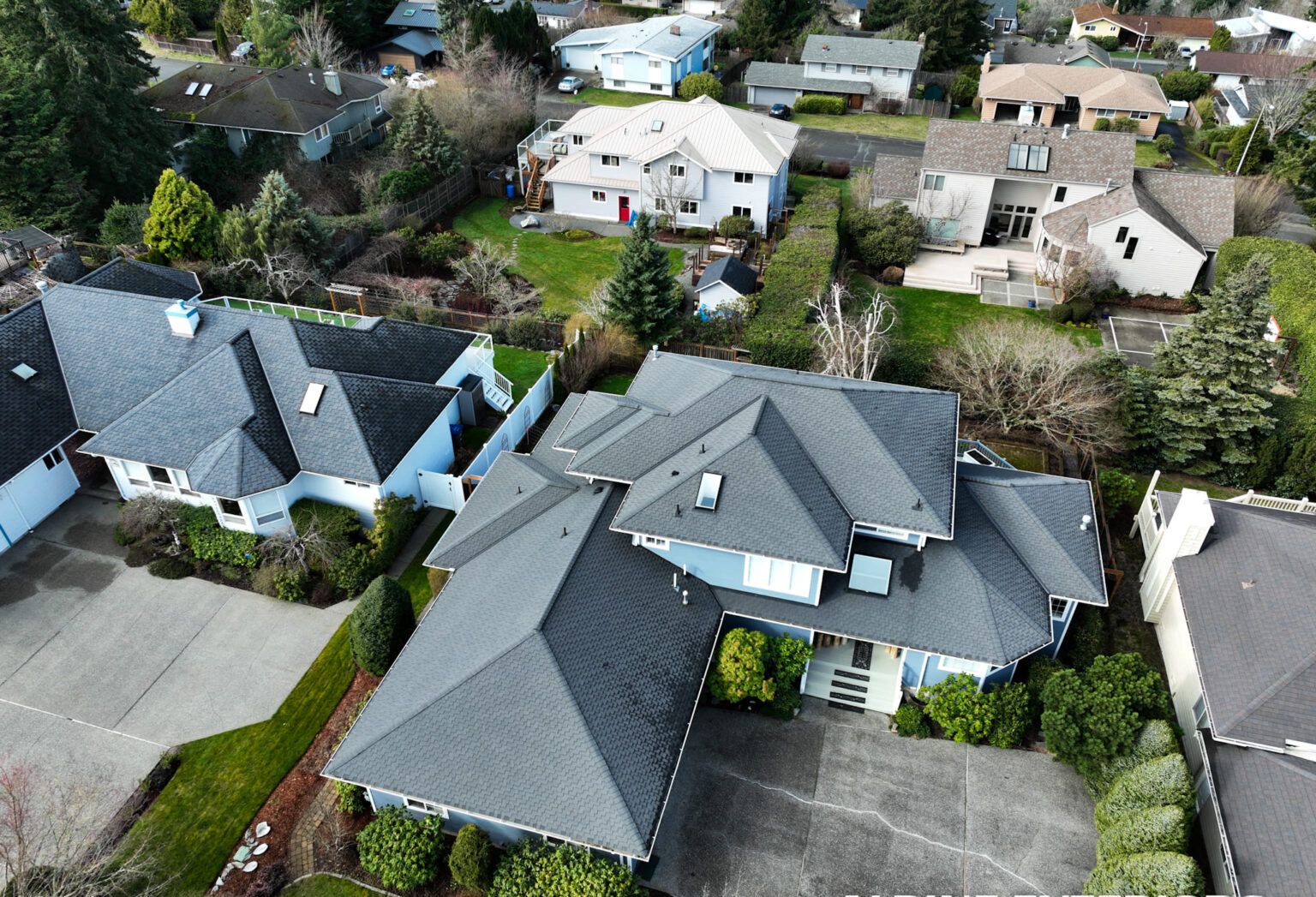
In Sudden Valley, siding permits are issued by Whatcom County Planning and Development Services, not a city hall — the neighborhood sits on unincorporated county land, so the county is the building authority even though the Sudden Valley Community Association also has a say over what your exterior looks like. A permit is generally required once the work goes past patching a small damaged area: a full tear-off and re-side, any repair that exposes or alters the sheathing and weather-resistive barrier underneath, or siding work bundled with a larger remodel all cross into permit territory, and each typically comes with at least one inspection before the walls get closed back up.
Washington doesn't let each county write its own building code from scratch. Whatcom County adopts the Washington State Building Code, which is Washington's version of the International Residential Code and International Building Code, along with the Washington State Energy Code for anything touching insulation, air sealing, or the building envelope. Whatcom County Planning and Development Services, based in Bellingham, is the office that actually reviews and issues permits for unincorporated areas — Sudden Valley, Birch Bay, and the rural county in general fall under that office rather than a city building department.
Not every siding job needs a permit. Small repairs — replacing a few damaged boards, patching a section that took wind damage, or swapping out trim around one window — are usually treated as maintenance and don't trigger a permit application on their own. What changes the picture is scope and what's happening underneath the new siding. Full removal and replacement of siding across some meaningful share of the exterior, any work that exposes the wall sheathing, or a project that adds or changes the weather-resistive barrier or continuous insulation typically needs a permit, because at that point the county isn't just looking at the finish material — it's looking at whether the wall assembly still meets code once it's closed back up.
That's also where inspections come in. For projects that require a permit, Whatcom County generally wants to see the weather-resistive barrier, flashing at windows and doors, and any structural sheathing repairs before they get covered by siding — this is often called a moisture-barrier inspection, and it's scheduled after the house wrap and flashing are in but before the siding goes on. There's typically a final inspection once the job is complete. Skipping that mid-project inspection because a crew wants to keep moving is one of the more common ways a siding job ends up with a stop-work order or a costly opening-back-up later.
Timelines are worth being honest about. Permit review isn't instant, and it can take longer during the busier spring and summer building months when contractors across the county are pulling permits for decks, additions, and re-roofs at the same time. A homeowner who assumes siding can start the week after a bid is signed is sometimes disappointed — building the permit timeline into the project schedule from the start avoids that.
Sudden Valley sits in the foothills above Lake Whatcom, and that setting shapes both the building rules and the way siding actually performs there. Lake Whatcom is the primary drinking water source for a large share of Whatcom County, and the county's Lake Whatcom Watershed provisions add extra scrutiny to projects that disturb soil or increase impervious surface near the shoreline. Straight siding replacement usually doesn't trigger that review, but a siding project that comes bundled with a deck, an addition, or regrading near the lake can, so it's worth flagging to the county rather than assuming it doesn't apply.
The other layer unique to Sudden Valley is the Community Association itself. Sudden Valley operates under covenants with an Architectural Control Committee that reviews exterior changes — siding material, color, and sometimes texture — separately from whatever Whatcom County requires. That's a step a homeowner in Bellingham, Ferndale, Lynden, or Blaine simply doesn't have, because those cities run their own building departments and don't have a community-wide architectural review layered on top. In Sudden Valley, a homeowner can be fully square with the county and still be out of compliance with the community association if that review step gets skipped.
Climate is the other piece. Sudden Valley gets the same steady, persistent rain as the rest of the county, but wind-driven rain off Bellingham Bay and the Strait pushes moisture sideways into wall assemblies in a way that dry-climate siding details don't anticipate — which is exactly why the weather-resistive barrier and flashing inspection matters so much here. Heavily treed, shaded lots around the lake also grow moss and algae on siding faster than open, sun-exposed sites, and any spot where that growth sits against wood trim or fiber cement long enough becomes a rot risk. Sitting up in the foothills at a bit more elevation than lowland Bellingham, Sudden Valley also sees more freeze-thaw cycling through the winter, which is harder on caulked joints and unsealed seams than the milder conditions closer to the water. And because any new siding assembly touches insulation and air sealing, the Washington State Energy Code's continuous insulation and building envelope requirements come into play on a full re-side in a way they wouldn't on a simple color change.
Start by being honest about scope before assuming a project is permit-exempt. If it's a full re-side, touches the sheathing, or is part of a bigger remodel, plan on a permit rather than finding out mid-project. Whatcom County Planning and Development Services can confirm what a specific job needs, and a contractor who pulls permits regularly in the unincorporated county — Alpine Exteriors included — can usually tell early on whether a given scope will need review.
Run the Sudden Valley Architectural Control Committee approval in parallel with the county process rather than after it. That committee has its own submission requirements, often including material samples or color swatches, and its own timeline that doesn't automatically match the county's. Waiting until the county permit is issued to start that application just stacks two waiting periods back to back.
Don't let the crew close up the walls before the moisture-barrier inspection happens, if one is required. It's tempting to keep a project moving, especially with a rain window closing, but an inspection that catches a flashing detail or a gap in the house wrap before the siding goes on is far cheaper than pulling siding back off later. Keep copies of the permit, inspection sign-offs, and architectural approval — they matter at resale, and a buyer's inspector or lender can ask for them.
Finally, weigh the real drawback here honestly: doing this correctly in Sudden Valley takes more coordination than a straightforward city permit would. Two separate approval processes, an inspection tied to weather windows, and watershed considerations if the project's scope grows all add time. A contractor who works through both the county and the community association process on Sudden Valley jobs, rather than treating either as an afterthought, is usually the difference between a project that stays on schedule and one that stalls waiting on paperwork nobody started early enough.
Usually not. Small, localized repairs — a handful of damaged boards, a patch after storm damage, or trim work around a single opening — are typically treated as maintenance and don't require a permit on their own. Once the work grows into a full tear-off, exposes the sheathing, or is paired with a larger remodel, it moves into permit territory with Whatcom County Planning and Development Services.
Yes. The Sudden Valley Community Association runs an Architectural Control Committee that reviews exterior changes, including siding material and color, independently of whatever Whatcom County requires. Getting a county permit does not satisfy that committee's review, and getting its approval does not substitute for a county permit — homeowners in Sudden Valley generally need to track both.
For projects that require a permit, expect a weather-resistive barrier and flashing inspection after the house wrap and window and door flashing are installed but before the siding covers them, plus a final inspection once the job wraps up. Given how much wind-driven rain the area sees off Bellingham Bay and the Strait, that mid-project inspection is one of the more important steps rather than a formality to rush past.
It can. A full re-side often touches the building envelope — house wrap, flashing, and sometimes added continuous insulation — which brings the Washington State Energy Code into the picture in a way a simple cosmetic repair wouldn't. If the project adds insulation or changes the wall assembly, that's worth discussing with whoever pulls the permit so the details meet current energy code requirements rather than just matching what was there before.
Siding work in Sudden Valley involves more moving pieces than a straightforward re-side in town — a Whatcom County permit, a separate Community Association review, and inspection timing that has to work around the region's rain. Alpine Exteriors has worked through that process on homes around Lake Whatcom and across Whatcom County, from Bellingham and Ferndale to Lynden, Blaine, Birch Bay, and the islands, and can walk through what your specific project will actually need before work starts. If you're planning a siding project in Sudden Valley, reach out to Alpine Exteriors (WA contractor license ALPINI751OW) for a straightforward look at scope, permitting, and what to expect from the county and the community association alike.