
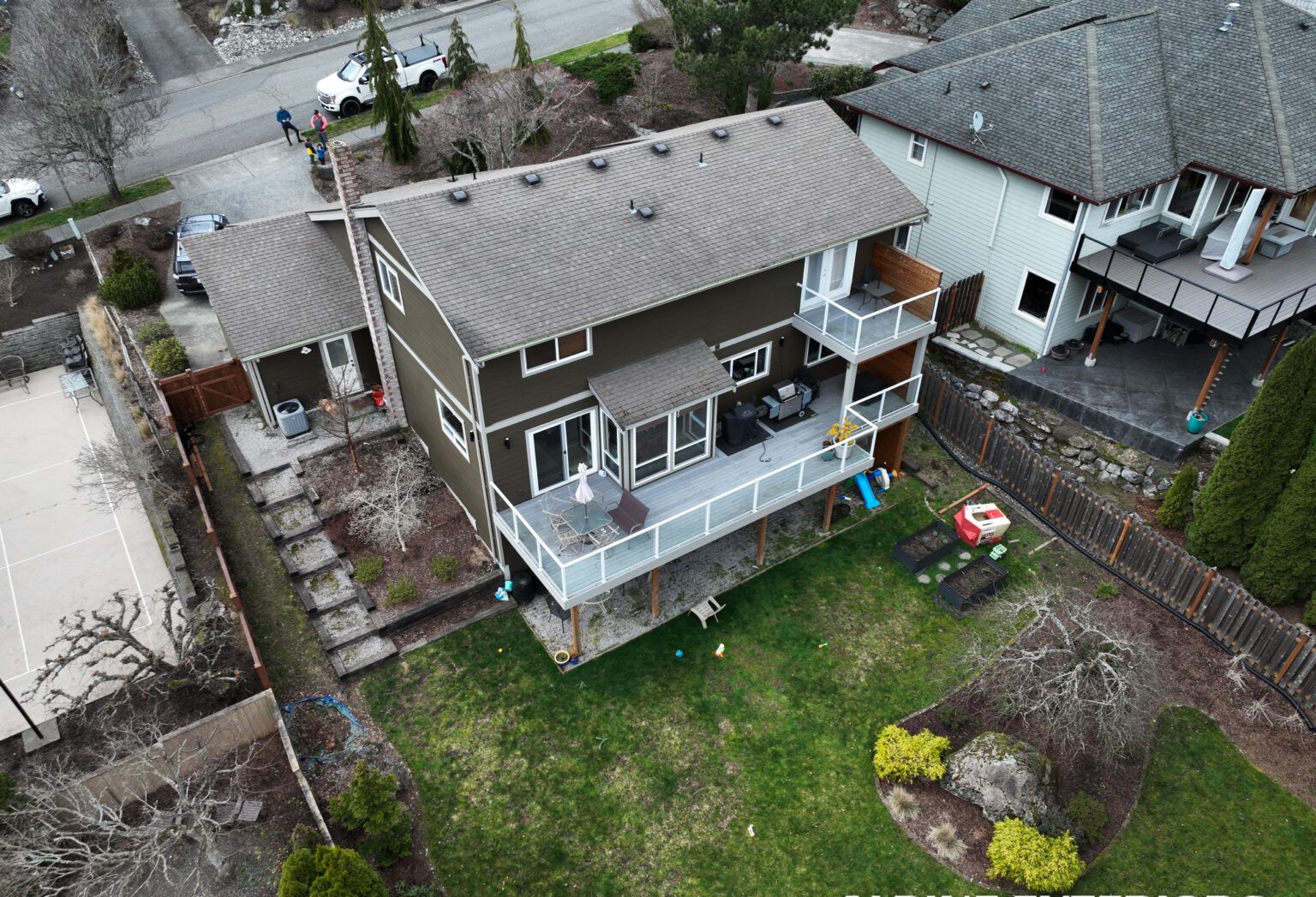
Sunnyland sits close enough to Bellingham Bay that its houses take weather differently than a home tucked into the foothills near Sudden Valley or set back on a farm lot outside Lynden. Whether your siding is original to a 1970s rambler or went up during a remodel five years ago, a slow walk around the house twice a year catches problems while they're still cheap to fix. This checklist is written for homeowners doing that walk themselves, with plain reasons for each item so you know what you're actually looking at and why it matters here specifically.
Whatcom County doesn't get hurricanes or hail the way other regions do, but it makes up for it with duration. Rain here is less about intensity and more about persistence — long stretches of drizzle and low cloud cover that keep exterior surfaces damp for days at a time, especially from October through April. Siding that would dry out in an afternoon somewhere drier can stay wet against the wall sheathing for a week, and that sustained moisture is what invites wood rot, not any single storm event.
Add to that the shaded, north-facing walls common in older Sunnyland lots with mature trees, and you get ideal conditions for moss and algae growth. It's mostly cosmetic at first, but a thick mat of moss holds water directly against the siding surface and behind trim, which speeds up whatever rot process is already underway. Homes closer to the water, including anything with a clear line toward Bellingham Bay or the Strait of Georgia, also deal with wind-driven rain — gusts that push moisture sideways into seams, under trim, and past flashing that would otherwise shed water fine in a calm downpour. Properties up toward the foothills, including areas near Lake Whatcom and Sudden Valley, see more freeze-thaw cycling in winter; water that gets into a crack, freezes, and expands does real damage over a handful of seasons even without dramatic cold snaps.
There's also a code angle worth knowing about. The Washington State Energy Code sets requirements for continuous air barriers, insulation, and moisture management in exterior wall assemblies, which is part of why modern siding installations pair house wrap, proper flashing, and rainscreen or drainage gaps with the visible siding material. When any of that underlying system fails, water intrusion tends to happen quietly, behind the siding, before it ever shows up as a stain you can see from the driveway. That's the main reason a regular visual inspection is worth the twenty minutes it takes — most siding failures in this region start small and stay hidden for a while.
Walk the full perimeter of the house in daylight, ideally after a dry stretch of a day or two so surfaces aren't actively wet. Bring a flashlight for shaded areas and a step stool if you need to check higher trim, but skip the ladder work unless you're comfortable on it — anything above the first story is worth leaving to someone with the right equipment.
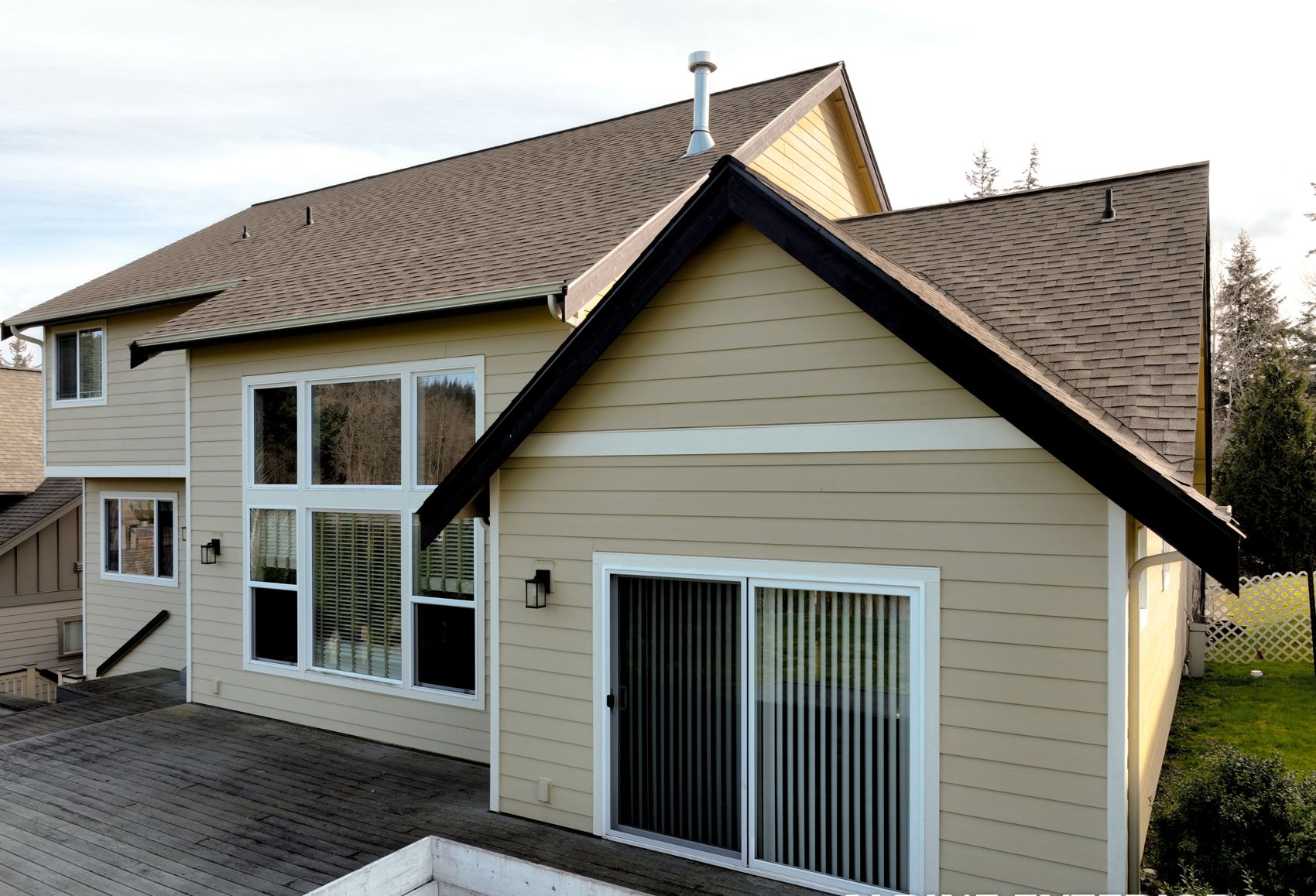
Not everything on this list means a costly repair, and it's worth being honest about which issues are urgent and which aren't. Moss and algae staining, on its own, is usually cosmetic. A gentle low-pressure rinse with a soft brush and a cleaner labeled safe for your siding material handles most of it — avoid pressure washing, since high-pressure water can force moisture behind panels and strip protective coatings, doing more harm than the moss itself. If moss keeps returning quickly in the same spot, take a closer look at nearby tree cover or gutter drainage, since standing shade and runoff are usually the real cause.
Cracked caulk and minor gaps at trim joints are reasonable for a handy homeowner to reseal with an exterior-grade sealant, but only if the material underneath is still solid. Caulking over a soft or rotted area doesn't fix anything — it just traps moisture that's already there and hides the problem until it's worse. Popped fasteners can sometimes be reset or replaced with a longer, corrosion-resistant screw, but if you find several in the same area, that's usually a sign the panel or the framing behind it has moved, which is worth having someone look at.
Anything involving soft or spongy siding, visible rot, missing or damaged flashing, or interior moisture signs isn't a DIY weekend project. These point to problems in the water-resistive barrier or the framing behind the siding, and patching the visible symptom without addressing what's underneath tends to mean redoing the work within a year or two.
Alpine Exteriors, licensed in Washington under ALPINI751OW, does in-person siding inspections across Whatcom County, including Bellingham neighborhoods like Sunnyland, along with Ferndale, Lynden, Blaine, Birch Bay, Sudden Valley, and the islands. A trained eye can often tell the difference between a cosmetic issue and a structural one faster than repeated guesswork, and catching a small rot pocket early is almost always cheaper than waiting until it spreads along a wall section.
Twice a year is a reasonable baseline for most homes here — once in early fall before the wet season sets in, and again in spring once the worst of the rain and any freeze-thaw cycling has passed. Homes close to the water with more direct exposure to wind-driven rain, or homes with heavy tree cover that stays damp longer, may benefit from an extra check partway through winter.
No. In most cases moss and algae are surface growth that can be cleaned off without any impact on the siding itself, and they're extremely common in this climate on shaded or north-facing walls. Replacement only becomes necessary if you find soft, rotted material underneath once the growth is cleared away, which is why it's worth checking the surface condition after cleaning rather than assuming it's fine.
It can work, but it carries real risk if the pressure is too high or the nozzle is held too close to seams and panel edges. High-pressure water can force moisture behind siding that was otherwise dry, strip paint or protective coatings, and even crack or dent softer materials like vinyl. A soft wash with lower pressure and an appropriate cleaning solution is generally the safer choice for routine moss and algae removal.
New siding material itself isn't what the code regulates directly — it's the wall assembly behind it, including air sealing, insulation levels, and the water-resistive barrier, that has to meet current Washington State Energy Code requirements. A proper installation accounts for all of that, not just the visible siding product, which is one reason it's worth asking a contractor how they're addressing the assembly as a whole rather than just the surface material.
If your walk-around turned up a few items on this checklist that gave you pause, or if it's simply been a few years since anyone looked closely, Alpine Exteriors offers siding inspections throughout Whatcom County under WA contractor license ALPINI751OW, serving Bellingham's Sunnyland neighborhood as well as Ferndale, Lynden, Blaine, Birch Bay, Sudden Valley, and the surrounding islands. Reach out to schedule a walk-through and get a straightforward read on what, if anything, needs attention before the next wet season sets in.