
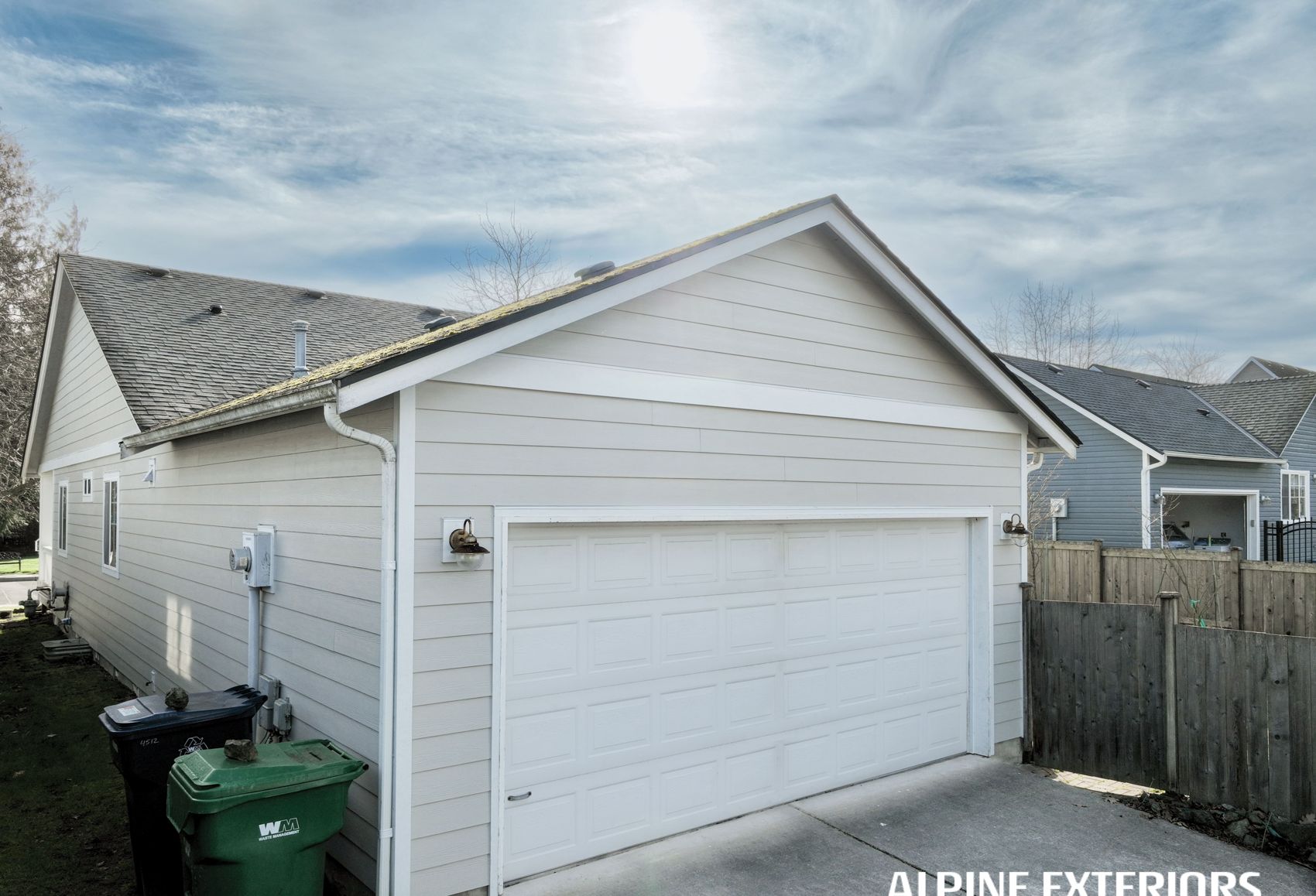
Sunnyland is one of Bellingham's older, tree-shaded neighborhoods, tucked between Whatcom Falls Park and Sehome, with a mix of 1940s and 1950s bungalows and newer infill homes built under mature Douglas fir and cedar canopy. That canopy is lovely, but it also means roof lines, north-facing walls, and anything shaded by big conifers stay damp longer after a storm rolls through than siding out in the open. For a typical single-family home in Sunnyland, a full siding replacement runs somewhere between one and three weeks of active work, depending on the size of the house, the material chosen, how much hidden wood rot turns up once the old siding comes off, and how many dry work windows land between Pacific frontal systems. Whatcom County doesn't deal with hurricane risk, but it does deal with long stretches of steady rain, so scheduling around forecast windows matters more here than in drier climates. Alpine Exteriors builds a buffer into every Sunnyland schedule for exactly that reason, rather than promising a fixed calendar date that a wet week can blow through.
Sunnyland sits inside Bellingham city limits, so a siding replacement generally requires a building permit through the City of Bellingham, particularly when the work involves removing sheathing, replacing the weather-resistive barrier, or altering insulation, since those changes touch the building envelope regulated under the Washington State Energy Code. A straightforward re-side over sound sheathing may qualify for a simpler permit path than a project that also involves structural repair, so it's worth confirming scope with the city before demolition begins. If your street or a newer pocket of the neighborhood falls under an HOA or a plat covenant, check it for restrictions on siding color, material, or trim profile before ordering anything — some Whatcom County developments are stricter about exterior appearance than buyers expect. Material lead times are the other planning variable: fiber cement siding (James Hardie and similar products) commonly runs three to six weeks out from order to delivery, longer for custom colors or specialty trim profiles, while regionally milled cedar can sometimes move faster but is subject to whatever the local mills have in stock. Ordering early, once measurements and product selection are locked in, is the single biggest lever homeowners have over how long the whole project takes.
Once permits are in hand and materials are staged, the physical work follows a fairly consistent sequence:
A little preparation on the homeowner's side keeps the project moving. Clear vehicles, patio furniture, and anything breakable away from the exterior walls, and trim back climbing vines, ivy, or shrubs that have grown into or against the siding — common in Sunnyland's older, well-established yards. If moss or algae streaking has built up on the old siding, don't be surprised if it's worse than it looked from the street once tarps and equipment are staged nearby; that's normal and doesn't reflect on the new material. Expect several days of noise, dust, and crew vehicles in the driveway or on the street, and plan around that if you have young children, pets, or work-from-home calls scheduled during tear-off. Exterior light fixtures, house numbers, and mounted decorations will likely need to come down and go back up, so flag anything fragile or sentimental ahead of time. Finally, budget a contingency for rot repair — most Sunnyland homes built before the 1980s have at least some hidden moisture damage behind the old siding, and it's better to plan for that possibility than to be caught off guard mid-project.
If the permit requires it, the City of Bellingham will schedule an inspection at the appropriate stage — often after the WRB and flashing are in but before siding closes everything up, since that's the point where inspectors can still see the water-management details. Daily cleanup during the project typically includes a magnetic sweep for stray nails and screws in the yard and driveway, which matters for kids, pets, and bare feet. At the end of the job, Alpine Exteriors walks the exterior with the homeowner, comparing the finished work against the original scope, checking caulk lines, corner details, and trim, and noting anything that needs a return visit. This final walkthrough is the right time to raise questions before the crew demobilizes, not weeks later.
New siding in Whatcom County still lives in a wet marine climate, so a little ongoing maintenance protects the investment. Most fiber cement and quality vinyl products carry a manufacturer's material warranty, and Alpine Exteriors backs its installation labor with its own workmanship warranty — ask for the specific terms in writing before the contract is signed, since coverage varies by product line. Going forward, an annual gentle wash (not high-pressure blasting, which can drive water behind laps and trim) helps keep moss and algae from re-establishing on shaded walls, and a yearly look at caulk joints and gutter function catches small issues before they become rot repairs. Keeping tree limbs and shrubs pulled back from the siding also reduces the moisture and debris buildup that speeds up organic growth on north-facing walls.
Most single-family homes take one to three weeks of active work once materials are on site, but the exact timeline depends on house size, the siding material chosen, how much hidden wood rot is found once tear-off begins, and how many dry stretches the crew gets between rain systems.
It's common, especially on older Sunnyland homes shaded by mature trees, where persistent rain and slow-drying walls create conditions for rot around window sills and roof-wall intersections; it's not guaranteed on every home, but it's frequent enough that most homeowners should budget a contingency for it.
In most cases yes, particularly if the project involves removing sheathing, replacing the weather-resistive barrier, or adding insulation, since that work touches the building envelope covered by the Washington State Energy Code; confirm the exact permit path with the City of Bellingham before work begins.
Fiber cement products handle sustained rain, moss, and algae exposure well and are a common choice locally, while quality cedar remains popular for its regional character; each material has different maintenance needs and cost, so the right choice depends on your home's exposure and your maintenance preferences rather than a single universal answer.
If you're weighing a siding replacement for a Sunnyland home, Alpine Exteriors can walk the exterior with you, talk through material options for Whatcom County's climate, and give you a realistic scope and timeline before any tear-off begins. Alpine Exteriors is licensed in Washington under contractor license ALPINI751OW and works throughout Bellingham, Ferndale, Lynden, Blaine, Birch Bay, Sudden Valley, and the islands. Reach out to schedule an on-site look at your home and get a straightforward assessment of what your project will actually involve.