
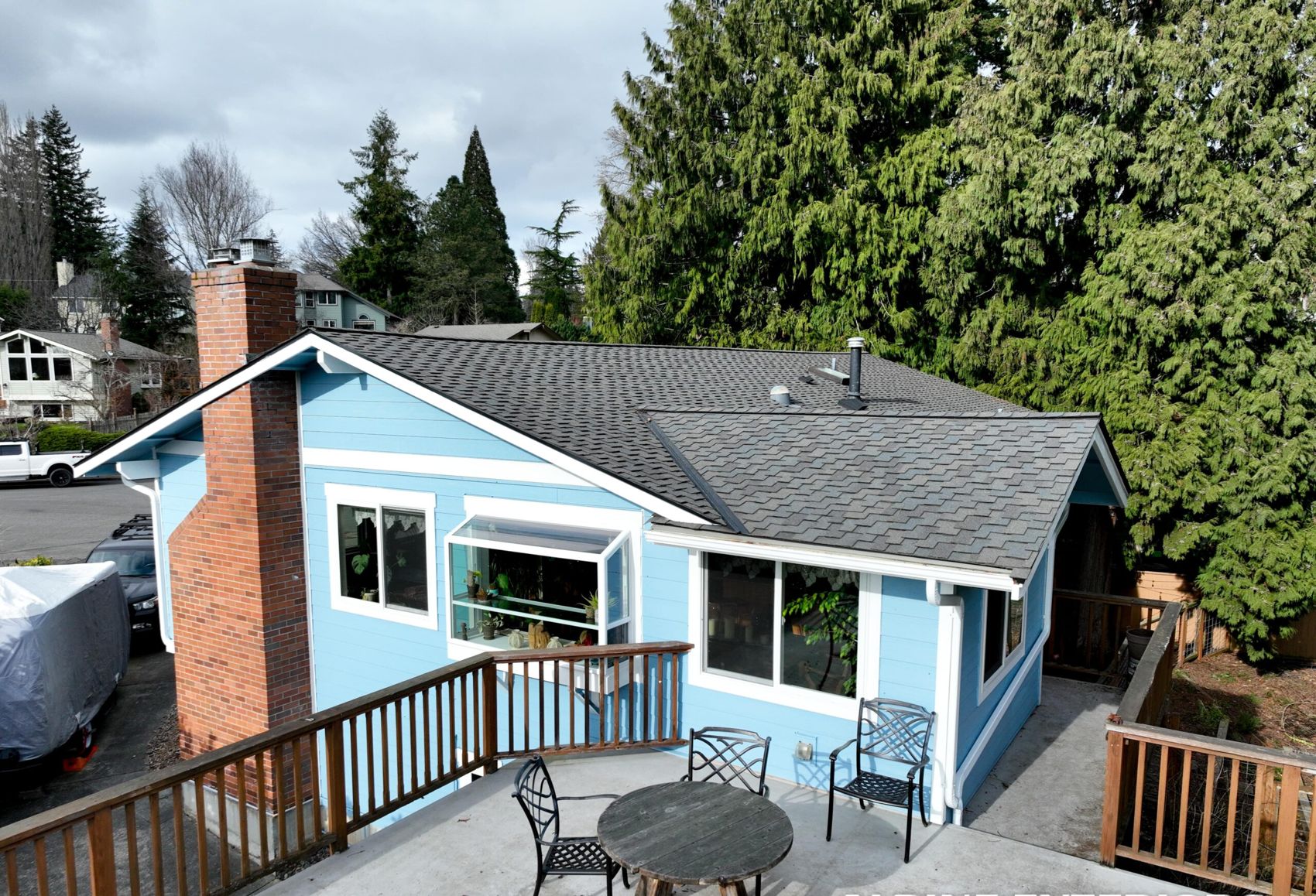
Happy Valley sits close enough to Bellingham Bay that houses in this neighborhood take a steady beating from wind-driven rain, especially on west- and south-facing walls that catch weather rolling in off the Strait. If you're looking at green or black streaking on your siding, soft trim boards, or a fiber-cement panel that's started to bow, you're not imagining it — this part of Whatcom County is genuinely hard on exterior cladding. A siding replacement here is a bigger project than most homeowners expect on the front end, but it's a manageable one once you understand the order things happen in.
For a typical single-family home in Happy Valley, plan on somewhere between one and three weeks of active work once crews start, depending on square footage, how much rot repair is needed under the old siding, and how many weather delays stack up. That's the on-site window. The bigger number to plan around is the lead time before that: between permitting, material ordering, and scheduling, four to ten weeks between signing a contract and the first day of demolition is normal, and longer during the busy summer stretch when every siding contractor in Whatcom County is booked. Alpine Exteriors builds that lead time into every proposal rather than promising a start date we can't hit.
Most straightforward siding replacement jobs in the City of Bellingham require a building permit, and if the scope includes structural sheathing repair, window flashing changes, or work that touches the building envelope in a way that affects insulation, that permit review will check the project against the Washington State Energy Code. This matters more than people expect in a re-side: if the crew is removing siding down to the studs, code may require bringing the wall assembly's continuous insulation and air-sealing up to current standards, not just replicating what was there before. We pull the permit and handle that review as part of the job — it's not something the homeowner needs to navigate alone, but it is a real step that adds time before demo can start.
If your property is in Sudden Valley or another association-governed community, add HOA or architectural committee approval to the list before the permit application. Sudden Valley's community association has design review requirements that touch exterior color and material changes, and approval can take a few weeks depending on when the committee meets. We ask about HOA status at the estimate stage specifically because skipping it can stall a project after materials are already ordered.
Speaking of materials — lead times are the piece most homeowners underestimate. Fiber-cement siding, certain trim profiles, and any custom color that requires factory finishing can take several weeks to arrive, and that clock doesn't start until the order is placed after the contract is signed and, in many cases, after the permit is in hand. If you have a specific product or color in mind, telling us early is the single best way to avoid a gap between demo and install.
Once permits are approved and material is on site, the work itself follows a consistent sequence:
A few things on your end make the project go smoother. Move or protect anything within about ten feet of the house — patio furniture, planters, hanging baskets, and anything hung on exterior walls should come down before crews arrive. If you have irrigation or landscape lighting running near the foundation, flag it so it isn't damaged during removal or scaffolding setup. Vehicles should be moved out of the driveway on demo and delivery days since material staging takes up space.
Inside the house, expect noise and vibration during removal and nailing, especially in rooms adjacent to whichever wall is being worked on. If you have pets that are sensitive to noise or strangers on the property, plan for that during active work days. It's also worth walking the exterior with your project lead before work starts to point out anything you've already noticed — soft spots, past leaks, or areas near downspouts and grade that concern you. That conversation up front helps set expectations about what's likely hiding under the old siding.
Once the siding permit closes out, a building inspector reviews the completed work against the approved permit, checking flashing, clearances, and any energy code items that were part of the scope. We schedule that inspection as part of the job rather than leaving it to the homeowner to arrange.
Daily cleanup during the project keeps nail debris, packaging, and cut-offs from becoming a hazard, but the final cleanup is more thorough: magnetic sweeps for stray fasteners, removal of all scrap and packaging, and a check of gutters and downspouts for construction debris that can clog them later. The final walkthrough is where you and your project lead go over every elevation together, check caulking and trim details up close, and note anything that needs touch-up before the job is considered finished. Take your time on this walk — it's much easier to flag something before the crew demobilizes than to schedule a return trip later.
New siding in this climate still needs periodic attention. Moss and algae growth on north-facing walls and anywhere shaded by trees is close to inevitable given how much of the year Whatcom County stays damp, and a gentle wash on a regular schedule will keep it from taking hold the way it did on the old siding. Avoid pressure washing directly at seams and under laps, since forcing water behind the cladding is exactly the failure mode a good installation is designed to prevent. Keep gutters clear and grade sloped away from the foundation — most of the rot found during a re-side traces back to water management problems that had nothing to do with the siding material itself.
Warranty coverage on a siding job has two layers: the manufacturer's material warranty on the siding itself, and the installer's workmanship warranty covering labor. We'll walk through both in writing before the contract is signed so you know what's covered and for how long, and we keep records of the installation details in case a manufacturer claim is ever needed. Alpine Exteriors is licensed in Washington under contractor license ALPINI751OW, and that licensing carries its own accountability if a warranty dispute ever needs to go beyond a phone call.
Active on-site work usually runs one to three weeks for a typical house, but that depends heavily on how much hidden rot repair is needed and how many rain days interrupt the schedule. The bigger time investment is often the weeks before demo even starts, once permitting and material lead times are factored in.
Often, yes. Given how much wind-driven rain this area gets off the bay and the Strait, water finds its way behind siding at window sills, butt joints, and old flashing details more often than homeowners expect. There's no way to know the full extent until removal is underway, which is why the contract includes a process for pricing any rot repair as it's discovered rather than guessing at it upfront.
In most cases, yes, and if the wall assembly is opened up, that permit review typically checks the project against the Washington State Energy Code. We pull and manage the permit as part of the job. If your home is in an HOA community like Sudden Valley, factor in architectural review time as well, since that approval usually needs to happen before the permit is submitted.
It can, but it's slower and requires more careful sequencing — removing smaller sections at a time, watching the forecast closely, and building in extra time for caulking and painted finishes to cure properly. If your project has flexibility, scheduling for a drier stretch of the year reduces delays, but crews do work through the wetter season when needed.
If you're seeing moss buildup, soft trim, or siding that's simply reached the end of its service life on your Happy Valley home, Alpine Exteriors can walk your property, point out what we see, and lay out a realistic scope and timeline before anything is signed. Reach out to schedule an on-site assessment and get a straightforward look at what your siding replacement will actually involve.