
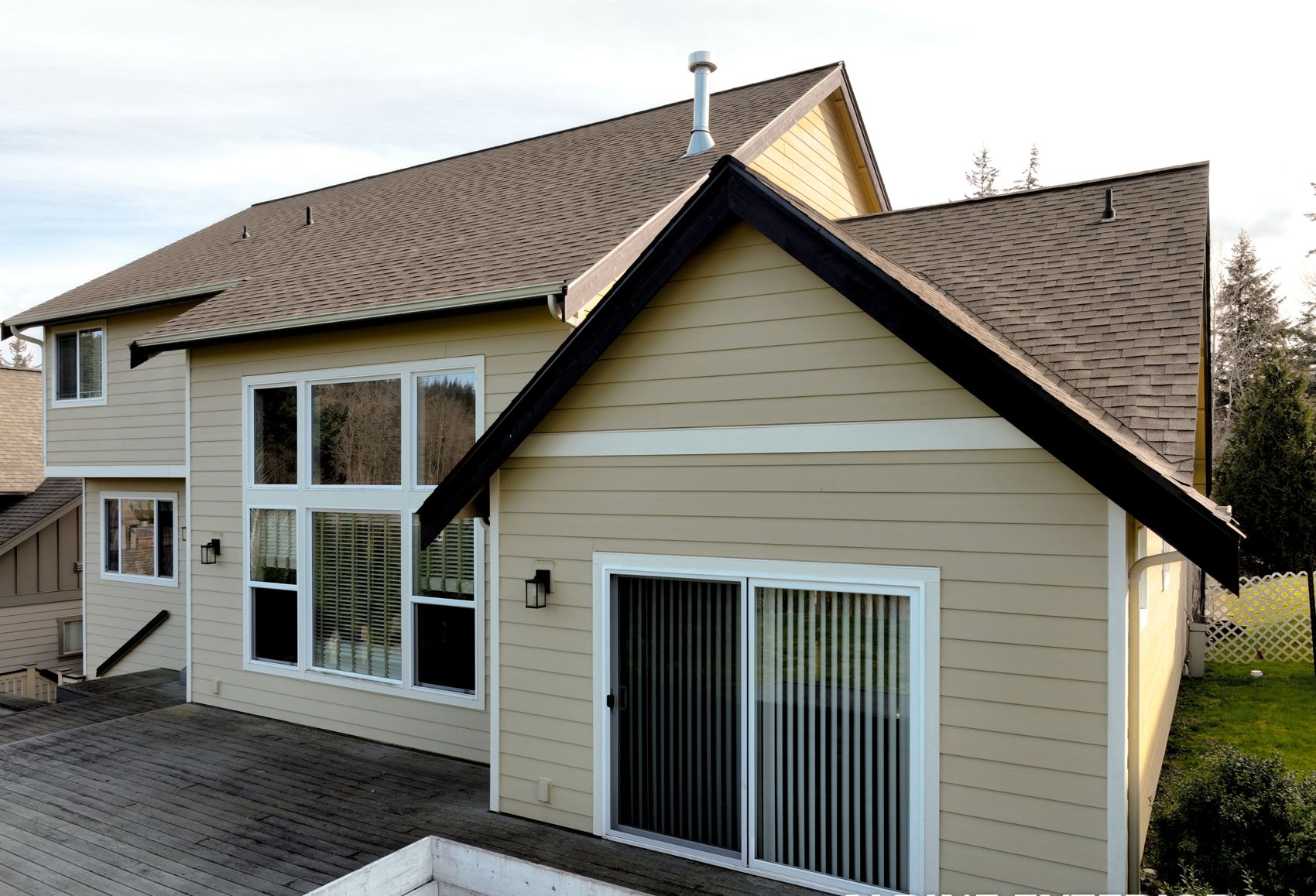
Wildfire smoke doesn't rot, warp, or eat through siding the way our rainy season does — but the ash and fine particulate that settle out of a smoky sky can dull finishes, streak into panel grooves, and leave a film that traps moisture once the rain comes back. The bigger practical issue for most Whatcom County homeowners is timing: smoke season (roughly August into September, when wind carries wildfire smoke down from British Columbia or over from the Cascades and eastern Washington) tends to land during our one real stretch of dry, stable weather, which is also the best window all year to have siding work done.
Wildfire smoke is mostly fine particulate — soot, partially burned organic material, and ash — carried on wind and dropped wherever it settles, sometimes over hundreds of miles. In Whatcom County we don't get the flame front; we get the plume. On a bad smoke day the air can look and smell like a campfire even though the nearest fire is in the Fraser Valley, the Okanogan, or somewhere east of the Cascades. That ash lands on roofs, gutters, and siding, and it sits there until the next rain washes it down. On a house with a lot of horizontal lap siding, that washdown tends to collect in the bottom of each course and along caulk lines, which is why you'll sometimes see faint gray or brown streaking under windowsills and at panel joints after a smoky August turns into a wet September.
None of this is structural. Ash residue is not going to compromise fiber cement, vinyl, or wood siding on its own. The real risk is what happens when that film sits under our fall rain pattern for weeks: it holds moisture against the surface a little longer than clean siding would, which gives algae and moss one more head start once our wet season really sets in. It's a cosmetic and maintenance issue layered on top of the moisture issues this region already deals with, not a new category of damage.
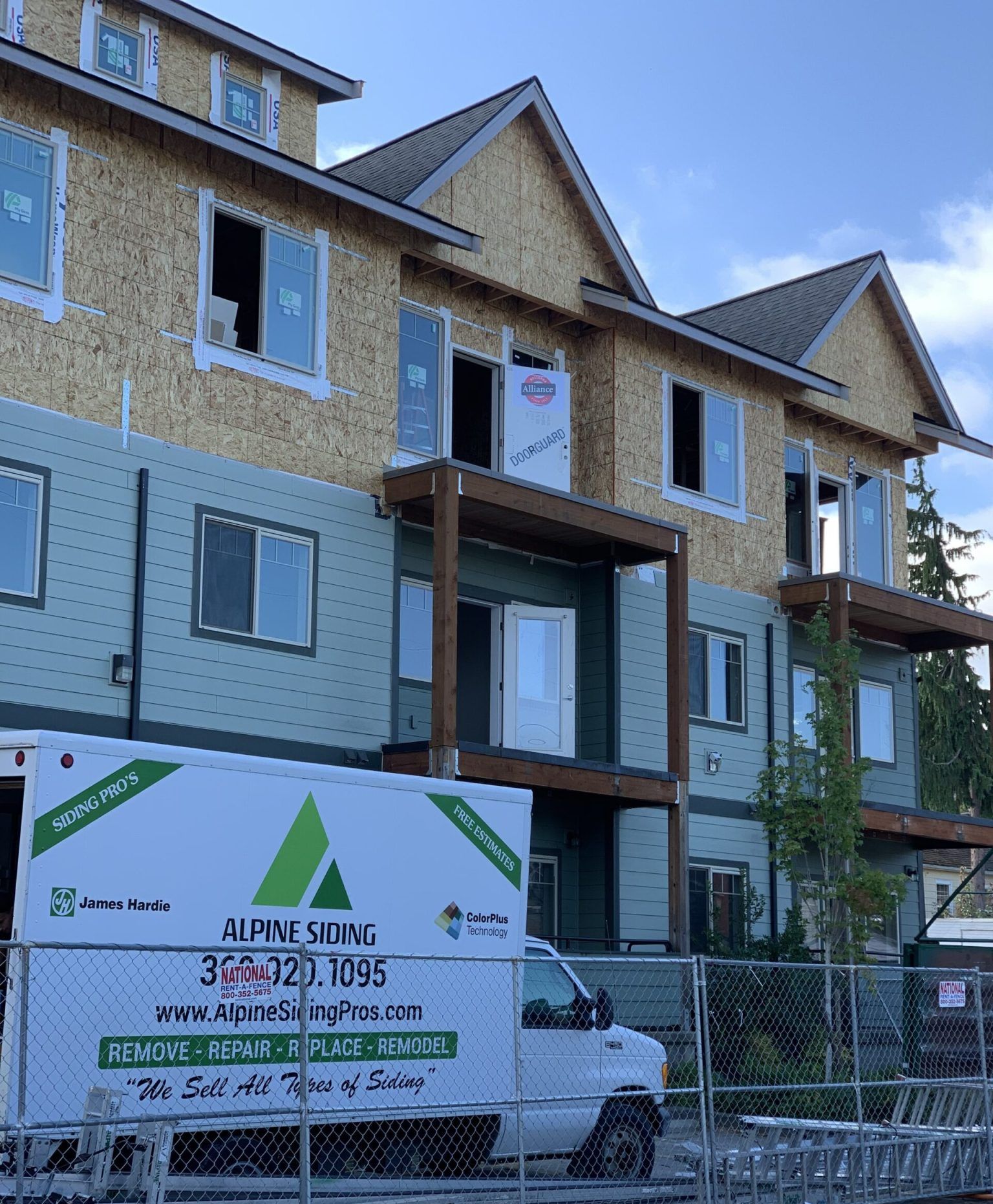
Most of the siding guidance you'll find online is written for places that deal with wildfire as a direct threat — embers, radiant heat, defensible space. That's a real concern in parts of eastern Washington and the wooded interface communities up here, like Sudden Valley along Lake Whatcom, but it's not the everyday story for most of the county. Bellingham, Ferndale, Lynden, Blaine, Birch Bay, and the islands are far more likely to see a hazy sky and ash on the porch rail than an actual approaching fire. The exception is homes tucked into tree cover in the foothills or around Lake Whatcom, where wind-blown embers from a nearby fire are a legitimate, if uncommon, possibility, and material choice matters more there than it does closer to the water.
What genuinely sets this region apart is what comes right before and right after smoke season. Whatcom County's default weather is wet: persistent rain off the Strait of Georgia and Bellingham Bay, wind-driven rain that gets pushed sideways into siding on exposed elevations, and enough sustained moisture to grow moss and algae on almost any surface that doesn't get sun or airflow. Wood siding and trim that stay damp are the ones we see soften and rot first, especially at butt joints and anywhere caulk has failed. Up in the foothills — Sudden Valley, the Mount Baker corridor, higher parts of Lynden and Deming — you also get real freeze-thaw cycling in winter, where water that's worked into a seam or a crack expands when it freezes and pries the joint open a little more each time. Smoke season sits in the middle of all that: a short, dry, relatively low-humidity window bookended by the conditions that actually do long-term damage to siding here. That's exactly why it's the window contractors and homeowners both try to use.
The Washington State Energy Code also shapes what "doing it right" looks like in this county regardless of season. Current prescriptive paths generally call for continuous insulation over the wall sheathing in our climate zone, which means a proper siding replacement isn't just swapping old panels for new — it usually involves a rainscreen gap, correctly lapped weather-resistive barrier, and insulation detailing that meets code before the new siding ever goes up. Skipping that step to save time during a dry week is a common shortcut, and it's the kind of thing that causes moisture problems two winters later.
Alpine Exteriors schedules a fair amount of siding work in exactly this window for exactly this reason — it's the stretch of the year where the installation can be done right, with proper rainscreen and flashing detail, before the wet season tests it.
For almost every home in Whatcom County, it's cosmetic. The ash and soot in wildfire smoke settle on the surface and can leave streaking or a dull film once rain washes them down, and if that film sits wet for weeks it can give moss and algae a small head start, but it isn't degrading vinyl, fiber cement, or properly maintained wood siding on its own. The exception is direct fire exposure or sustained radiant heat, which is a different situation entirely and much rarer here than in drier parts of the state.
It depends heavily on where the house sits. For a property surrounded by trees in Sudden Valley or another wooded foothill area, fiber cement's non-combustibility is a genuine, honest advantage over vinyl or untreated wood. For most of Bellingham, Ferndale, Blaine, or the islands, wind-driven rain and long-term moisture exposure are the bigger threats siding actually faces day to day, so the fiber cement decision there is usually more about durability and finish life than fire.
Not for the smoke itself — a few hazy days won't affect a properly sequenced install, and crews can and do work through moderate smoke. The better reason to aim for late summer is that it's the driest, most stable stretch of weather Whatcom County gets, which matters a lot more for getting the weather-resistive barrier, flashing, and rainscreen gap installed correctly than the smoke ever will.
A low-pressure hose rinse from the top down is usually enough for loose ash and soot, especially if it's done before a hard rain bonds the residue to the surface. Skip the pressure washer on seams, vents, and lap edges — forcing water into those points causes real moisture problems, which is a worse outcome than a little ash streaking that a rinse would have handled anyway.
If smoke season left streaking you're not sure about, or you're weighing a siding replacement and want it timed and detailed correctly for this climate, Alpine Exteriors can take a look. We're a licensed Washington contractor (ALPINI751OW) working throughout Whatcom County — Bellingham, Ferndale, Lynden, Blaine, Birch Bay, Sudden Valley, and the islands — and we'll give you an honest read on what's cosmetic, what's worth fixing now, and what the dry-season window actually buys you before the rain comes back.