
Toad Lake sits in unincorporated Whatcom County just northwest of Bellingham, tucked among second-growth conifers with a mix of older ranch homes, 1970s-80s daylight basements, and newer infill construction. The tree cover that makes the neighborhood pleasant to live in is also the reason siding here takes a beating: shaded, north-facing walls stay damp for days after a storm, moss and algae colonize cedar and older lap siding, and wind-driven rain off Bellingham Bay and the Strait of Georgia finds its way behind poorly flashed trim during a hard blow. A siding replacement is not a cosmetic project in this climate so much as a chance to rebuild the drainage plane behind the wall and stop slow water damage before it reaches the framing.
For a typical single-family home in the 1,800 to 3,000 square foot range, a full siding replacement runs somewhere between two and four weeks of on-site work once crews start, though the calendar from signed contract to finished project is usually longer once permitting, material ordering, and weather delays are factored in. Rain doesn't stop a siding job outright, but it does slow it — house wrap and flashing details need to go on dry or lightly damp material, not saturated sheathing, so a string of soaking days in November or February can push a two-week job closer to three.
| Stage | Typical Duration |
|---|---|
| Permitting and material lead time | 2-6 weeks (before crews arrive) |
| Tear-off and sheathing inspection | 1-3 days |
| Repairs, weather-resistive barrier, flashing | 2-5 days |
| Siding installation | 5-12 days |
| Trim, caulking, paint/finish, cleanup | 2-4 days |
Because Toad Lake is outside Bellingham's city limits, siding permits are pulled through Whatcom County Planning and Development Services rather than the City of Bellingham's permit counter — this trips up homeowners who assume they're dealing with the city. In most cases, a like-for-like siding replacement (same wall area, no structural change) is a straightforward permit, but if the scope grows to include re-sheathing large sections of wall, adding exterior insulation that changes wall thickness, or moving windows, the county will want more detail in the application. Alpine Exteriors handles the permit submission as part of the contract on jobs that require one, but the homeowner should expect a short delay while the county reviews it — this is normal and not something a contractor can rush.
A handful of Toad Lake subdivisions have homeowners' association covenants governing exterior color and siding material — check your HOA documents or ask your board before finalizing a color, since some associations require approval before work begins and getting it after the fact can mean redoing trim or repainting. Material lead time is the other variable worth planning around: fiber cement (James Hardie and similar) in standard colors is often available within a couple of weeks, but specialty colors, wide plank profiles, or true cedar in specific grades can run four to eight weeks out, longer during the busy spring and summer construction season. Vinyl siding generally has shorter lead times but fewer options for matching an existing architectural style. It's worth locking in material selections early so the permit review and the material order run in parallel instead of back to back.
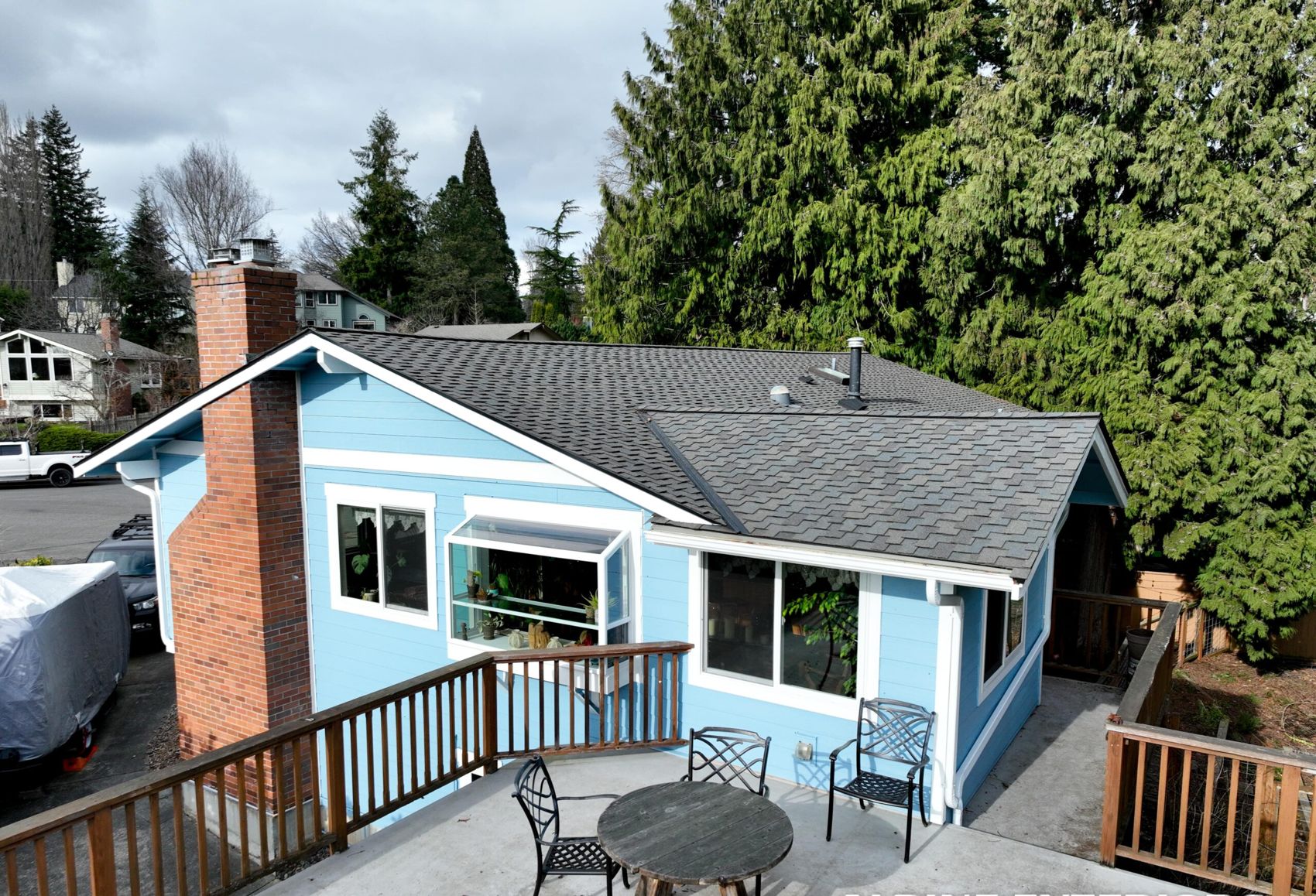
Every siding replacement follows roughly the same sequence, though the time spent at each stage depends on what the crew finds once the old siding comes off.
A little preparation on the homeowner's side keeps the project moving and protects belongings.
Once installation wraps up, any permitted work gets a final inspection from Whatcom County before it's considered closed — this is separate from Alpine Exteriors' own quality check, which happens first. Cleanup includes a magnetic sweep of the yard and driveway for dropped nails and screws, removal of the dumpster or debris trailer, and pulling protective tarps off landscaping. Before the crew leaves for good, the project lead walks the exterior with the homeowner, pointing out flashing and drainage details that will be covered by siding, checking caulk lines and paint or finish consistency, and noting anything for the punch list. It's worth walking every elevation, including the shaded north and east sides that are harder to see from the street, since those are the walls most exposed to moss growth and slow-drying moisture in this climate.
New siding still needs a bit of ongoing attention in a climate this wet. Gutters should be cleaned at least twice a year — more often on lots with heavy conifer cover near Toad Lake, since needles and cones clog downspouts and send water sheeting down the wall instead of away from it. Caulk joints and sealant at trim and penetrations should be checked every year or two and touched up before they fail, since a cracked bead is a much smaller fix than the rot repair that follows if water gets behind it for a season or two. Pressure washing can be done to knock back moss and algae, but manufacturer guidelines on distance, pressure, and nozzle type should be followed — too much pressure can force water behind laps or strip finish, particularly on fiber cement and engineered wood products. Alpine Exteriors stands behind its installation workmanship separately from the manufacturer's material warranty, and the specifics of both are spelled out in the contract so homeowners know what's covered and for how long before work begins. Alpine Exteriors holds Washington contractor license ALPINI751OW, which homeowners can verify directly with the state before signing any contract.
Once crews are on site, most single-family homes take two to four weeks of active work, depending on square footage, how much sheathing repair is needed, and how many dry-enough days the crew gets in a row. The bigger variable is usually the weeks before that — permitting through Whatcom County and material lead times, especially for specialty colors or profiles, often add several more weeks to the overall calendar.
Yes, most homeowners stay in the house throughout the project. Expect noise during tear-off and nailing, temporary loss of some exterior lighting or camera coverage while fixtures are off the wall, and work zones roped off around the perimeter. Interior life continues mostly as normal, though a room on the quiet side of the house is worth setting aside if you're sensitive to noise or working from home.
It's common enough on older Whatcom County homes that most contracts include an allowance or a clear process for it. Rotten or water-damaged sheathing and framing get cut back to solid wood and replaced before the weather-resistive barrier goes on — this is not optional, since siding installed over compromised wood just traps the problem. Alpine Exteriors documents any rot found with photos and discusses the repair and cost with the homeowner before proceeding.
In most cases a straightforward, like-for-like siding replacement requires a permit through Whatcom County Planning and Development Services, since Toad Lake falls outside Bellingham's city limits. Larger scopes — significant re-sheathing, added exterior insulation that changes wall thickness, or window relocation — get more scrutiny during review. Alpine Exteriors handles the permit application as part of the project on jobs that require one.
Every Toad Lake home carries its own combination of tree cover, sun exposure, and age-related wear, so the right approach starts with a look at your specific walls rather than a generic estimate. Alpine Exteriors serves Toad Lake and the rest of Whatcom County, from Bellingham and Ferndale to Lynden, Blaine, Birch Bay, Sudden Valley, and the islands, and can walk your property, point out what's driving any current moisture or moss problems, and lay out realistic timeline and cost ranges before you commit to anything. Reach out to schedule an on-site assessment.