
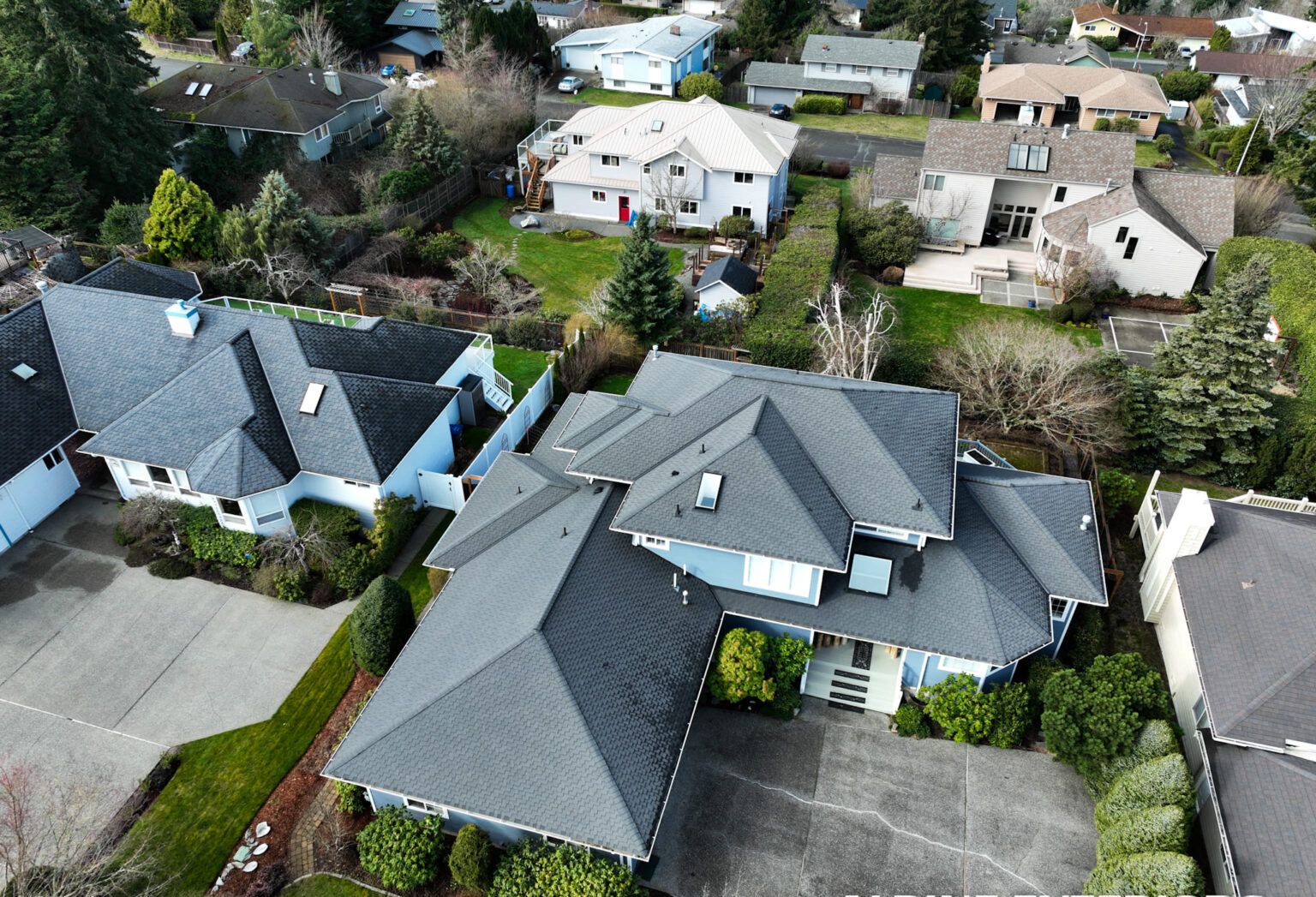
For most properties around Lake Whatcom, Whatcom County Planning & Development Services (PDS) is the agency that issues building permits, since the lake sits almost entirely in unincorporated county territory. Whether your siding job actually needs a permit depends less on the material and more on what's happening underneath it — a straight panel-for-panel replacement is often exempt, but any work that opens the wall, changes the assembly, or touches structural sheathing usually is not.
Jurisdiction around the lake isn't uniform, which trips people up. Sudden Valley, Geneva, Silver Beach, and most of the North Shore and South Shore roads are unincorporated Whatcom County, so permits go through Whatcom County PDS in Bellingham. A narrow strip near the lake's outlet and a few pockets closer to the city limits fall inside the City of Bellingham instead, which runs its own permit counter. If you're not sure which side of that line your parcel falls on, the county's parcel lookup tool will tell you in about thirty seconds — it's worth checking before you assume, because the two jurisdictions don't always apply the same review process or timeline.
Whatcom County generally follows the International Residential Code and International Building Code as adopted and amended for Washington State, along with the Washington State Energy Code for anything touching thermal envelope performance. Under those adopted codes, cosmetic and repair work — recaulking, replacing a handful of damaged boards, repainting — typically doesn't require a permit. What does trigger one is anything that changes the building envelope in a way inspectors care about: removing siding down to the studs across a significant portion of a wall, replacing rotted or missing sheathing, altering the water-resistive barrier system, adding rigid insulation that changes wall thickness, or re-flashing around windows and doors as part of the job. Once a crew is past the old siding and into sheathing, house wrap, and flashing details, the work has moved from cosmetic to envelope, and that's the line the county cares about.
There's a second, less obvious trigger specific to a drinking-water lake: shoreline jurisdiction. Under the Shoreline Management Act as implemented locally through Whatcom County's shoreline master program, work within a set distance of the ordinary high-water mark can require additional review even for exterior work, particularly if it's paired with anything that disturbs soil, expands a building footprint, or adds impervious surface. Straight siding replacement on an existing home usually doesn't rise to that level, but a siding project that's part of a larger exterior remodel — new windows, an added dormer, a deck rebuild — can pull the whole job into shoreline review if the property sits close enough to the water. This is one of the first questions worth asking PDS directly rather than assuming.
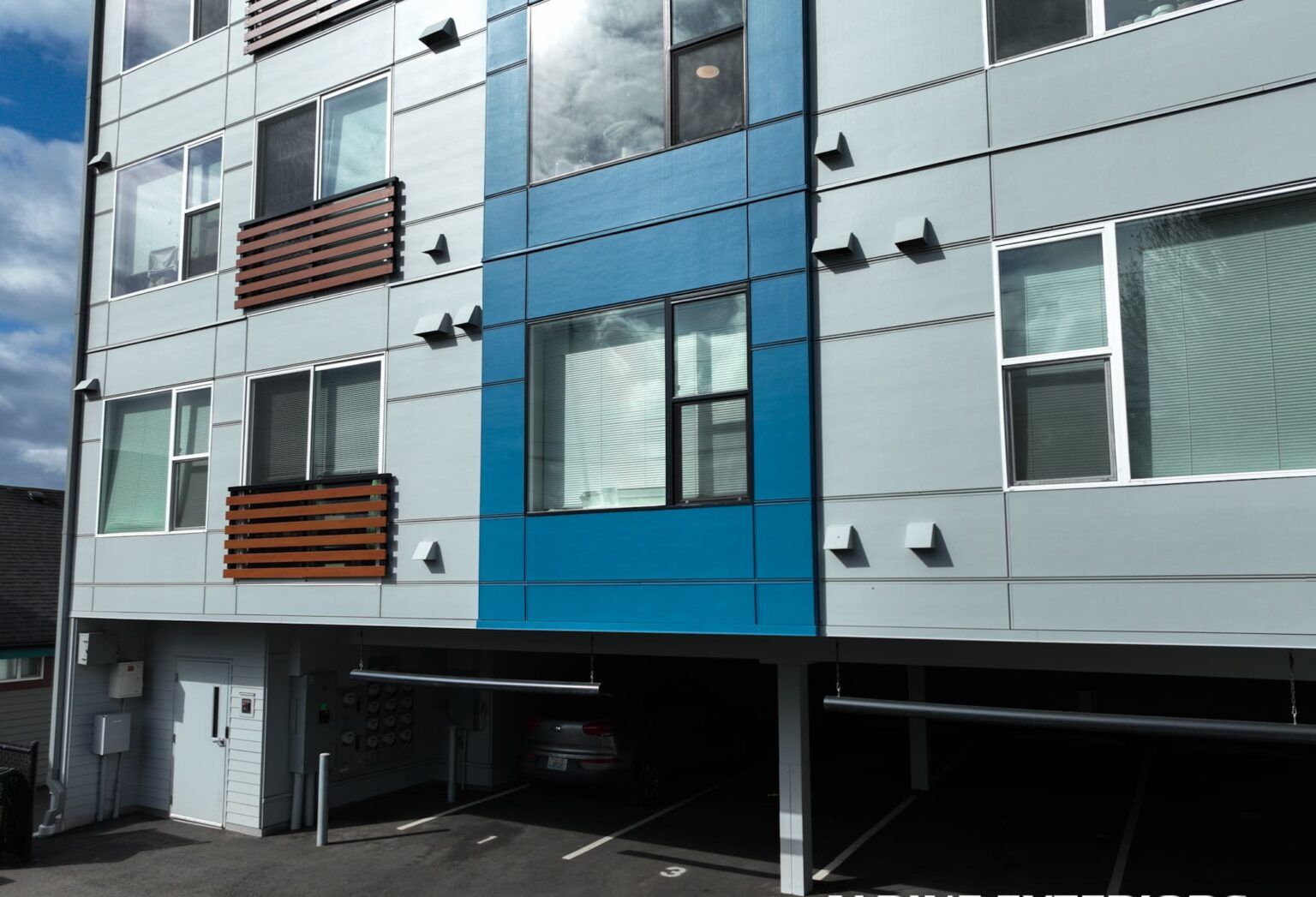
Lake Whatcom is Bellingham's primary drinking water source, and that single fact shapes how the county treats exterior work near the shoreline more than almost anywhere else in the county. The watershed carries added scrutiny around stormwater, erosion, and anything that could send sediment or runoff toward the lake, which is why projects that combine siding with grading, drainage changes, or footprint expansion get a closer look than the same job would get in, say, downtown Ferndale.
Beyond the regulatory layer, the physical conditions around the lake are genuinely different from the rest of Whatcom County's coastal towns. The North Shore and areas up toward Sudden Valley sit at higher elevation under heavy conifer canopy, which means persistent shade, slower drying times after rain, and a steady buildup of moss and algae on north- and east-facing walls — conditions that accelerate rot in wood trim and sheathing long before the siding itself looks bad from the street. Winters at that elevation also see more freeze-thaw cycling than low-lying Bellingham or Blaine, which matters when water has already worked its way behind siding through a failed seam or an old nail hole; repeated freezing expands trapped moisture and widens the damage each season. Down closer to the lake outlet and toward Bellingham Bay, wind-driven rain off the Strait pushes moisture sideways into wall assemblies during winter storms, which is exactly the scenario the water-resistive barrier and flashing details are supposed to handle — and exactly where a marginal older installation tends to fail first. None of this is hurricane territory; it's slow, cumulative moisture damage, and it's the reason so many "just replace the siding" calls around the lake turn into sheathing repair once a crew pulls the first few boards.
Start by confirming jurisdiction before you assume anything. A quick call or online parcel search with Whatcom County PDS will confirm whether your address is county or city, and whether the parcel falls inside shoreline jurisdiction because of its proximity to the lake. If it does, ask directly whether the scope of siding work you're planning requires a shoreline exemption letter or a full permit — getting that answer up front avoids a stop-work order mid-project.
It's also worth being honest about the tradeoffs. Pulling a permit adds time and a modest fee, and scheduling a county inspector isn't instant, especially in the busier summer construction months. But skipping a permit that was actually required creates real exposure — a stop-work order, a fine, or a disclosure problem when the house eventually sells and a buyer's inspector asks for permit history that doesn't exist. On a job where the sheathing turns out to be sound and the work stays cosmetic, no permit is needed and none of this applies. The point isn't to over-permit every siding job around the lake; it's to know, before the crew starts, which kind of job you actually have.
No. Straightforward replacement of existing siding, in kind, without touching structural sheathing or the water-resistive barrier, is generally treated as repair work and doesn't require a permit from Whatcom County. The permit question turns on what's found once the old siding is removed — if sheathing, flashing, or insulation needs to change, that portion of the work typically does need one.
Whatcom County Planning & Development Services maintains a parcel lookup that shows jurisdiction, zoning, and whether a property falls within shoreline jurisdiction near Lake Whatcom. It's a quick way to settle the question before assuming either agency handles your permit.
The North Shore and Sudden Valley areas sit under heavy tree canopy at somewhat higher elevation, which keeps walls damp longer after rain and encourages moss and algae growth that traps moisture against siding and trim. Combined with occasional freeze-thaw cycling in winter, that's a harsher environment for wood and sheathing than the lower, more open parts of Bellingham or Ferndale, and it's a big reason siding jobs near the lake more often uncover sheathing repair than jobs elsewhere in the county.
It can. If a project adds insulation, changes the wall assembly's thickness, or otherwise alters the thermal envelope, Whatcom County's permit review will typically check that the work meets current Washington State Energy Code requirements, even on an older home that wasn't built to today's standard. A permit-only cosmetic re-side usually doesn't trigger this review.
Permitting around Lake Whatcom isn't complicated once someone walks the property and looks at what's actually going on behind the old siding — the hard part is knowing which questions to ask Whatcom County before work begins. Alpine Exteriors serves homeowners throughout Whatcom County, from Bellingham and Ferndale to Lynden, Blaine, Birch Bay, Sudden Valley, and the lake itself, and pulls permits under Washington contractor license ALPINI751OW when the scope of work calls for one. If you're planning a siding project near Lake Whatcom and want a clear read on whether it needs a permit, contact Alpine Exteriors for an inspection and a straightforward answer before any boards come off the wall.