
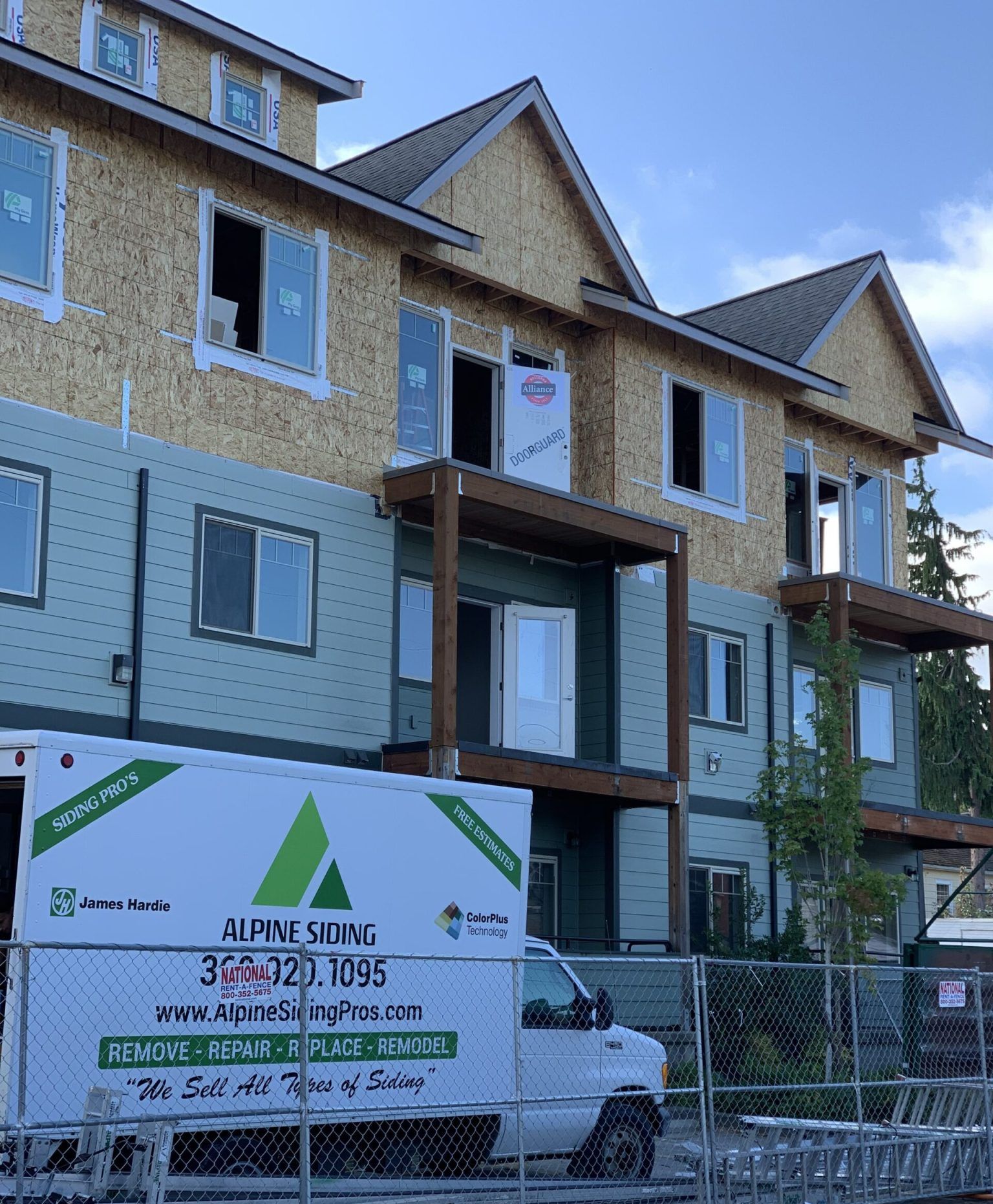
Homeowners around Lake Whatcom, Sudden Valley, and the surrounding Whatcom County foothills tend to ask the same question once they start pricing a re-side: James Hardie fiber cement or vinyl? Both are legitimate choices and both are sold heavily in this market, but they behave differently once they've spent a few winters facing the wind and rain that come off Bellingham Bay and the Strait, and they age differently in the shade of the timber that lines most Lake Whatcom lots. This page walks through both products in plain terms, compares them head-to-head, and gives you a straight answer on which one tends to make more sense for homes in this specific area.
If your home sits close to the water, backs up to trees, has a north-facing wall that never fully dries out, or you've already dealt with soft trim or rot at butt joints, James Hardie fiber cement is usually the better long-term fit. It handles constant damp exposure and moss growth without softening, holds paint for a long stretch, and doesn't distort with the freeze-thaw cycles that show up in the foothills above the lake in a cold snap. If your home is on a drier, more open lot, you're working with a tighter renovation budget, or you're re-siding a rental or a secondary structure where lowest lifetime cost matters more than exact appearance, vinyl remains a reasonable option, provided it's installed correctly with proper flashing and enough clearance from grade. Neither product is wrong here — the right one depends on the specific exposure of the house and what you're trying to optimize for.
James Hardie siding is a cement-based board product engineered specifically for wet climates, and Whatcom County's marine environment is exactly the kind of exposure it was designed around. The material is dense and non-organic, so it doesn't feed the moss and algae growth that's a constant issue on shaded, north- and west-facing walls near Lake Whatcom and out toward Sudden Valley. Where wood siding or trim would eventually soften and rot from sustained moisture contact, fiber cement stays dimensionally stable through the region's long wet season.
It also holds up well against the wind-driven rain that comes off Bellingham Bay and the Strait during fall and winter storms — driving rain forces water sideways against exposed walls, and a rigid, heavy board resists that kind of pressure better than a thin, flexible material. Hardie's factory-applied ColorPlus finish is baked on and warrantied against fading and peeling, which matters here because the marine air and near-constant cloud cover mean coatings get tested by moisture more than by UV.
The tradeoffs are real, though. Fiber cement costs more upfront than vinyl, both in material and in labor, because it's heavier, has to be cut with dust-control equipment, and requires proper caulking and flashing at every joint to perform as designed — a sloppy install undermines a lot of what makes the product worth choosing. It also needs to be installed with the manufacturer's specified clearances from grade, decks, and roof lines, which is a detail worth confirming with whoever's doing the work. Alpine Exteriors installs James Hardie siding across Whatcom County, including a fair number of Lake Whatcom and Sudden Valley homes where moss and moisture exposure are the main concern driving the re-side.
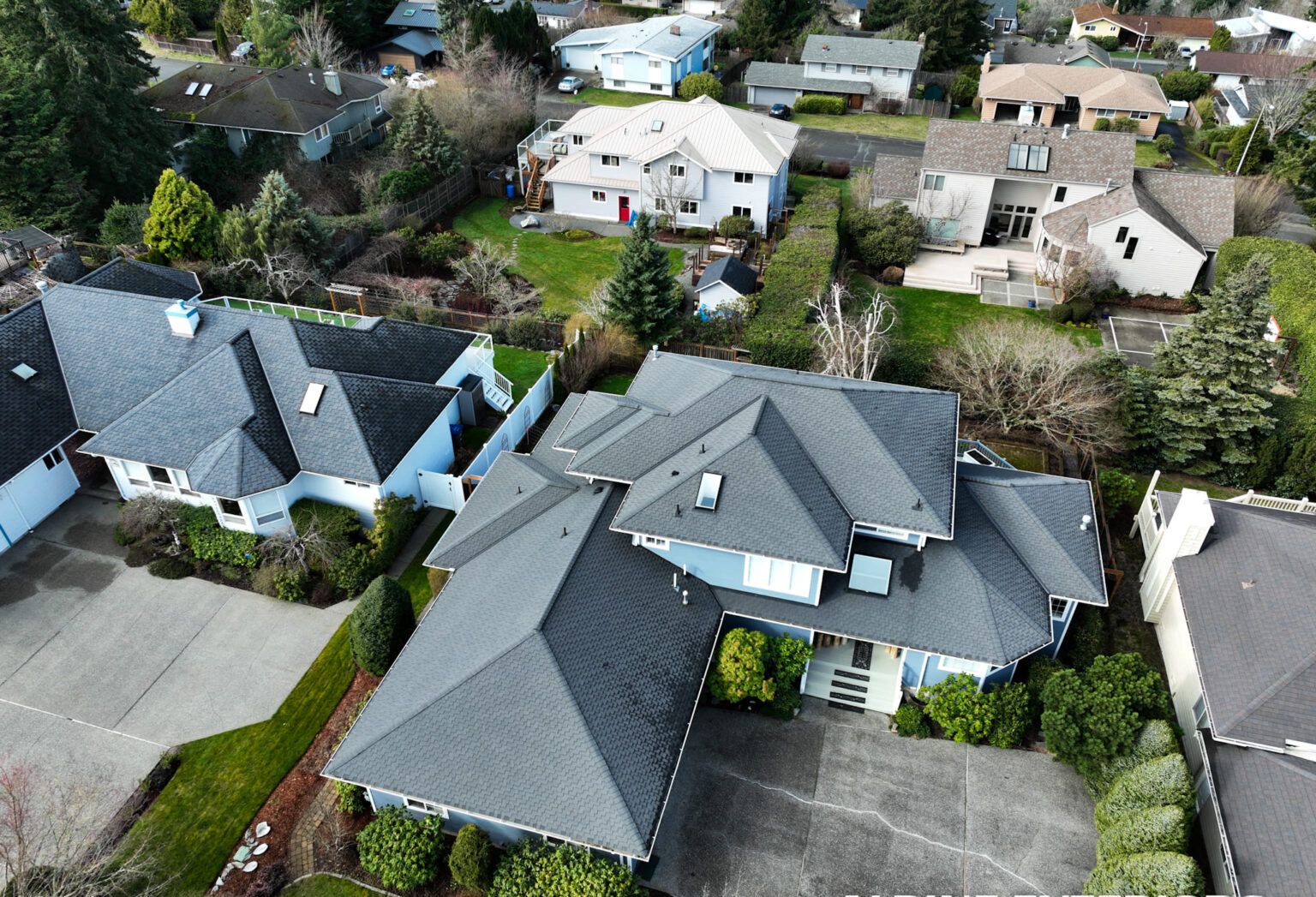
Vinyl siding is the lower-cost option and remains a common choice throughout Bellingham, Ferndale, and Lynden for homes that don't have unusual moisture exposure. It's lightweight, installs faster than fiber cement, never needs painting, and modern profiles have gotten better at mimicking lap and shake patterns at a glance. For a budget-conscious re-side on a home with decent sun exposure and good roof overhangs, it can perform acceptably for many years.
The drawbacks show up more clearly in this specific climate than in drier parts of the country. Vinyl is a thinner, more flexible material, and on walls that take direct wind-driven rain off the water, water can work its way behind panels at seams and corners if the house wrap and flashing details underneath aren't done carefully — the siding itself isn't the primary weather barrier, the layers behind it are, and vinyl leans on those layers more than fiber cement does. In persistently shaded, damp spots — the kind of northern exposure common on tree-lined lake lots — vinyl doesn't grow moss on its own surface the way wood does, but trapped moisture behind poorly flashed panels can still lead to sheathing and framing problems that aren't visible until the siding comes off. Vinyl can also become brittle over time in sustained cold snaps, which occasionally hit the foothills around Lake Whatcom harder than the lower elevations closer to Bellingham Bay, making panels more prone to cracking on impact during a freeze.
| Factor | James Hardie Fiber Cement | Vinyl Siding |
|---|---|---|
| Upfront cost | Higher material and labor cost; typically runs several dollars more per square foot installed than vinyl | Lower material and labor cost; one of the more affordable full re-side options available |
| Lifespan | Long service life when properly installed and flashed; factory finish is warrantied against fading and peeling for an extended period | Long service life on well-protected walls; more variable in constant wind, rain, and cold-snap exposure |
| Maintenance | Occasional caulk-joint checks and periodic washing to keep moss and algae from building up on the surface | Low maintenance day to day, but seams, corners, and J-channels need periodic inspection for water intrusion behind the panel |
| Appearance | Heavier board profile, crisp shadow lines, factory color options; reads as a premium, permanent-feeling material | Lighter, thinner profile; newer products look decent from the street but can look less substantial up close or in direct light |
For most homes directly around Lake Whatcom, Sudden Valley, and similarly tree-shaded, water-adjacent properties in Whatcom County, fiber cement earns its higher price. The combination of constant shade, standing moisture on north walls, moss pressure, and the wind-driven rain that sweeps in off the Bay and the Strait is close to the worst-case scenario for a thinner, more moisture-sensitive material — and fiber cement was purpose-built for exactly that combination. It also satisfies the Washington State Energy Code's exterior envelope requirements cleanly when paired with the correct underlayment and insulation approach, which any competent installer should already be accounting for regardless of which siding you pick.
That said, not every home on this list needs to default to Hardie. A well-sited home on a sunnier lot in Ferndale or Lynden with good overhangs and no history of moisture problems can do fine with a quality vinyl product, especially if the budget is tight and the priority is getting old, failing siding replaced rather than maximizing long-term durability. Alpine Exteriors walks each homeowner through their specific exposure — sun, shade, wind direction, tree cover, and any existing rot or paint failure — before recommending one product over the other, because the right answer really does change from lot to lot even within the same neighborhood.
Not on the same schedule as wood. Hardie's ColorPlus factory finish is baked on and warrantied against fading and peeling for a set number of years, so most homeowners go a long stretch before a repaint is needed, and some choose to repaint earlier only for a color change rather than because the original finish has failed.
It can become more brittle during sustained cold snaps, which occasionally reach the foothills above the lake, and a brittle panel is more likely to crack from an impact — a thrown rock, a ladder, hail — than it would be in milder weather. This isn't a constant problem here, but it's a real difference from fiber cement, which doesn't have the same cold-weather brittleness.
Neither material is organic, so neither one feeds moss growth the way untreated wood does. The practical difference shows up in surface texture and how each material sheds water — fiber cement's factory finish and installation details are engineered around wet climates specifically, and it tends to hold up visually longer on shaded, damp walls before needing a wash. Both products still need occasional cleaning on north-facing or tree-shaded elevations in this climate.
It depends on the extent of the damage. Localized wood rot at trim, soffits, or a few damaged panels can sometimes be repaired without redoing the whole wall, but if moisture has gotten behind the siding broadly or the existing material is failing across multiple elevations, patch repairs tend to be a short-term fix. A site visit is the only reliable way to tell which situation you're in.
If you're weighing James Hardie against vinyl for a home on or near Lake Whatcom, Sudden Valley, or anywhere else in Whatcom County, Alpine Exteriors can take a look at your specific exposure — sun, shade, wind, and any existing moisture or trim issues — and give you a straightforward recommendation, not a sales pitch toward whichever product carries the better margin. Alpine Exteriors is licensed in Washington under contractor license ALPINI751OW. Reach out to schedule a walkthrough and get an honest read on what your walls actually need.