
Samish sits along the water south of Bellingham, tucked between Chuckanut Bay, Samish Bay, and the wooded foothills that rise toward the Chuckanut Mountains. It's a beautiful place to own a home, but it's also a demanding one for exterior materials. Wind-driven rain comes off the bay and the Strait for months at a stretch, tall fir and cedar canopy keeps siding shaded and damp longer than it would be in an open subdivision, and moss and algae find a foothold on anything that stays wet. If you're planning a siding replacement or a new build in Samish, the choice usually comes down to two materials: James Hardie fiber cement and vinyl. Both are legitimate options used across Whatcom County, but they perform differently in this climate, and the right pick depends on your home, your budget, and how long you plan to own the place.
If you're staying in the home long-term, want the lowest-maintenance surface against moss and algae, and don't mind a higher upfront cost, James Hardie fiber cement is generally the better fit for Samish's wet, shaded, waterfront-influenced conditions. If you're working with a tighter budget, renovating a rental property, or need a faster install with fewer trade-offs on a home that isn't directly exposed to wind-driven rain off the water, vinyl siding remains a reasonable choice — as long as it's installed correctly with proper drainage behind it. Neither material is wrong; they just solve different problems. The rest of this page walks through why.
James Hardie fiber cement is a blend of cement, sand, and cellulose fiber, formed into planks or panels and factory-primed or pre-finished with Hardie's ColorPlus coating. It's noncombustible, dimensionally stable, and resistant to the freeze-thaw cycling that shows up in the Chuckanut foothills and other elevated pockets around Samish during cold snaps. Because it doesn't absorb and swell the way wood does, and doesn't expand and contract with temperature the way vinyl does, it holds its shape and its paint line far longer under sustained damp conditions.
The tradeoffs are real, though. Fiber cement is heavier and needs a crew that knows how to cut, fasten, and flash it correctly — done poorly, moisture can still get behind the panels, and Whatcom County's rain volume punishes any flashing mistake quickly. It costs more upfront than vinyl, both in material and labor, and while ColorPlus finishes hold color well, the siding will eventually need repainting on a longer cycle than most homeowners expect walking in. It's also not a DIY-friendly product; this is a job for an experienced installer.
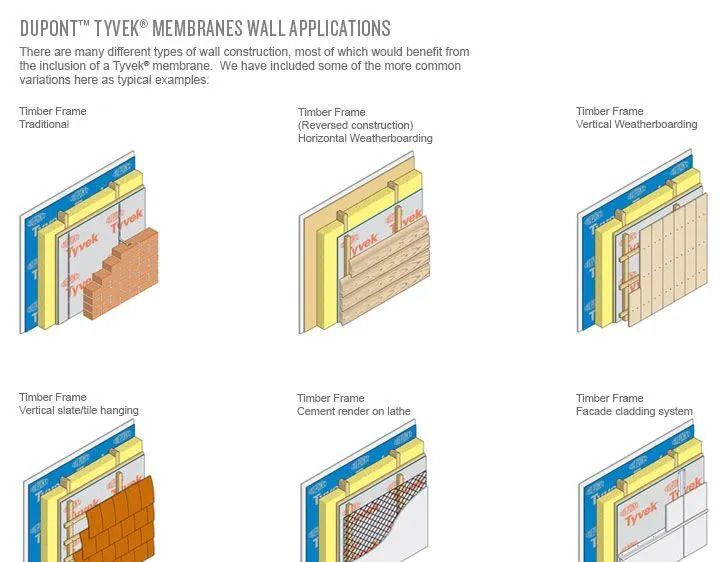
Vinyl siding is a PVC-based panel product, typically installed over house wrap and sometimes a foam backer for a bit of extra insulation value. Its biggest advantages are cost and speed: material is less expensive than fiber cement, installation labor is generally lower, and there's no painting, ever — color runs through the material. For a home in a more sheltered part of Samish, set back from direct exposure to wind off the bay, vinyl can perform acceptably for years with only routine cleaning.
The drawbacks show up over time in this specific climate. Vinyl can become brittle in sustained cold and crack on impact, and in older or lower-grade panels, prolonged UV and moisture exposure can lead to fading and slight warping at panel edges. More importantly for Samish specifically, vinyl doesn't shed moss and algae as cleanly as a factory-primed fiber cement finish, and the lap seams and J-channels give algae and mildew more places to take hold under the tree cover common on wooded lots near Chuckanut Bay and the Samish Bay shoreline. It's also worth noting that if wind-driven rain gets behind vinyl panels — through a poor seam, a missing house wrap detail, or an under-flashed window — the rigid cavity behind vinyl doesn't dry out as forgivingly as some other systems, so correct installation matters just as much as it does with fiber cement, if not more.
| Factor | James Hardie Fiber Cement | Vinyl Siding |
|---|---|---|
| Installed cost | Higher upfront; roughly $9–$16 per square foot installed depending on profile and trim complexity | Lower upfront; roughly $4–$9 per square foot installed depending on panel grade and thickness |
| Lifespan (real-world, this climate) | Commonly 30–50 years with reasonable care; ColorPlus finishes typically outlast field-painted finishes | Commonly 20–30 years; shorter if exposed to repeated freeze cycles or direct wind off the water |
| Maintenance | Periodic washing to control moss and algae; repainting eventually needed on field-painted or aged ColorPlus finishes | Periodic washing; no repainting, but cracked or faded panels usually need full replacement rather than a spot repair |
| Appearance | Crisp shadow lines, authentic wood-grain or smooth textures, holds a flat factory finish well | Wide color range and reasonable wood-grain texturing, but panel flex and seams can read as less substantial up close |
| Moisture/moss resistance in wet, shaded sites | Strong — dense material resists water intrusion and algae takes longer to establish on ColorPlus finishes | Moderate — seams and channels give moss and algae more places to start, especially on shaded, tree-covered lots |
Samish's specific mix of conditions — wind-driven rain off Samish Bay and the Strait, heavy tree shade on many lots near Chuckanut Bay, sustained dampness for much of the year, and occasional freeze-thaw swings when cold air settles into the foothills — puts real stress on any siding's weakest points: seams, fastener penetrations, and anywhere water can sit against the wall. For homes with direct or partial exposure to that wind and water, or on shaded lots where moss has historically been a problem on the roof or existing siding, we generally recommend James Hardie fiber cement. It handles the freeze-thaw cycling without the brittleness vinyl can show in cold snaps, and its factory finish resists moss and algae longer, which matters when a home sits under fir and cedar canopy for most of the year.
That said, vinyl isn't a bad choice for every Samish property. A well-sited home with good roof overhangs, decent sun exposure, and no history of moisture problems can do fine with a quality vinyl product installed with proper house wrap, flashing, and drainage gaps behind it. Budget matters too — if the choice is between vinyl now or delaying a needed re-side for years while saving for fiber cement, addressing failing or rotted siding sooner with vinyl is often the more responsible call for the house itself. Alpine Exteriors installs both materials across Whatcom County, including Bellingham, Ferndale, Lynden, Blaine, Birch Bay, and Sudden Valley, and part of a proper estimate is walking your specific lot, exposure, and tree cover before recommending one system over the other. We also make sure whichever material you choose meets the ventilation and insulation requirements under the Washington State Energy Code, since siding replacement is often the right moment to address wall assembly gaps that were never caught the first time around.
One more honest note: neither material is maintenance-free. Homeowners who choose fiber cement for its moss resistance still need to keep gutters clear and trees trimmed back from the siding, and homeowners who choose vinyl for its lower cost should budget for closer inspection of seams and trim after storm seasons. The material is only half the equation — installation quality against Whatcom County's rain volume is the other half, and it's where most siding failures we see actually originate.
In our experience, yes, generally. The dense fiber cement substrate and factory-applied ColorPlus finish give algae and moss less to grip onto than the seams and slightly more porous surface of many vinyl panels, and that difference shows up faster on shaded, tree-covered lots near Chuckanut Bay than it does on an open, sunny site. Neither material is immune, though — any siding under heavy canopy will need periodic washing regardless of what it's made from.
Lower-grade vinyl can become brittle and crack on impact during cold snaps, and it can show slight warping at panel edges after years of temperature swings, particularly in exposed spots or at higher elevations in the foothills where freeze-thaw cycling is more frequent. Thicker, higher-grade vinyl panels handle this better than economy-grade product, which is worth factoring into any cost comparison rather than looking at price per square foot alone.
It varies with the home's size, trim detail, and existing wall condition, but fiber cement installed typically runs meaningfully higher than vinyl per square foot — often somewhere in the range of double, depending on the specific profile and finish chosen. We don't publish exact figures because every house is different; a walk-through and written estimate from Alpine Exteriors is the only way to get a number you can actually budget against.
The energy code doesn't dictate a specific siding material, but it does govern the wall assembly behind it — things like continuous insulation, air sealing, and vapor control depending on your wall type. Re-siding is a practical time to bring an older wall assembly up to current code requirements, and Alpine Exteriors accounts for that when scoping a project rather than just swapping the outer layer.
If you're weighing James Hardie fiber cement against vinyl for a home in Samish or elsewhere in Whatcom County, Alpine Exteriors (WA contractor license ALPINI751OW) can walk your property, look at your sun exposure and tree cover, and give you a straightforward, honest recommendation along with a written estimate for both options. Reach out to schedule a site visit before your next re-side.