
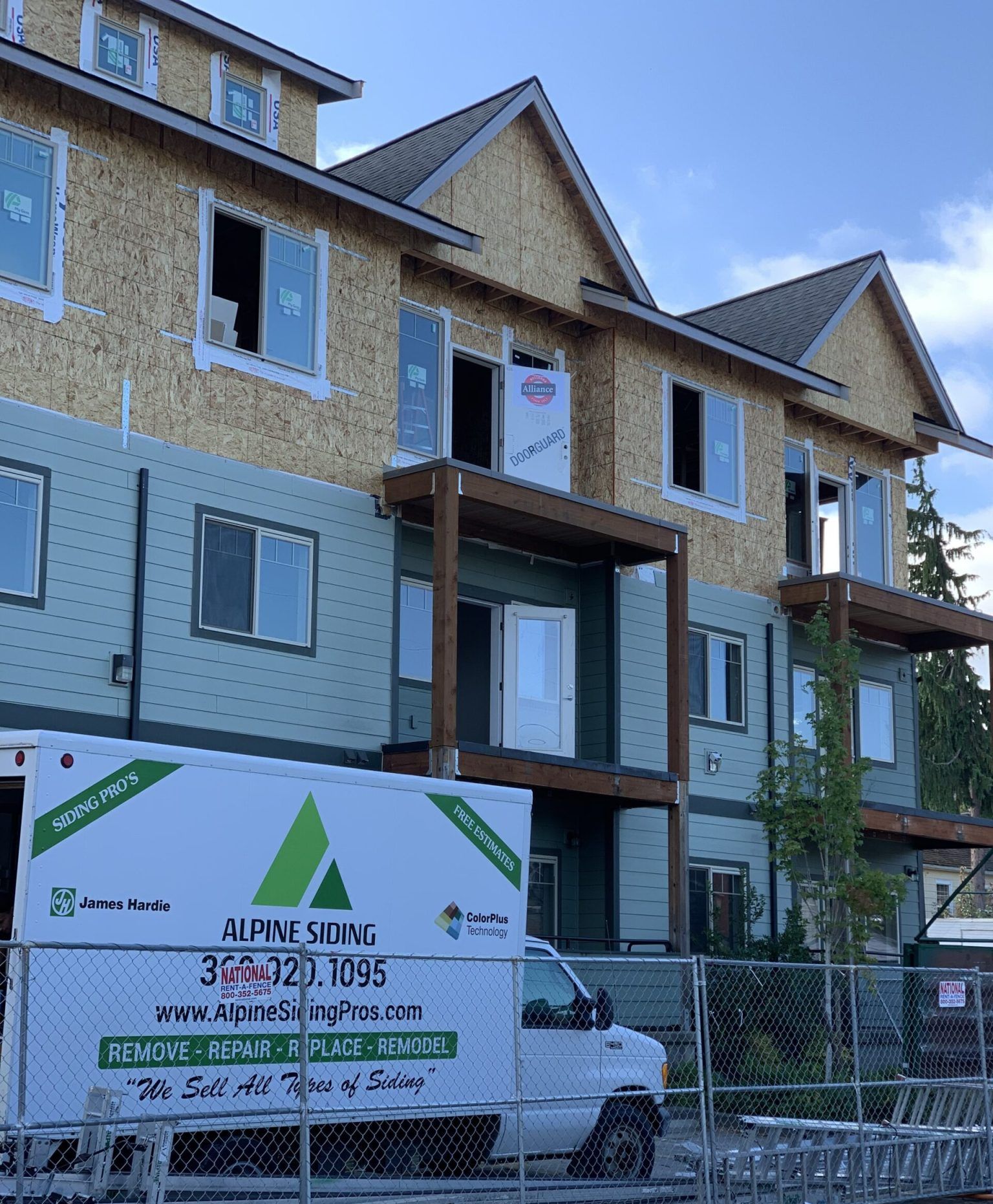
Geneva sits on the east side of Lake Whatcom, tucked into second-growth timber between Sudden Valley and the Bellingham city limits. It's a good-looking place to own a house and a hard place to keep siding in good shape. The tree canopy that makes the lake road pretty also means shade, needle litter, and slow-drying wall surfaces, which is why so many Geneva homes we look at have moss creeping up the north wall or soft, dark siding low near the foundation before the rest of the house shows its age. A siding replacement here is rarely just a cosmetic swap — it's usually also a chance to deal with rot, add a proper drainage plane, and bring the wall assembly up to what the Washington State Energy Code expects for continuous insulation and air sealing.
For a typical single-family home in the 1,800 to 3,200 square foot range, plan on roughly two to four weeks from the day crews start tear-off to the final walkthrough, assuming the substrate underneath is in reasonable shape. Homes with hidden rot, especially around old deck ledgers, window flashing, or chimney chases, can run longer once we open the wall and find out what's actually there. Weather is the other variable. Whatcom County gets long stretches of drizzle and low cloud from fall through spring, and house wrap and flashing work needs a dry window to install correctly — rushing it in the rain is how call-backs happen two winters later. We build float days into the schedule for this reason rather than pretending the forecast doesn't exist.
Geneva is unincorporated Whatcom County, not the City of Bellingham, so permitting runs through Whatcom County Planning and Development Services rather than a city building department. A straightforward siding-for-siding replacement on an existing single-family home is often exempt from a building permit as long as no structural work, window resizing, or significant wall-sheathing replacement is involved — but once rot repair opens up framing, or the scope includes replacing sheathing or upgrading insulation in a way that changes the wall assembly, a permit is typically required. We pull whatever the county requires before a crew touches the house; skipping this step is the single most common way a project gets flagged during resale.
Because Geneva overlaps the Lake Whatcom watershed — the drinking water source for a large part of the county — some parcels are subject to additional stormwater and erosion-control expectations, particularly if the job involves ground disturbance near the lakeshore, a steep bank, or a driveway that drains toward the water. We check parcel-specific requirements before scheduling rather than assuming a standard permit covers it.
If your property is inside a community association — several pockets around Geneva and neighboring Sudden Valley have architectural control covenants — get color and material approval in writing before we order product. HOA review can add one to three weeks, and it's much cheaper to wait on paperwork than to special-order a second color because the first one got rejected after installation.
Material lead times are the other planning item worth being honest about. Fiber cement lap siding in common colors is often available within a couple of weeks, but factory-primed or specialty color-matched fiber cement, certain board-and-batten profiles, and any custom trim can run four to eight weeks depending on the manufacturer's production schedule. We lock in material orders as soon as the contract and any required permit are in hand so the lead time runs in parallel with permitting instead of stacking on top of it.
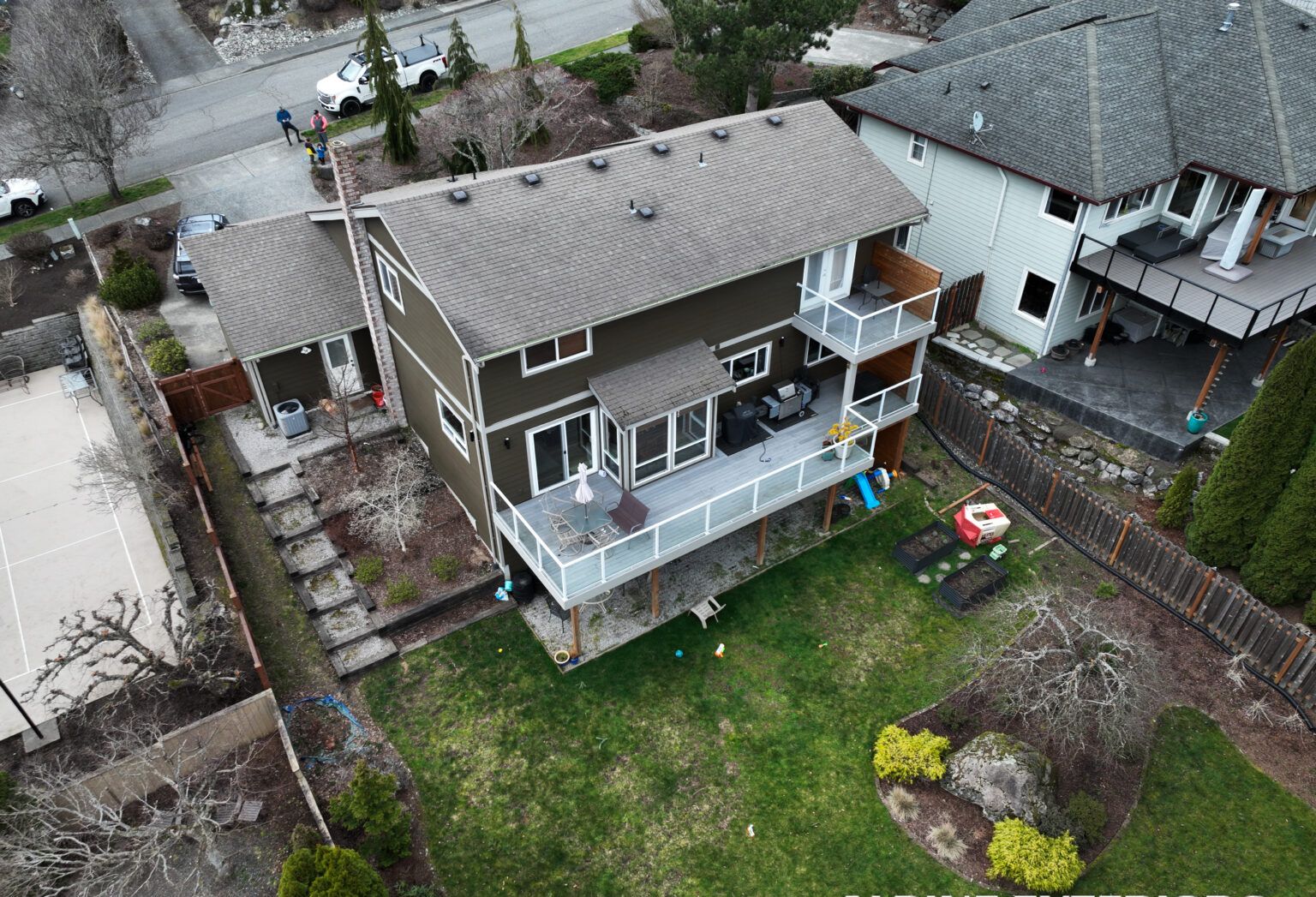
Every siding job follows roughly the same sequence, though the time spent at each stage depends on what we find once the old material comes off.
A few things go smoother if they're handled before the crew arrives. Move vehicles out of the driveway and garage access area for the duration of the job, since scaffolding and material staging often need that space. Anything hanging on exterior walls — house numbers, lights, mounted planters, security cameras — should come down or be flagged so it isn't reinstalled in the wrong spot. If you have an irrigation system with heads near the foundation, mark them; they're easy to miss under tarps.
Expect noise during tear-off and nail-gun work during installation, generally within standard daytime working hours. Pets that are sensitive to strangers or loud equipment are usually happier indoors or elsewhere for the first couple of days. If your home is on well and septic, which is common around Geneva, let the crew know the location of the septic tank, lid, and drain field so equipment and material staging avoid driving over them — that's an easy thing to overlook and an expensive one to fix.
If a county permit was pulled, the applicable inspections — typically a sheathing or weather-barrier inspection before siding closes it in, and a final inspection once the job is complete — happen at the appropriate stages rather than only at the end. We don't cover work that still needs to be inspected.
Daily cleanup is part of the job, not an afterthought: old siding debris, cut-offs, and packaging get bagged or binned at the end of each work day rather than left to blow around, which matters on windy days off the lake. At project close, we do a full magnetic sweep for stray fasteners in the yard and walkways, remove staging and protective coverings, and reset anything that was temporarily relocated. The final walkthrough covers the whole exterior with you in person — caulking lines, trim reveals, paint touch-up, and any punch-list items get identified and addressed before we consider the job finished, not left for a follow-up call.
New siding still needs occasional attention in this climate. Moss and algae growth on north- and shade-facing walls is close to unavoidable given how much of Whatcom County stays damp and shaded for months at a stretch; a soft wash every year or two keeps growth from taking hold and staining the finish. Keep gutters clear so overflow doesn't run down the wall face, and trim back vegetation that's shading or brushing against siding, since trapped moisture against the surface is what starts most of the rot problems we find on tear-off.
Material warranties vary by manufacturer and product line — fiber cement, engineered wood, and vinyl products each carry their own coverage terms, which we go over specifically for the product installed on your home rather than quoting a generic number. Alpine Exteriors also stands behind its own workmanship separately from the manufacturer's material warranty; the specifics are spelled out in your contract so there's no ambiguity about what's covered if something needs attention down the road. Alpine Exteriors holds Washington contractor license ALPINI751OW, and that license number is available to verify through the state at any point before or after the work.
Often a straightforward siding-for-siding replacement is exempt from a Whatcom County building permit, but that changes if the scope includes structural repairs, sheathing replacement, or work that alters the wall's insulation assembly, and parcels near the Lake Whatcom shoreline can carry extra stormwater considerations. We confirm the specific requirement for your property and pull any needed permit before work begins.
Any soft or delaminated sheathing and framing gets cut back to solid wood and replaced before new house wrap or siding goes on. We show you what we find, generally with photos, before proceeding, since the extent of hidden rot can shift the timeline and scope once the wall is opened up.
A properly detailed installation — continuous weather-resistive barrier, correct flashing at every penetration and roofline, and adequate ground clearance — is what actually resists wind-driven rain off the Bay and the Strait, more than the siding material itself. We install to those details regardless of which siding product you choose, and we'll be upfront if your current problems are really flashing or drainage issues rather than a siding failure.
Yes — if your property is under an architectural review process, we recommend getting written approval on the specific color and profile before we order material, since custom or factory-matched colors can carry longer lead times and aren't easily swapped once ordered.
If your Geneva home is showing moss, soft spots, or siding that's simply reached the end of its service life, Alpine Exteriors can walk the property with you, look at what's actually going on under the surface where possible, and lay out a realistic scope and timeline before any commitment is made. Reach out to schedule a walkthrough and get a written estimate specific to your home.