
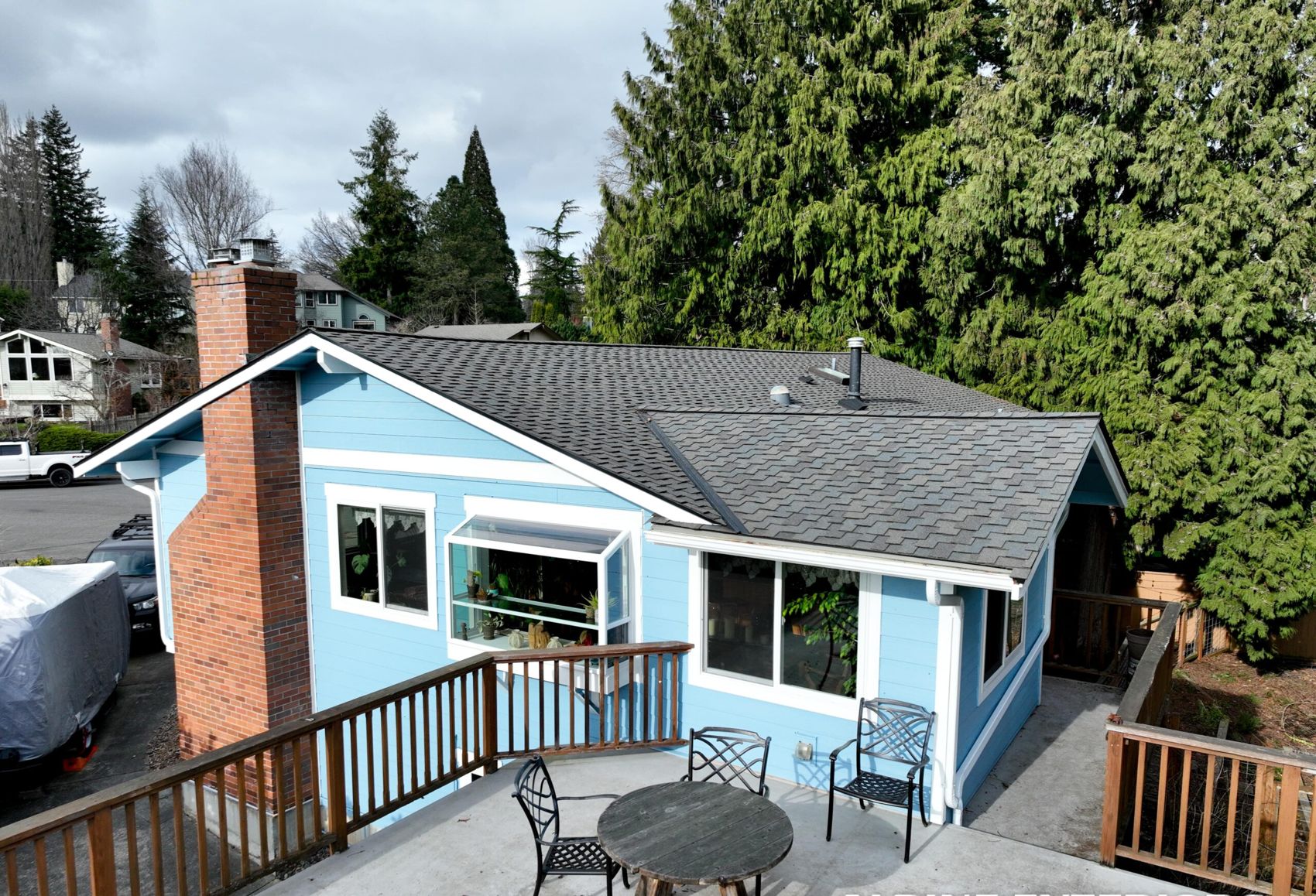
Sunnyland sits just up from Bellingham Bay, close enough to catch the wind-driven rain that rolls off the water and far enough into town to pick up moss spores from the maples and cedars that shade half the neighborhood's older bungalows and Craftsman-style homes. When a homeowner here starts pricing new siding, the choice almost always narrows to two materials: James Hardie fiber cement or vinyl. Both hold up in a wet Pacific Northwest climate when installed correctly, but they behave differently over a 20- or 30-year ownership horizon, and the right pick depends on your home, your budget, and how much upkeep you're willing to do. This page walks through both options honestly, including their real drawbacks, so you can decide with your eyes open.
If your home has visible wood rot, chronic moss and algae streaking, or you plan to stay in the house long-term and want the closest thing to a "install once, repaint occasionally" exterior, James Hardie fiber cement is usually the better fit for Sunnyland's climate. If you're working with a tighter renovation budget, selling within the next several years, or updating a home where the original vinyl held up fine and just looks dated, vinyl siding remains a reasonable, lower-cost option — as long as it's a heavier-gauge product installed with enough clearance to shed water. Neither choice is wrong; they trade off differently on upfront cost versus long-run maintenance and resale appeal.
James Hardie siding is a cement, sand, and cellulose fiber composite, sold locally in lap siding, shingle-style panels, and vertical board-and-batten profiles. It's factory-primed or comes with Hardie's ColorPlus finish, and it's manufactured with formulations Hardie markets specifically for wetter regions like ours (the HZ5 product line), which affects moisture resistance more than the color coat does. In practice, that means the material itself doesn't absorb and swell the way wood or lower-grade composites do, which matters directly here — persistent winter rain and the humidity that lingers under the tree canopy in neighborhoods like Sunnyland are exactly the conditions that rot wood siding and trim over time.
The tradeoffs are real. Fiber cement is heavy, so installation takes longer and costs more in labor than vinyl. It has to be field-cut with dust-controlled saws (silica dust is a genuine job-site hazard), and it requires paint eventually — ColorPlus finishes hold their color for many years, but they are not maintenance-free forever the way some marketing implies. It also needs correct caulking and flashing at every seam; done poorly, water can still get behind it. And because it's an engineered product installed as individual boards, a poor installer can void manufacturer warranty coverage just as easily as with any other siding.
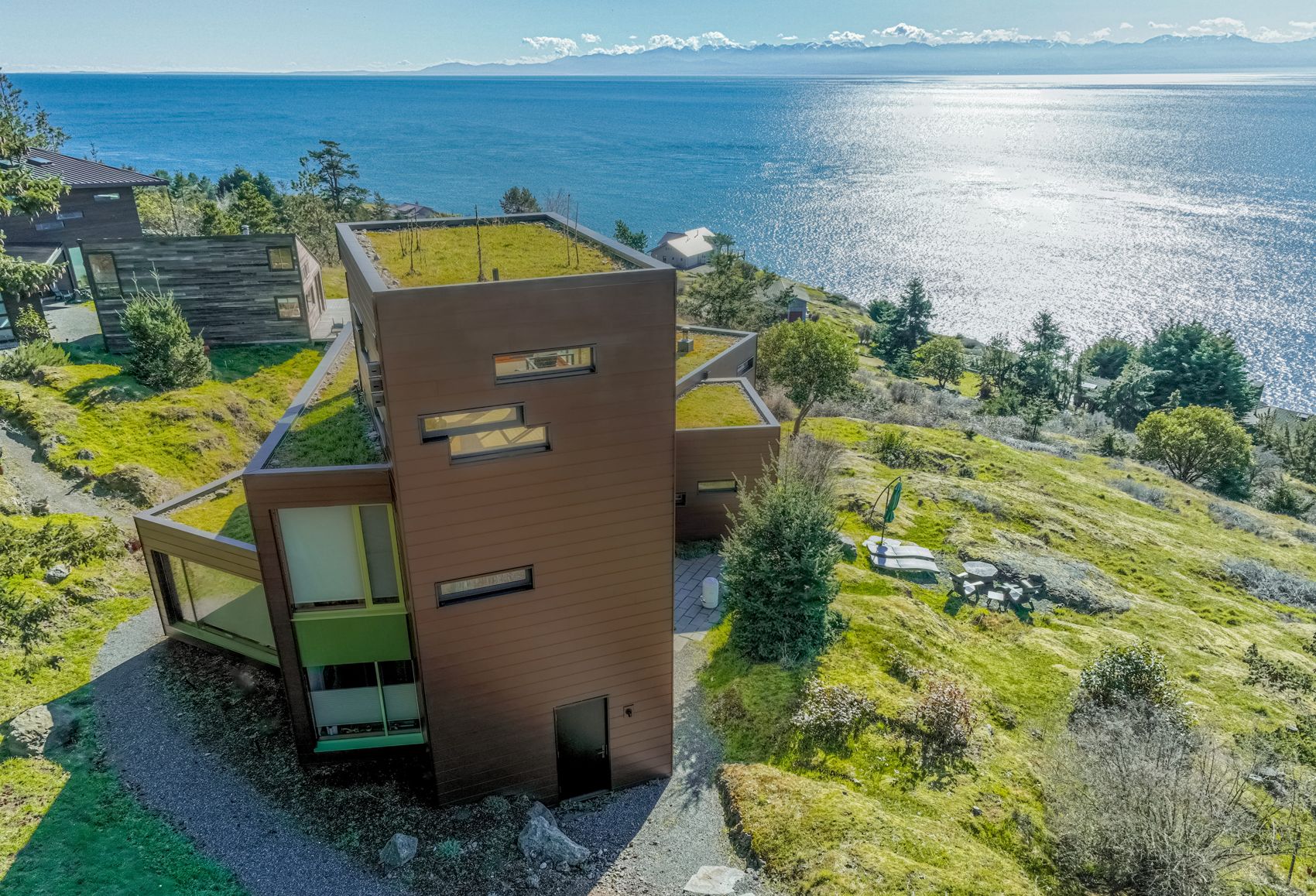
Vinyl siding is an extruded PVC panel product, sold in a wide range of profiles, textures, and price tiers — the gap in quality between a builder-grade 0.040-inch panel and a heavier insulated vinyl panel is significant, and it matters more in this climate than in a drier one. Vinyl doesn't rot, and it's the lower upfront cost of the two options in almost every case, which is why it's still common on rental properties and budget-conscious remodels around Whatcom County.
The drawbacks show up over time in a marine climate. Vinyl can warp or buckle if it's face-nailed too tight (it needs room to expand and contract) or if a dark color absorbs enough heat on a rare sunny south wall. Seams and J-channels are where moisture tends to find its way behind the panel, and once water gets behind vinyl, there's no repainting your way out of the problem — the panel or the wall assembly behind it may need to come off to fix it. Vinyl also tends to look less crisp on more architecturally detailed homes; it can't hold a deep shadow line the way fiber cement lap siding does, and lighter colors show green algae streaking sooner in shaded, damp spots than a properly coated fiber cement board does.
| James Hardie Fiber Cement | Vinyl Siding | |
|---|---|---|
| Upfront cost | Higher material and labor cost; typically the pricier bid for a full re-side | Lower material cost; generally the cheaper bid, especially on straightforward wall lines |
| Typical lifespan | Often 30+ years before major work is needed, with periodic repainting | Commonly in the 20-30 year range depending on panel thickness and sun exposure |
| Maintenance | Occasional recaulking and repainting (longer intervals with ColorPlus finish); resists moisture-driven rot | Occasional cleaning to knock down algae and moss staining; no repainting needed, but damaged panels are simply replaced |
| Appearance | Holds crisp lines and shadow detail; wide range of profiles and colors; reads as a premium material | Wide color and texture range; can look plasticky up close and doesn't hold shadow lines as well; fading is more visible over time |
Sunnyland's mix of older homes under mature tree cover and newer infill construction on more exposed lots means there isn't one universal answer, but the neighborhood's conditions do push the decision in a direction for most homeowners. The persistent rain typical of a Bellingham winter, combined with wind-driven rain that comes straight off Bellingham Bay and the Strait of Georgia during a southwesterly blow, puts real pressure on any siding's seams and lower courses. Homes closer to the water or on more exposed rises tend to see this hardest. Add in the shade and dampness under big-leaf maples and cedars that cover much of the neighborhood, and moss and algae growth on north- and east-facing walls becomes a maintenance fact of life regardless of which material you choose.
For homes with any history of wood rot at the old siding, trim, or sheathing — common on the neighborhood's older housing stock — we lean toward recommending James Hardie fiber cement. It won't absorb moisture the way the wood behind it may have, and it gives you a long runway before the next full re-side. For homes further from the water, on newer construction with good roof overhangs and gutters already managing runoff well, a quality vinyl product can be a perfectly sound, lower-cost choice, particularly if the budget is tight or the home is going on the market in the near term and a full fiber cement upgrade won't be recouped in the sale price.
One more regional factor worth naming: the Washington State Energy Code governs the wall assembly behind whichever siding you choose, including continuous insulation and air-sealing requirements on new construction and major remodels. Neither vinyl nor fiber cement siding is itself an insulation product, so the code compliance work happens in the wall assembly, not the cladding — but it does affect how furring, house wrap, and rainscreen gaps get detailed behind the siding, and a contractor who treats that layer as an afterthought is setting up moisture problems no matter which siding goes on top. If you're up in the foothills toward places like Sudden Valley where freeze-thaw cycles are more frequent than down in Sunnyland proper, that wall assembly detailing matters even more, since trapped moisture that freezes and thaws repeatedly is what eventually cracks caulk joints and loosens fasteners.
Alpine Exteriors installs both materials across Whatcom County — Bellingham neighborhoods like Sunnyland, plus Ferndale, Lynden, Blaine, Birch Bay, Sudden Valley, and the islands — and we'll walk your specific walls, exposure, and existing sheathing condition with you before recommending one over the other. We're licensed in Washington as ALPINI751OW, and our advice doesn't change based on which product carries a better margin; it changes based on what's actually on your house.
For most Sunnyland homes, yes, especially if there's any existing wood rot or if the home has heavy shade and persistent moss growth. The extra upfront cost buys a material that doesn't absorb water the way wood-based sidings do, which reduces the odds of a rot-driven repair project a decade or two down the road. That said, if your home is well-protected by overhangs and gutters and you're on a tight budget, the cost difference is a legitimate reason to consider vinyl instead — it's not that Hardie is "correct" and vinyl is "wrong," it's a tradeoff.
Standard residential vinyl siding is rated for wind loads well beyond what a typical Whatcom County storm produces, so wind resistance by itself usually isn't the deciding factor. The bigger issue in wind-driven rain events is water intrusion at seams, corners, and J-channels rather than the panels blowing off — proper lap, fastening, and flashing detail matter more here than panel strength alone.
Yes, eventually. James Hardie's factory ColorPlus finish is designed to hold up for many years without repainting, often well over a decade, but it is not a permanent finish. Field-primed boards that get painted on site typically need a fresh coat sooner than factory-finished ColorPlus boards. Either way, budget for repainting as part of long-term ownership rather than assuming it's a one-time installation.
No siding material eliminates moss and algae entirely in a shaded, damp Whatcom County lot — spores are airborne and will land on any surface. What changes between materials is how visible the staining gets and how it's removed. Algae streaking tends to show up faster on lighter vinyl in shaded areas, while a quality painted or ColorPlus fiber cement finish can resist staining a bit longer, but periodic gentle washing is a normal maintenance task either way, regardless of what's on the wall.
If you're weighing James Hardie against vinyl for a home in Sunnyland or elsewhere in Whatcom County, Alpine Exteriors can look at your walls, your exposure, and your existing sheathing in person and give you a straight recommendation, not a sales pitch for whichever product we'd rather sell. Contact Alpine Exteriors to schedule a walkthrough and get a written estimate for your project.