
Toad Lake sits in the tree-shaded country just north of Bellingham, tucked between the lake itself and the rolling foothills that lead toward Lake Whatcom and the Mount Baker highway corridor. Homes out here deal with a specific combination of conditions: heavy tree canopy that keeps siding damp and shaded for long stretches, a genuinely wet climate with rain spread across most months of the year, occasional wind-driven rain that pushes moisture sideways during Strait of Georgia and Bellingham Bay storm systems, and enough elevation change nearby that freeze-thaw cycling on siding and trim is a real winter concern, not a theoretical one. Choosing between James Hardie fiber cement siding and vinyl siding for a Toad Lake home isn't about which product is objectively "better" — it's about which one matches your house, your budget, and how much maintenance you're willing to do. This page walks through both options honestly, including the drawbacks, so you can make a call that fits your property.
If your home is shaded by fir and cedar canopy, sits close to Toad Lake or a drainage area where humidity lingers, or you want a look that reads as higher-end (board-and-batten, deep shadow lines, a color that won't fade), James Hardie fiber cement is usually the stronger long-term fit despite the higher upfront cost. If you're working with a tighter renovation budget, own a rental or secondary property where minimizing maintenance calls is the priority, or your home's walls get good sun and airflow with less moss pressure, vinyl siding remains a reasonable, defensible choice. Neither option is wrong — they solve different problems, and a lot of Toad Lake homes could genuinely go either way depending on the specific wall exposure, budget, and how long you plan to own the house.
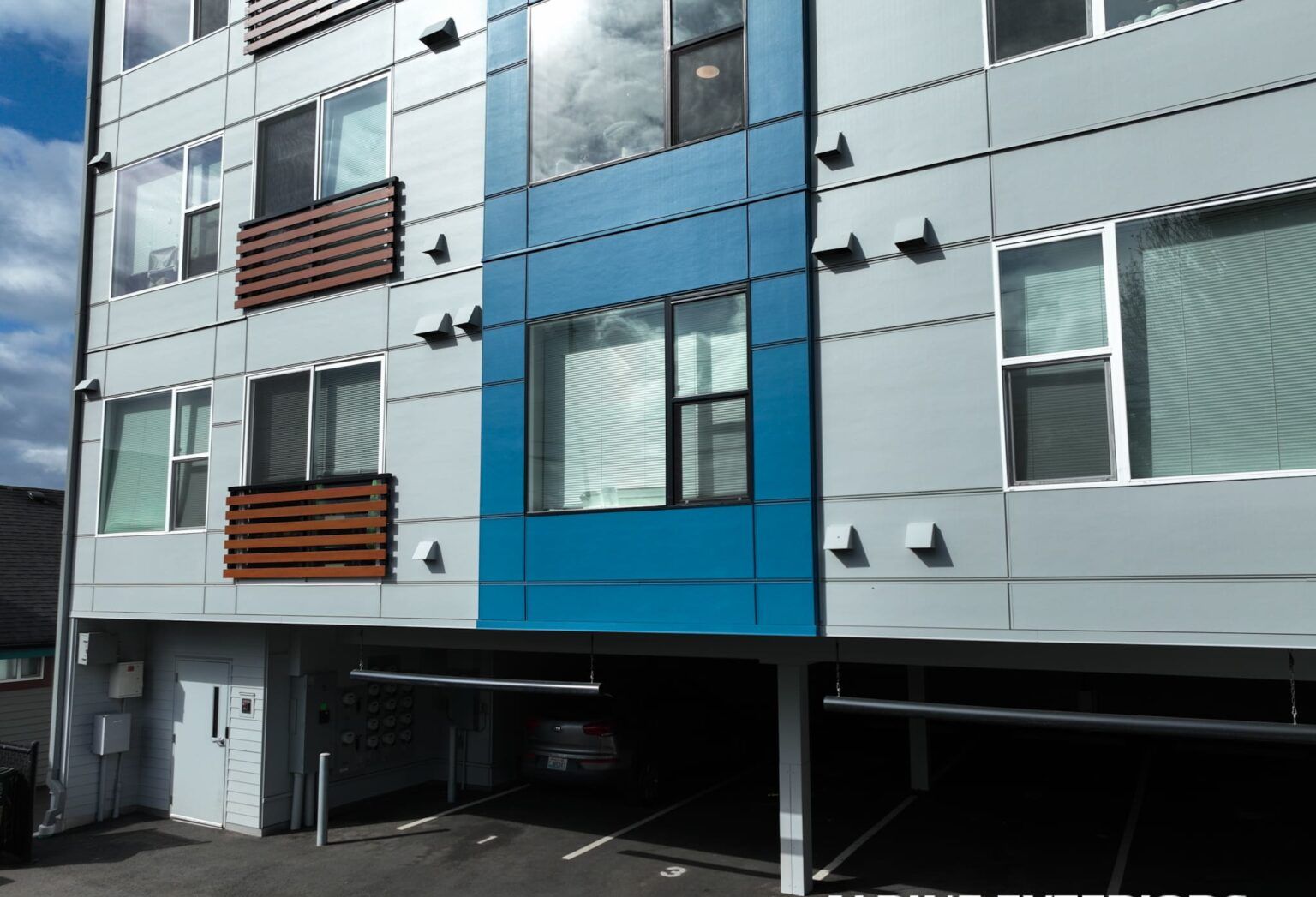
James Hardie fiber cement is a mix of cement, sand, and cellulose fiber pressed into planks, panels, or shingle-style pieces and then factory-primed or factory-finished with Hardie's ColorPlus coating. In a place like Toad Lake, its biggest advantage is that it doesn't feed the moisture problems that plague this climate. Fiber cement doesn't warp, swell, or rot when it stays damp under tree cover for days at a time, which matters on the north- and east-facing walls of homes tucked back under mature trees near the lake. It also holds paint and factory finish well over decades, resists impact from wind-blown branches and debris better than vinyl, and gives a heavier, more substantial look — deep woodgrain-style shadow lines, tight butt joints, and a profile that reads as real wood siding rather than a plastic substitute.
The drawbacks are real and worth naming. Fiber cement costs more to buy and, because it's heavy and has to be cut with dust-controlled equipment, it costs more to install than vinyl. It has to be painted (or repainted, if you don't stick with ColorPlus factory finish) at some point in its life, which is a maintenance cost vinyl doesn't carry. It's also not something a homeowner installs themselves on a weekend — Hardie's installation instructions are specific about fastener spacing, clearances, and flashing details, and getting those wrong is one of the more common causes of moisture problems behind fiber cement siding in wet climates like ours.
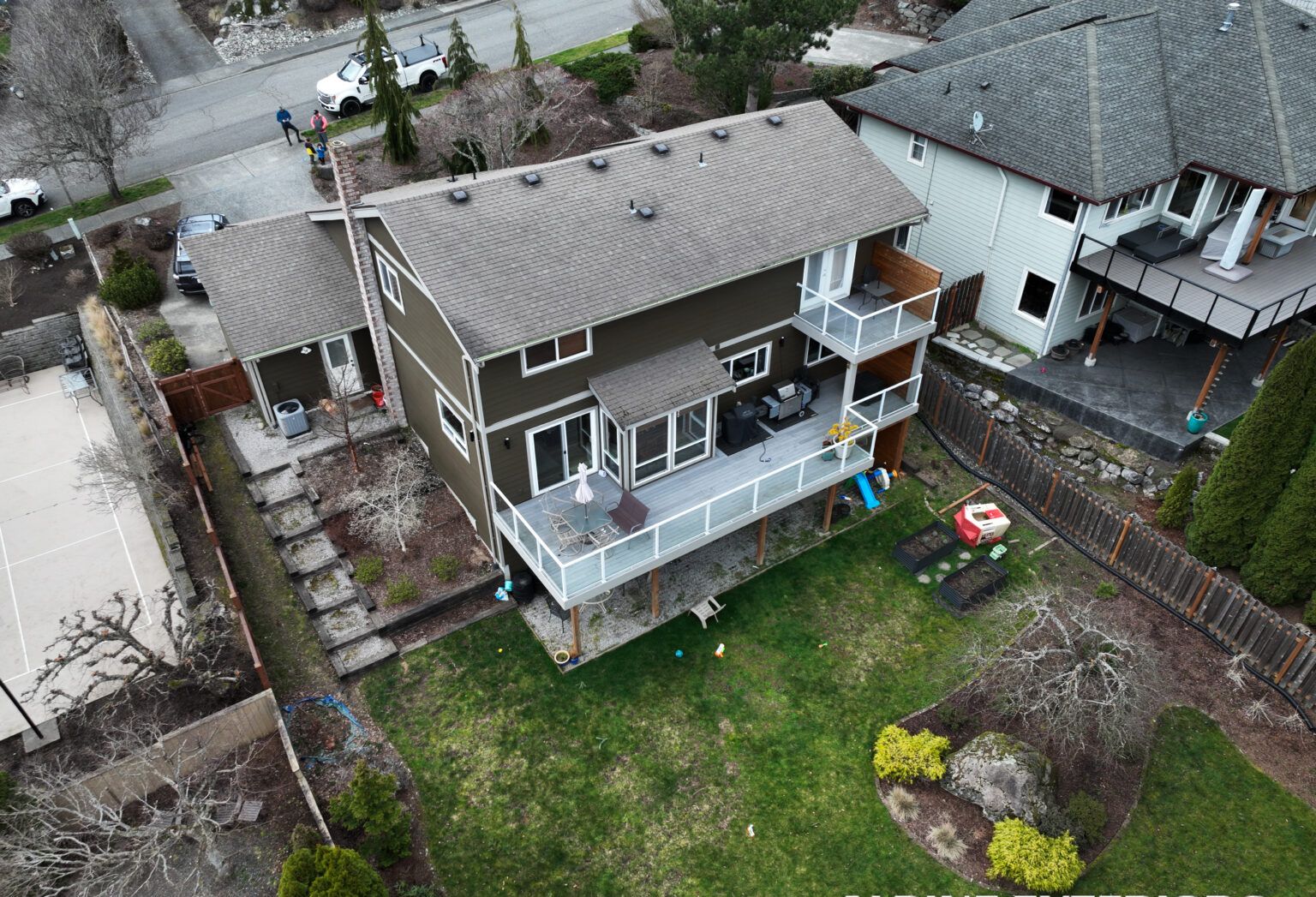
Vinyl siding is an extruded PVC product that comes in a wide range of profiles, from traditional clapboard to Dutch lap to shake-style panels, and it's been the budget-friendly standard in the Pacific Northwest for decades for good reason. It's lighter and faster to install than fiber cement, which keeps labor costs down, it never needs painting because the color runs through the material, and it holds up fine on walls that get reasonable sun and drainage. For a Toad Lake home with good roof overhangs, decent airflow around the exterior, and an owner who wants a straightforward re-side without ongoing upkeep, vinyl does the job at a meaningfully lower price point than fiber cement.
Where vinyl struggles in our climate is moisture-adjacent shading and moss. On walls that stay wet and shaded for extended stretches — common under the tree canopy near Toad Lake — vinyl doesn't rot the way wood does, but moss and algae take hold on its surface readily and need regular washing to keep the house looking cared-for. Vinyl also becomes brittle in cold snaps, so freeze-thaw conditions in the nearby foothills can make it more prone to cracking on impact during a hard winter than it would be in a milder microclimate. It fades over time, especially darker colors in whatever direct sun a shaded lot does get, and it can warp or buckle if installed too tightly without the manufacturer's required expansion gap — a detail that matters more here than in drier climates because temperature swings, while not extreme, are frequent. And because it's a thinner, hollow-backed product, it dents and can be punched through by a stray branch or ladder more easily than fiber cement.
| James Hardie Fiber Cement | Vinyl Siding | |
|---|---|---|
| Installed cost | Higher — material and labor both run more, partly due to specialized cutting and fastening requirements | Lower — lighter material, faster installation, generally the more budget-friendly option |
| Typical lifespan | Long-lived; many installations perform well for multiple decades when flashed and fastened correctly | Multiple decades under good conditions, though cold-weather brittleness and UV fading can shorten useful life in exposed spots |
| Maintenance | Occasional repainting if not factory ColorPlus finish; periodic moss/algae washing on shaded walls; caulk joints need checking | No painting needed; regular washing to keep moss and algae off shaded or lake-adjacent walls; watch for cracked panels after freeze events |
| Appearance | Deeper shadow lines, heavier look, closer to real wood or shake; holds crisp color long-term | Lighter, flatter profile; wide style and color range; can look less substantial up close and may show waviness over time |
For a lot of Toad Lake properties, the deciding factor isn't cost alone — it's what the specific walls of your house are exposed to. A home with south- or west-facing walls that get real sun and decent airflow, especially if the lot has been thinned of overhanging branches, can do well with vinyl and save a meaningful amount of money without taking on much added risk. But the walls that face the lake, sit under fir or cedar canopy, or stay shaded most of the day are exactly the conditions where fiber cement earns its higher price: it resists the rot, swelling, and moss penetration that damp, shaded siding deals with year after year in this climate, and it holds paint and shape through the freeze-thaw swings that hit the foothills in a way that's harder on vinyl's structural stability.
Wind-driven rain off Bellingham Bay and the Strait during fall and winter storms is also worth factoring in, less for the siding material itself and more for how it's installed. Both fiber cement and vinyl rely on correct water-resistive barrier and flashing work behind them to keep wind-driven moisture from getting behind the siding — this is where the Washington State Energy Code's continuous insulation and air-sealing requirements intersect with siding choice, since re-siding is often the practical moment to add continuous exterior insulation and correct any existing barrier gaps. A rushed or under-flashed installation will cause moisture problems regardless of which siding you choose, so the installer's attention to those details matters as much as the material itself. Alpine Exteriors installs both products on Whatcom County homes and generally recommends walking the specific walls of a Toad Lake property — shade, sun exposure, tree cover, and existing moisture damage — before settling on one material over the other, rather than defaulting to a single answer for every house.
On vinyl, moss and algae are mostly cosmetic — they sit on the surface and can be washed off without harming the panel, though heavy buildup left for years can trap moisture against the wall assembly behind it. On fiber cement, moss is also largely a surface issue if the factory finish or paint is intact, but if moisture works into a cut edge, a fastener hole, or a failed caulk joint under that moss, it can eventually reach the substrate. Either way, periodic washing on shaded Toad Lake walls is worth doing regardless of which material you choose.
Vinyl can become more brittle in cold temperatures, and the freeze-thaw swings that hit the foothills near Toad Lake occasionally do cause cracking, usually from an impact — a dropped ladder, a branch, a thrown object — rather than from cold alone. It's not a common failure mode in most winters here, since our cold snaps are relatively brief, but it's a real trade-off compared to fiber cement, which isn't affected the same way by cold-weather impact.
If you're planning to sell within the next few years, vinyl's lower upfront cost is harder to argue against, since you may not be the one who benefits from fiber cement's longer-term durability. That said, fiber cement's higher-end appearance can help with resale presentation in some markets, and buyers increasingly recognize the James Hardie name as a durability signal. It comes down to whether you value the cost savings now or the presentation and longevity for whoever owns the home later.
If you choose Hardie's factory ColorPlus finish, repainting isn't a near-term concern — the factory finish is formulated to hold up for many years before it needs attention. If you choose primed fiber cement and have it field-painted, or if you eventually want a color change, standard exterior repainting intervals apply, and Toad Lake's shaded, damp walls tend to show wear on paint a bit sooner than sun-exposed walls elsewhere in the county.
The right siding choice for a Toad Lake property really depends on which walls face the lake, how much tree canopy shades the house, and what your existing siding is telling you about moisture and rot after years in this climate. Alpine Exteriors, WA contractor license ALPINI751OW, installs both James Hardie fiber cement and vinyl siding across Whatcom County — Bellingham, Ferndale, Lynden, Blaine, Birch Bay, Sudden Valley, and the islands — and can walk your specific house with you to talk through exposure, budget, and which material actually fits before you commit. Reach out to Alpine Exteriors for an on-site look and a straightforward comparison for your home.