
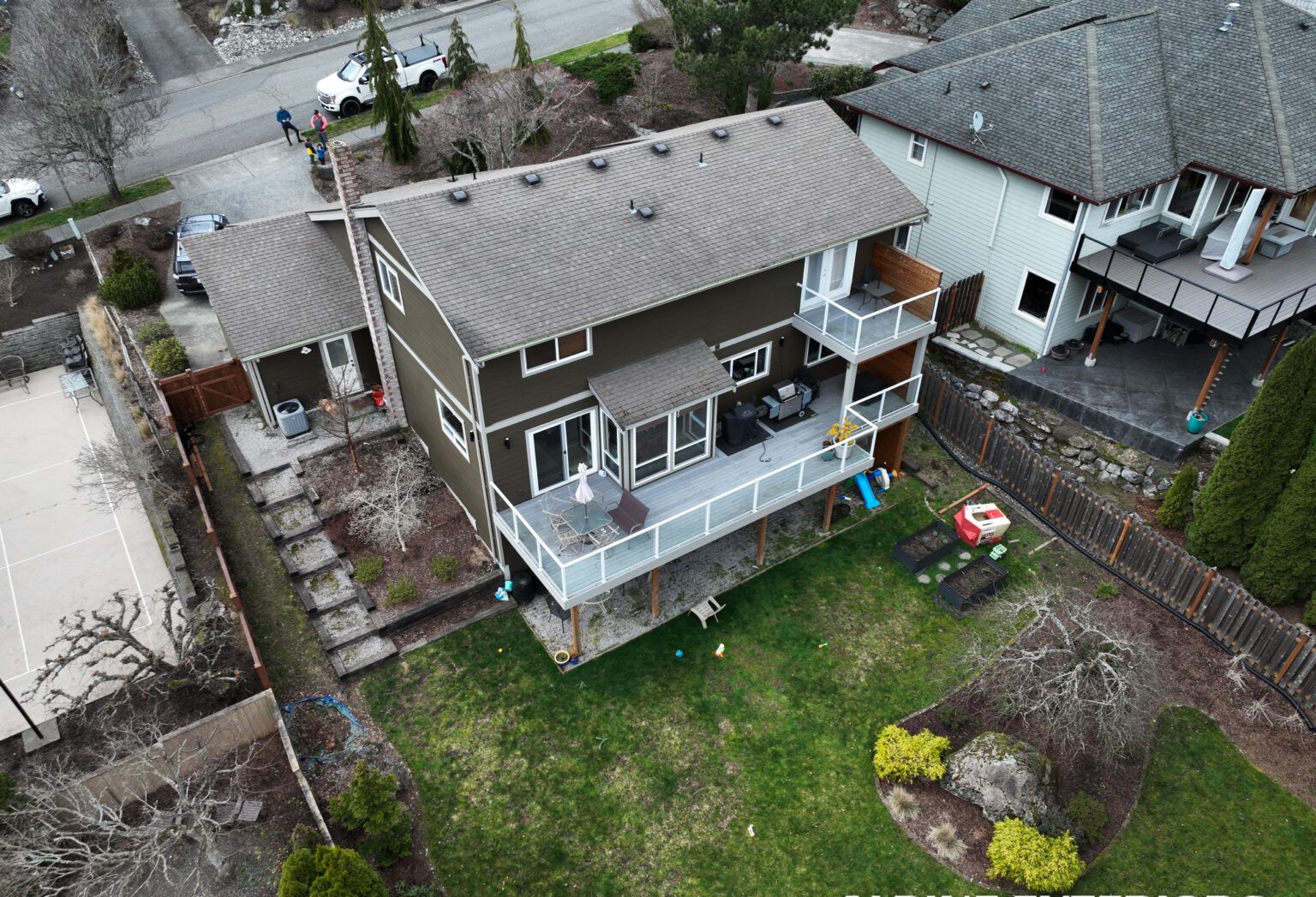
If you own a home in Bellingham's Columbia neighborhood — or anywhere else around Whatcom County, from Ferndale and Lynden out to Blaine, Birch Bay, Sudden Valley, or the islands — you've probably noticed the siding conversation always ends the same way: "so what does this actually cost?" There isn't one honest number for that, because James Hardie fiber cement siding pricing depends on the shape of your house, how much of the wall assembly underneath needs attention, and how much of the old siding has to come off first. What follows are realistic ranges, the variables that push a project toward the low end or the high end, and what you should expect a legitimate quote to cover. Alpine Exteriors has priced and installed Hardie siding on older Columbia-neighborhood bungalows and newer builds out toward Lynden and Ferndale alike, and the same cost drivers show up on nearly every job.
For a typical single-family home in the Columbia neighborhood or elsewhere in Whatcom County, whole-house James Hardie lap siding replacement generally lands somewhere in the broad range of roughly $9 to $16 per square foot installed, which on an average-sized home often works out to a total project cost somewhere between the high teens and mid-$40,000s. That's a wide window on purpose — a straightforward re-side over sound sheathing on a single-story rectangular home is a very different job than a two-story house with wood rot at every window sill, a full tear-off, and a rain-screen gap system added behind the new siding. Homes closer to the water in Bellingham, Blaine, or Birch Bay that take direct wind-driven rain off Bellingham Bay and the Strait tend to need more moisture-barrier work than a similar house tucked into Sudden Valley or the Columbia Valley foothills, which pushes those projects toward the higher end even before labor and material choices are factored in.
| Cost Factor | Typical Low End | Typical High End |
|---|---|---|
| HardiePlank lap siding, material only | Lower-cost smooth or standard profile | Premium ColorPlus prefinished profiles |
| Tear-off and disposal of old siding | Single layer, easy access | Multiple layers, steep or restricted-access lots |
| Wood rot and sheathing repair | Minor spot repairs at a few trim points | Extensive rot at sills, corners, or rim joists |
| Weather-resistive barrier / rain screen | Standard housewrap replacement | Full drainable rain-screen gap system |
| Trim, corners, and HardieTrim boards | Basic trim package | Detailed trim on complex rooflines and dormers |
| Labor and crew size | Simple one-story footprint | Multi-story, steep-slope, or hard-to-access walls |
| Color and finish | Standard factory primed, field-painted | Factory-baked ColorPlus finish, multiple colors |
| Permits and code compliance | Straightforward residential re-side | Additions requiring energy-code upgrades |
None of these ranges should be read as a quote — they're meant to give you a sense of where the money actually goes so a written estimate makes sense when you get one.
A handful of things consistently separate a lower-cost project from a higher-cost one in this part of Washington. The first is moisture damage. Whatcom County's long wet season, combined with moss and algae growth on north-facing and shaded walls, means a lot of older siding — especially original wood lap siding from decades ago — is hiding soft or rotted sheathing underneath by the time it's removed. A crew can't know exactly how much rot is behind the siding until it comes off, which is why a fair contractor builds a contingency allowance into the estimate rather than pretending the number is fixed in advance.
The second driver is exposure. Homes that take wind-driven rain directly off Bellingham Bay, the Strait, or open water around Blaine and Birch Bay generally benefit from a drainable rain-screen assembly behind the new siding, which adds labor and material cost compared to a simpler housewrap-only installation on a more sheltered lot in Sudden Valley or inland toward Lynden. The third is elevation and access — homes on sloped lots, multi-story builds, or properties requiring scaffolding rather than simple ladder work all add labor hours. Freeze-thaw cycling in the foothills toward the Mt. Baker area can also accelerate deterioration of caulking, trim, and fastener points over time, which is worth flagging if your home is on the eastern edge of the county.
Finally, code compliance plays a real role. Washington State Energy Code requirements around continuous insulation and air sealing can mean a re-side project also involves adding rigid insulation or upgrading the weather-resistive barrier to meet current standards, particularly if the scope of work triggers a permit review. That's not a cost every project carries, but it's worth asking about up front rather than discovering it mid-project.
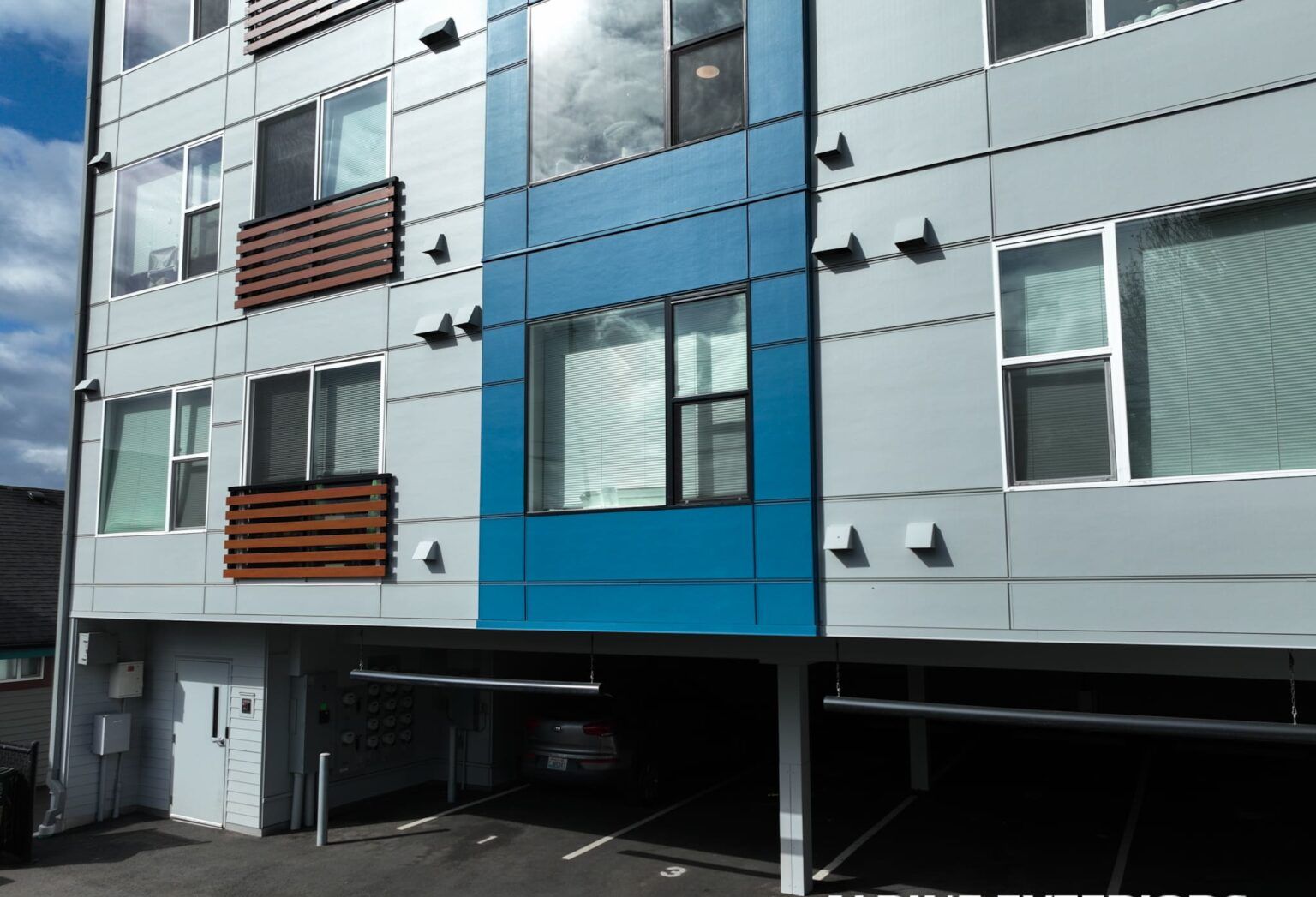
A useful, comparable quote for James Hardie siding in this region should spell out more than a single lump-sum number. At minimum, look for it to itemize: the specific HardiePlank or HardiePanel product and profile being used, whether it's factory-primed or a ColorPlus prefinished color, the trim package (including HardieTrim boards at corners, windows, and fascia where applicable), the weather-resistive barrier or rain-screen system being installed, tear-off and disposal of the existing siding, an allowance or a per-board-foot rate for sheathing and rot repair, fasteners and flashing details at windows and doors, permit fees where a permit is required, and the manufacturer's and installer's warranty terms. Alpine Exteriors writes quotes this way specifically because vague, single-number bids are the most common source of disputes and change orders on siding jobs.
It's also worth asking whether the quote assumes a fixed rot-repair allowance or a true time-and-materials rate for anything found once the old siding is off. Both approaches are legitimate, but you want to know which one you're agreeing to before work starts, not after the crew has already opened up a wall.
The cheapest bid on paper is not automatically the best value, and the most expensive one isn't automatically the most thorough. When comparing two or three estimates for the same home, line them up side by side on the same categories: same siding profile and thickness, same trim scope, same barrier system, same tear-off scope, and the same treatment of unknown rot. A bid that looks noticeably lower than the others is often missing something — sometimes it's a thinner trim package, sometimes it skips the rain-screen gap, and sometimes it simply underestimates rot repair and plans to change-order it later. Ask each contractor directly how they price rot found after tear-off, whether they're pulling a permit, and what their crew's plan is for protecting landscaping, windows, and neighboring structures during demo. A contractor who answers those questions clearly and in writing is generally more trustworthy than one who just repeats a total price. It's also fair to ask for proof of active WA contractor licensing and insurance — Alpine Exteriors operates under WA contractor license ALPINI751OW, and any legitimate siding contractor should be able to provide their license number without hesitation.
Siding replacement is a significant expense, and most homeowners in Whatcom County don't pay for it out of pocket in a single lump sum. Many contractors, including Alpine Exteriors, can connect homeowners with third-party financing options that spread the cost over monthly payments — terms, rates, and approval depend on the lender and your credit, so ask for specifics rather than assuming a promotional rate applies to your situation. On the insurance side, siding replacement is sometimes partially covered when the damage stems from a specific, sudden event — a wind-driven rain intrusion event or storm damage, for example — but ordinary wear, moss and algae staining, or long-term wood rot from age is typically considered a maintenance issue rather than an insurable loss. If you suspect storm-related damage contributed to your siding's condition, it's worth documenting it with photos and calling your insurer before work begins, since most carriers want damage assessed prior to repair.
For a lot of Whatcom County homeowners, yes — fiber cement resists the moss, algae, and moisture-driven deterioration that's common in this climate better than standard vinyl, and it holds paint and factory-baked ColorPlus finishes well over time. That said, it costs more upfront and is heavier and more labor-intensive to install, so the right choice depends on your budget, how long you plan to stay in the home, and how much of your existing wall assembly needs repair regardless of which siding you choose.
Older homes in established Bellingham neighborhoods like Columbia often have original wood siding and sheathing that's decades old, and the amount of hidden rot or moisture damage behind it varies house to house even on the same block. Lot exposure to wind-driven rain, the number of stories, roofline complexity, and whether a rain-screen system is added all compound those differences, which is why two seemingly similar homes can get noticeably different estimates.
In most cases a straightforward like-for-like re-side may not trigger a full building permit, but that depends on your specific jurisdiction, whether structural sheathing is being replaced, and whether the scope of work intersects with Washington State Energy Code requirements for insulation and air sealing. Your contractor should confirm permit requirements with the local jurisdiction before starting rather than assuming either way.
Timelines depend heavily on home size, how much rot repair turns up once the old siding is removed, and weather — Whatcom County's wet season can slow exterior work considerably. A single-story home with sound sheathing underneath moves much faster than a multi-story home with extensive rot repair and a rain-screen retrofit, so ask your contractor for a realistic weather-adjusted timeline rather than a best-case number.
If you're weighing James Hardie siding for a home in the Columbia neighborhood, elsewhere in Bellingham, or anywhere else in Whatcom County — Ferndale, Lynden, Blaine, Birch Bay, Sudden Valley, or the islands — Alpine Exteriors can walk your property, look at what's actually happening behind the existing siding, and put together an itemized, apples-to-comparable estimate rather than a vague lump sum. Reach out to schedule an on-site assessment and get a written quote you can actually compare against other bids.