
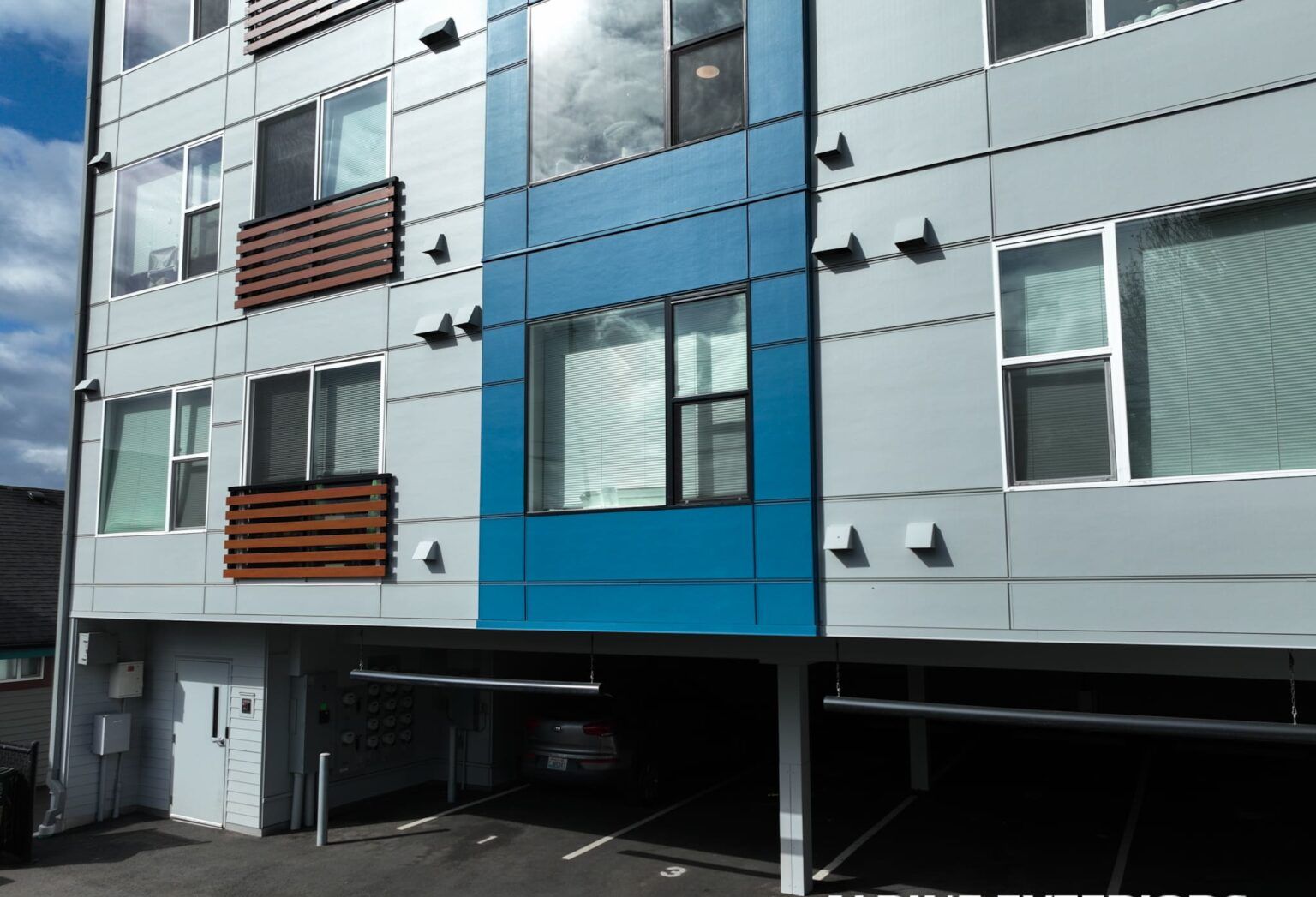
Homeowners in the Birchwood area of Whatcom County start looking into siding replacement for a handful of predictable reasons: the old siding is cupping or delaminating, moss and black-green algae streaks keep coming back no matter how many times someone pressure-washes the north wall, or a contractor pulled a piece of trim during a repair and found soft, water-stained sheathing underneath. Whatever the trigger, the first question is almost always the same one: what is this actually going to cost? Below are realistic ranges based on the kind of work typically involved in a full or partial siding replacement in this part of Washington, along with the regional factors that push a project toward the low end or the high end of those ranges.
For a typical single-family home in the Birchwood/Bellingham area, full siding replacement tends to land in a broad range that depends heavily on material choice, house size, and how much hidden damage is found once the old siding comes off. Homeowners should expect a wide low-to-high spread rather than a single number, because two houses of the same square footage can differ enormously in final cost once rot repair, trim work, and moisture-barrier upgrades are factored in. The table below breaks down the main cost drivers separately, since bundling them into one lump figure tends to hide where the money actually goes.
| Cost Factor | Typical Low | Typical High | Why It Varies Here |
|---|---|---|---|
| Siding material (fiber cement, vinyl, engineered wood) | Lower end for vinyl | Higher end for fiber cement | Fiber cement resists moss and moisture damage better in our wet climate but costs more up front than vinyl |
| House size / number of stories | Smaller single-story ranch | Larger two-story or multi-gable home | More wall area, more corners, and taller work (ladders, lifts) all add labor time |
| Tear-off and rot/sheathing repair | Minimal if walls are dry | Substantial if rot is widespread | Persistent Pacific Northwest rain means hidden rot under old siding is common, especially on north- and west-facing walls |
| Trim, flashing, and water management details | Basic trim replacement | Full flashing/kickout/drip-cap rebuild | Wind-driven rain off Bellingham Bay and the Strait of Georgia pushes water into gaps that drier climates rarely test |
| House wrap / weather-resistive barrier upgrade | Reuse of sound existing wrap | Full replacement with rainscreen detailing | Washington State Energy Code compliance and long-term moisture control often justify upgrading the barrier during a tear-off |
| Disposal, permitting, and site access | Simple curbside driveway access | Difficult access (waterfront lots, steep sites, island ferry logistics) | Some Whatcom County properties, including parts of the islands, add real logistics cost |
Treat these as directional ranges, not quotes. The only way to get an accurate number for a specific Birchwood home is a walk-around inspection, ideally one that includes probing a few suspect areas of the wall for soft spots before any number gets written down.
A few conditions specific to this corner of Washington tend to move a project up in cost more than homeowners expect going in. The first is simply how wet the region stays for most of the year. Extended damp periods give moss, algae, and mildew time to colonize north-facing and shaded walls, and where that growth has been present for years, the siding and the sheathing behind it have often absorbed moisture long enough to soften. A contractor who finds punky wood under the siding is not padding the invoice — that repair has to happen before new siding goes on, or the new material will be nailed over a problem that keeps growing.
Second, houses closer to open water — along the bay, in Birch Bay, or on the islands — take wind-driven rain directly against exterior walls in a way that inland homes in Lynden or Sudden Valley don't experience as often. That means more attention (and more cost) around window and door flashing, kick-out flashing at roof-to-wall intersections, and butt joints in lap siding, since those are the spots where blown rain finds its way behind the cladding.
Third, in the foothill areas and anywhere with more freeze-thaw cycling through the winter, siding and trim that has already absorbed moisture is more prone to cracking as it freezes and expands. That accelerates failure in older wood or hardboard siding and can turn what looked like a cosmetic repair into a replacement job once the material is actually opened up.
Finally, the Washington State Energy Code has tightened requirements around continuous insulation and air sealing over the years. A tear-off is a practical time to bring a wall assembly up to current code-driven performance, and doing so — adding rigid insulation, improving air sealing at penetrations, or upgrading the weather-resistive barrier — adds material and labor cost but pays back through comfort and lower heating bills over time.
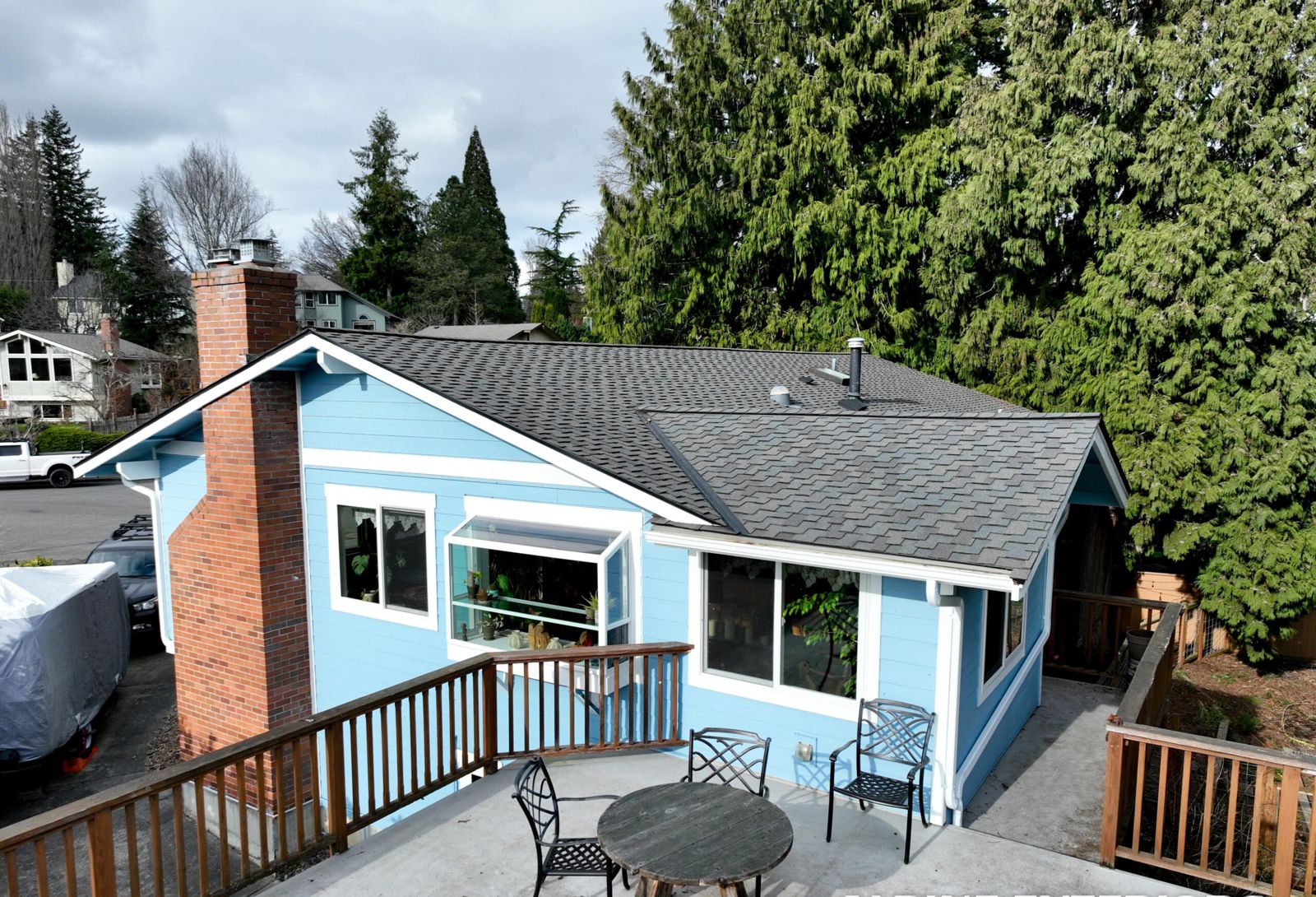
A siding estimate that is worth comparing against others should spell out, in writing, more than just a total dollar figure. At minimum it should list the specific siding product and manufacturer, not just "fiber cement" or "vinyl" as a category, since performance and cost vary between product lines. It should note whether tear-off of the existing siding is included, and what happens if rot is discovered once that tear-off starts — ideally with a stated per-unit rate for sheathing or framing repair rather than an open-ended "we'll figure it out later." It should specify what happens with flashing at windows, doors, and roof lines, since this is exactly the detail that determines whether wind-driven rain stays out. It should also state whether the house wrap or weather barrier is being replaced or reused, whether a rainscreen air gap is part of the assembly, and what the permit and disposal arrangements are. A quote that only lists a material name and a total number is missing most of the information a homeowner actually needs to compare it against a competing bid.
The temptation with any home exterior project is to line up three numbers and pick the middle one, but that only works if the underlying scope is the same across all three bids — and it rarely is. One contractor may be quoting a straightforward re-side over existing sheathing with no rot allowance, while another has priced in a full tear-off, sheathing inspection, and flashing rebuild. Those numbers will look very different and are not actually comparable until the scope is normalized. It helps to ask each contractor directly whether their bid assumes any hidden rot repair, what brand and product line of siding they're quoting, whether trim and flashing are included or billed separately, and how they handle unexpected damage once the walls are opened up. It's also reasonable to ask how a contractor handles moisture-prone details specific to this region — kick-out flashing, window head flashing, and the transition where siding meets a deck or porch roof — since those are the spots that fail first here. Alpine Exteriors walks Whatcom County homeowners through each of these line items during an estimate specifically so the final number reflects a defined scope rather than a guess.
Siding replacement is rarely an insurance claim unless the damage stems from a specific covered event, such as a storm that visibly tore off cladding or a tree limb impact; ordinary wear, moss growth, and gradual moisture damage from age are generally treated as maintenance issues rather than a covered loss, so it's worth checking a policy's language before assuming coverage applies. Many homeowners instead pay through a mix of savings, a home equity line of credit, or financing offered directly through a contractor or a third-party lender; terms vary enough between lenders that it's worth comparing more than one offer rather than accepting the first financing option presented. Whichever payment path is used, it's worth confirming that any contractor doing the work is properly licensed in Washington — Alpine Exteriors holds Washington contractor license ALPINI751OW — since licensing status is part of what protects a homeowner if a dispute over workmanship comes up later.
The biggest source of variation is usually hidden damage rather than the base price of the siding itself. A house that has stayed dry behind its old cladding will cost far less to re-side than one where years of moisture exposure have softened the sheathing or framing, and that difference often isn't visible until the old siding actually comes off the wall.
Not necessarily. Surface staining on its own can sometimes be cleaned and controlled, but moss and algae that have been present for a long time are a sign the wall stays damp longer than it should, and that's worth having checked for softness or rot underneath rather than assuming it's purely cosmetic.
For homes in this region, many contractors consider it a reasonable investment, since it's far cheaper to improve moisture management while the wall is already open than to redo the work again a few years later. Whether it makes sense for a specific house depends on the current wall assembly and budget, which is worth discussing during the estimate.
Timelines depend heavily on house size, how much repair work is uncovered, and weather windows, since siding installation generally needs a run of dry days. A straightforward re-side can move faster than a project that involves significant rot repair or a full water-resistive barrier rebuild, so it's reasonable to ask for a project-specific timeline rather than a generic estimate.
The only reliable way to turn these ranges into a real number is an in-person inspection of the actual walls. Alpine Exteriors provides written estimates for homeowners throughout Whatcom County — including Birchwood, Bellingham, Ferndale, Lynden, Blaine, Birch Bay, Sudden Valley, and the islands — that spell out material, scope, and the specific water-management details this climate calls for, so the number reflects the house rather than a guess.